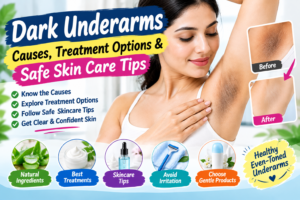

Dark underarms are a common skin concern that can affect people of all skin types. The skin under the arms may appear darker than the surrounding skin because of shaving, friction, irritation, hormonal changes, excessive sweating, or certain skin conditions. Although dark underarms are usually not dangerous, the change in skin color can sometimes be frustrating and may affect confidence when wearing sleeveless clothing.
The good news is that you can select safer and more efficient treatment options if you are aware of the causes of dark underarms. Underarm skin can be gradually improved with gentle skincare, minimizing irritation, using the right products, and, if needed, treating an underlying medical condition.
This guide explains why underarms become dark, the best dark underarm treatment options, safe skincare tips, ingredients to consider, common mistakes to avoid, and when you should see a dermatologist.
What Causes Dark Underarms?
There is no single cause of underarm darkening. In many cases, several factors contribute to changes in pigmentation.
1. Shaving
Frequent shaving can contribute to darker-looking underarms. A razor may cause tiny amounts of irritation, especially when shaving is performed without enough lubrication or with a dull blade.
Shaving can also leave visible hair beneath the skin, creating a shadow that makes the area appear darker.
Using a gentle shaving gel or cream and avoiding repeated passes over the same area may help reduce irritation.
2. Friction
Repeated rubbing between the skin and clothing can cause irritation and inflammation. Tight clothing may increase friction around the underarms, particularly during exercise or hot weather.
When the skin experiences repeated irritation, it may produce more pigment as part of the skin’s response to inflammation.
Wearing breathable clothing and reducing unnecessary friction may help prevent further darkening.
3. Deodorants and Antiperspirants
Some deodorants and fragranced products contain ingredients that can irritate sensitive skin. If a product causes burning, itching, redness, or a rash, continued use may contribute to post-inflammatory hyperpigmentation.
If you notice irritation after using a particular deodorant, consider switching to a fragrance-free or sensitive-skin formulation.
4. Dead Skin Cell Buildup
The underarm area can sometimes develop roughness and buildup of dead skin cells. This may make the skin look dull or darker.
However, aggressive scrubbing is not the answer. Excessive exfoliation can damage the skin barrier and potentially make pigmentation worse.
Gentle skincare is generally preferable to harsh physical scrubbing.
5. Hormonal Changes
Hormonal changes can influence pigmentation in some people. Pregnancy, hormonal medications, and certain endocrine conditions may sometimes be associated with changes in skin color.
If darkening develops suddenly or appears in multiple body areas, it is worth discussing the change with a healthcare professional.
6. Post-Inflammatory Hyperpigmentation
Skin inflammation caused by shaving, rashes, eczema, allergic reactions, or irritation can leave behind darker pigmentation after the original problem has healed.
This is known as post-inflammatory hyperpigmentation, and it can be more noticeable in people with naturally deeper skin tones.
Treating the source of inflammation is an important part of improving the pigmentation.
7. Acanthosis Nigricans
Dark, thicker, or velvety skin in the underarms can sometimes be associated with acanthosis nigricans. This condition can also affect areas such as the neck and groin.
Acanthosis nigricans may be associated with insulin resistance and other metabolic or hormonal conditions. If underarm skin becomes noticeably darker, thicker, or velvety, especially together with similar changes on the neck, medical evaluation can be helpful.
How to Treat Dark Underarms Safely
The best approach depends on what is causing the pigmentation. There is no single cream or home remedy that works for everyone.
1. Reduce Skin Irritation
The first step is to identify anything that may be irritating your underarms.
Avoid products that cause burning, stinging, itching, or redness. If a deodorant repeatedly causes irritation, discontinue it and consider a gentler alternative.
Reducing irritation can help prevent additional pigmentation.
2. Moisturize Regularly
A healthy skin barrier can tolerate everyday environmental stress better than irritated, damaged skin.
Apply a gentle, fragrance-free moisturizer to clean, dry underarms. Ingredients such as glycerin, ceramides, and hyaluronic acid can help support hydration.
Moisturizing after bathing or shaving may be particularly useful for people who experience dryness or irritation.
3. Use Gentle Exfoliation
Mild chemical exfoliating ingredients may help improve the appearance of uneven skin tone by supporting the removal of dead surface cells.
Products containing ingredients such as lactic acid, glycolic acid, or salicylic acid are sometimes used for body pigmentation and rough texture.
However, underarm skin can be sensitive. Start cautiously and avoid using strong exfoliating products on freshly shaved, irritated, broken, or inflamed skin.
Using multiple exfoliating acids at the same time can increase irritation and may worsen pigmentation.
4. Consider Niacinamide
Niacinamide is a popular skincare ingredient that can help support the skin barrier and improve the appearance of uneven skin tone.
A gentle niacinamide-containing product may be suitable for people looking for a gradual approach to underarm hyperpigmentation.
Consistency is important, and results generally take time rather than appearing overnight.
5. Try Azelaic Acid When Appropriate
Azelaic acid is another ingredient commonly used for uneven pigmentation and inflammatory skin concerns.
It may help improve the appearance of post-inflammatory hyperpigmentation while also being useful for certain types of skin inflammation.
Because underarm skin can be sensitive, introduce new active ingredients slowly and stop if significant irritation develops.
6. Be Careful With Strong Brightening Products
Some skin-lightening products can contain ingredients that are inappropriate for long-term unsupervised use. Avoid unknown products that promise extremely fast whitening or bleaching.
Do not use harsh chemical peels, concentrated acids, or unregulated bleaching products on the underarms.
A dermatologist can recommend appropriate treatment if pigmentation is persistent or significant.
Can Shaving Make Underarms Darker?
Shaving itself does not necessarily cause permanent pigmentation, but shaving irritation can contribute to darkening.
To reduce irritation, use a clean and sharp razor, apply shaving gel or cream, shave gently in the direction that causes the least irritation, and avoid repeatedly going over the same area.
Moisturizing afterward can also help reduce dryness.
If shaving consistently causes bumps and irritation, other hair-removal methods may be worth discussing with a dermatologist.
Best Skincare Routine for Dark Underarms
A simple routine can help protect the skin and gradually improve its appearance.
Morning Routine
Clean the underarms gently with a mild cleanser. Pat the area dry instead of rubbing it aggressively.
Apply a lightweight moisturizer if your skin is dry or sensitive. Use a deodorant that does not cause irritation.
Evening Routine
Clean the area gently and apply a fragrance-free moisturizer.
If you are using an exfoliating or pigmentation-focused product, follow the product instructions carefully. Do not apply several strong active ingredients at once.
On days when the skin feels irritated, focus on moisturizing and barrier repair instead of exfoliation.
Home Remedies for Dark Underarms: What Should You Avoid?
Many online remedies claim to lighten dark underarms quickly, but some can cause more harm than good.
Avoid rubbing lemon juice, baking soda, toothpaste, or undiluted vinegar on the underarms. These substances can irritate the skin and potentially worsen pigmentation.
Likewise, harsh scrubs made from salt or sugar can create tiny areas of irritation when used aggressively.
Natural does not automatically mean safe for sensitive skin.
If a home remedy causes burning, redness, itching, or discomfort, wash it off and discontinue use.
How Long Does It Take to Lighten Dark Underarms?
The time required to improve dark underarms depends on the underlying cause, how long the pigmentation has been present, and your individual skin type.
If irritation is responsible, reducing the trigger may help prevent further darkening relatively quickly, but existing pigmentation can take considerably longer to fade.
Hyperpigmentation generally improves gradually. Consistent skincare is more realistic than expecting dramatic results within a few days.
If pigmentation does not improve after several months of appropriate skincare, a dermatologist can assess the cause and discuss additional treatment options.
Medical Treatments for Dark Underarms
When over-the-counter skincare does not provide enough improvement, dermatologists may consider professional treatments depending on the diagnosis.
Possible options can include prescription topical treatments, professionally supervised chemical peels, or certain laser-based procedures.
The appropriate treatment depends on skin tone, the type of pigmentation, and whether an underlying skin condition is present.
Professional treatment should be selected carefully because overly aggressive procedures can cause irritation and post-inflammatory hyperpigmentation, particularly in darker skin tones.
When Should You See a Dermatologist?
Dark underarms are usually harmless, but certain changes deserve professional attention.
See a dermatologist or healthcare professional if the pigmentation:
- Develops suddenly without an obvious reason
- Becomes thick or velvety
- Also appears on the neck or groin
- Is associated with significant itching, pain, or a rash
- Develops after a persistent skin reaction
- Does not improve despite gentle skincare
- Continues to worsen
A healthcare professional can determine whether the problem is simple hyperpigmentation, irritation, dermatitis, acanthosis nigricans, or another condition.
How to Prevent Dark Underarms
Prevention is often easier than treating established pigmentation.
Avoid excessively tight clothing that causes constant rubbing. Use gentle cleansers and choose deodorants that your skin tolerates well.
When shaving, use proper lubrication and avoid shaving irritated skin. Replace dull razors and avoid applying strong skincare actives immediately after shaving.
Keep the underarm area clean and dry, particularly during hot weather or exercise.
Most importantly, avoid aggressive attempts to lighten the skin. Irritation can trigger more pigmentation and create a cycle that becomes difficult to break.
Frequently Asked Questions About Dark Underarms
Why are my underarms dark even though I wash them regularly?
Dark underarms are not necessarily caused by poor hygiene. Pigmentation can result from friction, shaving, irritation, hormonal changes, post-inflammatory hyperpigmentation, or certain medical conditions.
What is the best treatment for dark underarms?
The best treatment depends on the cause. Gentle skincare, reducing irritation, moisturizing, and carefully selected ingredients such as niacinamide or mild exfoliating acids may help some people. Persistent pigmentation should be evaluated by a dermatologist.
Does deodorant cause dark underarms?
Some deodorants can irritate sensitive skin, and repeated irritation may contribute to post-inflammatory hyperpigmentation. If a deodorant causes burning, itching, or redness, consider switching to a gentler product.
Is lemon good for dark underarms?
Lemon juice is not recommended as a safe underarm-lightening treatment. Its acidity can irritate sensitive skin and may worsen pigmentation.
Can moisturizer help dark underarms?
Moisturizer does not directly bleach pigmentation, but maintaining a healthy skin barrier can reduce dryness and irritation. This may help prevent additional darkening.
Can dark underarms be permanently removed?
The appearance of pigmentation can often be improved, but results depend on the underlying cause. Preventing repeated irritation and treating any underlying condition are important for maintaining improvement.
Final Thoughts
Dark underarms are a common concern and can develop for many different reasons, including shaving, friction, deodorant irritation, inflammation, hormonal changes, and certain skin conditions. The safest approach is to identify the cause rather than trying aggressive whitening remedies.
Start with products that don’t irritate your skin, frequent moisturizing, careful hair removal, and mild cleansing. A gradual improvement in skin texture and uneven pigmentation may be supported by ingredients like niacinamide, ceramides, glycerin, and carefully chosen exfoliating acids.
Steer clear of unregulated bleaching products, baking soda, harsh scrubs, and lemon juice. These methods may worsen pigmentation and harm the skin barrier.
If your underarms become thick, velvety, suddenly darker, or remain persistently pigmented despite appropriate skincare, consult a dermatologist. Treating the underlying cause is often the most effective way to achieve healthier-looking and more even-toned underarm skin.