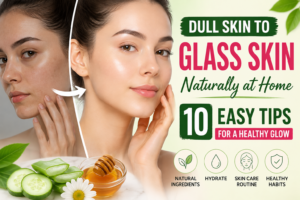

Have you ever looked in the mirror and felt that your skin looks tired, rough, dry, or less radiant than usual? Dull skin is extremely common and can be caused by dehydration, dead skin-cell buildup, lack of sleep, environmental exposure, an unsuitable skincare routine, or simply dry skin.
The popular “glass skin” look refers to skin that appears smooth, hydrated, fresh, and luminous. You don’t need an expensive facial or a cabinet full of skincare products to work toward this appearance.
With a consistent routine, gentle skincare products, hydration, sun protection, and healthy lifestyle habits, you can make dull-looking skin appear smoother, softer, and more radiant naturally at home.
This guide explains how to go from dull skin to glass skin naturally at home, including the best ingredients, a simple morning and nighttime routine, home-friendly tips, mistakes to avoid, and product categories worth considering.
What Is Glass Skin?
“Glass skin” is a beauty term used to describe a complexion that looks exceptionally smooth, hydrated, even, and luminous.
It does not mean your skin literally needs to be poreless or perfectly transparent. Real skin naturally has pores, texture, fine lines, pigmentation, and other characteristics.
Instead of trying to achieve unrealistic perfection, focus on improving:
- Skin hydration
- Smoothness
- Healthy-looking radiance
- Even appearance
- Skin comfort
- A strong skin barrier
The goal should be healthy-looking glowing skin, not flawless skin.
Why Does Skin Look Dull?
Before learning how to get glass skin, it helps to understand why your complexion may look dull.
1. Dehydrated Skin
When skin lacks water, it can appear tired, tight, flaky, or less radiant.
2. Dead Skin-Cell Buildup
Old skin cells can accumulate on the surface and make the complexion appear rough or uneven.
3. Over-Exfoliation
Surprisingly, exfoliating too much can also make skin look worse. Excessive use of scrubs or acids may cause dryness and irritation.
4. Sun Exposure
UV exposure can contribute to uneven pigmentation, premature skin aging, and a dull-looking complexion.
5. Poor Sleep
Not getting enough quality sleep can make you look tired and may affect how fresh your complexion appears.
6. Dry Weather
Cold, windy, or low-humidity conditions can increase dryness and make skin appear rough.
7. Harsh Skincare
Strong cleansers, excessive washing, fragrance, and too many active ingredients can irritate the skin.
8. Lack of Consistency
Changing products every few days makes it difficult to determine what actually works for your skin.
How to Go From Dull Skin to Glass Skin Naturally at Home
You don’t need to follow a complicated 10-step Korean skincare routine. A simple routine used consistently can be much more practical.
1. Start With a Gentle Cleanser
Cleansing is the first step toward brighter-looking skin.
Choose a gentle cleanser that removes sweat, sunscreen, oil, and impurities without leaving your skin feeling extremely tight.
Look for products labeled:
- Gentle cleanser
- Hydrating cleanser
- Fragrance-free
- Sensitive skin
- Non-stripping
Avoid scrubbing your face aggressively with a washcloth or facial brush.
If your skin feels tight immediately after cleansing, your cleanser may be too harsh or you may be cleansing too frequently.
2. Hydrate Your Skin
Hydration is one of the biggest secrets behind a dewy, glass-like appearance.
When skin is well moisturized, it can look temporarily plumper and smoother.
Look for hydrating ingredients such as:
- Hyaluronic acid
- Glycerin
- Panthenol
- Aloe vera
- Beta-glucan
Apply your moisturizer while your skin is slightly damp to help maintain hydration.
For dry skin, a cream may feel more comfortable. If you have oily skin, choose a lightweight gel or lotion.
3. Use a Vitamin C Serum
Vitamin C is a popular ingredient for people who want a brighter and more even-looking complexion.
A well-formulated vitamin C product may help improve the appearance of uneven skin tone and protect skin from environmental oxidative stress when used appropriately.
For beginners, start slowly rather than immediately using a highly concentrated formula.
A basic routine could be:
Cleanser → Vitamin C serum → Moisturizer → Sunscreen
If vitamin C causes significant burning or irritation, discontinue it and simplify your routine.
4. Don’t Skip Sunscreen
If you’re trying to improve dull or uneven-looking skin, daily sunscreen is one of the most important steps.
Choose a broad-spectrum sunscreen with SPF 30 or higher and apply it every morning.
Sun protection can help prevent UV-related skin damage and can also help prevent existing dark spots from becoming more noticeable.
For outdoor activities, remember to reapply according to the product’s directions and use additional protection such as hats and shade.
High-RPM skincare keyword opportunity:
For content monetization, sunscreen-related searches can have strong commercial intent because users often compare products based on:
- SPF level
- Skin type
- Finish
- Ingredients
- Price
- Mineral vs. chemical filters
- Acne-prone skin compatibility
- Tinted vs. untinted formulas
This makes sunscreen a useful product category to cover naturally within a skincare article.
5. Exfoliate—But Don’t Overdo It
Exfoliation can help remove excess dead skin cells from the surface and improve the appearance of skin texture.
However, more exfoliation does not mean better skin.
Instead of harsh physical scrubs, many people prefer gentle chemical exfoliants.
Common options include:
- Lactic acid
- Mandelic acid
- Glycolic acid
- Salicylic acid
The right choice depends on your skin type and concerns.
For example, salicylic acid is commonly used for oily and acne-prone skin, while lactic acid can be a gentler option for some people seeking smoother-looking skin.
If your skin is sensitive, irritated, peeling, or recovering from barrier damage, avoid adding exfoliating acids until your skin is comfortable again.
6. Try Niacinamide for a Smoother-Looking Complexion
Niacinamide, a form of vitamin B3, is a versatile skincare ingredient.
It is commonly included in products designed to support the skin barrier, improve the appearance of uneven skin tone, and manage excess oil.
A niacinamide serum can be especially appealing if your skin is:
- Oily
- Combination
- Uneven-looking
- Dull
- Prone to visible pores
You don’t necessarily need a very high concentration. A simple, well-formulated product may be enough.
7. Use a Moisturizer Every Day
One of the easiest ways to make dry, dull skin appear healthier is to use moisturizer consistently.
Look for ingredients such as:
- Ceramides
- Glycerin
- Hyaluronic acid
- Squalane
- Panthenol
- Dimethicone
If your skin is dry, consider a richer cream.
If your skin is oily, choose a lightweight, non-comedogenic moisturizer.
Remember: oily skin can still be dehydrated, so skipping moisturizer isn’t always the best solution.
8. Try a Simple Hydrating Face Mask
A hydrating sheet mask or gentle moisturizing mask can temporarily make skin look fresher and more plump.
For a safer home routine, choose products specifically formulated for facial skin rather than applying random kitchen ingredients.
Be careful with popular DIY remedies involving:
- Lemon juice
- Baking soda
- Undiluted apple cider vinegar
- Toothpaste
- Strong essential oils
These ingredients can irritate facial skin and may cause more problems than benefits.
Natural does not automatically mean safe for your face.
9. Improve Your Diet and Hydration
Skincare products aren’t the only factors affecting how your skin looks.
A balanced diet provides nutrients your body needs for normal skin function.
Try to include a variety of:
- Fruits
- Vegetables
- Whole grains
- Healthy fats
- Protein-rich foods
- Nuts and seeds
Also drink enough fluids according to your individual needs, climate, activity level, and health requirements.
However, drinking excessive amounts of water won’t magically create glass skin. Hydration is important, but skincare and sun protection still matter.
10. Get Enough Sleep
Your nighttime routine shouldn’t only involve skincare.
Quality sleep is also important for overall health and can help you look less tired.
Aim for a consistent sleep schedule and create a relaxing bedtime routine.
Instead of adding another expensive serum, improving your sleep habits may be one of the simplest lifestyle changes you can make.
Best Glass Skin Routine at Home
Here’s a simple routine you can follow.
Morning Glass Skin Routine
Step 1: Gentle cleanser
Step 2: Hydrating serum
Step 3: Vitamin C or niacinamide, if tolerated
Step 4: Moisturizer
Step 5: Broad-spectrum SPF 30+ sunscreen
You don’t need every serum. Choose products based on your skin’s needs.
Nighttime Glass Skin Routine
Step 1: Remove makeup and sunscreen
Step 2: Gentle cleanser
Step 3: Hydrating serum
Step 4: Treatment product, if appropriate
Step 5: Moisturizer
If you’re using an exfoliating acid or retinoid, introduce it gradually rather than using multiple strong actives at the same time.
Best Ingredients for Naturally Glowing Skin
If you’re shopping for skincare products, these ingredients are worth knowing.
| Ingredient | Main Purpose |
|---|---|
| Hyaluronic Acid | Hydration |
| Glycerin | Moisture retention |
| Vitamin C | Brightening and antioxidant support |
| Niacinamide | Barrier support and even-looking tone |
| Ceramides | Skin barrier support |
| Squalane | Softness and moisturization |
| Lactic Acid | Gentle exfoliation |
| Salicylic Acid | Pore and oil management |
| Panthenol | Hydration and soothing |
| Peptides | Skin-conditioning and anti-aging formulations |
How to Get Glass Skin Without Expensive Products
You don’t need luxury skincare to build an effective routine.
Focus on four essentials:
1. Gentle Cleanser
Choose something that cleans your skin without excessive dryness.
2. Moisturizer
Look for a formula suitable for your skin type.
3. Sunscreen
Use broad-spectrum SPF 30 or higher.
4. One Treatment
Choose one targeted ingredient based on your main concern.
For example:
Dullness: Vitamin C
Dehydration: Hyaluronic acid
Uneven texture: Gentle exfoliant
Visible pores/oil: Niacinamide or salicylic acid
Dryness: Ceramides and richer moisturizers
This approach can also save money because you aren’t purchasing multiple products that perform similar functions.
Glass Skin for Oily Skin
If you have oily skin, you don’t need to make your face completely matte.
Healthy skin can have a natural glow.
Try:
- Lightweight moisturizer
- Gel cleanser
- Niacinamide
- Non-comedogenic sunscreen
- Occasional gentle exfoliation
Avoid excessive cleansing because it can leave your skin irritated and uncomfortable.
Glass Skin for Dry Skin
Dry skin usually benefits from a stronger focus on hydration and moisture.
Try:
- Cream cleanser
- Hydrating serum
- Ceramide moisturizer
- Squalane or another emollient if needed
- Rich nighttime moisturizer
- Daily sunscreen
Avoid frequent scrubbing and very hot water.
How Long Does It Take to Get Glass Skin?
There is no guaranteed timeline.
Hydration can make skin look smoother relatively quickly, while improvements in uneven tone or texture can take considerably longer.
Your results depend on:
- Skin type
- Age
- Genetics
- Sun exposure
- Existing skin conditions
- Skincare consistency
- Products used
- Lifestyle habits
Be patient and focus on gradual improvement rather than overnight results.
Common Mistakes That Prevent Glowing Skin
Over-Exfoliating
Using acids or scrubs too frequently can cause dryness and irritation.
Using Too Many Actives
Vitamin C, retinoids, AHAs, BHAs, and other treatments can be useful, but combining too many products may overwhelm sensitive skin.
Skipping Sunscreen
This can undermine your efforts to maintain an even-looking complexion.
Sleeping With Makeup On
Makeup should be removed before bed, followed by gentle cleansing.
Changing Products Too Quickly
Give a new routine enough time to evaluate how your skin responds, unless you experience irritation.
Following Every Viral DIY Hack
Social media trends aren’t automatically safe or effective.
Always check whether an ingredient is actually formulated for facial skin.
High-RPM Skincare Topics to Cover Around This Article
If you’re creating a skincare website and want to attract commercially valuable search traffic, build supporting content around topics with strong product-comparison or buying intent.
Potential topics include:
- Best Vitamin C Serums for Glowing Skin
- Best Sunscreen for Oily Skin
- Best Moisturizer for Dry Sensitive Skin
- Best Hyaluronic Acid Serums
- Best Niacinamide Serums for Pores
- Best Retinol Serums for Beginners
- Best Korean Skincare Products for Glass Skin
- Best Drugstore Skincare Products
- Best Facial Moisturizers With Ceramides
- Best SPF Moisturizers for Daily Use
- Best Skincare Routine for Acne-Prone Skin
- Best Products for Uneven Skin Tone
These topics can naturally connect to product reviews, comparisons, ingredient guides, and buyer-focused content without keyword stuffing.
Frequently Asked Questions
Can I get glass skin naturally at home?
You can improve the appearance of dull, dehydrated, or rough skin at home by following a consistent routine focused on gentle cleansing, hydration, moisturizing, exfoliation when appropriate, and daily sun protection. However, naturally flawless or poreless skin is unrealistic.
What is the fastest way to make dull skin glow?
Hydrating your skin and applying moisturizer can make it appear temporarily smoother and more radiant. Consistent sunscreen use and a suitable skincare routine are more important for long-term skin appearance.
Which ingredient is best for dull skin?
Vitamin C, niacinamide, gentle exfoliating acids, and hydrating ingredients such as glycerin and hyaluronic acid can all be useful. The best option depends on your skin type and the reason your skin looks dull.
Can I get glass skin without makeup?
Yes. You can improve hydration, smoothness, and radiance without makeup. However, everyone’s natural skin has pores and texture, so “glass skin” should be viewed as a beauty description rather than a realistic skin standard.
Is lemon good for getting glass skin?
Applying lemon juice directly to your face is not recommended. It can irritate the skin and may increase sensitivity. Use properly formulated skincare products instead.
How often should I exfoliate for glowing skin?
It depends on the exfoliant and your skin’s tolerance. Start conservatively and follow the product instructions. If your skin becomes red, burning, excessively dry, or peeling, reduce or stop exfoliation.
Final Thoughts
Going from dull skin to glass skin naturally at home isn’t about finding one magical ingredient. The most effective strategy is to build a simple routine that keeps your skin clean, hydrated, moisturized, and protected from UV exposure.
Start with the basics: gentle cleanser, hydrating moisturizer, and SPF 30+ sunscreen. Then add one targeted ingredient such as vitamin C, niacinamide, hyaluronic acid, or a gentle exfoliant based on your skin’s needs.
Most importantly, don’t chase perfection. Healthy skin naturally has pores, texture, lines, and variations in tone. Instead of trying to completely change your skin, focus on making it feel comfortable and look healthy, hydrated, and radiant.