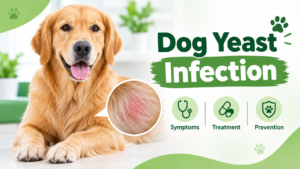

A dog yeast infection on skin is a common problem that can cause intense itching, redness, unpleasant odor, and discomfort. Many dogs develop yeast overgrowth in warm, moist areas such as the paws, ears, armpits, and skin folds. Although yeast naturally lives on a dog’s skin, certain conditions can allow it to multiply excessively and cause inflammation.
Pet owners can identify the issue early and seek the proper veterinary care if they are aware of the signs of a yeast infection in dogs. Antifungal drugs, mild skin care, and treating the underlying cause are typically used in treatment.
In order to keep your pet’s skin healthy, this guide explains the symptoms of dog yeast infections, common causes, available treatments, at-home care, and preventative measures.
What Is a Yeast Infection on a Dog’s Skin?
A dog skin yeast infection occurs when yeast organisms grow excessively on the skin. One of the most common organisms involved is Malassezia pachydermatis, a yeast that normally lives on many dogs without causing problems.
Healthy skin has natural defenses that help control yeast growth. However, allergies, moisture, skin damage, or hormonal disorders can disturb this balance. When yeast multiplies too much, it can trigger inflammation and a condition called yeast dermatitis.
Yeast infections are not the same as bacterial skin infections, although both can occur together. A veterinarian may need to examine skin samples to determine which organisms are involved.
Dog Yeast Infection Symptoms
Recognizing the signs of a yeast infection on a dog’s skin is important because many other skin conditions can look similar.
1. Persistent Itching
One of the most common symptoms is intense itching. Your dog may scratch, lick, chew, or rub affected areas repeatedly. Excessive scratching can damage the skin and increase the risk of secondary infections.
2. Redness and Inflammation
Affected skin may appear pink, red, or irritated. The redness is often visible on the belly, paws, groin, or under the front legs. Dogs with darker skin may show inflammation through changes in texture or increased pigmentation rather than obvious redness.
3. Greasy or Oily Skin
Yeast overgrowth can cause the skin to become greasy or oily. Some dogs develop a sticky residue on their coat, particularly around the neck, armpits, and skin folds.
4. Musty or Unpleasant Odor
A strong, musty, or sour smell is a common sign of yeast overgrowth. Owners may notice the odor even after bathing their dog. However, odor alone cannot confirm a yeast infection.
5. Hair Loss and Darkened Skin
Repeated itching and licking may cause hair thinning or bald patches. Chronic inflammation can also make the skin thicker and darker. These changes often take time to resolve after treatment begins.
6. Brown Staining on the Paws
Dogs with yeast-related paw irritation may lick their feet frequently. Saliva can stain light-colored fur brown or reddish-brown. This staining is not proof of yeast, but it can be a clue when combined with itching and inflammation.
7. Scaly Skin or Crusts
Some dogs develop flaky skin, crusting, or small bumps. These symptoms may also occur with allergies, mites, bacterial infections, or other skin diseases, so veterinary examination is important.
Where Do Yeast Infections Commonly Occur?
Yeast grows more easily in warm and moist environments. Common locations include:
- Paws and between the toes.
- Armpits and groin.
- Belly and skin folds.
- Around the neck.
- Face folds, especially in breeds with wrinkled skin.
Yeast can also affect the ears, where it may cause head shaking, scratching, odor, and dark ear discharge. Ear infections require separate examination and treatment.
What Causes Yeast Infections in Dogs?
A yeast infection usually develops because something allows yeast to grow more than normal. Identifying the underlying cause is essential for preventing repeated infections.
Allergies
Environmental allergies, food allergies, and flea allergy dermatitis can damage the skin barrier and cause persistent itching. Dogs that repeatedly scratch or lick their skin may be more vulnerable to yeast overgrowth.
Moisture and Humidity
Frequent swimming, wet fur, and inadequate drying can create a favorable environment for yeast. Moisture trapped in skin folds or between the toes can worsen irritation.
Skin Folds
Breeds with wrinkles or folds may be more prone to yeast dermatitis because air circulation is limited and moisture can become trapped.
Hormonal Disorders
Conditions such as hypothyroidism or Cushing’s disease may contribute to recurrent skin infections in some dogs. A veterinarian may investigate these problems when yeast infections are frequent or difficult to control.
Excessive Skin Oil
Some dogs naturally produce more skin oil, which can encourage yeast growth. Seborrhea and other skin disorders may also increase the risk of recurrent infections.
Medications and Other Skin Problems
Certain medications, including corticosteroids, can affect skin defenses. Damaged skin, bacterial infections, and other underlying conditions may also contribute.
How Is a Dog Yeast Infection Diagnosed?
A veterinarian usually begins with a physical examination and asks about itching, allergies, bathing, diet, and previous skin problems.
Skin cytology is one of the most helpful tests. A microscope is used to look for yeast and other organisms in a sample taken from the afflicted skin. This test can help differentiate between conditions that need different treatment and yeast overgrowth.
Further testing may be required in certain circumstances, particularly if the infection keeps coming back. Skin scrapings, bacterial testing, allergy assessments, and blood tests for suspected hormonal disorders are a few examples.
A correct diagnosis matters because treating the wrong condition may delay recovery.
Dog Yeast Infection Treatment
The best treatment depends on the severity of the infection, the affected area, and the underlying cause. A veterinarian may recommend topical antifungal products, oral medication, or both.
1. Medicated Antifungal Shampoos
Veterinary antifungal shampoos may contain ingredients such as chlorhexidine and miconazole or ketoconazole. These products can help reduce yeast on the skin and control inflammation.
Use only products appropriate for dogs and follow the veterinarian’s instructions. Medicated shampoos often need to remain on the coat for a specific amount of time before rinsing.
2. Antifungal Creams or Wipes
For localized infections, a veterinarian may recommend an antifungal cream, spray, or medicated wipe. These products can be useful for small affected areas, paws, or skin folds.
Avoid applying human antifungal creams without veterinary advice. Some products contain additional ingredients that may be unsafe if a dog licks them.
3. Oral Antifungal Medication
Severe, widespread, or recurrent infections may require prescription oral antifungal medication. Drugs such as itraconazole or fluconazole may be used in appropriate cases.
The veterinarian determines the medication, dosage, and duration based on the dog’s condition. Some oral antifungal medicines can cause side effects or affect the liver, so follow-up monitoring may be necessary.
4. Treating the Underlying Cause
If allergies, hormonal disease, or another skin problem is contributing to the infection, that condition must also be managed. Otherwise, the yeast may return after the initial treatment.
Home Care for Dogs With Yeast Infections
Home care can support veterinary treatment, but it should not replace diagnosis or prescription medication when needed.
Keep the Skin Dry
Dry your dog thoroughly after bathing or swimming. Pay special attention to the paws, skin folds, and other areas that remain damp.
Clean the Paws Gently
If your dog has dirty or irritated paws, rinse them with clean water and dry carefully. Avoid harsh soaps, excessive scrubbing, or frequent use of irritating products.
Prevent Excessive Licking
A protective collar or other veterinarian-approved method may help prevent your dog from damaging the skin through constant licking. Ask your veterinarian about the safest option.
Wash Bedding Regularly
Clean bedding can help reduce dirt and irritants that may worsen skin problems. Wash blankets and bedding regularly and allow them to dry completely.
Avoid Unverified Home Remedies
Apple cider vinegar, essential oils, baking soda, and other homemade treatments can irritate inflamed skin. Tea tree oil is particularly unsafe for dogs when improperly used. Do not apply these remedies to your dog’s skin without veterinary guidance.
How to Prevent Dog Yeast Infections
Prevention focuses on keeping the skin healthy and managing conditions that encourage yeast overgrowth.
- Manage allergies: Work with your veterinarian if your dog has ongoing itching or seasonal skin problems.
- Keep paws clean and dry: Dry between the toes after outdoor activities or bathing.
- Maintain regular grooming: Brush your dog’s coat and use a suitable bathing routine.
- Check skin folds: Inspect wrinkled areas for moisture, odor, or redness.
- Control fleas: Use a veterinarian-approved flea prevention plan.
- Feed a balanced diet: Provide complete and balanced nutrition appropriate for your dog’s age and health.
- Treat infections early: Seek veterinary advice when itching, odor, or skin changes persist.
How Long Does a Dog Yeast Infection Take to Heal?
Mild infections may improve after treatment begins, but complete recovery can take several weeks. More severe infections or those caused by an untreated allergy may take longer.
The skin may remain darker or thicker after the yeast has been controlled. Hair regrowth can also take time. Improvement in itching and odor is encouraging, but follow-up testing may be needed to confirm that the infection has resolved.
Never stop prescribed treatment early just because the skin looks better. Follow your veterinarian’s instructions to reduce the risk of recurrence.
When Should You See a Veterinarian?
Contact your veterinarian if your dog has persistent itching, a strong skin odor, redness, hair loss, or recurring skin infections. Prompt examination is especially important when the skin is painful, bleeding, or developing open sores.
Seek urgent veterinary care if your dog has severe pain, facial swelling, breathing difficulty, widespread blistering, or sudden worsening of its condition.
Puppies, senior dogs, and dogs with other medical conditions may need prompt evaluation because skin problems can become more complicated.
Frequently Asked Questions
Can a dog yeast infection go away on its own?
Some mild skin irritation may improve without treatment, but a confirmed yeast infection often needs veterinary care. Without addressing the underlying cause, it may persist or return.
Is a yeast infection on a dog’s skin contagious to humans?
The common yeast associated with canine skin infections is generally an opportunistic organism rather than a typical contagious infection between healthy dogs and humans. People with weakened immune systems should take extra precautions and consult a healthcare professional if concerned.
Can I use human antifungal cream on my dog?
Do not use human antifungal medication without veterinary advice. Some products may be unsuitable for dogs, and licking topical products can cause problems.
Does bathing help a dog yeast infection?
Veterinary medicated shampoos can help reduce yeast on the skin. Ordinary bathing alone may not treat the infection and excessive bathing can worsen irritation.
Why does my dog’s yeast infection keep coming back?
Recurring infections may be linked to allergies, moisture, skin folds, hormonal disease, or incomplete treatment. Your veterinarian can investigate the cause and recommend a long-term management plan.
Final Thoughts
Dog yeast infection on skin can cause itching, redness, odor, greasy fur, and darkened skin. Although yeast normally lives on a dog’s body, excessive growth may lead to uncomfortable dermatitis.
The most effective approach is to identify the infection, use appropriate veterinary antifungal treatment, and manage the underlying cause. Good grooming, dry skin folds, regular flea prevention, and early veterinary attention can help reduce recurrence.
If your dog has persistent itching or a musty skin odor, arrange a veterinary examination rather than relying only on home remedies. With proper care, most dogs can recover and maintain healthier skin.