
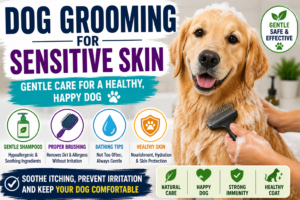

Dogs with sensitive skin require extra care during grooming. While regular grooming is essential for maintaining a clean coat and healthy skin, using the wrong products or techniques can lead to irritation, dryness, itching, and discomfort. If your dog frequently scratches, develops red patches, or has flaky skin after grooming, it’s time to adjust your grooming routine.
This comprehensive guide explains everything you need to know about dog grooming for sensitive skin, including how to choose the right shampoo, proper brushing methods, bathing frequency, and tips to keep your dog’s skin healthy year-round.
Why Some Dogs Have Sensitive Skin
Sensitive skin can develop due to various reasons, including:
- Environmental allergies
- Food allergies
- Flea allergy dermatitis
- Dry weather
- Frequent bathing
- Harsh grooming products
- Skin infections
- Genetics
Breeds like Bulldogs, Boxers, West Highland White Terriers, Golden Retrievers, and Labrador Retrievers may be more prone to skin sensitivities.
Signs Your Dog Has Sensitive Skin
Watch for these common symptoms:
- Constant scratching
- Red or inflamed skin
- Dry, flaky skin
- Hair loss
- Hot spots
- Excessive licking
- Unpleasant skin odor
- Small bumps or rashes
If these symptoms persist, consult your veterinarian to rule out infections or allergies.
Benefits of Proper Grooming for Sensitive Skin
Gentle grooming helps:
- Remove dirt and allergens
- Reduce shedding
- Prevent matting
- Improve blood circulation
- Spread natural skin oils
- Detect skin problems early
- Keep the coat soft and healthy
A proper grooming routine can also reduce discomfort and improve your dog’s overall quality of life.
Choose the Right Shampoo
The shampoo you use plays a major role in protecting sensitive skin.
Look for shampoos that contain:
- Oatmeal
- Aloe vera
- Chamomile
- Coconut-based cleansers
- Vitamin E
- Colloidal oatmeal
Avoid products containing:
- Artificial fragrances
- Alcohol
- Sulfates
- Parabens
- Harsh dyes
Hypoallergenic shampoos are often the safest choice for dogs with sensitive skin.
Brush Gently
Regular brushing removes loose hair, dirt, and debris while distributing natural oils throughout the coat.
Choose the correct brush for your dog’s coat type:
- Soft-bristle brush for short coats
- Slicker brush for medium coats
- Pin brush for long-haired breeds
Brush slowly and avoid pulling on tangled fur to prevent skin irritation.
Bathe Only When Necessary
Overbathing strips the skin of its natural protective oils.
Most dogs with sensitive skin only need a bath every 4–8 weeks, unless your veterinarian recommends otherwise.
Always use lukewarm water, as hot water can dry out and irritate the skin.
Dry the Coat Carefully
After bathing:
- Pat the coat dry with a soft towel.
- Avoid vigorous rubbing.
- If using a blow dryer, choose the lowest heat setting and keep it at a safe distance from the skin.
Moisture trapped in the coat can contribute to skin irritation, so ensure your dog is completely dry.
Trim Nails Regularly
Long nails can affect posture and make walking uncomfortable. Dogs that scratch frequently because of itchy skin can also injure themselves with overgrown nails.
Trim nails every 3–4 weeks or as needed using dog-specific nail clippers.
Clean the Ears Gently
Sensitive-skinned dogs may also have sensitive ears.
Check your dog’s ears weekly for:
- Redness
- Wax buildup
- Bad odor
- Swelling
Use only veterinarian-approved ear cleaners and avoid inserting cotton swabs into the ear canal.
Moisturize Your Dog’s Skin
Dogs with sensitive skin often benefit from extra moisture after grooming. Healthy skin is less likely to become itchy, flaky, or irritated.
Safe ways to keep your dog’s skin moisturized include:
- Use a veterinarian-approved moisturizing spray.
- Apply a leave-in conditioner made specifically for dogs.
- Choose shampoos that contain oatmeal, aloe vera, or vitamin E.
- Keep your dog well hydrated by providing fresh water at all times.
Avoid using human lotions or moisturizers, as many contain ingredients that are unsafe for dogs.
Feed a Skin-Healthy Diet
A balanced diet plays an important role in maintaining healthy skin and a shiny coat.
Foods That Support Healthy Skin
- High-quality protein
- Salmon
- Sardines
- Eggs
- Pumpkin
- Sweet potatoes
- Blueberries
- Carrots
- Spinach
These foods provide vitamins, minerals, and antioxidants that support skin health.
Omega-3 Fatty Acids
Omega-3 fatty acids help reduce inflammation and may improve dry or itchy skin.
Good sources include:
- Fish oil
- Salmon oil
- Flaxseed oil (only if recommended by your veterinarian)
Always consult your veterinarian before adding supplements to your dog’s diet.
Natural Grooming Tips for Sensitive Skin
Natural care can complement regular grooming.
Oatmeal Baths
Colloidal oatmeal helps soothe itchy and inflamed skin. Many veterinarian-approved dog shampoos already contain oatmeal.
Aloe Vera
Pure aloe vera products formulated for dogs may help calm irritated skin. Avoid products containing alcohol or added fragrances.
Coconut Oil
A small amount of coconut oil may help moisturize dry skin in some dogs. Apply sparingly and consult your veterinarian if your dog has allergies or oily skin.
Grooming Schedule for Dogs with Sensitive Skin
A consistent routine helps prevent irritation.
Daily
- Check for redness or bumps.
- Remove dirt after walks.
- Wipe paws if they contact grass or mud.
Weekly
- Brush the coat thoroughly.
- Clean ears if necessary.
- Inspect for fleas or ticks.
Every 4–8 Weeks
- Bathe using a gentle, hypoallergenic shampoo.
- Trim nails.
- Check the condition of the skin and coat.
Adjust the schedule based on your dog’s breed, activity level, and veterinarian’s advice.
Common Grooming Mistakes to Avoid
Many skin problems are caused by simple grooming errors.
Using Human Shampoo
Human shampoos have a different pH balance and can dry out a dog’s skin.
Bathing Too Often
Frequent bathing removes natural oils that protect the skin.
Brushing Too Hard
Aggressive brushing can cause redness, scratches, and irritation.
Ignoring Skin Problems
Persistent itching, sores, or hair loss should never be ignored. Early treatment often prevents more serious skin conditions.
Using Strong Fragrances
Artificial fragrances and harsh chemicals may trigger allergic reactions in sensitive dogs.
Seasonal Grooming Tips
Spring
- Brush more frequently during shedding season.
- Watch for pollen allergies.
Summer
- Bathe after swimming if recommended by your veterinarian.
- Check for fleas and ticks after outdoor activities.
- Avoid shaving double-coated breeds unless advised by a professional.
Autumn
- Remove leaves and debris from the coat.
- Continue flea prevention.
Winter
- Moisturize dry skin.
- Bathe less frequently if possible.
- Dry the coat completely after walks in rain or snow.
When Should You Visit a Veterinarian?
Seek veterinary care if your dog experiences:
- Severe itching
- Bleeding skin
- Open sores
- Persistent hair loss
- Bad skin odor
- Swelling
- Pus or discharge
- Frequent ear infections
These symptoms may indicate allergies, parasites, bacterial infections, fungal infections, or other medical conditions that require professional treatment.
Frequently Asked Questions (FAQs)
How often should I groom a dog with sensitive skin?
Most dogs with sensitive skin benefit from brushing several times a week and bathing every 4–8 weeks using a gentle, hypoallergenic shampoo. Your veterinarian may recommend a different schedule depending on your dog’s condition.
What is the best shampoo for dogs with sensitive skin?
Look for shampoos containing:
- Colloidal oatmeal
- Aloe vera
- Vitamin E
- Chamomile
Choose products that are fragrance-free and specifically labeled for dogs with sensitive skin.
Can grooming help reduce itching?
Yes. Proper grooming removes allergens, dirt, loose hair, and excess oils while improving skin health, which can reduce itching when combined with appropriate veterinary care.
Should I shave my dog if it has skin allergies?
Not necessarily. Shaving is not suitable for every breed and may expose the skin to sunburn or irritation. Always seek advice from a veterinarian or professional groomer before shaving your dog.
Can diet improve my dog’s skin?
Yes. A balanced diet rich in quality protein, omega-3 fatty acids, vitamins, and minerals supports healthy skin and coat condition.
Final Thoughts
Proper dog grooming for sensitive skin requires gentle products, consistent care, and attention to your dog’s individual needs. Using a hypoallergenic shampoo, brushing carefully, feeding a nutritious diet, and avoiding harsh grooming practices can significantly improve skin comfort and coat health.
Regular grooming also helps you detect skin problems early, allowing prompt treatment before they become more serious. If your dog’s skin irritation continues despite good grooming habits, consult your veterinarian for a thorough evaluation and personalized treatment plan.
With patience and the right routine, your dog can enjoy healthier skin, a softer coat, and a happier, more comfortable life.