
Introduction
Acne is one of the most common skin problems affecting teenagers and adults worldwide. Whether you’re dealing with painful cystic acne, stubborn blackheads, or red pimples, finding an effective solution can feel overwhelming.
Many people search for ways to remove acne in just a few days. While no treatment can guarantee completely clear skin within two weeks, the right skincare routine combined with proven acne-fighting ingredients can significantly reduce breakouts, redness, and inflammation.
In this guide, you’ll discover five dermatologist-recommended products, how to use them correctly, lifestyle habits that speed healing, and mistakes to avoid.
Why Does Acne Happen?
Understanding the cause of acne helps you choose the right treatment.
Common causes include:
- Excess oil production
- Clogged pores
- Acne-causing bacteria
- Hormonal changes
- Stress
- Poor skincare routine
- Heavy makeup
- High-glycemic foods in some people
The good news is that these causes can often be managed with consistent skincare.
Can Acne Improve in Just 2 Weeks?
Yes—but with realistic expectations.
Within two weeks, many people notice:
- Reduced redness
- Smaller pimples
- Less inflammation
- Fewer new breakouts
- Smoother-looking skin
However:
- Deep cystic acne usually takes 6–12 weeks.
- Acne scars need longer treatment.
- Hormonal acne may require prescription medications.
Consistency is the key.
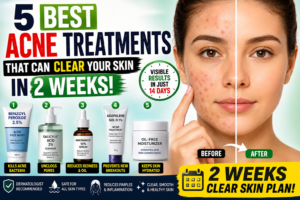
Product #1: Benzoyl Peroxide Face Wash
Why It Works
Benzoyl peroxide is considered one of the most effective over-the-counter acne treatments.
It works by:
- Killing acne-causing bacteria
- Reducing inflammation
- Clearing clogged pores
- Preventing new pimples
Best Strength
Beginners should start with:
2.5% Benzoyl Peroxide
Higher strengths aren’t always more effective and may increase irritation.
How to Use
- Wash your face once daily.
- Leave it on for about one minute.
- Rinse thoroughly.
- Follow with a moisturizer.
Pros
- Fast results
- Affordable
- Reduces inflamed acne
- Prevents new breakouts
Possible Side Effects
- Dryness
- Peeling
- Mild redness
- Bleaching of towels and pillowcases
Product #2: Salicylic Acid Cleanser
Why Dermatologists Recommend It
Salicylic acid is oil-soluble, allowing it to penetrate deep inside pores.
It helps:
- Remove excess oil
- Dissolve dead skin cells
- Prevent blackheads
- Reduce whiteheads
Best Concentration
Choose:
2% Salicylic Acid
This concentration is widely recommended for acne-prone skin.
How to Apply
- Wash twice daily.
- Massage gently for 30 seconds.
- Rinse with lukewarm water.
- Avoid scrubbing.
Benefits
✔ Deep pore cleansing
✔ Controls oil
✔ Prevents future acne
✔ Smooths rough skin
Product #3: Niacinamide Serum (10%)
Niacinamide has become one of the most popular skincare ingredients—and for good reason.
Benefits
It helps:
- Reduce redness
- Calm inflammation
- Control excess oil
- Improve skin barrier
- Fade post-acne marks over time
Unlike stronger acne medications, niacinamide is suitable for most skin types.
How to Use
Morning:
- Cleanser
- Niacinamide serum
- Moisturizer
- Sunscreen
Night:
- Cleanser
- Niacinamide
- Moisturizer
Why People Love It
- Gentle
- Lightweight
- Easy to layer with other products
- Suitable for oily skin
Product #4: Adapalene Gel (Retinoid)
The Gold Standard for Acne
Adapalene is an over-the-counter retinoid recommended by many dermatologists.
It works by:
- Preventing clogged pores
- Speeding skin cell turnover
- Reducing inflammation
- Preventing future breakouts
How to Use
Week 1
Apply only two nights weekly.
Week 2
Increase to every other night if your skin tolerates it.
Important Tips
Always:
- Apply on dry skin
- Use a pea-sized amount
- Follow with moisturizer
Avoid:
- Using multiple exfoliants simultaneously
- Applying around the eyes
- Overusing the product
Common Side Effects
Temporary:
- Dryness
- Peeling
- Mild irritation
These usually improve after a few weeks.
Product #5: Lightweight Non-Comedogenic Moisturizer
Many people skip moisturizer because they think it causes acne.
Actually, dehydrated skin often produces even more oil.
Choose a moisturizer labeled:
- Oil-free
- Non-comedogenic
- Fragrance-free
Benefits
- Repairs the skin barrier
- Reduces irritation
- Improves tolerance to acne medications
- Prevents excessive dryness
The Best Morning Acne Routine
- Salicylic Acid Cleanser
- Niacinamide Serum
- Oil-Free Moisturizer
- SPF 30+ Sunscreen
This routine helps control oil while protecting your skin from UV damage, which can worsen acne marks.
The Best Night Routine
- Gentle Cleanser
- Adapalene Gel (or Benzoyl Peroxide on alternate nights)
- Moisturizer
Avoid layering strong active ingredients together unless your skin tolerates them well.
Tips to Speed Up Acne Improvement
- Wash your face twice daily.
- Avoid picking or squeezing pimples.
- Change pillowcases regularly.
- Clean your phone screen.
- Remove makeup before bed.
- Use non-comedogenic skincare and cosmetics.
- Stay hydrated and get enough sleep.
10 Common Mistakes That Can Make Acne Worse
Even the best acne products won’t work well if you’re making skincare mistakes. Avoid these common habits to help your skin heal faster.
1. Popping or Squeezing Pimples
Popping pimples pushes bacteria and oil deeper into the skin. This can cause:
- More inflammation
- Acne scars
- Dark spots
- Longer healing time
Instead, use a spot treatment and let the pimple heal naturally.
2. Washing Your Face Too Often
Many people believe washing their face several times a day removes acne faster.
In reality, over-cleansing strips away natural oils, causing irritation and sometimes even more oil production.
Best practice: Wash your face twice a day—morning and night.
3. Skipping Moisturizer
Acne medications like benzoyl peroxide and adapalene can dry out the skin. Skipping moisturizer may weaken your skin barrier and increase irritation.
Choose a lightweight, oil-free, non-comedogenic moisturizer every day.
4. Using Too Many Acne Products Together
Using several strong products at the same time can lead to:
- Redness
- Burning
- Peeling
- Skin sensitivity
Introduce one active ingredient at a time and build your routine gradually.
5. Sleeping with Makeup On
Makeup, dirt, and oil can clog pores overnight.
Always remove makeup before going to bed using a gentle cleanser.
6. Touching Your Face Frequently
Your hands carry bacteria and dirt that can transfer to your skin.
Avoid resting your face on your hands or picking at blemishes.
7. Ignoring Sunscreen
Sun exposure can make acne marks darker and increase skin irritation, especially if you’re using retinoids.
Use a broad-spectrum sunscreen with SPF 30 or higher every morning.
8. Not Cleaning Pillowcases
Oil, sweat, and bacteria build up on pillowcases over time.
Change your pillowcase every 2–3 days if you have acne-prone skin.
9. Using Heavy Hair Products
Hair oils and styling products can transfer onto your forehead and clog pores, causing “pomade acne.”
Keep oily hair products away from your face.
10. Expecting Overnight Results
Most effective acne treatments need time.
While some redness and swelling may improve within two weeks, noticeable clearing often takes 6–12 weeks with consistent use.
Foods That May Help Reduce Acne
Although diet isn’t the sole cause of acne, certain foods may support healthier skin.
Fatty Fish
Salmon, sardines, and mackerel are rich in omega-3 fatty acids that may help reduce inflammation.
Fruits and Vegetables
Colorful produce provides vitamins, antioxidants, and fiber that support skin health.
Good choices include:
- Blueberries
- Spinach
- Carrots
- Tomatoes
- Bell peppers
Nuts and Seeds
Walnuts, almonds, sunflower seeds, and chia seeds contain healthy fats and nutrients that support the skin barrier.
Green Tea
Green tea contains antioxidants that may help reduce inflammation and support healthy skin.
Whole Grains
Brown rice, oats, and whole wheat provide steady energy and may help reduce blood sugar spikes.
Water
Staying hydrated supports overall skin function.
Aim for enough water throughout the day based on your activity level and climate.
Foods That May Trigger Acne in Some People
Research suggests some people notice more breakouts after eating certain foods, though responses vary.
These may include:
- Sugary drinks
- Candy
- White bread
- Pastries
- Highly processed snacks
- Excessive fast food
Some individuals also notice breakouts with dairy products, but this varies from person to person.
Keeping a food diary may help identify personal triggers.
Your 2-Week Acne Improvement Plan
Days 1–3
- Start using a salicylic acid cleanser.
- Apply moisturizer twice daily.
- Wear sunscreen every morning.
Goal:
Reduce excess oil and begin protecting the skin barrier.
Days 4–7
- Add niacinamide serum.
- Begin adapalene two nights per week.
- Avoid touching or picking your face.
Goal:
Calm inflammation and start preventing clogged pores.
Days 8–10
- Continue your routine consistently.
- Drink enough water.
- Replace your pillowcase.
- Clean your phone screen.
Goal:
Maintain healthy habits and reduce exposure to acne-causing bacteria.
Days 11–14
- Continue your skincare routine without skipping days.
- Monitor your skin for improvements.
- Avoid introducing new products unless necessary.
Expected Improvements
You may notice:
- Less redness
- Smaller pimples
- Reduced oiliness
- Fewer new breakouts
- Smoother skin texture
Deep acne and acne scars usually require more time and, in some cases, professional treatment.
Frequently Asked Questions (FAQ)
Can acne disappear in 2 weeks?
Mild acne may improve noticeably within two weeks with consistent skincare. Moderate to severe acne often takes several weeks or months to improve.
Which acne ingredient works the fastest?
Benzoyl peroxide often reduces inflamed pimples quickly by targeting acne-causing bacteria.
Is salicylic acid or benzoyl peroxide better?
- Salicylic acid is excellent for blackheads, whiteheads, and oily skin.
- Benzoyl peroxide is especially effective for inflamed pimples.
Many people use both on alternating days if their skin tolerates it.
Should I moisturize if I have oily skin?
Yes. A lightweight, oil-free moisturizer helps maintain the skin barrier and may prevent excess oil production caused by dryness.
When should I see a dermatologist?
Seek medical advice if:
- You have painful cystic acne.
- Acne leaves scars.
- Over-the-counter products don’t help after 8–12 weeks.
- Acne is affecting your confidence or daily life.
Final Thoughts
Acne can be frustrating, but improving your skin usually comes down to patience and consistency rather than trying many products at once.
A simple routine with proven ingredients—such as salicylic acid, benzoyl peroxide, niacinamide, adapalene, a non-comedogenic moisturizer, and daily sunscreen—can help reduce breakouts over time.
While you may notice visible improvements within two weeks, complete acne clearance often takes longer. Stick to your routine, avoid common mistakes, and remember that healthy skin is built through consistent care rather than quick fixes.