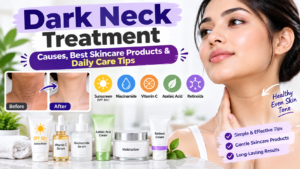

Dark Neck Treatment: Causes, Best Skincare Products & Daily Care Tips
A dark neck is a common skin concern that can make the skin around the neck appear uneven, dull, or darker than the face. It may develop because of sun exposure, friction, dryness, irritation, hormonal changes, or an underlying health condition. In some cases, the skin becomes darker and thicker with a soft or velvety texture.
The good news is that regular skincare and lifestyle adjustments can alleviate a number of the causes of dark neck skin. However, the cause of the discoloration will determine the best course of action. Strong bleaching agents, harsh scrubs, and natural remedies like lemon juice can aggravate pigmentation and cause skin irritation.
This guide explains the common causes of a dark neck, effective skincare ingredients, daily care tips, and when professional treatment may be necessary.
What Causes a Dark Neck?
Dark neck skin can develop for several reasons. Identifying the cause is the first step toward choosing the right treatment.
1. Sun Exposure
The neck is often exposed to sunlight but may receive less sunscreen than the face. Ultraviolet radiation can stimulate melanin production, leading to tanning, uneven pigmentation, and dark patches.
Repeated sun exposure may also make existing pigmentation more noticeable. Daily broad-spectrum sunscreen is therefore one of the most important steps in dark neck treatment.
2. Friction and Irritation
Tight collars, necklaces, scarves, and repeated rubbing can irritate the delicate skin around the neck. This irritation may trigger post-inflammatory hyperpigmentation, especially in people with medium to deep skin tones.
Frequent shaving, waxing, strong perfumes, and fragranced body products may also cause irritation and discoloration.
3. Dry Skin and Product Buildup
Dryness can make the neck appear rough, dull, and darker. Sweat, dead skin cells, body oils, and heavy product buildup may also create an uneven appearance.
However, dark skin around the neck is not always caused by dirt. Scrubbing aggressively can damage the skin barrier and increase pigmentation.
4. Acanthosis Nigricans
Acanthosis nigricans is a skin condition that causes darker, thicker, velvety skin, commonly around the neck, armpits, and groin. It may be associated with insulin resistance, prediabetes, type 2 diabetes, hormonal conditions, or certain medications.
If the neck becomes noticeably thicker, velvety, or darker without an obvious skincare cause, consult a healthcare professional. Treating the underlying condition is often more effective than using cosmetic creams alone.
5. Hormonal Changes
Hormonal changes during pregnancy, puberty, or certain medical conditions can contribute to pigmentation. Conditions such as polycystic ovary syndrome may also be associated with insulin resistance and dark, thickened skin.
Hormonal pigmentation should be assessed according to the person’s symptoms and medical history.
6. Eczema or Other Skin Inflammation
Eczema, allergic reactions, fungal infections, and other inflammatory skin conditions may leave dark marks after the irritation improves. This is called post-inflammatory hyperpigmentation.
The skin may first become itchy, red, flaky, or irritated before the darker area appears.
Best Skincare Products for Dark Neck Treatment
The best products depend on the cause and sensitivity of your skin. Start with gentle formulas and introduce one active ingredient at a time.
1. Broad-Spectrum Sunscreen
Sunscreen is essential for preventing further darkening. Choose a broad-spectrum SPF 30 or higher, preferably SPF 50 if the neck receives regular sun exposure.
Apply sunscreen to:
- The front and sides of the neck
- The back of the neck
- The upper chest
- The ears, if exposed
Reapply every two hours when outdoors or after sweating. A lightweight sunscreen that does not feel sticky is more likely to be used consistently.
2. Niacinamide
Niacinamide, also known as vitamin B3, is a useful ingredient for uneven skin tone. It may help support the skin barrier, reduce the appearance of discoloration, and improve overall skin texture.
A product containing approximately 2% to 5% niacinamide is often a good starting point for sensitive skin. Apply it after cleansing and before moisturizer.
3. Vitamin C
Vitamin C is an antioxidant that can help brighten the appearance of dull skin and support protection against environmental stress. It may also help reduce the appearance of uneven pigmentation over time.
Choose a gentle vitamin C serum and apply it in the morning. If your skin is sensitive, begin with a lower-strength formula and use it only a few times per week.
4. Azelaic Acid
Azelaic acid may help improve uneven pigmentation and is often useful for skin that is prone to acne, redness, or inflammation. It can also help reduce the appearance of dark marks left after irritation.
A low-strength product may be used a few nights per week before gradually increasing frequency. Stop or reduce use if burning, redness, or peeling develops.
5. Alpha Hydroxy Acids
Lactic acid and glycolic acid are alpha hydroxy acids, or AHAs, that exfoliate the surface of the skin. They may improve rough texture and help fade superficial discoloration.
Lactic acid is often more suitable for dry or sensitive skin, while glycolic acid can be stronger. Use an AHA product only one or two nights per week at first, and always follow with moisturizer and sunscreen.
Avoid applying strong exfoliating acids to irritated, recently shaved, or broken skin.
6. Retinoids
Retinoids, such as retinol, can support skin renewal and may gradually improve uneven pigmentation and texture. They can be helpful when dark neck skin is related to sun damage or post-inflammatory marks.
Retinol should be introduced slowly, usually one or two nights per week. Apply a small amount to completely dry skin, followed by moisturizer.
Retinoids may cause dryness and irritation. They are generally not recommended during pregnancy unless specifically approved by a healthcare professional.
7. Tranexamic Acid
Some pigmentation serums use tranexamic acid to target the appearance of uneven skin tone and stubborn dark spots. When pigmentation is persistent, it might be beneficial, but the effects take time.
Use it according to the product instructions and avoid combining too many strong active ingredients at the same time.
A Simple Daily Routine for Dark Neck
A consistent routine is usually more helpful than using many products.
Morning Routine
- Wash the neck with a gentle cleanser.
- Apply a niacinamide or vitamin C serum if tolerated.
- Use a fragrance-free moisturizer.
- Apply broad-spectrum SPF 30 or SPF 50 sunscreen.
- Cover the neck with clothing or a scarf when spending long periods outdoors.
Night Routine
- Cleanse gently to remove sweat, sunscreen, and dirt.
- Apply one treatment product, such as azelaic acid or a mild retinol.
- Use a nourishing moisturizer.
- Avoid rubbing, scratching, or aggressively exfoliating the area.
Do not start vitamin C, retinol, glycolic acid, and other active ingredients all at once. Introducing several products together can cause irritation and make the neck darker.
Home Care Tips for a Dark Neck
Keep the Skin Moisturized
A moisturizer containing ceramides, glycerin, hyaluronic acid, or shea butter can help reduce dryness and support the skin barrier.
Avoid Harsh Scrubbing
Do not use rough loofahs, abrasive scrubs, pumice stones, or stiff brushes on the neck. These methods may cause tiny injuries and worsen pigmentation.
Reduce Friction
Choose comfortable clothing and avoid tight collars or accessories that repeatedly rub against the skin.
Use Gentle Fragrance-Free Products
Perfumes, deodorants, and fragranced creams may cause irritation in sensitive skin. Apply fragrance directly to clothing instead of the neck if you notice redness or itching.
Maintain a Healthy Lifestyle
If dark neck skin is related to insulin resistance, weight changes, or a metabolic condition, healthy eating, regular physical activity, adequate sleep, and medical guidance may help improve the underlying cause.
Avoid Lemon Juice and Bleaching Remedies
Lemon juice, baking soda, toothpaste, and unregulated whitening creams can cause burns, irritation, or increased pigmentation. Avoid products containing undisclosed steroids, mercury, or strong bleaching agents.
How Long Does Dark Neck Treatment Take?
Mild tanning or superficial pigmentation may begin to improve within several weeks, but noticeable results often require two to three months or longer. Deeper pigmentation, post-inflammatory marks, and acanthosis nigricans may take much longer.
Progress depends on:
- The underlying cause
- Skin sensitivity
- Consistency with sunscreen
- The treatment ingredients used
- Whether irritation continues
- Any untreated medical condition
Take a photo once every few weeks in similar lighting to track gradual changes instead of checking the skin every day.
When Should You See a Dermatologist?
Consult a dermatologist if:
- The neck becomes thick, velvety, or suddenly darker.
- Darkening also appears in the armpits or groin.
- The pigmentation develops quickly.
- There is itching, scaling, pain, or a rash.
- Over-the-counter products cause burning or peeling.
- The discoloration does not improve after consistent care.
- You have symptoms such as increased thirst, frequent urination, unexplained weight changes, or irregular periods.
A dermatologist may recommend prescription creams, chemical peels, laser treatment, or medical testing depending on the cause. If acanthosis nigricans is suspected, a doctor may assess blood glucose, insulin resistance, or other related health factors.
Frequently Asked Questions
Can dark neck skin be removed naturally?
Some mild discoloration may improve with gentle cleansing, moisturizing, sun protection, and lifestyle changes. Natural remedies are not always safe, and lemon juice or baking soda should be avoided because they can irritate the skin.
Is dark neck caused by poor hygiene?
Not always. A dark neck can result from sun exposure, friction, inflammation, hormonal changes, or acanthosis nigricans. Scrubbing harder is not an appropriate treatment.
Which ingredient is best for a dark neck?
Niacinamide, azelaic acid, vitamin C, mild AHAs, and retinol may help depending on the cause. Sunscreen is essential because treatment products cannot work well if the skin continues to receive excessive UV exposure.
Can moisturizer lighten a dark neck?
Moisturizer does not directly bleach pigmentation, but it can improve dryness, roughness, and irritation. A healthy skin barrier may also help reduce the risk of additional discoloration.
Is glycolic acid safe for the neck?
Glycolic acid can be effective but may irritate the neck, especially at high strengths. Start with a low-strength product once weekly, avoid damaged skin, and stop if burning or persistent redness occurs.
Final Thoughts
Dark neck skin can develop for many reasons, including sun exposure, friction, dryness, irritation, hormonal changes, and medical conditions such as acanthosis nigricans. The most effective approach is to identify the cause, use gentle skincare, apply sunscreen daily, and avoid harsh home remedies.
For mild pigmentation, ingredients such as niacinamide, azelaic acid, vitamin C, and carefully used exfoliating acids may help improve the appearance over time. If the skin becomes thick, velvety, itchy, or suddenly darker, professional medical evaluation is important. Consistency and patience are key to achieving a more even-looking neck.