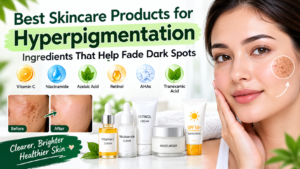

Best Skincare Products for Hyperpigmentation: Ingredients That Help Fade Dark Spots
Common skincare issues include uneven skin tone, dark spots, and acne scars. Acne, sun exposure, hormonal changes, and skin irritation can all cause hyperpigmentation. Dark spots can affect your confidence and take months to go away, even though they are typically harmless.
The good news is that the right skincare products can help improve hyperpigmentation over time. Ingredients such as niacinamide, vitamin C, azelaic acid, retinoids, and alpha hydroxy acids are popular choices for improving skin tone. However, not every product works equally well for every skin type.
This guide explains the best skincare products for hyperpigmentation, the ingredients that help fade dark spots, how to build an effective routine, and when to consult a dermatologist.
What Is Hyperpigmentation?
Hyperpigmentation occurs when certain areas of the skin produce more melanin, the pigment responsible for skin color. This extra pigment creates darker patches or spots compared with the surrounding skin.
Common types of hyperpigmentation include:
- Post-inflammatory hyperpigmentation: Dark marks left behind after acne, cuts, burns, or skin inflammation.
- Sunspots: Brown or grayish spots caused by long-term ultraviolet exposure.
- Melasma: Patchy brown or gray pigmentation, often appearing on the cheeks, forehead, upper lip, or nose.
- Post-acne marks: Dark spots that remain after pimples heal.
The best treatment depends on the cause, your skin type, and how deeply the pigment is located in the skin.
Best Skincare Ingredients for Fading Dark Spots
1. Niacinamide
Niacinamide, also known as vitamin B3, is one of the most useful ingredients for uneven skin tone. It helps reduce the transfer of melanin into skin cells and can improve the appearance of dark spots with consistent use.
Niacinamide also supports the skin barrier, helps reduce excess oil, and may calm redness. These benefits make it a good choice for oily, combination, acne-prone, and sensitive skin.
A product containing 2% to 5% niacinamide is a practical starting point. Higher concentrations are not necessarily more effective and may irritate some people.
Best for: Post-acne marks, uneven tone, oily skin, and beginners.
2. Vitamin C
Vitamin C is a popular brightening ingredient found in serums, moisturizers, and some sunscreens. It acts as an antioxidant, helping protect skin from oxidative stress caused by environmental exposure. It can also interfere with melanin production, making it useful for improving the appearance of dark spots.
L-ascorbic acid is a well-studied form of vitamin C, although it can be irritating for sensitive skin. Derivatives such as magnesium ascorbyl phosphate and sodium ascorbyl phosphate may be gentler.
Apply vitamin C in the morning before moisturizer and sunscreen. Start slowly if you have sensitive skin, and avoid combining multiple strong products at once.
Best for: Dull skin, sun-related pigmentation, and uneven complexion.
3. Azelaic Acid
Azelaic acid is particularly helpful for those with hyperpigmentation and acne. It helps lessen aberrant pigment production and has anti-inflammatory qualities. Additionally, it can help manage acne, potentially preventing the formation of new dark marks.
Products commonly contain 10% azelaic acid, while stronger concentrations may be prescribed by a dermatologist.
Start with a small amount a few times per week, then increase as tolerated. Mild tingling can occur, but persistent burning or severe irritation is a reason to stop using the product.
Best for: Acne marks, blemish-prone skin, redness, and uneven skin tone.
4. Retinoids
Retinoids, including retinol, retinal, and prescription tretinoin, help improve skin cell turnover and can gradually reduce the appearance of pigmentation. They are also useful for acne, fine lines, and uneven skin texture.
Retinol is available in many over-the-counter serums and creams. Prescription retinoids are stronger and should be used according to a healthcare professional’s advice.
Begin with a low-strength product two or three nights per week. Apply a moisturizer to reduce dryness, and use sunscreen every morning. Avoid applying retinoids to irritated or damaged skin.
Retinoids can take several weeks to show improvement, and early irritation may make dark marks worse in some people.
Best for: Post-acne hyperpigmentation, acne prevention, and skin texture.
5. Alpha Hydroxy Acids
Alpha hydroxy acids, or AHAs, are exfoliating ingredients that help remove dead skin cells from the surface. Glycolic acid and lactic acid are commonly used in skincare products.
Glycolic acid can improve skin texture and the appearance of superficial dark spots. Lactic acid is often preferred by people who want a gentler exfoliating option.
Use an AHA product one or two times per week at first. Avoid over-exfoliating, especially if you are already using retinoids, benzoyl peroxide, or other active ingredients.
Best for: Rough texture, dullness, and superficial pigmentation.
6. Tranexamic Acid
Tranexamic acid is an ingredient used in some topical brightening serums and creams. It may help reduce the appearance of persistent pigmentation by affecting pathways involved in melanin production.
It is particularly popular in products designed for melasma and stubborn dark spots. Results vary, and it should not be considered a guaranteed treatment.
Choose a well-formulated product from a reputable skincare brand. If pigmentation is widespread or keeps returning, professional assessment may be more helpful than adding more products.
Best for: Persistent dark spots and uneven pigmentation.
7. Kojic Acid
Kojic acid is derived from certain fungi and is used in brightening soaps, serums, and creams. It can help reduce melanin production and improve the appearance of hyperpigmentation.
However, it may cause irritation or allergic contact dermatitis in some people. Kojic acid soaps can also be drying because they are often used as cleansers.
A leave-on product with a carefully formulated concentration may be preferable to harsh brightening soaps. Patch test before regular use.
Best for: Small areas of pigmentation and people who tolerate brightening ingredients well.
Best Skincare Products for Hyperpigmentation by Skin Type
For oily and acne-prone skin
Choose lightweight, non-comedogenic products such as a gentle cleanser, niacinamide serum, azelaic acid treatment, and oil-free moisturizer. A retinoid may be helpful if acne is contributing to dark marks.
Avoid scrubbing, harsh soaps, and excessive exfoliation because irritation can trigger more pigmentation.
For dry and sensitive skin
Focus on barrier support. Use a fragrance-free cleanser, a moisturizer containing ceramides, and a broad-spectrum sunscreen. Niacinamide at a lower concentration or azelaic acid may be suitable, depending on tolerance.
Introduce only one new active ingredient at a time.
For melasma-prone skin
Daily sun protection is especially important. A tinted sunscreen containing iron oxides may provide additional protection against visible light, which can worsen pigmentation in some people.
Melasma can be persistent and may require prescription treatment from a dermatologist.
The Most Effective Skincare Routine for Dark Spots
Using too many brightening products can damage your skin barrier and make pigmentation worse. A simple routine is often more effective.
Morning routine
- Cleanse with a gentle face wash.
- Apply a vitamin C or niacinamide serum if tolerated.
- Use a moisturizer suited to your skin type.
- Apply broad-spectrum SPF 30 or higher sunscreen.
Reapply sunscreen every two hours when outdoors, and more often after swimming or sweating.
Night routine
- Remove sunscreen and makeup.
- Cleanse gently.
- Apply one targeted treatment, such as azelaic acid or retinol.
- Finish with a moisturizer.
If your skin becomes irritated, reduce the frequency of active ingredients and focus on hydration until the barrier recovers.
How Long Does It Take for Dark Spots to Fade?
Hyperpigmentation does not disappear overnight. Mild post-acne marks may begin to improve after several weeks of consistent care, while deeper or more persistent pigmentation may take several months.
The exact timeline depends on the cause, skin tone, sun exposure, product ingredients, and whether new inflammation continues.
Take monthly photos in similar lighting to track progress. Avoid judging your results from daily mirror checks.
Skincare Ingredients to Avoid Mixing Carelessly
Some ingredients can be used together, but combining several strong actives increases the risk of irritation.
Be cautious when using:
- Retinoids with glycolic acid or other strong exfoliants.
- Multiple exfoliating acids in the same routine.
- Strong vitamin C products with other irritating treatments.
- Brightening products that cause burning, peeling, or persistent redness.
There is no need to use every popular ingredient. A gentle cleanser, moisturizer, sunscreen, and one effective dark-spot treatment are a good starting point.
When to See a Dermatologist
Consult a dermatologist if pigmentation is spreading quickly, changing in appearance, becoming painful, or developing unusual features. A new or changing dark spot should be professionally evaluated, particularly if it has an irregular border, multiple colors, or persistent bleeding.
Professional treatment may be appropriate for stubborn melasma or dark spots that do not respond to a consistent skincare routine. Depending on the diagnosis, a dermatologist may recommend prescription creams, chemical peels, or laser treatment.
Do not use unregulated skin-lightening creams containing hidden steroids, mercury, or other harmful ingredients. These products can cause serious skin damage and may worsen pigmentation.
Frequently Asked Questions
What is the best skincare ingredient for hyperpigmentation?
There is no single best ingredient for everyone. Niacinamide, vitamin C, azelaic acid, retinoids, and tranexamic acid can all be useful. Sunscreen is essential because ultraviolet exposure can darken existing spots and encourage new pigmentation.
Can sunscreen fade dark spots?
Sunscreen helps prevent pigmentation from becoming darker and reduces the risk of new sun-related spots. It is a key part of any dark-spot routine, even when using brightening serums.
Is niacinamide or vitamin C better for dark spots?
Both can help improve uneven skin tone. Niacinamide is often easier for sensitive or oily skin to tolerate, while vitamin C provides antioxidant benefits. The best choice depends on your skin’s needs and how well you tolerate the formula.
Can hyperpigmentation be removed permanently?
Some pigmentation can fade substantially, but it may return if the underlying cause continues. Sun exposure, acne, hormonal changes, and skin irritation can all contribute to recurrence. Consistent sunscreen and appropriate treatment help maintain results.
Is it safe to use retinol for dark spots?
Retinol can be helpful, but it may cause dryness, peeling, or irritation. Start slowly and moisturize regularly. Retinoids should not be used during pregnancy unless specifically approved by a healthcare professional.
Final Thoughts
The best skincare products for hyperpigmentation are those that address your specific type of dark spots without damaging your skin barrier. Niacinamide, vitamin C, azelaic acid, retinoids, and gentle exfoliants can support a more even-looking complexion.
The most important step is daily broad-spectrum sunscreen. With a consistent routine, realistic expectations, and professional guidance when needed, you can gradually improve the appearance of dark spots and maintain healthier-looking skin.