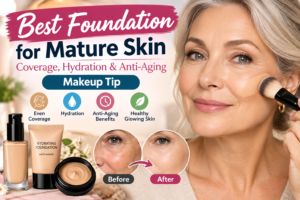

Finding the best foundation for mature skin can be challenging. As skin ages, it may become drier, more textured, or less even in tone. Fine lines and wrinkles can also become more noticeable, and some traditional foundations may settle into these areas instead of creating a smooth, natural-looking finish.
A strong foundation can have a big impact. Without making the skin appear heavy or cakey, a solution that offers moisture, flexible coverage, and a skin-like finish can help produce a more youthful and comfortable makeup look.
The finest anti-aging makeup procedures for a smooth, glowing complexion, how to choose the best foundation for mature skin, what ingredients and finishes to look for, and how much coverage you actually need are all covered in this guide.
What Makes a Foundation Good for Mature Skin?
Mature skin does not necessarily need a specific type of foundation simply because of age. Instead, the best formula depends on your individual skin type, texture, concerns, and desired finish.
However, many people with mature skin prefer foundations that offer:
- Hydrating ingredients
- Lightweight or buildable coverage
- A natural or radiant finish
- Flexible formulas that move with the skin
- Minimal emphasis on fine lines
- Comfortable long-lasting wear
- Ingredients that support the skin barrier
Very matte, thick, or highly powdery foundations can sometimes make dry patches and fine lines more noticeable. This does not mean mature skin cannot wear matte makeup, but a well-prepared skin base and carefully chosen formula are especially important.
Best Foundation Finish for Mature Skin
Hydrating and Radiant Finish
A hydrating or radiant foundation is often a good choice for mature or dry skin. It can give the complexion a healthy-looking glow and help prevent the skin from appearing flat.
Look for foundations described as:
- Hydrating
- Luminous
- Radiant
- Satin
- Natural finish
- Skin-like
These finishes can help create a softer appearance and may be particularly flattering when the skin looks dry or dull.
Natural Satin Finish
A satin finish is a versatile option if you want something between matte and dewy. It can provide a polished appearance without looking overly shiny.
This type of foundation can work well for combination or normal mature skin.
Matte Foundation
Matte foundation is not automatically unsuitable for mature skin. If you have an oily T-zone or prefer a shine-free look, a lightweight matte formula can work.
The key is avoiding excessive product and preparing dry areas properly before application.
How Much Coverage Is Best for Mature Skin?
More coverage does not always mean a better result.
Heavy foundation can settle into wrinkles and emphasize skin texture. For this reason, light to medium buildable coverage is often a practical choice.
A buildable formula allows you to apply a thin layer across the entire face and add additional coverage only where needed.
For example, you can use a small amount around the cheeks, nose, or areas of discoloration instead of covering the entire face with a thick layer.
This approach can create a more natural-looking complexion while allowing your skin to remain visible.
Key Ingredients to Look for in Foundation
When choosing a foundation for mature skin, the formula’s ingredients can be just as important as its shade and finish.
Hyaluronic Acid
Hyaluronic acid is commonly used in skincare and makeup formulas designed to support hydration. It can help the skin feel more moisturized and comfortable.
A foundation containing hydrating ingredients may be particularly useful when dryness makes makeup look patchy.
Glycerin
Glycerin is a humectant that helps attract and retain water. It is frequently found in moisturizing cosmetic products.
Foundations containing glycerin may feel more comfortable on dry or dehydrated skin.
Squalane
Squalane is an emollient ingredient commonly used in skincare products. It can help provide a smooth, conditioned feeling and may be useful in foundations designed for dry skin.
Ceramides
Ceramides are skin-identical lipids commonly used in barrier-supporting skincare. Some complexion products include them as part of a moisturizing formula.
Antioxidants
Some foundations contain antioxidant ingredients such as vitamin E or certain plant extracts. These ingredients may complement an overall skincare routine, although foundation should not replace dedicated sunscreen or skincare products.
How to Choose the Right Foundation Shade
Choosing the correct shade is one of the most important steps in achieving natural-looking makeup.
Test foundation on the jawline, rather than only on the hand or wrist. The goal is to find a shade that blends naturally between your face and neck.
Also consider your undertone:
- Warm undertones often have golden, yellow, or peach characteristics.
- Cool undertones may appear pink, red, or bluish.
- Neutral undertones fall somewhere between warm and cool.
Whenever possible, check the foundation in natural daylight before making your final choice.
Best Way to Prepare Mature Skin Before Foundation
Foundation usually looks better when the skin underneath is properly prepared.
Step 1: Cleanse Gently
Start with a gentle cleanser that does not leave the skin feeling tight or stripped.
Step 2: Moisturize
Apply a suitable moisturizer and allow it a few minutes to absorb.
Well-moisturized skin can provide a smoother surface for foundation application.
Step 3: Apply Sunscreen
During the daytime, use a broad-spectrum sunscreen appropriate for your skin. Allow it to settle before applying makeup.
Daily sun protection is one of the most important long-term steps for maintaining healthy-looking skin.
Step 4: Use Primer if Needed
A primer is optional. If your foundation tends to settle into pores or fine lines, a lightweight smoothing or hydrating primer may help.
Avoid applying a thick layer of multiple products, as too much skincare underneath makeup can cause pilling.
How to Apply Foundation on Mature Skin
Application technique can be just as important as the foundation itself.
Use a Small Amount
Start with a thin layer. It is much easier to build coverage than to remove excess product.
Apply From the Center of the Face
Place a small amount around areas that usually need the most coverage, such as the nose and center of the cheeks.
Blend outward toward the edges of the face.
Use a Damp Makeup Sponge
A slightly damp makeup sponge can help create a soft, natural finish. Instead of rubbing the foundation into the skin, gently press and bounce the sponge over the face.
Try a Foundation Brush
A soft, dense brush can also provide beautiful coverage. Use light strokes and avoid repeatedly dragging the brush over areas with visible texture.
Don’t Overapply Around Fine Lines
Fine lines around the eyes, mouth, and forehead often need less foundation rather than more.
Apply a very thin layer in these areas and use your fingertip or sponge to remove excess product if necessary.
Foundation Tips for Wrinkles and Fine Lines
If foundation frequently settles into wrinkles, try these techniques:
Use less product. Excess foundation is more likely to collect in lines.
Hydrate first. Dry skin can make texture more noticeable.
Choose flexible formulas. A lightweight foundation that moves with the skin may look more natural.
Set selectively. Instead of applying powder everywhere, use a small amount only where you experience excess shine.
Blend carefully. Check areas around the nose, mouth, and eyes before finishing your makeup.
Should You Use Powder With Mature Skin?
Powder can be useful, but too much may make mature skin appear dry or emphasize texture.
If you have dry skin, consider using powder only on areas that become oily.
A finely milled translucent powder can be applied lightly around the nose, forehead, or chin.
If you prefer a dewy finish, you may not need much powder at all.
Foundation vs. Tinted Moisturizer for Mature Skin
If you prefer a very natural makeup look, a tinted moisturizer or skin tint may be an alternative to traditional foundation.
A skin tint generally provides lighter coverage and can allow more of your natural skin to show through.
Foundation is usually preferable when you want more coverage for discoloration, redness, or uneven skin tone.
You can also combine the two approaches by using a lightweight skin tint across the face and adding concealer only where additional coverage is needed.
Common Foundation Mistakes on Mature Skin
Avoiding common mistakes can make your makeup look significantly better.
Applying Too Much Foundation
Heavy layers can emphasize texture rather than hide it.
Skipping Moisturizer
Dry skin can cause foundation to appear flaky or uneven.
Using Too Much Powder
Excess powder may settle into fine lines and make the complexion look dull.
Choosing a Foundation That Is Too Matte
Very matte formulas can sometimes make dry skin look flatter or more textured.
Choosing the Wrong Shade
A foundation that is too light, dark, pink, or yellow can make the face look unnatural.
Applying Foundation to the Entire Eye Area
The delicate skin around the eyes often needs minimal product. Too much foundation may settle into fine lines.
Anti-Aging Makeup Tips for a Natural Look
The goal of anti-aging makeup should not be to completely hide every sign of aging. Instead, good makeup techniques can help create a fresh, balanced, and healthy-looking appearance.
Use a lightweight foundation, cream-based blush, and a small amount of concealer where necessary.
Cream products often blend easily and can create a softer appearance than applying large amounts of powder.
A small amount of highlighter can also add radiance, but avoid applying heavy shimmer directly over areas where you want to minimize texture.
Well-groomed brows, curled lashes, and a flattering lip color can also help create a polished appearance without requiring heavy foundation.
How Long Should Foundation Last on Mature Skin?
Foundation wear time depends on the formula, skin type, climate, skincare products, and application technique.
Instead of choosing the heaviest possible foundation for long wear, consider using thin layers and setting only the areas that need it.
If your skin becomes dry during the day, carrying a hydrating facial mist or using a small amount of moisturizer around dry areas may be more comfortable than repeatedly adding powder.
Frequently Asked Questions
What is the best foundation for mature dry skin?
A hydrating, lightweight foundation with a natural, satin, or radiant finish is often a good starting point for mature dry skin.
Is liquid or powder foundation better for mature skin?
Liquid foundation is often easier to customize for mature skin, especially when it has a hydrating or natural finish. However, the best option depends on your individual skin type and preferences.
Should mature skin use matte foundation?
Yes. Mature skin can use matte foundation, particularly if the skin is oily or combination. Choose a lightweight formula and avoid excessive powder.
Does foundation make wrinkles look worse?
Foundation itself does not necessarily make wrinkles worse, but heavy application can make fine lines more noticeable. Hydrating the skin and using thin layers can help.
Should I use primer before foundation?
Primer is optional. A hydrating or smoothing primer can help create a more even makeup base, but it is not necessary for everyone.
Final Thoughts
Choosing the best foundation for mature skin is less about finding one universally perfect product and more about finding a formula that works with your individual skin type and texture.
For many people, a hydrating, lightweight, buildable foundation with a natural or satin finish can provide an attractive balance of coverage and comfort. Proper skincare preparation, minimal powder, and careful application can be just as important as the foundation itself.
Remember that mature skin does not need to be completely covered to look beautiful. Allowing some natural skin texture to show through can create a more realistic, fresh, and youthful-looking finish.