

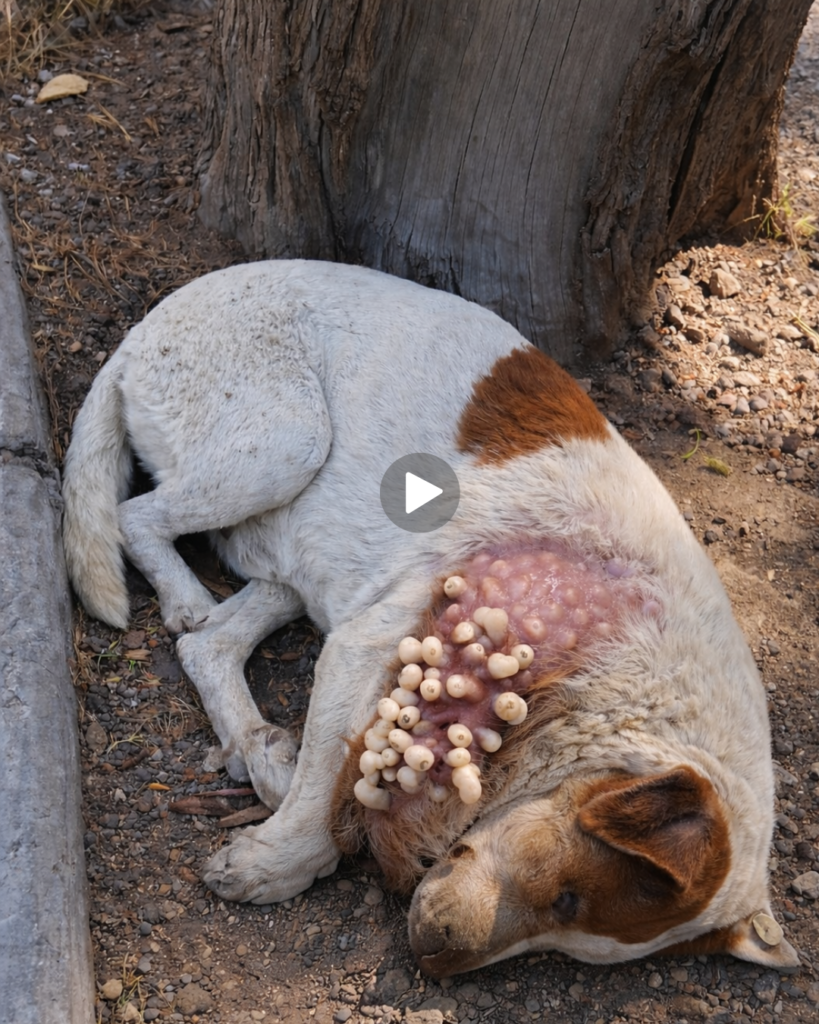
The image above captures a scene that is difficult to witness—a dog lying helplessly on the ground, its body invaded by clusters of maggots feeding on living flesh. This condition is known as myiasis, and it is one of the most severe yet preventable afflictions affecting dogs, especially strays and neglected animals.
While disturbing, images like this are not shared to shock senselessly. They are shared to educate, awaken compassion, and drive action. Behind every photograph like this is an animal suffering silently, dependent entirely on human awareness and timely intervention to survive.
What Is Myiasis?
Myiasis is a parasitic infestation caused by fly larvae (maggots) that feed on the tissue of living animals. Flies are attracted to moisture, blood, pus, feces, urine, or open wounds. Once eggs are laid, they can hatch within 8–24 hours, and the larvae immediately begin burrowing into the skin.
In the image, the dog’s neck and shoulder region are heavily infested. This indicates an advanced stage of myiasis, where maggots have multiplied and penetrated deep into the tissue. At this stage, the condition is not just painful—it is life-threatening.
How Does a Dog End Up Like This?
Myiasis rarely begins as a large, visible wound. In most cases, it starts with something small and easily overlooked:
- A minor cut or scratch
- A tick or flea bite
- Skin infections or hot spots
- Matted fur trapping moisture
- Diarrhea or urine-soaked fur
- Untreated surgical wounds
For stray dogs, the risk is far greater. With no one to clean wounds, remove parasites, or notice early signs, flies have the perfect opportunity to lay eggs. Within days, a small injury can turn into a massive infestation, as seen in this image.
Why Myiasis Is So Dangerous
Maggots do not simply sit on the surface of the skin. They secrete enzymes that break down healthy tissue, allowing them to burrow deeper. This causes:
- Severe tissue destruction
- Intense and constant pain
- Rapid bacterial infection
- Toxins entering the bloodstream
- Risk of septic shock
Dogs suffering from myiasis often stop eating, become weak, and may collapse from pain or infection. Without treatment, death can occur quickly—sometimes within days.
The dog in the image appears exhausted and motionless, a sign that its body may already be struggling to cope with the infection.
Signs and Symptoms You Should Never Ignore
Early detection can save a dog’s life. Whether you care for pets or encounter stray animals, watch for these warning signs:
- Foul or rotting smell from the body
- Persistent licking or scratching one area
- Swelling or redness under the fur
- Hair loss around a wound
- Visible movement in the skin or wound
- Lethargy and weakness
- Loss of appetite
- Pain when touched or sudden aggression
If maggots are visible, the situation is already critical and requires immediate veterinary attention.
Emergency Treatment: What Saves Lives
Myiasis is a medical emergency, not a condition that can wait.
Proper treatment involves:
- Immediate removal of maggots, often under sedation
- Thorough wound cleaning and flushing
- Antibiotics to control infection
- Pain relief medication
- Supportive care, including fluids and nutrition
- Ongoing wound management until healing is complete
In severe cases, surgery may be necessary to remove dead tissue. With timely care, many dogs can recover—but delays drastically reduce survival chances.
The Danger of Home Remedies
One of the most harmful myths surrounding myiasis is that it can be treated at home using oil, kerosene, turpentine, or chemicals. These methods are dangerous and often fatal.
Improper treatment can:
- Push maggots deeper into tissue
- Cause chemical burns
- Increase pain and stress
- Delay proper medical care
Only trained veterinarians or animal rescue professionals should handle myiasis cases.
Prevention: The Best Cure
The tragedy of myiasis is that it is largely preventable.
For Pet Owners:
- Inspect your dog’s body daily
- Treat wounds immediately
- Keep fur clean and trimmed
- Use flea and tick preventatives
- Maintain clean sleeping areas
For Community Members:
- Report injured stray animals
- Support local rescue groups
- Spread awareness about myiasis
- Encourage spaying and neutering to reduce stray populations
Simple actions can prevent unimaginable suffering.
Stray Dogs: The Forgotten Victims
Stray dogs are the most common victims of myiasis. Living on the streets, exposed to injuries, parasites, hunger, and harsh weather, they are easy targets for flies.
The dog in this image represents thousands of voiceless animals enduring similar pain without help. Many die unseen, their suffering unnoticed.
When communities step up—by feeding, reporting injuries, or supporting animal welfare efforts—these lives can be saved.
The Emotional Cost of Neglect
Beyond the physical damage, myiasis causes extreme psychological distress. Dogs experience fear, confusion, and relentless pain. They do not understand why they are suffering or how to escape it.
As humans, we hold the power—and responsibility—to prevent such suffering. Turning away does not make it disappear.
Why Sharing Awareness Matters
Images like this are hard to look at, but they serve a crucial purpose. Awareness leads to education. Education leads to action. Action saves lives.
- One shared post can alert someone to a wounded dog
- One phone call can bring rescue help
- One informed person can prevent future cases
Your one click and sharing of the post can save the lives of many dogs.
A Call to Compassion
This image is not just a photograph—it is a call to conscience.
If you see an injured animal, do not ignore it. If you are a pet owner, inspect and protect your animals. If you are able, support organizations that rescue and treat animals suffering from myiasis and other preventable conditions.
No dog deserves to suffer in silence.
Conclusion
Myiasis is a cruel, painful, and often fatal condition—but it does not have to be. With awareness, timely care, and compassion, countless lives can be saved.
