
Introduction
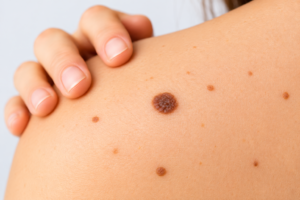
Skin moles are common skin growths that can appear anywhere on the body. They may develop during childhood, adolescence, or adulthood, and some people are even born with them. Most skin moles are harmless and do not require medical treatment. However, certain changes in their appearance can sometimes indicate skin cancer, including melanoma.
Moles, medically known as nevi, develop when pigment-producing cells called melanocytes grow in clusters rather than spreading evenly throughout the skin. They can vary in size, shape, texture, and color. While brown and black moles are common, some may appear pink, red, tan, blue, or even skin-colored.
Understanding the different types of skin moles, what causes them, and which changes to watch for can help you maintain healthy skin. Regular skin checks are especially important because early detection of melanoma can significantly improve treatment outcomes.
In this guide, we will explore the types of skin moles, their causes, professional removal options, warning signs of skin cancer, and effective prevention tips.
What Are Skin Moles?
A skin mole is a small growth that develops when melanocytes, the cells responsible for producing melanin, collect in one area of the skin.
Moles can appear flat or raised, smooth or slightly rough. Some contain hair, while others have a completely smooth surface.
Most people develop several moles throughout their lives. Their appearance may change slightly with age, hormonal changes, and sun exposure. For example, some moles may become darker during pregnancy or gradually fade as a person gets older.
Although most moles are benign (noncancerous), it is important to monitor them for unusual changes.
Different Types of Skin Moles
Skin moles are generally divided into three main categories: congenital moles, acquired moles, and atypical moles.
1. Congenital Moles
Congenital moles are present at birth or appear shortly afterward. They develop because of differences in pigment-producing cells during fetal development.
These moles can vary significantly in size, shape, and color. Some are small and flat, while others may be larger, darker, or slightly raised.
Most congenital moles are harmless. However, larger congenital melanocytic nevi may carry a higher risk of developing melanoma during a person’s lifetime. A dermatologist can assess the mole and recommend appropriate monitoring.
2. Acquired Moles
Acquired moles develop after birth, usually during childhood, adolescence, or early adulthood.
They are among the most common types of skin moles and often appear brown, black, or tan. Sun exposure and genetic factors can influence how many moles a person develops.
Common examples include:
- Junctional nevi: Usually flat moles that develop where the upper and deeper layers of the skin meet. They are commonly brown or dark brown.
- Compound nevi: These moles contain pigment-producing cells at different skin levels and are often slightly raised.
- Intradermal nevi: Typically raised, dome-shaped growths that may be skin-colored, light brown, or slightly pink.
- Blue nevi: Usually small, smooth moles with a blue or blue-black appearance due to the depth of pigment in the skin.
- Spitz nevi: Often pink, red, brown, or skin-colored growths that may appear raised. They can sometimes resemble melanoma and should be evaluated if their appearance is unusual.
- Seborrheic keratoses: These are common benign skin growths that may look like moles. They often have a waxy, rough, or stuck-on appearance.
Not every dark or raised skin growth is a mole. A dermatologist can help identify the exact type.
Youtube Video
3. Atypical Moles (Dysplastic Nevi)
Atypical moles, also called dysplastic nevi, have an unusual appearance compared with ordinary moles.
They may be larger than typical moles and often have irregular borders, uneven coloring, or an asymmetrical shape.
Atypical moles are not necessarily cancerous, but having several dysplastic nevi can increase a person’s risk of developing melanoma.
Common characteristics include:
- Irregular or uneven borders
- Different shades of brown, black, pink, or red
- A size larger than many ordinary moles
- An asymmetrical shape
- Changes in appearance over time
People with atypical moles should consider regular skin examinations, particularly if they have a family history of melanoma.
What Causes Skin Moles?
Skin moles develop when melanocytes grow together in clusters instead of spreading evenly throughout the skin.
Several factors can contribute to mole development.
1. Genetics
Family history plays an important role in determining how many moles a person develops. If your parents or close relatives have numerous moles, you may also be more likely to develop them.
Genetic factors can also influence mole size, color, and appearance.
2. Sun Exposure
Exposure to ultraviolet (UV) radiation from sunlight can influence the development of new moles and cause existing moles to become darker.
Repeated sun exposure, especially sunburns during childhood, can also increase the risk of melanoma.
Protecting your skin from UV radiation is important for maintaining overall skin health.
3. Hormonal Changes
Hormonal changes during puberty and pregnancy may affect the appearance of existing moles.
Some moles may become darker or slightly larger during these periods. However, a changing mole should not automatically be assumed to be harmless because of hormonal changes.
If a mole changes significantly, consult a dermatologist.
4. Aging
Many people develop new moles during childhood and early adulthood. As they get older, some moles may gradually become lighter, flatter, or less noticeable.
New moles appearing later in adulthood deserve attention, particularly if they grow quickly or look different from existing moles.
5. Certain Medications
Some medications can affect skin pigmentation or make the skin more sensitive to sunlight. This may change the appearance of existing pigmented areas.
If you notice unusual skin changes after starting a medication, discuss them with your healthcare professional.
How to Identify a Potentially Cancerous Mole
Most moles are harmless, but recognizing the warning signs of melanoma is essential.
The American Academy of Dermatology recommends using the ABCDE method to identify suspicious changes in moles.
A – Asymmetry
A normal-looking mole is often symmetrical. If one half looks different from the other half, it may require medical evaluation.
B – Border
Pay attention to moles with uneven, jagged, blurred, or poorly defined borders.
C – Color
Ordinary moles often have a relatively uniform color. A suspicious mole may contain multiple shades, such as brown, black, red, pink, or white.
D – Diameter
Melanomas are often larger than 6 millimeters (approximately the size of a pencil eraser). However, melanoma can also be smaller, so size alone cannot determine whether a mole is dangerous.
E – Evolving
Changes in a mole’s size, shape, color, texture, or symptoms are important warning signs.
A mole that begins itching, bleeding, swelling, or changing rapidly should be examined by a dermatologist.
Important: Melanoma does not always follow the ABCDE rule. A new or unusual skin spot that looks different from your other moles should also be checked.
How Are Skin Moles Removed?
Many people choose mole removal for cosmetic reasons, while others need treatment because a mole looks suspicious or causes discomfort.
Mole removal should always be performed by a qualified medical professional. Attempting to remove a mole at home can cause infection, scarring, bleeding, and delayed skin cancer diagnosis.
Common professional mole removal methods include:
1. Surgical Shave Removal
During shave removal, a dermatologist uses a surgical blade to remove a raised mole from the skin’s surface.
This method is generally used for selected smaller, raised moles. The removed tissue may be sent to a laboratory for examination when medically indicated.
2. Surgical Excision
Surgical excision involves removing the entire mole along with a small amount of surrounding skin when appropriate.
The area is then closed with stitches. This method is commonly used when a mole needs complete removal or when melanoma is suspected.
The removed tissue can be examined under a microscope to check for abnormal or cancerous cells.
3. Biopsy
If a dermatologist suspects that a mole may be cancerous, they may perform a skin biopsy.
A small sample or the entire suspicious growth is removed and examined by a pathologist. The results help determine whether additional treatment is necessary.
Never use home remedies, cutting tools, or over-the-counter mole removal products on suspicious moles.
Possible Complications of Mole Removal
Mole removal is generally a straightforward medical procedure, but certain side effects can occur.
Possible complications include:
- Scarring: Some procedures may leave a permanent or temporary scar.
- Infection: Bacteria can enter the treated area if proper wound care is not followed.
- Bleeding: Minor bleeding may occur after removal.
- Pigmentation changes: The treated area may become darker or lighter than the surrounding skin.
- Mole recurrence: Some moles may grow back after incomplete removal.
Following your dermatologist’s aftercare instructions can help reduce complications and support proper healing.
Keep the treated area clean, protect it from excessive sun exposure, and use recommended wound-care products.
When Should You See a Dermatologist?
You should schedule an appointment with a dermatologist if you notice unusual changes in an existing mole or develop a new suspicious skin growth.
Warning signs that require medical evaluation include:
- A new mole that grows quickly
- A mole that changes color, shape, or size
- A mole with irregular or uneven borders
- Persistent itching or tenderness
- Bleeding without an obvious injury
- A sore that does not heal
- A spot that looks noticeably different from your other moles
- A dark line or unusual pigmentation under a fingernail or toenail
People with many moles, atypical moles, a personal history of skin cancer, or a family history of melanoma may need more frequent skin examinations.
Do not wait for your next routine appointment if you notice a concerning change.
How to Prevent Skin Cancer and Protect Your Moles
You cannot prevent every mole from developing, but you can reduce UV exposure and lower your risk of skin damage.
Follow these practical skin protection tips:
1. Apply Broad-Spectrum Sunscreen
Use a broad-spectrum sunscreen with SPF 30 or higher every day when your skin is exposed to sunlight.
Apply it generously and reapply approximately every two hours when outdoors, especially after swimming or sweating.
2. Avoid Excessive Sun Exposure
Try to stay in the shade when sunlight is strongest, particularly around midday.
Avoid intentional tanning and never use tanning beds.
3. Wear Protective Clothing
Long-sleeved clothing, sunglasses, and wide-brimmed hats can help protect your skin from harmful UV radiation.
Consider UV-protective clothing when spending extended periods outdoors.
4. Check Your Skin Regularly
Examine your skin about once a month to become familiar with your existing moles.
Check areas that are easy to overlook, including your back, scalp, feet, palms, and the spaces between your toes.
Use a mirror or ask someone you trust to help examine difficult-to-see areas.
5. Schedule Professional Skin Examinations
Regular professional skin examinations may be particularly important for people with increased melanoma risk.
Your dermatologist can assess suspicious moles and recommend a monitoring schedule based on your personal risk factors.
Frequently Asked Questions About Skin Moles
1. Are skin moles dangerous?
Most skin moles are harmless and do not require treatment. However, some unusual or changing moles may indicate melanoma. Regular skin checks can help identify concerning changes early.
2. What do cancerous moles look like?
Cancerous moles may have irregular borders, uneven coloring, asymmetrical shapes, or changing sizes. Some may itch, bleed, or develop a different appearance from surrounding moles.
The ABCDE method can help identify warning signs, but only a medical examination and appropriate testing can determine whether a mole is cancerous.
3. Can skin moles disappear naturally?
Yes. Some moles may gradually fade or become less noticeable as people age. However, a mole that disappears or changes significantly should be discussed with a dermatologist if the change is unusual.
4. Is it safe to remove a mole at home?
No. Removing a mole at home can cause infection, bleeding, and permanent scarring. More importantly, it may delay the diagnosis of skin cancer. Always consult a qualified medical professional.
5. Does every changing mole mean skin cancer?
No. Some harmless moles can change slightly over time, particularly during hormonal changes. However, noticeable or rapid changes should always be evaluated by a dermatologist.
6. Can sunscreen prevent moles?
Sunscreen cannot prevent all moles because genetics and other factors also play a role. However, regular sun protection can reduce UV damage and help lower the risk of skin cancer.
7. When should I worry about a new mole?
A new mole that appears during adulthood, especially one that grows rapidly, changes color, or looks different from your other moles, should be examined by a dermatologist.
Final Thoughts
Skin moles are common and usually harmless, but understanding their appearance and monitoring changes is important for long-term skin health.
Congenital, acquired, and atypical moles can differ in size, color, and shape. While most do not develop into skin cancer, unusual changes may sometimes indicate melanoma.
Protect your skin by using sunscreen, avoiding excessive UV exposure, and checking your moles regularly. If you notice a new, changing, bleeding, or unusual mole, consult a dermatologist rather than trying to remove it yourself.
Early detection and professional evaluation are among the most important steps in protecting your skin and maintaining healthy skin for years to come.