
A healthy skincare routine does not always require expensive beauty products. Sometimes, simple ingredients available in your kitchen can help improve your skin’s appearance. One popular natural skincare ingredient is plain yogurt, which is known for its creamy texture, moisturizing properties, and beneficial nutrients.
A yogurt face mask has become a popular DIY skincare treatment because it may help hydrate the skin, improve its texture, and give the face a fresh appearance. Yogurt also contains lactic acid, a naturally occurring ingredient associated with gentle exfoliation.
Although many beauty blogs claim that yogurt can solve several skin problems, scientific evidence supporting all these benefits is still limited. Some research suggests that yogurt-based skincare products may help improve skin hydration and support the skin barrier.
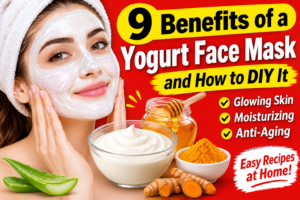
If you are interested in trying a yogurt face mask at home, understanding its ingredients, potential benefits, and possible side effects is important. In this guide, we will explore nine potential benefits of a yogurt face mask, easy DIY recipes, precautions, and natural alternatives.
What Ingredients Can You Use in a Yogurt Face Mask?
Before making a homemade yogurt face mask, it is important to select suitable ingredients for your skin type. Plain, unsweetened yogurt is generally the best starting point because it does not contain added fragrances, flavors, or unnecessary sugars.
You can also combine yogurt with other skincare ingredients depending on your skin’s needs.
1. Plain Yogurt
Plain yogurt is the main ingredient in a yogurt face mask. It contains proteins, fats, and other nutrients that may help condition the skin.
Yogurt also contains lactic acid, an alpha-hydroxy acid (AHA) that is commonly used in skincare products for exfoliation. However, the concentration and effectiveness of lactic acid in ordinary yogurt are not well established.
2. Greek Yogurt
Greek yogurt has a thicker consistency than regular yogurt, making it convenient for homemade face masks. Its creamy texture helps it stay on the face without dripping easily.
Choose an unsweetened and unflavored variety for skincare purposes.
3. Honey
Honey is a popular natural skincare ingredient because of its moisturizing properties. It acts as a humectant, helping attract and retain moisture.
Honey may also support the skin’s natural barrier and has been studied for its wound-healing properties. However, regular kitchen honey should not replace medical wound treatments.
4. Turmeric
Turmeric contains curcumin, a compound known for its antioxidant and anti-inflammatory properties.
It is commonly used in traditional skincare remedies. However, evidence supporting turmeric as a topical treatment for acne, pigmentation, or other skin conditions remains limited.
Be careful when applying turmeric because it can temporarily stain the skin and may cause irritation in some people.
5. Aloe Vera
Aloe vera gel is widely used in skincare products because of its soothing and moisturizing effects.
Combining a small amount of aloe vera with plain yogurt may create a refreshing face mask for dry or irritated-looking skin.
Always choose a fragrance-free product and perform a patch test before applying it to your face.
Youtube Video
9 Potential Benefits of a Yogurt Face Mask
Yogurt is frequently included in homemade beauty treatments because of its creamy consistency and naturally occurring ingredients. While some potential skincare benefits are supported by research, others still require more scientific investigation.
Here are nine possible benefits of using a yogurt face mask.
1. Helps Moisturize Dry Skin
One of the most commonly discussed benefits of a yogurt face mask is its potential to improve skin hydration.
Yogurt contains water, fats, and proteins that may help condition the skin and temporarily improve its softness.
People with dry or rough skin may enjoy the creamy texture of a yogurt mask. However, a moisturizer containing ingredients such as ceramides, glycerin, or hyaluronic acid is generally a more reliable option for long-lasting hydration.
2. May Improve Skin Brightness
Dull-looking skin can sometimes result from dryness, dead skin cell buildup, and environmental factors.
Yogurt contains lactic acid, which is associated with exfoliation. Professional skincare products containing properly formulated lactic acid may help improve skin texture and brightness.
However, the amount of lactic acid in ordinary yogurt is variable, so a homemade yogurt mask should not be considered a proven skin-brightening treatment.
3. May Help Improve Uneven Skin Tone
Uneven skin tone can develop because of sun exposure, acne marks, aging, and excess melanin production.
Some research on probiotics and fermented ingredients suggests that they may have beneficial effects on skin health. Nevertheless, there is not enough clinical evidence to confirm that applying plain yogurt directly to the face will remove dark spots or pigmentation.
For more noticeable pigmentation concerns, dermatologist-recommended ingredients such as niacinamide, azelaic acid, and sunscreen may be more effective.
4. Supports Skin Against Environmental Stress
Environmental factors such as pollution, sunlight, and oxidative stress can affect the skin over time.
Yogurt contains certain nutrients and compounds associated with antioxidant activity. Research into fermented dairy ingredients has also explored their potential role in skin health.
However, applying yogurt to your face does not provide reliable sun protection. Always use a broad-spectrum sunscreen with SPF 30 or higher during the day.
5. May Improve the Appearance of Skin Texture
Rough skin can make the face appear dull and uneven. Gentle exfoliation may help remove accumulated dead skin cells and improve the skin’s surface.
Lactic acid is commonly used in cosmetic products to support this process.
Although yogurt naturally contains lactic acid, its concentration is not standardized. Therefore, the exfoliating effect of a homemade yogurt mask may be mild or unpredictable.
6. May Reduce the Appearance of Fine Lines
Fine lines are a natural part of aging and can become more noticeable when the skin is dehydrated.
Keeping the skin moisturized may temporarily make fine lines appear less visible.
Yogurt masks may provide a short-term conditioning effect, but there is insufficient evidence that they stimulate collagen production or significantly reverse wrinkles.
For long-term skin-aging prevention, daily sunscreen and dermatologist-recommended skincare ingredients are better-supported choices.
7. May Support Acne-Prone Skin
Acne develops through several factors, including excess oil production, clogged pores, inflammation, and changes in skin bacteria.
Probiotics have attracted scientific interest because of their potential effects on the skin microbiome.
Some studies suggest that certain probiotic ingredients may support skin health. However, plain yogurt has not been proven to treat acne when applied directly to the face.
If you have frequent breakouts, consider evidence-based acne ingredients such as salicylic acid or benzoyl peroxide.
8. May Soothe the Feeling of Dry or Irritated Skin
Dryness and environmental exposure can leave the skin feeling uncomfortable.
A simple yogurt mask may temporarily soften the skin because of its creamy consistency and moisturizing components.
You can also consider aloe vera gel as an alternative soothing ingredient.
However, avoid applying homemade masks to inflamed, infected, wounded, or severely irritated skin. Seek professional advice if irritation continues.
9. May Help Maintain a Healthy-Looking Skin Barrier
The skin barrier protects the body from external irritants and helps prevent excessive moisture loss.
Maintaining this protective layer is essential for healthy-looking skin.
Some research involving fermented ingredients and probiotics has explored their potential relationship with skin barrier function. However, more human clinical studies are needed to establish whether ordinary yogurt masks provide meaningful benefits.
Using a gentle cleanser, moisturizer, and sunscreen remains a more dependable way to support your skin barrier.
DIY Yogurt Face Mask Recipes for Different Skin Types
Making a yogurt face mask at home is relatively simple. You only need a few ingredients and a clean mixing bowl.
Before applying any homemade skincare treatment, wash your face with a gentle cleanser. Perform a patch test at least 24 hours beforehand and avoid ingredients that cause irritation.
Here are three simple recipes you can try.
1. Yogurt and Honey Face Mask for Dry Skin
Ingredients:
- 2 tablespoons plain, unsweetened yogurt
- 1 teaspoon honey
How to prepare:
- Add yogurt and honey to a clean bowl.
- Mix until both ingredients are combined.
- Apply a thin layer to clean skin.
- Leave it on for approximately 10–15 minutes.
- Rinse gently with lukewarm water.
- Apply your regular moisturizer.
Potential benefits: This combination may temporarily soften dry skin and improve its appearance by providing conditioning and moisturizing effects.
2. Yogurt and Aloe Vera Face Mask for Sensitive-Looking Skin
Ingredients:
- 2 tablespoons plain yogurt
- 1 tablespoon pure aloe vera gel
How to prepare:
- Combine the yogurt and aloe vera gel in a bowl.
- Mix until you get a smooth consistency.
- Apply a small amount to clean skin.
- Leave it on for 10 minutes.
- Wash your face with cool or lukewarm water.
- Finish with a gentle moisturizer.
Potential benefits: Aloe vera may provide a soothing and moisturizing effect, while yogurt adds a creamy texture.
If you have sensitive skin, introduce each ingredient separately before combining them.
3. Yogurt and Turmeric Face Mask
Ingredients:
- 2 tablespoons plain yogurt
- A very small pinch of turmeric powder
How to prepare:
- Place the yogurt in a clean bowl.
- Add a tiny amount of turmeric.
- Mix thoroughly.
- Apply a thin layer to a small area of skin first.
- If tolerated, apply to the face for around 5–10 minutes.
- Rinse thoroughly with lukewarm water.
Potential benefits: Turmeric contains curcumin, which has been studied for antioxidant and anti-inflammatory properties. However, this homemade mask is not a proven treatment for acne or pigmentation.
Avoid using too much turmeric because it may stain your skin or cause irritation.
Possible Side Effects and Drawbacks of Yogurt Face Masks
Although yogurt is a common food ingredient, that does not automatically make it suitable for everyone’s skin.
Before adding a yogurt mask to your skincare routine, consider the following precautions.
1. Allergic Reactions
People with a milk protein allergy should avoid applying traditional dairy yogurt to their skin.
An allergic reaction may cause redness, itching, swelling, or discomfort.
Plant-based yogurt may be an alternative, but check its ingredients carefully because added fragrances and preservatives can also cause reactions.
2. Skin Irritation
Some people may experience irritation after using homemade face masks.
Turmeric, honey, aloe vera, and other added ingredients can cause unwanted reactions in sensitive individuals.
Stop using the mask immediately if you notice burning, itching, redness, or swelling.
3. Possible Acne Breakouts
Homemade skincare products have not been thoroughly tested for their effects on acne-prone skin.
Depending on the ingredients and individual skin response, a mask may cause discomfort or potentially worsen breakouts.
If you notice new pimples after using a yogurt mask, discontinue it.
4. Not Suitable for Broken or Infected Skin
Avoid applying homemade yogurt masks to open wounds, cuts, active skin infections, or severely inflamed areas.
Food ingredients are not sterile skincare treatments and should not be used as substitutes for medical care.
5. Limited Scientific Evidence
Many online articles claim that yogurt can remove wrinkles, eliminate acne, fade dark spots, and protect against sun damage.
However, most of these claims are not supported by strong clinical studies involving ordinary yogurt face masks.
It is important to understand the difference between potential skincare benefits and scientifically proven treatments.
Natural Alternatives to a Yogurt Face Mask
If yogurt does not suit your skin, several other ingredients and skincare options may be worth considering.
Here are some alternatives based on common skincare concerns.
1. Aloe Vera for Dry and Uncomfortable Skin
Aloe vera gel is a popular skincare ingredient because of its soothing and moisturizing properties.
Choose a fragrance-free product and apply it according to the product instructions.
2. Oatmeal for Dry or Irritated Skin
Colloidal oatmeal is commonly used in skincare products designed for dry and sensitive skin.
It may help soothe irritation and support the skin barrier. Choose a properly formulated colloidal oatmeal product rather than using rough oatmeal particles as a facial scrub.
3. Honey for Moisturizing
Honey acts as a humectant and may help attract moisture to the skin.
However, people with allergies or sensitive skin should perform a patch test before using it.
4. Avocado for Dry Skin
Avocado contains fats and other nutrients that make it a popular ingredient in homemade beauty treatments.
However, evidence supporting the effectiveness of raw avocado masks is limited. People with avocado allergies should avoid topical use.
5. Green Tea for Antioxidant Benefits
Green tea contains polyphenols, including catechins, which have antioxidant properties.
Some skincare products contain green tea extracts to support skin health. A properly formulated product is generally more reliable than a homemade green tea mask.
6. Dermatologist-Recommended Skincare Products
For specific skin concerns, commercially formulated products may provide more predictable results.
Consider these ingredients:
- Hyaluronic acid: Helps attract moisture to the skin.
- Niacinamide: May support the skin barrier and improve uneven skin tone.
- Salicylic acid: Helps unclog pores and manage acne.
- Lactic acid: Provides controlled chemical exfoliation.
- Ceramides: Help support and maintain the skin barrier.
Choose products according to your skin type and introduce new ingredients gradually.
How Often Should You Use a Yogurt Face Mask?
If your skin tolerates a yogurt face mask, occasional use may be enough to enjoy its temporary moisturizing effects.
Start with once a week rather than using it every day. Always observe how your skin responds.
Avoid combining several potentially irritating ingredients in one mask. You should also avoid excessive exfoliation, especially if your skin is sensitive or acne-prone.
Remember that a homemade yogurt mask is an optional skincare treatment, not a replacement for a consistent daily routine.
Frequently Asked Questions (FAQs)
1. Can I Apply Yogurt to My Face Every Day?
Daily application is not necessary. Start with occasional use and monitor your skin for irritation. If you experience redness, itching, or breakouts, stop using it.
2. Does a Yogurt Face Mask Help Brighten Skin?
Yogurt contains naturally occurring lactic acid, which is associated with exfoliation. However, there is limited evidence that ordinary yogurt masks significantly brighten skin or remove pigmentation.
3. Is Yogurt Good for Dry Skin?
Yogurt may temporarily soften and condition dry skin. For lasting hydration, use a moisturizer containing ingredients such as glycerin or ceramides.
4. Can Yogurt Help With Acne?
There is some research interest in probiotics and skin health, but applying plain yogurt directly to acne has not been proven to treat breakouts.
5. Which Yogurt Is Best for a Face Mask?
Plain, unsweetened, unflavored yogurt is the simplest option. Greek yogurt can be convenient because its thick consistency makes application easier.
6. How Long Should I Leave Yogurt on My Face?
If your skin tolerates it, approximately 10–15 minutes is a reasonable starting point. Rinse thoroughly and discontinue use if irritation develops.
7. Can I Mix Yogurt With Turmeric?
You can combine a small amount of turmeric with plain yogurt, but this mixture may irritate some skin types or temporarily stain the skin. Always perform a patch test first.
Final Takeaway
A yogurt face mask is an easy homemade skincare option that may temporarily soften, condition, and moisturize the skin. Its creamy texture and naturally occurring lactic acid make it an interesting ingredient for DIY beauty treatments.
However, not every claimed benefit is scientifically established. Yogurt has not been proven to eliminate acne, remove wrinkles, cure pigmentation, or protect the skin from harmful UV rays.
If you want to try a yogurt face mask, choose plain, unsweetened yogurt, use simple ingredients, and perform a patch test before applying it to your face.
For long-term skin health, focus on a consistent skincare routine that includes gentle cleansing, regular moisturizing, and daily broad-spectrum sunscreen. If you have persistent acne, eczema, pigmentation, or another skin condition, consult a qualified dermatologist for appropriate treatment.
Healthy skin starts with gentle care, consistency, and choosing skincare ingredients that work well with your skin type.