
Introduction
Have you ever wondered whether to apply serum or moisturizer first? If your skincare routine includes cleanser, toner, serum, moisturizer, sunscreen, and facial oil, understanding the correct order can sometimes feel confusing.
Using skincare products in the right order helps you build a simple and effective routine. Each product has a different purpose. Cleansers remove dirt and impurities, serums provide targeted skincare benefits, and moisturizers help keep the skin soft and comfortable.
The general rule is simple: apply serum before moisturizer. Serums are usually used as a targeted treatment step, while moisturizers provide an additional layer of hydration and comfort.
However, there is an important exception. Some face serums are oil-based and already contain nourishing botanical oils. Depending on your skin type, you may not always need to apply a separate moisturizer afterward.
In this guide, you will learn whether serum or moisturizer should come first, how to layer skincare products correctly, where facial oils fit into your routine, and how to create a simple morning and evening skincare routine.
Serum or Moisturizer First? The Quick Answer
In most skincare routines, serum should be applied before moisturizer.
Serums are generally designed to deliver targeted ingredients to the skin, while moisturizers help maintain hydration and reduce moisture loss.
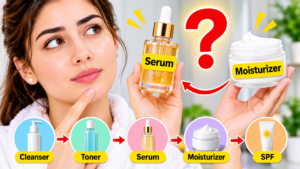
A basic skincare routine should follow this order:
- Cleanser: Removes dirt, oil, makeup, and impurities.
- Toner: Provides an optional refreshing or hydrating step.
- Serum: Delivers targeted skincare ingredients.
- Moisturizer: Helps soften the skin and maintain hydration.
- Sunscreen: Protects the skin from UV exposure during the day.
This is a common skincare layering approach, although the exact routine can vary depending on the products you use.
You do not need to use every product every day. A simple routine that suits your skin is often better than applying too many products.
Why Does Skincare Routine Order Matter?
The order in which you apply skincare products can influence how comfortable your skin feels and how effectively your products fit together.
Different products perform different functions.
- Cleansers remove surface impurities.
- Toners provide an optional refreshing or hydrating step.
- Serums deliver concentrated skincare ingredients.
- Moisturizers help support the skin barrier and reduce dryness.
- Face oils provide additional nourishment and soften the skin.
- Sunscreens protect against harmful UV radiation.
A useful general rule is to apply your targeted skincare products before richer moisturizing layers.
For example, applying serum before moisturizer allows you to use the serum as your treatment step before adding another product.
However, texture also matters. Lightweight products are generally applied before heavier creams and oils, although the instructions for individual products should always be considered.
Youtube Video
What Is Face Serum and How Does It Work?
Face serum is a skincare product designed to provide concentrated ingredients for specific skin concerns.
Depending on its formulation, a serum may help improve the appearance of dullness, dryness, uneven skin tone, or visible signs of aging.
Different serums contain different ingredients, so choosing the right formula depends on your skin type and skincare goals.
Some common serum ingredients include:
Vitamin C: An antioxidant commonly used to improve the appearance of uneven skin tone and dullness.
Hyaluronic Acid: Helps attract and retain water, supporting skin hydration.
Niacinamide: Supports the skin barrier and may improve the appearance of uneven tone and excess oil.
Retinol: A vitamin A derivative used in skincare to improve the appearance of fine lines, uneven texture, and acne.
Botanical Oils: Some oil-based serums contain plant oils that help soften and nourish the skin.
How to Use Face Serum Correctly
Using face serum is relatively simple. Follow these steps:
- Cleanse your face with a gentle facial cleanser.
- Apply toner if it is part of your routine.
- Put a few drops of serum onto your fingertips.
- Gently press or massage the serum over your face and neck.
- Allow the product to settle before applying moisturizer.
The amount of serum you need depends on its formulation. Some products require only two or three drops.
Avoid applying serum too close to your eyes unless the product is specifically designed for that area.
If you are trying a new serum, perform a patch test first, especially if you have sensitive skin.
Where Does Moisturizer Fit in Your Skincare Routine?
Moisturizer generally comes after serum.
Its main purpose is to help keep the skin hydrated, soft, and comfortable. Moisturizers also support the skin’s protective barrier and help reduce moisture loss.
Using serum and moisturizer together can create a balanced skincare routine.
However, the type of moisturizer you choose should depend on your skin type.
For Dry Skin
Dry skin often benefits from a nourishing moisturizer after applying serum.
Look for ingredients such as:
- Ceramides
- Glycerin
- Shea butter
- Hyaluronic acid
- Petrolatum
These ingredients can help improve skin hydration and reduce the appearance of dryness.
For Sensitive Skin
Sensitive skin may benefit from a simple moisturizer without unnecessary fragrance or irritating ingredients.
Choose gentle formulas and introduce new products gradually.
For Oily Skin
People with oily skin may prefer lightweight, non-comedogenic moisturizers.
A gel-based moisturizer may provide comfortable hydration without feeling too heavy.
For Combination Skin
Combination skin may require different levels of hydration in different areas.
You can apply a lightweight moisturizer across your face and use a little extra on areas that feel dry.
Can You Use Serum Without Moisturizer?
Yes, you can sometimes use serum without applying a separate moisturizer.
Whether this works for you depends on the serum formulation and how your skin feels afterward.
For example, oil-based serums contain nourishing plant oils that can help soften the skin. Some people may find that an oil-based serum provides enough comfort without needing another moisturizing product.
However, water-based serums may not provide enough moisture protection on their own.
How to Know If You Need Moisturizer
Pay attention to how your skin feels after applying serum.
If your skin feels:
- Soft and comfortable, you may not need another layer.
- Dry or tight, apply a suitable moisturizer.
- Rough or flaky, consider adding more hydration.
- Greasy or heavy, try using less product.
Give your serum a few minutes to settle before deciding whether your skin needs another layer.
People with dry, mature, or sensitive skin may prefer using both serum and moisturizer, particularly during colder weather.
People with oily or combination skin may sometimes prefer a simpler routine.
Where Do Face Oils Fit in a Skincare Routine?
Face oils are popular skincare products that can help soften dry skin and provide a nourishing finish.
Although face oils and serums are sometimes used interchangeably, they are not necessarily the same thing.
Face oils are usually formulated with plant oils, while serums can contain different types of active ingredients and may have either water-based or oil-based formulations.
Common facial oils include:
- Rosehip oil
- Jojoba oil
- Argan oil
- Apricot kernel oil
- Sweet almond oil
- Evening primrose oil
- Bakuchiol oil
These oils may be useful when your skin feels dry, rough, or tight.
Should Face Oil Go Before or After Moisturizer?
The answer depends on the formulation of the products and your skin’s preferences.
Many people prefer applying face oil after moisturizer as an optional final step.
However, lighter facial oils may also be applied before cream if that combination works well with your products.
A simple evening routine could look like this:
- Cleanser
- Toner
- Serum
- Moisturizer
- Face oil
You do not need to use all five steps every evening.
If your skin already feels comfortable after applying serum and moisturizer, facial oil may not be necessary.
Morning vs. Evening Skincare Routine Order
Your morning and evening skincare routines do not need to be identical.
Morning skincare focuses on cleansing, hydration, and sun protection. Evening skincare focuses on removing makeup, sunscreen, and daily impurities before applying nourishing products.
Morning Skincare Routine
Follow these steps in the morning:
Step 1: Cleanser
Wash your face with a gentle cleanser. If your skin is very dry and prefers a minimal morning routine, rinsing with water may be sufficient.
Step 2: Toner
Apply a hydrating toner or facial hydrolat if you use one.
Step 3: Serum
Apply a few drops of your chosen face serum and allow it to settle.
Step 4: Moisturizer
Use a suitable moisturizer if your skin needs additional hydration.
Step 5: Sunscreen
Finish your daytime skincare routine with broad-spectrum SPF 30 or higher.
Sunscreen should be the final skincare step before makeup.
Evening Skincare Routine
Your nighttime routine can be slightly more nourishing.
Step 1: Cleanser
Remove makeup, sunscreen, sweat, and daily buildup.
Step 2: Toner
Use a toner or hydrolat if it suits your skincare routine.
Step 3: Serum
Apply your selected serum to clean skin.
Step 4: Moisturizer
Follow with a night cream or moisturizer if your skin needs extra comfort.
Step 5: Face Oil
Apply a few drops of facial oil as an optional final step if your skin feels dry or tight.
Can You Use Serum, Moisturizer, and Face Oil Together?
Yes. You can use serum, moisturizer, and facial oil in the same skincare routine.
However, not everyone needs all three products every day.
A traditional layering routine usually follows this order:
- Serum first for targeted skincare.
- Moisturizer second for hydration and comfort.
- Face oil last for additional nourishment.
If you use an oil-based serum, you may prefer a simpler routine.
For example, you could use serum alone if your skin feels comfortable, or apply moisturizer afterward if additional hydration is needed.
Avoid applying excessive amounts of products. Too many layers may make your skin feel greasy or cause products to pill under makeup.
The goal is to build a routine that feels comfortable and works with your skin type.
Best Skincare Routine Order for Different Skin Types
Choosing products according to your skin type can make your skincare routine easier.
1. Dry or Mature Skin
Dry and mature skin may benefit from additional hydration and nourishing ingredients.
Recommended routine:
- Gentle cleanser
- Hydrating toner
- Nourishing face serum
- Moisturizer or night cream
- Optional face oil
2. Sensitive Skin
Sensitive skin generally benefits from a simple routine with gentle formulations.
Recommended routine:
- Mild cleanser
- Gentle hydrating toner, if tolerated
- Suitable serum
- Fragrance-free moisturizer
- Sunscreen during the day
Introduce new products one at a time.
3. Normal or Combination Skin
Normal and combination skin may need a balanced approach.
Recommended routine:
- Gentle cleanser
- Optional toner
- Lightweight serum
- Moisturizer where needed
- Sunscreen during the day
4. Oily or Blemish-Prone Skin
Oily skin can still become dehydrated, so moisturizing should not automatically be skipped.
Recommended routine:
- Gentle gel cleanser
- Lightweight serum
- Non-comedogenic moisturizer if needed
- Broad-spectrum sunscreen
Avoid using excessive amounts of facial oils if they make your skin feel uncomfortable.
Common Skincare Layering Mistakes to Avoid
Even when you have good skincare products, incorrect application can make your routine less comfortable.
Here are some common mistakes to avoid:
Applying moisturizer before serum: In most routines, serum should come first because it is the targeted treatment step.
Skipping sunscreen: Sunscreen is important for protecting the skin from UV damage during the day.
Using too many active ingredients: Combining multiple strong skincare ingredients may increase irritation.
Applying excessive amounts of serum: Most serums require only a small quantity.
Ignoring your skin type: A product that works well for dry skin may feel too heavy for oily skin.
Changing products too frequently: Give your routine time to work before introducing several new products.
Keeping your skincare routine simple can make it easier to identify which products suit your skin.
Frequently Asked Questions (FAQs)
1. Should I apply serum or moisturizer first?
You should generally apply serum first and moisturizer afterward. Serum is usually the targeted treatment step, while moisturizer provides additional hydration and comfort.
2. Can I use face serum every day?
Many face serums are designed for daily use, but it depends on the ingredients and product instructions. Some active ingredients, such as retinol, may need to be introduced gradually.
3. How many drops of serum should I use?
The required amount depends on the product. Many serums need only a few drops to cover the face and neck. Always follow the manufacturer’s instructions.
4. Can I skip moisturizer after applying serum?
Yes, sometimes. If your serum is oil-based and your skin feels comfortable afterward, you may not need another product. However, dry or sensitive skin may benefit from an additional moisturizer.
5. Should I apply face oil before or after moisturizer?
Many people prefer applying face oil after moisturizer as an optional final step. However, the best order depends on the formulations and how your skin responds.
6. Should sunscreen go before or after moisturizer?
Sunscreen should generally be applied after moisturizer as the final step in your daytime skincare routine.
7. Can I use serum and moisturizer at night?
Yes. Applying serum followed by moisturizer is a common nighttime skincare routine. It can help provide targeted skincare benefits while keeping your skin comfortable.
8. Do oily skin types need moisturizer?
Yes. Oily skin still needs hydration. Choose a lightweight, non-comedogenic moisturizer that feels comfortable on your skin.
Conclusion
Understanding whether serum or moisturizer comes first can make your skincare routine much easier.
In most cases, serum should be applied before moisturizer. Start with cleansing, use toner if desired, apply your serum, and follow with moisturizer when your skin needs additional hydration.
Face oils can also be included as an optional nourishing step, particularly when your skin feels dry or tight. However, using every product in your skincare collection is not necessary.
The best routine is one that suits your skin type, feels comfortable, and is easy to maintain consistently.
Remember that skincare should not be complicated. Focus on choosing suitable products, applying them in the correct order, and protecting your skin with sunscreen every morning.
Medical Disclaimer: This article is for educational purposes only and does not replace professional dermatological advice.