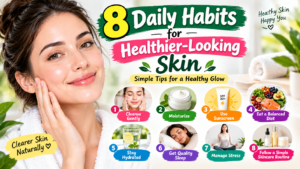

8 Daily Habits for Healthier-Looking Skin: Simple Tips for a Healthy Glow
Introduction
Healthy-looking skin often starts with simple daily habits rather than expensive skincare products. Your skin is the body’s largest organ, and it helps protect you from environmental irritants, germs, and moisture loss. Taking care of it consistently can help maintain a smoother texture, improve hydration, and support a natural, healthy appearance.
However, achieving healthier-looking skin does not require a complicated routine. Gentle cleansing, regular moisturizing, sun protection, balanced nutrition, and adequate sleep can all play important roles in maintaining skin health. Small lifestyle changes may also help reduce dryness, irritation, and the appearance of premature aging.
Each person’s skin is unique. Your skin’s appearance and feel can be influenced by a number of factors, including age, hormones, genetics, climate, and pre-existing skin disorders. What is effective for one individual might not be effective for another.
In this guide, you will discover eight practical daily habits for healthier-looking skin, along with easy ways to include them in your everyday routine.
1. Cleanse Your Skin Gently Every Day
Cleansing is one of the most important steps in a basic skincare routine. Throughout the day, sweat, excess oil, dirt, sunscreen, and environmental particles can accumulate on the skin. Removing these substances helps keep the skin clean and prepares it for moisturizer and other skincare products.
However, washing too frequently or using harsh cleansers can strip away protective oils and cause dryness, tightness, or irritation.
How to Cleanse Your Skin Properly
Follow these simple tips:
- Wash your face in the morning and before bedtime, adjusting if your skin becomes dry or irritated.
- Choose a gentle cleanser suited to your skin type.
- Use lukewarm water instead of very hot water.
- Massage the cleanser gently with your fingertips.
- Avoid aggressive scrubbing, rough brushes, and abrasive exfoliants.
- Pat your face dry with a clean, soft towel.
If you wear makeup or water-resistant sunscreen, use a suitable makeup remover or cleansing product to remove it thoroughly without rubbing harshly.
People with oily or acne-prone skin may benefit from a gentle foaming cleanser, while those with dry or sensitive skin may prefer a creamy, fragrance-free formula.
Daily tip: Clean skin gently rather than trying to make it feel completely oil-free. A comfortable, non-tight feeling after washing is a useful sign that your cleanser may suit you.
2. Apply Moisturizer to Maintain Hydration
Moisturizing helps reduce water loss from the skin and supports the skin barrier. When the skin barrier is functioning properly, skin generally feels more comfortable and is better able to retain moisture.
Dry skin may appear rough, flaky, dull, or more noticeable around fine lines. Regular use of a suitable moisturizer can improve softness and make the skin look smoother.
How to Choose the Right Moisturizer
Different skin types may benefit from different formulations.
For dry skin: Look for creams containing ingredients such as ceramides, glycerin, or hyaluronic acid.
For oily skin: Try a lightweight, non-comedogenic gel or lotion.
For sensitive skin: Choose fragrance-free products with a simple ingredient list.
For combination skin: Use a balanced moisturizer, applying a little more to dry areas if needed.
Apply moisturizer after cleansing while the skin is slightly damp. This can help trap moisture and improve hydration.
You do not need to purchase several expensive creams. One well-tolerated moisturizer that meets your skin’s needs may be enough for an effective daily routine.
3. Wear Sunscreen Every Day
Sun protection is one of the most valuable habits for maintaining healthier-looking skin over time. Ultraviolet radiation can contribute to sunburn, uneven pigmentation, premature wrinkles, and other forms of skin damage.
Even when the weather is cloudy, ultraviolet radiation can reach exposed skin. If you spend time outdoors, appropriate sun protection is important throughout the year.
How to Use Sunscreen Correctly
Choose a broad-spectrum sunscreen with SPF 30 or higher. Apply it generously to exposed skin, including your face, neck, ears, and other uncovered areas.
Remember these important tips:
- Apply sunscreen before going outdoors according to the product instructions.
- Reapply approximately every two hours while outdoors.
- Reapply after swimming, sweating heavily, or towel drying.
- Use a hat, sunglasses, and protective clothing when possible.
- Seek shade when sunlight is particularly intense.
If you have acne-prone skin, look for a non-comedogenic sunscreen. If your skin is sensitive, a fragrance-free product may be more comfortable.
Sunscreen does not prevent every skin concern, but regular use can help reduce sun-related damage and protect the results of your skincare routine.
4. Eat a Balanced Diet for Healthy-Looking Skin
Your diet provides nutrients that support normal skin function, tissue maintenance, and overall health. Although no particular food guarantees flawless skin, a balanced eating pattern can help your body obtain the nutrients it needs.
A varied diet is generally more useful than relying on a single so-called beauty food.
Include These Foods in Your Diet
Colorful fruits and vegetables: Carrots, spinach, tomatoes, berries, oranges, and peppers provide vitamins, minerals, and other beneficial compounds.
Healthy fats: Nuts, seeds, olive oil, and oily fish provide fats that support general health.
Protein-rich foods: Eggs, beans, lentils, fish, tofu, and lean meats provide protein needed for tissue maintenance and repair.
Whole grains: Oats, brown rice, and whole-grain bread provide fiber and other nutrients.
Zinc-containing foods: Beans, seeds, seafood, meat, and nuts can contribute to your zinc intake.
Try to limit excessive added sugar and highly processed foods while maintaining a balanced, enjoyable diet.
Remember that skin health is influenced by many factors, including hormones, genetics, skincare, and medical conditions. A healthy diet supports your skin but cannot replace treatment for acne, eczema, or other skin problems.
5. Drink Enough Water Throughout the Day
Hydration is important for overall health, and severe dehydration can affect the skin’s appearance and comfort. However, drinking extra water beyond your body’s needs has not been proven to eliminate wrinkles, cure acne, or guarantee glowing skin.
The goal is to maintain adequate hydration rather than force yourself to drink excessive amounts.
Simple Ways to Stay Hydrated
- Drink water regularly throughout the day.
- Keep a reusable water bottle nearby if it helps you remember.
- Include water-rich foods such as cucumbers, melons, oranges, and tomatoes.
- Drink more when you are physically active or spending time in hot weather.
- Pay attention to thirst and your body’s changing needs.
Your hydration requirements depend on factors such as climate, activity level, diet, and health.
Moisturizer also matters because the skin’s outer layer needs help retaining water. Drinking water and applying moisturizer serve different purposes, so one does not replace the other.
6. Get Enough Quality Sleep
Sleep is essential for general health and helps the body maintain its normal repair and recovery processes. Poor sleep may contribute to a tired appearance, under-eye puffiness, and reduced well-being.
Although sleeping well will not eliminate every skin concern, a consistent sleep schedule is a useful part of a healthy lifestyle.
Build a Better Sleep Routine
Try the following habits:
- Aim for around seven to nine hours of sleep per night if you are an adult.
- Go to bed and wake up at consistent times.
- Create a dark, quiet, comfortable sleeping environment.
- Reduce stimulating activities and bright screens before bedtime.
- Avoid excessive caffeine late in the day.
- Follow a relaxing bedtime routine.
Changing your pillowcase regularly can also help maintain a clean sleeping surface, particularly if you have acne-prone skin.
If you regularly experience poor sleep despite healthy habits, consider discussing it with a healthcare professional.
7. Manage Stress and Avoid Touching Your Face Frequently
Stress affects people in different ways, and ongoing stress may worsen certain skin conditions, including acne, for some individuals. Stress can also disrupt sleep and encourage habits that are less helpful for skin health.
Touching your face frequently, picking pimples, or squeezing blemishes may increase irritation and raise the risk of scarring or discoloration.
Practical Ways to Reduce Stress
Consider adding a few simple activities to your day:
- Take a short walk outdoors.
- Practice slow breathing or meditation.
- Stretch gently during work breaks.
- Make time for hobbies and relaxing activities.
- Maintain regular sleep and meal schedules.
- Talk to someone you trust when you feel overwhelmed.
Keep Your Hands Away From Breakouts
Avoid picking, squeezing, or scratching pimples. These actions can worsen inflammation and damage the surrounding skin.
If you often touch your face while working, try to become aware of the habit and keep your hands occupied when possible.
If stress seems to cause recurring flare-ups, you might be able to better control them by combining stress management with proper skincare.
8. Follow a Consistent and Simple Skincare Routine
Consistency is more important than using a large number of products. Frequently switching skincare products, layering too many active ingredients, or using strong treatments together may irritate the skin.
A simple routine makes it easier to understand what works for you and identify products that cause problems.
Morning Skincare Routine
A basic morning routine may include:
- A gentle cleanser, if needed.
- A suitable moisturizer.
- Broad-spectrum sunscreen with SPF 30 or higher.
If you use a treatment serum, choose one that addresses a specific concern and is suitable for your skin. You do not need a serum to maintain healthy-looking skin.
Evening Skincare Routine
At night, consider the following steps:
- Remove makeup and sunscreen.
- Cleanse gently.
- Apply a suitable treatment product if needed.
- Finish with moisturizer.
Introduce new products one at a time. Patch testing a new product on a small area of skin can help you identify irritation before using it more widely, although it cannot rule out every reaction.
Avoid using multiple exfoliating acids, retinoids, or other potentially irritating products at the same time without guidance.
Give your routine time to work. Some skincare benefits appear gradually, and acne treatments may require several weeks or longer to show noticeable improvement.
Common Skincare Mistakes to Avoid
Even with good intentions, certain habits can make skin look or feel worse.
Overwashing Your Face
Frequent washing and harsh cleansers may cause irritation and dryness. Cleanse gently and adjust your routine to your skin’s needs.
Skipping Sunscreen
Moisturizer alone does not provide reliable sun protection unless it contains an appropriately rated sunscreen and is applied correctly.
Using Too Many Active Ingredients
Combining several strong treatments may damage the skin barrier. Introduce products gradually and stop using a product that causes significant irritation.
Expecting Instant Results
Healthy-looking skin usually depends on consistent care. Avoid judging a new routine after only one or two days.
Following Unverified Home Remedies
Lemon juice, baking soda, toothpaste, and undiluted essential oils can irritate the skin. Choose products formulated for skin use rather than experimenting with harsh household ingredients.
When Should You See a Dermatologist?
Daily habits can support healthy skin, but some conditions need professional treatment. Consider seeing a dermatologist if you experience persistent acne, painful or deep pimples, new or changing skin lesions, severe itching, a spreading rash, or irritation that does not improve.
Seek medical advice if your skin problem is affecting your confidence or daily life. Early assessment may help prevent complications, including acne scarring.
If you develop sudden facial swelling, difficulty breathing, or a severe allergic reaction, seek emergency medical care.
Conclusion
Following these eight daily habits for healthier-looking skin can help you build a simple, sustainable skincare routine. Gentle cleansing, regular moisturizing, daily sunscreen, balanced nutrition, adequate hydration, quality sleep, stress management, and consistent skincare all contribute to overall skin health.
You do not need expensive products or complicated beauty routines to take good care of your skin. Start with the basics, choose products suited to your skin type, and make gradual changes that you can maintain.
Remember that healthy skin looks different from person to person. The goal is not perfection but skin that feels comfortable, well cared for, and protected. If you have a persistent skin concern, a dermatologist can help you find the most appropriate treatment.