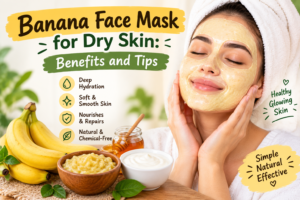

Dry skin can feel rough, tight, flaky, and uncomfortable, especially during cold weather or after using harsh skincare products. While moisturizers are essential for keeping the skin hydrated, some people also enjoy using natural ingredients as part of their skincare routine. One popular home remedy is a banana face mask for dry skin.
Bananas are widely available and contain vitamins, minerals, and naturally occurring carbohydrates. When mashed and applied to the skin, banana can create a soft, smooth mask that may temporarily improve the feel of dry skin. Combining banana with ingredients such as plain yogurt or honey can make the mask easier to spread.
But it’s crucial to keep in mind that for chronic skin issues, DIY face masks cannot take the place of a quality moisturizer or medical care.
The possible advantages of a banana face mask for dry skin, simple do-it-yourself recipes, application advice, and safety tips are all covered in this article.
What Is a Banana Face Mask?
A banana face mask is a homemade skincare treatment made by mashing a ripe banana and applying it to the face for a short period. Depending on the recipe, it may also include ingredients such as honey, plain yogurt, or oatmeal.
Bananas contain nutrients, including potassium and vitamin B6, as well as other naturally occurring plant compounds. Although these nutrients are beneficial as part of a balanced diet, there is limited scientific evidence that applying banana directly to the skin provides significant long-term skincare benefits.
A banana face mask may help soften the skin temporarily, but it should not be considered a proven treatment for severe dryness, eczema, wrinkles, or other skin conditions.
Benefits of a Banana Face Mask for Dry Skin
1. May Help Soften Dry Skin
One reason people use banana face masks is their smooth texture. Mashed banana creates a creamy mixture that spreads easily across the skin.
After rinsing, your skin may feel softer and smoother. This effect can be temporary, so applying a suitable moisturizer afterward is important to help maintain skin comfort.
2. Provides a Gentle Skincare Option
A simple banana mask uses a small number of ingredients and does not require complicated preparation. For people who enjoy DIY skincare, this can be an easy addition to an occasional self-care routine.
However, natural ingredients can still cause irritation or allergic reactions. Always test the mixture on a small area of skin before applying it to your entire face.
3. Contains Naturally Occurring Antioxidants
Bananas contain several plant compounds, including phenolic compounds, that have antioxidant activity in laboratory settings.
Antioxidants help protect cells from oxidative damage, but laboratory findings do not automatically prove that a banana face mask protects human skin or reverses visible signs of aging. More research is needed to establish specific benefits from topical banana.
4. May Temporarily Improve Skin Feel
The creamy consistency of a banana mask can leave the skin feeling smooth after use. Some people enjoy the temporary softening effect, especially when their skin feels rough.
For lasting relief from dryness, however, a moisturizer containing ingredients such as glycerin, ceramides, or petrolatum is generally a more reliable choice.
5. Can Be Combined with Other Skincare Ingredients
Banana can be combined with a few familiar ingredients to create different mask textures.
For example, plain yogurt creates a creamy consistency, while finely ground oatmeal may make the mixture thicker. Honey is another popular DIY ingredient, although it can cause irritation or allergy in some people.
Adding more ingredients does not necessarily make a face mask more effective. For sensitive or very dry skin, a simple recipe is usually the better starting point.
3 Easy Banana Face Mask Recipes for Dry Skin
Here are three simple recipes you can try if your skin tolerates the ingredients.
1. Simple Banana Face Mask
This is the easiest option for beginners because it uses just one ingredient.
Ingredients:
- ½ ripe banana
- 1 small bowl
Instructions:
- Peel the banana and place half of it in a clean bowl.
- Mash it thoroughly with a fork until it forms a smooth paste.
- Wash your face with a gentle cleanser and pat your skin dry.
- Apply a thin layer of mashed banana, avoiding your eyes and lips.
- Leave it on for approximately 5–10 minutes.
- Rinse thoroughly with lukewarm water and gently pat dry.
- Apply a fragrance-free moisturizer.
Best for: People who want to try a simple homemade face mask without additional ingredients.
Remember that this mask may temporarily soften your skin, but its ability to treat dry skin has not been established by strong clinical evidence.
2. Banana and Plain Yogurt Face Mask
Plain yogurt gives this mask a creamy texture and contains naturally occurring lactic acid. However, the concentration and effects of lactic acid in yogurt are not standardized, so yogurt should not be treated like a professionally formulated exfoliating product.
Ingredients:
- ½ ripe banana
- 1 teaspoon plain, unsweetened yogurt
Instructions:
- Mash the banana until smooth.
- Add the plain yogurt and mix well.
- Apply a thin layer to clean skin.
- Leave it on for 5–10 minutes.
- Rinse gently with lukewarm water.
- Apply a gentle moisturizer.
Potential benefit: The mixture may leave the skin feeling temporarily soft and smooth.
Precaution: Avoid this recipe if you have a dairy allergy, and do not use it on irritated, cracked, or inflamed skin.
3. Banana and Honey Face Mask
Honey is a common ingredient in homemade skincare because of its texture and moisture-attracting properties. However, evidence for specific benefits from applying ordinary kitchen honey to dry facial skin is limited.
Ingredients:
- ½ ripe banana
- ½ teaspoon plain honey
Instructions:
- Mash the banana in a clean bowl.
- Mix in the honey until the ingredients are evenly combined.
- Apply a thin layer to your face, keeping it away from your eyes.
- Leave it on for 5–10 minutes.
- Rinse thoroughly with lukewarm water.
- Finish with a fragrance-free moisturizer.
Potential benefit: The mixture may make the skin feel softer for a short time.
Precaution: Do not use honey if you have a known allergy to it or its ingredients. Stop immediately if you notice burning, itching, redness, or swelling.
How to Use a Banana Face Mask Correctly
Using a homemade face mask carefully can reduce the risk of irritation. Follow these tips before adding a banana mask to your routine.
1. Start with Clean Skin
Wash your face using a gentle, fragrance-free cleanser. Avoid harsh soaps and scrubs that can strip away natural oils and worsen dryness.
2. Perform a Patch Test
Before using the mask on your face, apply a small amount to an inconspicuous area of skin. Check for irritation over the next 24–48 hours.
A patch test can reduce risk, but it cannot guarantee that a reaction will not occur.
3. Apply a Thin Layer
Spread the mask gently without rubbing or scrubbing. Avoid the eye area, lips, and any broken or irritated skin.
4. Do Not Leave It on for Too Long
For a homemade banana mask, approximately 5–10 minutes is a reasonable precautionary limit. There is no established ideal application time, and leaving a mask on longer does not necessarily improve its effects.
5. Rinse with Lukewarm Water
Use lukewarm water rather than very hot water, which can aggravate dry skin. Remove the mask gently without rubbing.
6. Apply Moisturizer Immediately
This is one of the most important steps. Apply a fragrance-free moisturizer while your skin is still slightly damp. Look for products containing glycerin, ceramides, or petrolatum to help retain moisture and support the skin barrier.
7. Keep the Mask Fresh
Prepare the mask immediately before use and discard any leftovers. Do not store homemade face masks for later because they lack preservatives and can become contaminated.
How Often Should You Use a Banana Face Mask?
If your skin tolerates the ingredients, you could try using a banana face mask occasionally, such as once a week. However, there is no strong scientific evidence establishing an ideal frequency or proving that regular use improves dry skin.
If your skin is very dry or sensitive, prioritize a consistent moisturizing routine rather than frequent homemade masks.
Stop using the mask if you experience redness, itching, burning, swelling, or increased dryness.
Who Should Avoid a Banana Face Mask?
Although banana is a common food, it is not suitable for everyone’s skin.
You should avoid a banana face mask if:
- You have a known banana allergy.
- Your skin is cracked, bleeding, or severely irritated.
- You have an active rash or unexplained facial inflammation.
- Any ingredient in the recipe causes itching, redness, or discomfort.
People with eczema, rosacea, or highly sensitive skin may react to homemade masks even when the ingredients appear gentle. If you have persistent dryness, painful cracking, or symptoms that do not improve with regular moisturizer, consult a qualified healthcare professional or dermatologist.
Better Daily Skincare Tips for Dry Skin
A banana face mask may be an occasional self-care option, but a consistent skincare routine is more important for managing dryness.
Choose a Gentle Cleanser
Use a mild, fragrance-free cleanser and avoid washing your face excessively. Hot water and harsh cleansing products can worsen dryness.
Moisturize Every Day
Apply moisturizer after washing your face and whenever your skin feels dry. Creams and ointments often provide more effective moisture retention than lightweight lotions.
Ingredients worth considering include:
- Glycerin: Helps attract water to the skin.
- Ceramides: Help support the skin’s protective barrier.
- Petrolatum: Helps reduce moisture loss.
- Hyaluronic acid: Helps attract and retain water in the skin.
Choose a product that suits your skin and does not cause irritation.
Protect Your Skin from the Sun
Daily sun protection helps reduce UV-related skin damage and premature aging. Use a broad-spectrum sunscreen with SPF 30 or higher and reapply according to its instructions, especially after sweating or swimming.
Stay Hydrated and Eat a Balanced Diet
Drink enough water to meet your body’s needs and eat a varied diet that includes fruits, vegetables, protein, and healthy fats. Nutrition supports overall health, although drinking excessive water or eating a particular fruit will not cure dry skin.
Avoid Harsh DIY Ingredients
Lemon juice, baking soda, strong essential oils, and abrasive scrubs can irritate the skin or damage its protective barrier. Avoid applying these ingredients to your face, especially if you already have dry or sensitive skin.
Frequently Asked Questions (FAQs)
1. Is a banana face mask good for dry skin?
A banana face mask may temporarily make skin feel softer, but strong clinical evidence supporting its effectiveness for dry skin is lacking. A suitable moisturizer is a more reliable option for ongoing dryness.
2. Can I apply a banana face mask every day?
Daily use is not necessary and has not been proven to provide additional benefits. If you choose to try a banana mask, occasional use is more reasonable, provided your skin tolerates it.
3. How long should I leave a banana mask on my face?
You can start with approximately 5–10 minutes and rinse thoroughly. There is no scientifically established ideal duration for a homemade banana mask.
4. Does a banana face mask remove wrinkles?
There is no convincing clinical evidence that a banana face mask removes wrinkles or reverses skin aging. Daily sunscreen and a consistent skincare routine are better-supported approaches to maintaining healthy-looking skin.
5. Can I use a banana face mask on sensitive skin?
Sensitive skin may react to banana or other ingredients in a homemade mask. Perform a patch test first, avoid applying the mask to irritated skin, and discontinue use if any reaction develops. People with very sensitive skin may prefer a fragrance-free moisturizer instead.
6. Is a banana face mask better than moisturizer?
No. A homemade banana mask is not a substitute for a formulated moisturizer. Moisturizers containing glycerin, ceramides, or petrolatum are designed to help hydrate the skin and reduce moisture loss.
Conclusion
A banana face mask for dry skin is a simple DIY skincare option that may temporarily leave your skin feeling softer and smoother. You can prepare it with mashed banana alone or combine it with a small amount of plain yogurt or honey, provided you tolerate those ingredients.
However, scientific evidence for the specific skin benefits of topical banana is limited. For lasting relief from dryness, focus on gentle cleansing, regular moisturizing, and daily sun protection.
Always patch-test homemade skincare ingredients, avoid applying masks to irritated skin, and discontinue use if you experience a reaction.
The best skincare routine is one that keeps your skin comfortable, protects its natural barrier, and uses products suited to your individual needs.