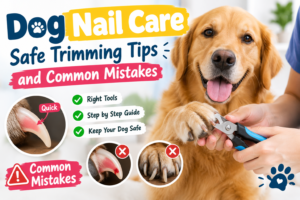

Introduction
Dog nail care is an essential part of keeping your pet healthy, comfortable, and active. Although many dog owners focus on feeding, bathing, brushing, and exercise, nail maintenance is equally important. Overgrown nails can cause discomfort, affect walking posture, and sometimes lead to painful breaks or injuries. Regular nail trimming helps dogs move comfortably and reduces the risk of nail-related problems.
However, trimming a dog’s nails can be challenging, especially for beginners. Some dogs become nervous when they see nail clippers, while others pull their paws away or struggle during the process. Cutting the nails too short is another common mistake that can cause bleeding and pain.
The good news is that with perseverance, the appropriate equipment, and a regular schedule, dog nail care becomes simpler. This guide will teach you how to safely trim dog nails, spot overgrown nail symptoms, steer clear of typical blunders, and maintain the health of your dog’s paws at home.
Why Is Dog Nail Care Important?
Regular nail care is important for your dog’s comfort and overall well-being. A dog’s nails continuously grow, and they may not wear down naturally enough through everyday walking, especially if the dog spends most of its time indoors or walks mainly on soft surfaces.
When nails become too long, they can touch the ground while your dog stands or walks. This pressure may cause discomfort and change the way your dog places its feet. Over time, persistently overgrown nails may contribute to abnormal movement and additional strain on the toes.
Long nails can also catch on carpets, blankets, grass, and other surfaces. This can result in painful breaks, torn nails, or injuries around the nail bed. In severe cases, a nail may curl into the paw pad and cause a wound or infection.
Regular trimming helps avoid these issues and improves the comfort of playing, running, and walking. Regularly examining your dog’s paws also enables you to identify any abnormalities, such as swelling, redness, or broken nails, before they worsen.
How Often Should You Trim Your Dog’s Nails?
There is no single trimming schedule that works for every dog. Nail growth varies according to breed, age, activity level, walking surfaces, and individual nail structure.
Many dogs need their nails trimmed approximately every three to four weeks, while others require more frequent maintenance. Dogs that regularly walk on suitable rough surfaces may naturally wear down some of their nails. However, the dewclaws, which sit higher on the legs, often receive little contact with the ground and may need extra attention.
Instead of following a calendar alone, inspect your dog’s nails regularly. If you hear clicking sounds when your dog walks across a hard floor, the nails may be too long. Another sign is when the nails touch the ground while your dog is standing naturally.
Do not wait until the nails become extremely long. Small, regular trims are generally easier and safer than attempting to shorten heavily overgrown nails in one session.
Essential Tools for Safe Dog Nail Trimming
Choosing appropriate tools can make the trimming process more comfortable for both you and your dog.
Dog nail clippers: Guillotine-style and scissor-style clippers are common options. Select a size suitable for your dog’s nails and make sure the blades are sharp. Dull clippers can crush the nail instead of cutting it cleanly.
Pet nail grinder: A grinder gradually shortens the nail and smooths sharp edges. Some dogs tolerate it better than clippers, although the noise and vibration may frighten sensitive pets.
Styptic powder: This product helps control minor bleeding if you accidentally cut the quick. Keep it nearby before starting.
Treats: Small, dog-safe treats reward calm behavior and help create a positive association with nail care.
Good lighting: Bright lighting helps you see the nail structure and identify the quick, particularly when working with light-colored nails.
A non-slip surface: A stable mat or floor helps your dog feel secure and reduces the risk of slipping during trimming.
Never use ordinary human nail clippers on large, thick dog nails if they cannot cut them cleanly. Using an unsuitable tool may cause crushing or splitting.
How to Trim Dog Nails Safely at Home
Step 1: Help Your Dog Feel Comfortable
Choose a quiet location where your dog feels safe. Avoid trimming immediately after a stressful event or when your pet is highly energetic.
Let your dog sniff the clippers or grinder before you begin. If your dog is uncomfortable with paw handling, spend a few days gently touching the paws and rewarding relaxed behavior. You do not have to complete the entire process in one sitting.
Step 2: Examine Each Nail
Hold the paw gently and inspect every nail, including the dewclaws. Look for cracks, discoloration, swelling, or signs of pain.
In light-colored nails, the quick often appears as a pink area inside the nail. It contains blood vessels and nerves, so cutting into it can cause pain and bleeding.
Dark nails are more difficult to assess because the quick may not be visible from the outside. For these nails, take extra care and remove only very small amounts at a time.
Step 3: Position the Clippers Correctly
Hold the paw securely without squeezing it. Position the clippers so you can remove a small portion of the nail tip without cutting toward the quick.
For dark nails, make a series of tiny cuts and examine the newly exposed surface after each one. Stop when you see a dark central area or a moist-looking center, which can indicate that you are approaching the quick.
If you are unsure where to cut, ask a veterinarian or professional groomer to demonstrate the technique.
Step 4: Trim Small Sections
Avoid removing too much nail at once. Make controlled cuts rather than attempting to shorten the entire nail in one movement.
If your dog has very long nails, the quick may also have grown longer than usual. You may need several gradual trimming sessions over time, with guidance from a veterinary professional when necessary.
Step 5: Smooth the Edges
After trimming, use a pet nail grinder or an appropriate nail file to smooth sharp edges if your dog tolerates it. Keep the grinder moving briefly rather than holding it against one spot, because friction can generate heat.
Avoid grinding the fur, skin, or paw pads. Take breaks if the nail or tool becomes warm.
Step 6: Reward Your Dog
Give your dog praise and a treat after each successful nail or paw-handling session. If your pet becomes distressed, stop and try again later.
Short, positive sessions are often more effective than forcing a frightened dog to tolerate a complete trim.
Common Dog Nail Trimming Mistakes to Avoid
Cutting the Nails Too Short
One of the most frequent mistakes is cutting into the quick. This can cause pain and bleeding and may make your dog fearful of future nail trimming.
The safest approach is to remove small amounts at a time, particularly when trimming dark nails. Never rush because you want to finish quickly.
Ignoring the Dewclaws
Some owners forget the dewclaws because they do not touch the ground during normal walking. These nails can continue growing and may eventually curl into the surrounding skin.
Check all four paws and examine any additional dewclaws your dog may have.
Using Dull or Incorrect Tools
Poor-quality or blunt clippers can split the nail and make trimming uncomfortable. Always use clean, sharp tools designed for pets and appropriate for your dog’s size.
Replace damaged equipment rather than continuing to use it.
Forcing a Frightened Dog
Holding a struggling dog down can increase fear and raise the risk of accidental injury. It may also make future grooming sessions more difficult.
Instead, gradually introduce paw handling, reward calm behavior, and work on one or two nails at a time. If your dog becomes aggressive or extremely distressed, seek help from a veterinarian or qualified groomer.
Trimming Only When Nails Look Extremely Long
Waiting too long can make nail maintenance harder. When nails remain overgrown for an extended period, the quick may lengthen, reducing how much nail can safely be removed at once.
Regular inspections and modest trims can help prevent this problem.
Forgetting to Check for Nail Problems
Trimming is not just about shortening nails. It is also an opportunity to inspect the paws for injuries, swelling, unusual odors, and signs of infection.
Do not simply cut through a cracked, infected, or painful nail. Have a veterinarian examine the problem when necessary.
What to Do If You Accidentally Cut the Quick
Even experienced dog owners can accidentally cut the quick. If this happens, remain calm and prevent your dog from running around while the nail is bleeding.
Apply styptic powder according to the product instructions and use gentle, steady pressure. If you do not have styptic powder, clean gauze and gentle pressure may help while you seek appropriate advice.
Avoid repeatedly wiping the area because this can disturb clot formation. Do not apply household chemicals or unverified home remedies to the wound.
Contact a veterinarian if bleeding does not stop after several minutes of firm pressure, the injury appears severe, the nail is badly torn, or your dog shows significant pain. Seek prompt veterinary care if the nail is partially detached or the surrounding tissue is seriously injured.
Signs Your Dog Needs Professional Nail Care
Some dogs can have their nails trimmed safely at home, but others need professional assistance. Contact a veterinarian or experienced groomer if your dog has extremely long nails, dark nails that are difficult to assess, severe anxiety, or a history of struggling during grooming.
Professional evaluation is especially important when you notice:
- Persistent limping or difficulty walking.
- Swelling, redness, or discharge around a nail.
- A broken nail with exposed tissue.
- Nails that curl toward or into the paw pad.
- Persistent licking or chewing of the paws.
- Sudden sensitivity when you touch a foot.
- Unusual nail discoloration or a foul smell.
These signs may indicate an injury, infection, or another medical problem. A veterinarian can identify the cause and recommend appropriate treatment.
Tips for Maintaining Healthy Dog Nails
Good nail health depends on regular care rather than occasional trimming alone.
Check your dog’s paws once a week and establish a trimming schedule based on how quickly the nails grow. Introduce nail handling gradually to puppies so they become familiar with having their paws touched.
Keep the fur around the paws tidy when appropriate, and inspect between the toes for dirt, debris, or irritation. Provide regular walks suited to your dog’s age, fitness, and health, but do not rely on walking alone to maintain nail length.
Feed a balanced, complete diet appropriate for your dog’s life stage. If your dog develops brittle nails, recurring nail infections, or unusual nail changes, consult a veterinarian rather than automatically adding supplements.
For older dogs or pets with arthritis, arrange comfortable positioning and more frequent, gentle nail checks. These dogs may have difficulty maintaining their nails naturally and may find paw handling uncomfortable.
Frequently Asked Questions About Dog Nail Care
Can I Trim My Dog’s Nails at Home?
Yes. Many dogs can have their nails trimmed at home when the owner uses suitable tools, understands where the quick is located, and works patiently. If you are uncertain about the technique, ask a veterinary professional to demonstrate it.
How Do I Know If My Dog’s Nails Are Too Long?
Clicking sounds on hard floors, nails touching the ground while standing, and nails beginning to curve are common warning signs. Some dogs may also show discomfort when walking.
Is a Nail Grinder Better Than Clippers?
Neither option is best for every dog. Clippers are usually faster, while grinders can provide gradual control and smoother edges. The best choice depends on your dog’s temperament, nail thickness, and your comfort using the tool.
What Should I Do If My Dog Refuses Nail Trimming?
Stop if your dog becomes highly stressed. Build tolerance through short paw-handling sessions and rewards. If the fear continues or creates a risk of injury, seek help from a veterinarian or qualified groomer.
Do Dogs Need Their Nails Trimmed in Winter?
Yes. Nail growth continues throughout the year. Dogs that walk less during winter may wear down their nails less naturally, so regular inspections are particularly useful.
Conclusion
Dog nail care is a simple but important part of responsible pet ownership. Regular trimming helps maintain comfortable movement, reduces the risk of broken nails, and allows you to identify paw problems early.
The key to safe nail trimming is preparation, patience, appropriate equipment, and careful attention to the quick. Avoid cutting too much at once, never ignore the dewclaws, and do not force a frightened dog through the process.
By creating a positive routine and checking your dog’s paws regularly, you can make nail care safer and less stressful. If you encounter bleeding that will not stop, a painful nail, or signs of infection, seek veterinary advice.
A few minutes of routine nail care can make a meaningful difference in your dog’s comfort, mobility, and quality of life.
Disclaimer: This article is for general educational purposes and does not replace professional veterinary advice. Consult a veterinarian for persistent nail problems, significant injuries, or concerns about your dog’s health.