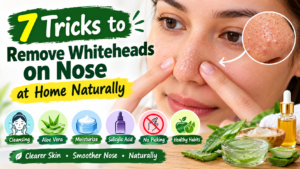

7 Tricks to Remove Whiteheads on Nose at Home Naturally
Whiteheads on the nose are a common skincare concern that can make your skin look bumpy, uneven, and less smooth. These small white or skin-colored bumps often appear when excess oil and dead skin cells block the pores. Because the nose usually produces more oil than some other areas of the face, it is a common place for clogged pores and whiteheads to develop.
The good news is that you can manage whiteheads and enhance the appearance of your skin at home with a few easy steps. Over time, clogged pores may be lessened with gentle cleansing, adequate moisturizing, and the right skincare products. But it’s crucial to stay away from harsh home remedies that could irritate or harm your skin.
This guide will explain the causes of whiteheads on your nose, provide seven useful tips for managing them naturally, and teach you how to keep them from coming back.
What Are Whiteheads on the Nose?
Whiteheads are a type of non-inflammatory acne that develops when a pore becomes clogged with oil and dead skin cells. Unlike blackheads, which have an open surface, whiteheads have a closed opening and often appear as small white or skin-colored bumps.
The nose is particularly prone to clogged pores because it contains many sebaceous glands that produce sebum, the natural oil that helps protect your skin.
However, not every tiny bump on the nose is a whitehead. Some bumps are sebaceous filaments, which are normal structures that help move oil through your pores. They often appear as tiny gray, yellowish, or skin-colored dots.
Understanding the difference is important because sebaceous filaments are normal and naturally return after extraction, while true whiteheads may respond to acne treatments.
If your nose also feels greasy or itchy, other factors may be contributing to your skin concerns. Read our complete guide to nose whiteheads, oily nose, and itchy nose causes, treatments, and prevention to learn more about these symptoms.
What Causes Whiteheads on the Nose?
Several factors can contribute to the development of whiteheads.
Excess oil production: When your skin produces more oil than necessary, sebum can combine with dead skin cells and block pores.
Dead skin cell buildup: Dead skin cells naturally shed from your skin. When they accumulate around pore openings, they may contribute to clogged pores.
Pore-clogging skincare products: Some heavy moisturizers, makeup products, and facial oils may contribute to breakouts in people who are prone to acne.
Hormonal changes: Hormonal fluctuations can increase oil production and make whiteheads more likely to develop.
Excessive scrubbing: Scrubbing your nose too aggressively can irritate the skin and make existing bumps appear redder or more noticeable.
Inconsistent cleansing: Failing to remove makeup, sunscreen, and excess oil at the end of the day may contribute to clogged pores.
Understanding these causes can help you choose a skincare routine that manages whiteheads without damaging your skin.
1. Clean Your Nose With a Gentle Facial Cleanser
One of the simplest ways to manage whiteheads is to wash your face with a gentle cleanser twice daily.
A suitable facial cleanser removes excess oil, sweat, sunscreen, and everyday impurities from the surface of your skin. It can help keep your nose clean without stripping away too much of its natural moisture.
Choose a mild, non-comedogenic cleanser that suits your skin type. Wet your face with lukewarm water, gently massage the cleanser over your nose using your fingertips, and rinse thoroughly.
Avoid using rough brushes, abrasive scrubs, or excessive pressure. These methods can irritate your skin and may worsen redness.
If you exercise or sweat heavily, washing your face afterward can also help remove sweat and oil.
Remember that cleansing alone may not eliminate established whiteheads. However, it provides a useful foundation for an effective skincare routine.
Helpful tip: Avoid washing your face repeatedly throughout the day. Over-cleansing can cause dryness and irritation.
2. Use a Warm Compress to Soften Your Skin
A warm compress can be a gentle addition to your skincare routine. It may help soften the surface of your skin and make cleansing more comfortable.
To try this method, soak a clean washcloth in comfortably warm water. Wring out the excess water and place the cloth gently over your nose for a few minutes.
Afterward, remove the cloth, gently pat your skin dry, and apply a suitable moisturizer.
It is important to understand that warm water does not dissolve whiteheads or permanently open pores. This method is mainly intended to provide comfort rather than remove clogged pores directly.
Never use boiling water or hold your face over a container of hot water. Excessive heat can cause burns and irritation.
If your skin is sensitive, red, or inflamed, skip the warm compress and focus on gentle cleansing instead.
Helpful tip: Use a clean washcloth each time to reduce the transfer of dirt and bacteria to your face.
3. Apply Aloe Vera Gel for Skin Comfort
Aloe vera is commonly used in skincare products because it can help soothe and moisturize the skin. It may be useful if your nose feels dry or irritated.
Choose a fragrance-free aloe vera gel formulated for facial use. Apply a thin layer to clean skin and observe how your skin responds.
Aloe vera may support skin comfort, but there is limited evidence that it can remove whiteheads or unclog pores on its own. For that reason, it is better to consider aloe vera a soothing skincare option rather than a proven acne treatment.
Before applying a new product to your face, test it on a small area of skin. Stop using it if you experience itching, burning, swelling, or a rash.
Avoid homemade mixtures containing lemon juice, toothpaste, or other harsh ingredients, even if they are described as natural remedies.
Helpful tip: If you already use a moisturizer that suits your skin, you do not need to add aloe vera unless you find it helpful.
4. Keep Your Nose Moisturized
People with oily skin sometimes avoid moisturizers because they believe these products will make their nose greasier. However, oily skin can still become dehydrated or irritated.
A suitable moisturizer helps maintain the skin barrier and can reduce dryness caused by cleansing or acne treatments.
Look for a lightweight, oil-free, non-comedogenic moisturizer. Gel-based or lotion-based formulas may be comfortable for oily skin, while people with dry skin may prefer a richer formula.
Apply moisturizer after cleansing. Use a small amount and spread it gently over your face, including your nose.
Moisturizing does not directly remove whiteheads, but it supports skin health and can help you tolerate treatments such as salicylic acid.
Avoid choosing products solely because they are labeled natural or oil-free. The overall formulation and how your skin responds are more important.
Helpful tip: If a new moisturizer consistently causes breakouts, discontinue it and consider trying a different non-comedogenic formula.
5. Try Salicylic Acid to Help Unclog Pores
If gentle home care is not enough, salicylic acid may be a useful option for managing whiteheads.
Salicylic acid is a beta-hydroxy acid, commonly called BHA. It helps exfoliate dead skin cells and can penetrate oily pores, making it a popular ingredient in products designed for blackheads and whiteheads.
For beginners, an over-the-counter product containing a low concentration, such as 0.5% to 2%, may be appropriate. Follow the product instructions and begin with occasional use rather than applying it several times a day.
Use a moisturizer to help maintain your skin barrier. Avoid combining salicylic acid with several other strong exfoliants or acne treatments when first introducing it.
Some people experience dryness, redness, or peeling. If irritation develops, reduce use or stop the product. People with sensitive skin should introduce it cautiously.
Unlike many homemade remedies, salicylic acid has established uses in acne skincare. Nevertheless, results vary depending on the person and the severity of the clogged pores.
For additional guidance, read our detailed article about nose whitehead treatment, which can help you explore suitable ways to manage these bumps.
Helpful tip: Give a suitable treatment several weeks to work. Avoid increasing the amount or frequency simply because you want faster results.
6. Never Squeeze or Pick Whiteheads
Squeezing whiteheads can be tempting, especially when they are clearly visible on the nose. However, pressing or picking at them can damage the surrounding skin.
Forceful extraction may cause redness, inflammation, scabs, dark marks, and scarring. It can also increase the risk of infection.
Sometimes a bump is not a whitehead at all but a sebaceous filament or another type of skin lesion. Attempting to force it out may cause unnecessary irritation without providing lasting results.
Instead, keep your skin clean, use suitable skincare products, and allow the bump to improve over time.
Avoid using needles, sharp tools, metal extraction instruments, or aggressive pore-removal devices at home. If whiteheads are persistent or particularly stubborn, a dermatologist can assess your skin and recommend an appropriate treatment or professional extraction when necessary.
If your main concern is removing visible bumps safely, learn more about nose whitehead removal for additional guidance.
Helpful tip: Keep your fingernails away from your nose, particularly when your skin is irritated or inflamed.
7. Follow Healthy Daily Skincare Habits
Your daily habits can make a difference in maintaining healthy-looking skin and reducing factors that contribute to clogged pores.
Start with a consistent routine. Cleanse your face in the morning and evening, apply a suitable moisturizer, and use sunscreen during the day.
Remove makeup and sunscreen before sleeping. Choose products labeled non-comedogenic when possible, particularly if your skin is oily or acne-prone.
Clean makeup brushes and reusable facial tools regularly. Change pillowcases regularly and avoid sharing towels or skincare products that come into direct contact with your face.
If you sweat after exercise, gently cleanse your skin rather than allowing sweat and oil to remain on your face for an extended period.
A balanced diet, adequate sleep, and regular physical activity can support general well-being. However, no specific food, drink, or detox remedy is guaranteed to remove whiteheads.
Avoid frequently switching skincare products or applying several new treatments at once. Introducing one product at a time makes it easier to identify irritation or unwanted reactions.
Helpful tip: Consistency is more important than having a complicated skincare routine with many products.
Natural Remedies You Should Avoid
Not every home remedy promoted online is safe for your skin. Some common DIY treatments can cause more harm than good.
Avoid applying lemon juice, undiluted apple cider vinegar, toothpaste, or baking soda directly to your nose. These substances can irritate the skin, disrupt its protective barrier, or cause burns and discoloration.
Rough sugar scrubs and aggressive brushing can also worsen irritation. Similarly, popping whiteheads with sharp tools may increase the risk of infection and scarring.
Natural ingredients are not automatically safe or effective. Products specifically formulated for facial skin are generally a better option than harsh homemade mixtures.
If a remedy causes burning, persistent redness, swelling, or itching, wash it off gently and discontinue use.
How Long Does It Take to Get Rid of Nose Whiteheads?
Whiteheads do not usually disappear overnight. The time needed to see improvement depends on your skin type, the number of clogged pores, and the treatment you choose.
Gentle cleansing and moisturizing can improve skin comfort relatively quickly, but acne treatments generally require consistent use over several weeks.
Avoid trying to remove every bump in one session. Excessive squeezing, scrubbing, or applying multiple active ingredients can damage your skin and make the problem worse.
If your whiteheads do not improve after several weeks of appropriate skincare, or if they become painful, inflamed, or widespread, consult a dermatologist.
A professional can determine whether the bumps are whiteheads, sebaceous filaments, or another skin condition and recommend the most appropriate treatment.
Frequently Asked Questions
1. How can I remove whiteheads from my nose naturally?
You can begin with gentle cleansing, regular moisturizing, and avoiding pore-clogging products. A warm compress may provide comfort, while aloe vera may help soothe irritated skin. These methods are not guaranteed to remove existing whiteheads, so persistent clogged pores may require an evidence-based acne treatment.
2. Can whiteheads on the nose disappear overnight?
Whiteheads rarely disappear completely overnight. Consistent skincare and appropriate acne treatments usually work gradually. Avoid squeezing them for immediate results because this can cause inflammation and scarring.
3. Is toothpaste effective for removing whiteheads?
No. Toothpaste is not a recommended whitehead treatment. Its ingredients may irritate facial skin and cause dryness or redness. Use skincare products formulated for acne-prone skin instead.
4. Does warm water remove whiteheads?
Warm water helps cleanse the skin comfortably, but it does not remove whiteheads by itself. Avoid very hot water and aggressive steaming because these can irritate or burn your skin.
5. What is the difference between whiteheads and sebaceous filaments?
Whiteheads are clogged pores with a closed opening. Sebaceous filaments are normal structures that help move oil through pores. They are especially noticeable on the nose and naturally become visible again after extraction.
6. Which ingredient works best for nose whiteheads?
Salicylic acid is a commonly used ingredient for clogged pores and mild acne. The best option depends on your skin type, sensitivity, and the severity of your symptoms.
7. When should I see a dermatologist?
Consider seeing a dermatologist if the bumps persist despite appropriate skincare, become painful, develop significant redness, or leave scars. Professional advice can help identify the cause and prevent unnecessary skin damage.
Conclusion
Whiteheads on the nose are common, but a gentle and consistent skincare routine can help manage them. Washing your face with a mild cleanser, using a suitable moisturizer, avoiding squeezing, and choosing non-comedogenic products are practical steps to support clearer-looking skin.
Aloe vera and warm compresses may offer limited supportive benefits, while salicylic acid can help treat clogged pores more directly. Avoid harsh DIY remedies and give your skincare routine enough time to work.
If your nose continues to develop whiteheads or the bumps become painful or irritated, consult a dermatologist for personalized advice.
Remember that healthy skin takes time. Focus on gentle care, choose suitable products, and avoid aggressive extraction to work toward smoother, healthier-looking skin.