
Introduction
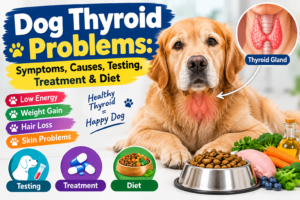
Dog thyroid problems can affect a dog’s metabolism, energy level, skin, coat, weight, and overall health. The most common thyroid disorder in dogs is hypothyroidism, a condition in which the thyroid gland does not produce enough thyroid hormones.
Thyroid hormones affect numerous bodily systems and aid in controlling the body’s metabolism. A dog may experience fatigue, gain weight, develop skin or coat issues, and lose interest in exercise when hormone levels fall too low.
Dogs in their middle and adult years are most frequently diagnosed with hypothyroidism. However, a dog should not be diagnosed solely on the basis of symptoms because many of its symptoms might also occur with other medical disorders. For a precise diagnosis, a veterinary examination and suitable blood testing are crucial.
This guide explains dog thyroid problems, symptoms, causes, testing, treatment, medication, diet, and long-term care.
What Is Hypothyroidism in Dogs?
Hypothyroidism occurs when a dog’s body does not have enough thyroid hormone. In dogs, most cases are caused by problems involving the thyroid gland itself. More than 95% of clinical cases are associated with destruction or loss of functional thyroid tissue.
The thyroid gland is located in the neck and produces hormones that help control metabolic activity. When hormone production decreases, many body processes slow down.
Hypothyroidism is most common in dogs between approximately 4 and 10 years of age, particularly medium and large breeds. However, it can occur in many different breeds.
Common Symptoms of Dog Thyroid Problems
The signs of hypothyroidism can develop slowly, sometimes making them difficult for owners to notice at first.
1. Unexplained Weight Gain
One of the most recognizable signs is weight gain without a significant increase in food intake.
A dog may gain weight because its metabolic rate has slowed. However, weight gain can have many other causes, including overfeeding, lack of exercise, aging, and other medical conditions.
2. Low Energy and Lethargy
A dog with hypothyroidism may seem unusually tired or less interested in normal activities.
You may notice that your dog:
- Sleeps more than usual
- Does not want to play
- Becomes tired during walks
- Moves more slowly
- Appears mentally dull
- Has reduced interest in exercise
Lethargy and exercise intolerance are common signs associated with canine hypothyroidism.
3. Skin and Coat Problems
Skin and coat changes are another important sign.
A dog may develop:
- Dry or dull coat
- Excessive shedding
- Hair thinning
- Hair loss
- Darker skin pigmentation
- Recurrent skin infections
- Poor hair regrowth
- Thickened skin
Hair loss may especially affect the trunk and can sometimes produce a characteristic “rat tail” appearance.
4. Feeling Cold
Some hypothyroid dogs seek warm places more often because they have difficulty maintaining normal body temperature.
You might notice your dog sleeping close to heaters, blankets, or other warm areas.
5. Recurrent Ear or Skin Infections
Dogs with hypothyroidism can develop recurring skin problems, including bacterial infections and ear infections.
If your dog repeatedly develops skin infections despite treatment, your veterinarian may investigate underlying conditions, including hormonal disorders.
6. Slow Heart Rate
A slower-than-normal heart rate can occur in dogs with hypothyroidism. This is one reason a complete veterinary examination is important when thyroid disease is suspected.
7. Changes in Behavior
Some dogs may become less alert, less active, or mentally dull. These changes can be subtle and may develop gradually.
What Causes Thyroid Problems in Dogs?
The most common cause of canine hypothyroidism is destruction or loss of thyroid tissue.
Two important causes include:
Autoimmune Thyroiditis
In some dogs, the immune system mistakenly attacks thyroid tissue. This is known as lymphocytic thyroiditis or autoimmune thyroiditis.
Over time, damage to the thyroid gland can reduce the production of thyroid hormones.
Idiopathic Thyroid Atrophy
Another major cause is thyroid gland atrophy, where functional thyroid tissue is gradually lost without an identifiable underlying cause. AAHA describes these as major mechanisms of acquired canine hypothyroidism.
Less commonly, thyroid hormone deficiency can be related to problems involving the pituitary gland or congenital abnormalities.
How Are Dog Thyroid Problems Diagnosed?
Diagnosing hypothyroidism requires more than one blood test in many cases.
This is important because a low thyroid hormone result does not automatically mean that a dog has hypothyroidism. Other illnesses, medications, breed differences, and certain physiological conditions can lower thyroid hormone levels.
Total T4 Test
A total T4 (TT4) blood test is commonly used as an initial screening test.
A normal TT4, particularly when comfortably within the laboratory’s reference range, makes hypothyroidism less likely. However, a low TT4 by itself does not confirm the disease.
Free T4 Test
A veterinarian may recommend a free T4 test, especially when the initial results and clinical signs are unclear.
Free T4 can provide additional information about thyroid function and is often interpreted together with other test results.
TSH Test
A canine thyroid-stimulating hormone (TSH) test may also be used.
Dogs with primary hypothyroidism commonly have low thyroid hormone levels and increased TSH. However, TSH is not perfect because some dogs with confirmed hypothyroidism can have TSH concentrations within the normal range.
Additional Testing
Depending on the dog, a veterinarian may recommend:
- Complete blood count
- Blood chemistry testing
- Cholesterol testing
- Triglyceride testing
- Thyroid antibody testing
- Additional thyroid testing
- Thyroid imaging in selected cases
Veterinarians also consider the dog’s breed, age, medications, symptoms, and other illnesses before making a diagnosis.
Why a Low T4 Does Not Always Mean Hypothyroidism
This is an important point for dog owners.
Some sick dogs without thyroid disease can have reduced thyroid hormone levels. Certain medications can also influence thyroid test results. Some breeds naturally have lower thyroid hormone concentrations.
For this reason, veterinary guidelines recommend interpreting thyroid tests together with the dog’s clinical signs and other laboratory findings rather than diagnosing hypothyroidism from a single low T4 result.
Treatment for Dog Thyroid Problems
The standard treatment for confirmed canine hypothyroidism is thyroid hormone replacement, usually with synthetic levothyroxine.
Levothyroxine replaces the thyroid hormone that the dog’s body is not producing adequately. Treatment generally needs to continue long term and, in most cases, for the dog’s lifetime.
How Quickly Does Treatment Work?
Some improvements can occur relatively quickly.
Energy and alertness may improve within a few weeks, while skin and coat problems and body weight can take considerably longer to improve. Merck notes that dermatological signs and body weight may take up to several months to improve.
Owners should not increase or decrease the medication without veterinary guidance.
Monitoring Thyroid Medication
Regular monitoring is an important part of treatment.
Veterinarians commonly perform follow-up thyroid hormone testing after treatment begins and after dosage changes. Once the dog’s condition is stable, ongoing monitoring is generally recommended at regular intervals.
AAHA guidance recommends monitoring thyroid hormone levels after starting treatment and then periodically once control is achieved.
If your dog continues to show symptoms despite treatment, the veterinarian may check medication absorption, dosing, administration, testing results, or whether another medical condition is responsible.
Best Diet for a Dog With Hypothyroidism
There is no single special diet that can cure hypothyroidism.
The most important goal is to provide a complete and balanced diet appropriate for your dog’s age, size, activity level, and health needs.
Focus on Healthy Weight
Because hypothyroidism can contribute to weight gain, portion control is particularly important.
Your veterinarian can help determine:
- Appropriate daily calories
- Ideal body weight
- Portion size
- Treat allowance
- Exercise requirements
Avoid giving excessive treats or table scraps simply because your dog appears hungry.
Quality Protein
A balanced dog food should provide appropriate levels of high-quality protein and other essential nutrients.
Protein supports muscle maintenance, especially when a dog is overweight or less active.
Omega-3 Fatty Acids
Foods containing appropriate omega-3 fatty acids may support overall skin and coat health. However, supplements should be discussed with your veterinarian before use.
Iodine and Thyroid Health
Iodine is required for thyroid hormone production, but more iodine is not necessarily better.
Do not give iodine supplements, kelp products, or homemade thyroid remedies to your dog unless your veterinarian recommends them. Excessive supplementation can create nutritional problems rather than solving the underlying disease.
Can Diet Cure Dog Thyroid Problems?
Diet alone cannot replace appropriate treatment for confirmed hypothyroidism.
A nutritious diet can support general health and healthy body weight, but it should not be considered a substitute for prescribed thyroid hormone replacement.
If your dog has been diagnosed with hypothyroidism, follow the veterinarian’s medication and monitoring plan.
Exercise for Dogs With Hypothyroidism
Exercise can be helpful, particularly for maintaining a healthy body weight.
However, dogs that are tired or weak should not be forced into intense exercise.
Start with gentle activities such as:
- Short walks
- Controlled play
- Gradually increased walking
- Low-impact activities
As your dog’s energy improves with treatment, your veterinarian can help you develop a more suitable exercise routine.
When Should You Take Your Dog to the Veterinarian?
Contact your veterinarian if your dog develops persistent:
- Weight gain
- Lethargy
- Hair loss
- Dry skin
- Recurrent ear infections
- Recurrent skin infections
- Exercise intolerance
- Cold-seeking behavior
- Changes in normal behavior
These symptoms do not automatically mean your dog has thyroid disease. They can occur with several other medical conditions, so proper veterinary evaluation is important.
Seek prompt veterinary attention if your dog has severe weakness, collapse, difficulty breathing, seizures, or another sudden serious change in health.
Can Dogs Live a Normal Life With Hypothyroidism?
Yes. With appropriate diagnosis, treatment, monitoring, nutrition, and routine veterinary care, many dogs with hypothyroidism can maintain a good quality of life.
The condition generally requires long-term management rather than a one-time treatment. Giving medication consistently and attending follow-up appointments are important parts of successful care.
Frequently Asked Questions
What are the first signs of thyroid problems in dogs?
Early signs can include tiredness, reduced activity, unexplained weight gain, exercise intolerance, and changes in the skin or coat. Because these signs are nonspecific, veterinary testing is needed for diagnosis.
What is the best treatment for hypothyroidism in dogs?
The standard treatment is prescription thyroid hormone replacement, usually levothyroxine. The dosage should be determined and monitored by a veterinarian.
Can a dog recover from hypothyroidism?
Hypothyroidism is generally managed rather than cured. Most affected dogs require long-term or lifelong thyroid hormone replacement.
Can a dog with hypothyroidism eat normal dog food?
Many dogs can eat a normal complete and balanced dog food. The diet should be appropriate for the dog’s calorie needs and overall health. Dogs that are overweight may need a veterinarian-guided weight-management plan.
How long does it take for a dog to improve after thyroid treatment?
Energy and alertness may improve within a few weeks, while skin, coat, and weight changes may take longer.
Is a low T4 enough to diagnose hypothyroidism?
No. A low total T4 alone is not enough to confirm hypothyroidism because illness, medication, breed, and other factors can reduce thyroid hormone levels. Additional testing and clinical evaluation may be necessary.
Can I give my dog human thyroid medicine?
Do not give human medication to your dog unless it has specifically been prescribed or approved by your veterinarian. The dose and monitoring requirements for dogs can differ substantially from human treatment.
Conclusion
Dog thyroid problems, particularly hypothyroidism, can cause noticeable changes in energy, weight, skin, coat, and exercise ability. The condition is common enough to be considered when these signs occur, but the symptoms can overlap with many other health problems.
Finding a low thyroid hormone level is not enough to make an accurate diagnosis. To ascertain whether hypothyroidism is genuinely present, veterinarians may combine the dog’s symptoms, physical examination, routine bloodwork, total T4, free T4, TSH, and other tests.
Levothyroxine is the conventional treatment for dogs with diagnosed hypothyroidism; long-term health is supported by a balanced diet, a healthy weight, sufficient exercise, and routine monitoring.