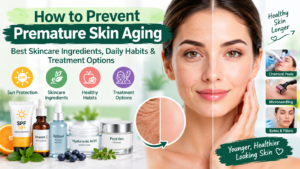

Premature skin aging can make the skin look older than it actually is. Fine lines, wrinkles, uneven skin tone, dryness, dullness, and loss of firmness can develop earlier than expected because of sun exposure, pollution, lifestyle habits, stress, and an inconsistent skincare routine.
While natural aging cannot be stopped completely, many factors that contribute to premature skin aging can be reduced. A combination of daily sun protection, effective skincare ingredients, healthy lifestyle habits, and appropriate professional treatments can help maintain smoother, healthier-looking skin.
This guide explains how to prevent premature skin aging, which skincare ingredients are most useful, daily habits that protect your skin, and treatment options worth discussing with a dermatologist.
What Is Premature Skin Aging?
Premature skin aging refers to visible signs of aging that appear earlier or more noticeably than expected. Unlike normal chronological aging, premature aging is often strongly influenced by external factors.
Common signs include:
- Fine lines and wrinkles
- Loss of skin firmness
- Uneven pigmentation
- Dark spots
- Rough or dry texture
- Dull-looking skin
- Enlarged pores
- Reduced elasticity
- Sagging around the cheeks and jawline
One of the biggest contributors is photoaging, which occurs when repeated ultraviolet (UV) exposure damages skin cells and the structures that help keep skin firm.
What Causes Premature Skin Aging?
Understanding the causes is an important part of preventing premature aging.
1. Sun Exposure
UV radiation is one of the major environmental causes of visible skin aging. Repeated exposure can contribute to wrinkles, pigmentation, rough texture, and loss of elasticity.
Even when the weather is cool or cloudy, UV exposure can still occur. This is why daily sunscreen is one of the most important anti-aging habits.
2. Smoking
Smoking exposes the body to chemicals that can contribute to oxidative stress and damage. It can also affect circulation and collagen production, making wrinkles and dullness more noticeable.
Quitting smoking is beneficial for overall health and may also help protect the appearance of the skin.
3. Pollution and Environmental Stress
Air pollution can increase oxidative stress and may contribute to inflammation and damage to the skin barrier. People living in heavily polluted areas may benefit from a consistent cleansing and antioxidant-focused skincare routine.
4. Poor Sleep
The skin undergoes important repair processes during sleep. Consistently getting too little sleep can leave the skin looking tired, dull, and less refreshed.
5. Dehydration and Poor Skin Care
A damaged or dehydrated skin barrier can make fine lines appear more noticeable. Harsh cleansers, excessive exfoliation, and skipping moisturizer may contribute to dryness and irritation.
6. High Stress
Long-term stress can affect many processes in the body, including skin health. Stress may worsen inflammation and can also encourage habits such as poor sleep, unhealthy eating, or neglecting skincare.
Best Skincare Ingredients to Prevent Premature Skin Aging
A good anti-aging skincare routine does not need dozens of products. Choosing evidence-based ingredients and using them consistently is usually more useful than constantly changing products.
1. Sunscreen
Sunscreen is arguably the most important product for preventing premature skin aging.
Choose a broad-spectrum sunscreen with SPF 30 or higher. Broad-spectrum protection helps protect against both UVA and UVB radiation.
Apply sunscreen every morning to exposed skin, including the face, neck, and ears. Reapply when spending extended periods outdoors, especially after sweating or swimming.
For people concerned about pigmentation, a tinted sunscreen containing iron oxides may also be worth considering because visible light can contribute to pigmentation in some skin types.
2. Retinoids
Retinoids are among the most widely studied skincare ingredients for improving visible signs of aging.
Retinol, retinal, and prescription retinoids can encourage skin cell turnover and support collagen-related processes. With consistent use, they may help improve the appearance of fine lines, uneven texture, and pigmentation.
Beginners should generally start slowly because retinoids can cause dryness, redness, or irritation.
A simple approach is to use a small amount at night several times per week and gradually increase frequency as tolerated.
3. Vitamin C
Vitamin C is an antioxidant that can help protect skin from oxidative stress caused by environmental factors. It may also support a brighter, more even-looking complexion.
Vitamin C is commonly used in morning skincare routines, often underneath moisturizer and sunscreen.
Because formulations vary considerably, look for a well-formulated product that suits your skin type and is packaged appropriately to protect the ingredient from degradation.
4. Niacinamide
Niacinamide, a form of vitamin B3, is a versatile ingredient that may support the skin barrier and improve the appearance of uneven tone and redness.
It is often well tolerated by different skin types and can be particularly useful for people who want a simple anti-aging routine without using many strong active ingredients.
5. Hyaluronic Acid
Hyaluronic acid is a humectant that helps attract and retain water in the skin.
Although it does not reverse structural aging, better hydration can temporarily make the skin appear smoother and can reduce the visibility of dehydration-related fine lines.
6. Peptides
Peptides are short chains of amino acids used in many anti-aging skincare products. Certain peptide formulations may help support the appearance of firmness and reduce the look of fine lines.
However, peptide products vary widely, so realistic expectations are important.
7. Ceramides
Ceramides are lipids naturally found in the skin barrier. Skincare products containing ceramides can help support barrier function and reduce moisture loss.
A strong skin barrier is important because chronically dry or irritated skin can make the complexion look rough and more aged.
Daily Habits That Help Prevent Skin Aging
Skincare products work best when combined with healthy daily habits.
Wear Sunscreen Every Day
Make sunscreen a permanent part of your morning routine rather than something reserved for beach days.
In addition to sunscreen, use physical protection when appropriate, such as sunglasses, wide-brimmed hats, and shade.
Avoid Tanning Beds
Artificial tanning exposes the skin to UV radiation and can accelerate photoaging. There is no need to intentionally tan the skin to achieve a healthy appearance.
Get Enough Sleep
Aim for a consistent sleep schedule and enough sleep to feel rested. Good sleep supports overall health and may contribute to healthier-looking skin.
Eat a Balanced Diet
A diet containing vegetables, fruits, whole grains, healthy fats, and adequate protein provides nutrients needed for normal skin function.
Foods rich in antioxidants and essential nutrients can be part of an overall healthy diet.
Stay Hydrated
Adequate fluid intake supports normal body function. However, drinking excessive amounts of water does not necessarily reverse wrinkles or dramatically change skin aging.
Hydration is most effective when combined with a healthy diet and a moisturizer suited to your skin.
Don’t Smoke
If you smoke, quitting is one of the most beneficial changes you can make for both your general health and skin.
Avoid Over-Exfoliation
Exfoliation can help remove surface buildup, but excessive exfoliation can damage the skin barrier.
Avoid combining multiple strong exfoliating products unless you know your skin can tolerate them. Redness, burning, persistent dryness, and peeling are signs that your routine may be too aggressive.
A Simple Anti-Aging Skincare Routine
You do not need a complicated 10-step routine to protect your skin.
Morning
- Gentle cleanser, if needed
- Vitamin C or niacinamide serum
- Moisturizer
- Broad-spectrum SPF 30 or higher
Evening
- Gentle cleanser
- Retinoid or retinol product, if appropriate
- Moisturizer
If your skin is sensitive, start with fewer active ingredients and introduce new products gradually.
How Often Should You Use Anti-Aging Ingredients?
More is not always better.
Retinoids may initially be used two or three nights per week before gradually increasing frequency. Exfoliating acids may also be used less frequently depending on your skin’s tolerance.
If your skin becomes irritated, reduce the frequency or temporarily stop the active ingredient until your skin barrier recovers.
Professional Treatments for Premature Skin Aging
Skincare can improve the appearance of many early signs of aging, but professional treatments may provide additional results.
Chemical Peels
Chemical peels use controlled exfoliating ingredients to improve skin texture, pigmentation, and overall appearance.
Different peel strengths are available, and treatment should be selected according to skin type and concerns.
Microneedling
Microneedling uses tiny needles to create controlled micro-injuries in the skin. The process stimulates the body’s healing response and may improve the appearance of fine lines, scars, and uneven texture.
Multiple sessions are often needed.
Laser Treatments
Certain laser and light-based treatments can target pigmentation, redness, wrinkles, or uneven texture.
The appropriate treatment depends on skin type, pigmentation risk, and the specific concern being treated.
Botox and Other Neuromodulators
Neuromodulators such as Botox can temporarily reduce the appearance of certain dynamic wrinkles caused by repeated muscle movement.
They are commonly used for areas such as forehead lines and crow’s feet.
Dermal Fillers
Dermal fillers can restore or add volume in selected areas of the face. They may be considered when age-related volume loss contributes to facial changes.
These treatments should always be performed by a qualified medical professional with appropriate training.
When Should You Start an Anti-Aging Skincare Routine?
There is no single perfect age to begin anti-aging skincare.
Instead of waiting until wrinkles become prominent, focus on prevention early by developing healthy habits.
For most people, the most important steps are:
- Daily sunscreen
- Gentle cleansing
- Regular moisturizing
- Avoiding smoking and tanning
- Adequate sleep
- A balanced diet
- Carefully selected active ingredients
You do not need expensive products to begin protecting your skin.
Common Mistakes That Can Accelerate Skin Aging
Some skincare habits can unintentionally make skin look older.
Using Sunscreen Only in Summer
UV exposure occurs throughout the year. Make daily sun protection part of your routine.
Using Too Many Active Ingredients
Combining retinoids, exfoliating acids, vitamin C, and other strong products without a plan can cause irritation.
Skipping Moisturizer
Even oily skin can become dehydrated. Choose a lightweight, non-comedogenic moisturizer if you are prone to breakouts.
Changing Products Too Quickly
Most skincare routines require consistency. Constantly switching products makes it difficult to know what works and can increase irritation.
Expecting Instant Results
Anti-aging skincare usually requires patience. Improvements in texture, pigmentation, and fine lines can take weeks or months.
How Long Does It Take to See Results?
The timeline depends on the ingredient and the concern being treated.
Hydrating products may make the skin feel smoother relatively quickly, while improvements from retinoids and other active ingredients generally require consistent use over a longer period.
Professional treatments may produce faster visible changes, but results vary between individuals.
The key is consistency rather than using the strongest possible products.
Final Thoughts
Preventing premature skin aging is mainly about protecting the skin from avoidable damage and maintaining a healthy skin barrier. Daily sunscreen, retinoids, antioxidants, moisturizers, and gentle skincare can all play useful roles.
Lifestyle choices also matter. Avoiding smoking and tanning, getting adequate sleep, eating a balanced diet, managing stress, and protecting your skin from excessive sun exposure can support healthier-looking skin over time.
If you have significant wrinkles, pigmentation, sagging, or other concerns, a dermatologist can help determine which skincare ingredients or professional treatments are appropriate for your skin type.