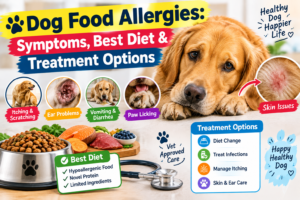

Dog Food Allergies: Symptoms, Best Diet & Treatment Options
Dog food allergies can cause uncomfortable skin problems, digestive issues, and recurring ear infections. If your dog frequently scratches, develops red skin, vomits, has diarrhea, or suffers from repeated ear problems, a food allergy may be one possible cause.
Food allergies can still happen and have a big impact on a dog’s quality of life, even though they are less common than environmental allergies in dogs. Dogs may consume the same food for months or even years before exhibiting symptoms, making it difficult to pinpoint the precise substance in question.
Fortunately, once the source is found, dog food allergies can frequently be effectively treated. A carefully regulated elimination diet followed by a planned reintroduction of foods under veterinary supervision is typically the most dependable method.
What Are Dog Food Allergies?
A food allergy occurs when a dog’s immune system reacts abnormally to a particular food protein.
Common ingredients associated with food reactions in dogs include:
- Beef
- Dairy products
- Chicken
- Wheat
- Lamb
- Soy
- Egg
- Other animal or plant proteins
Importantly, a dog can develop a reaction to an ingredient it has eaten previously without problems.
A food allergy is different from a food intolerance. An intolerance may cause digestive problems without involving the immune system, while a true allergy involves an immune response.
Common Dog Food Allergy Symptoms
Recognizing the symptoms of food allergies can help you know when to discuss the problem with your veterinarian.
1. Persistent Itching
One of the most noticeable signs is ongoing itching. Affected dogs may scratch their:
- Ears
- Face
- Paws
- Belly
- Groin
- Armpits
Some dogs may also lick or chew their paws repeatedly.
However, itching can have many causes, including fleas and environmental allergies, so itching alone does not prove that a food allergy is present.
2. Red or Inflamed Skin
Dogs with allergic skin disease may develop redness, irritation, or inflammation.
You may notice irritated areas around the paws, ears, abdomen, or other parts of the body.
3. Recurrent Ear Problems
Repeated ear infections or inflammation can sometimes occur alongside allergic disease.
Signs may include:
- Head shaking
- Ear scratching
- Bad odor
- Redness
- Excessive ear discharge
If your dog has recurring ear problems, a veterinarian should evaluate the ears and investigate possible underlying causes.
4. Paw Licking and Chewing
Constant licking or chewing of the paws can indicate allergies or other skin problems.
Excessive licking can damage the skin and create an environment where secondary bacterial or yeast infections develop.
5. Digestive Problems
Some dogs with adverse food reactions may experience:
- Vomiting
- Diarrhea
- Soft stools
- Excessive gas
- Abdominal discomfort
- Changes in appetite
Digestive symptoms can have many causes, so veterinary evaluation is important if they persist.
What Causes Food Allergies in Dogs?
Food allergies are usually associated with proteins rather than specific types of carbohydrates.
Some commonly reported triggers include beef, dairy, chicken, wheat, lamb, soy, and egg.
However, there is no single ingredient that causes allergies in every dog.
Your dog’s individual history matters. A veterinarian may review the foods your dog has eaten regularly and use that information to design an appropriate elimination diet.
How Are Dog Food Allergies Diagnosed?
Diagnosing a food allergy can take time because many symptoms overlap with other conditions.
There is no simple symptom that confirms a food allergy.
Veterinarians may first rule out other common causes of itching or gastrointestinal problems, such as:
- Fleas
- Environmental allergies
- Parasites
- Skin infections
- Yeast infections
- Gastrointestinal disease
- Other medical conditions
The Elimination Diet Trial
A properly conducted elimination diet is one of the most useful approaches for determining whether food is contributing to a dog’s symptoms.
During an elimination diet, the dog receives a carefully selected diet containing ingredients it has not previously consumed or a veterinary therapeutic diet formulated for this purpose.
The dog must eat only the prescribed diet during the trial.
This means avoiding:
- Treats
- Table scraps
- Flavored medications when possible
- Chews containing food ingredients
- Other pets’ food
Even small amounts of another food can interfere with the results.
Best Diet for Dogs With Food Allergies
There isn’t one universally “best” food for every allergic dog. The ideal diet depends on the suspected trigger and your veterinarian’s recommendations.
1. Hydrolyzed Protein Diets
Hydrolyzed diets contain proteins that have been broken down into smaller components.
These diets are often used during veterinary elimination trials because the modified proteins may be less likely to trigger an immune response.
Veterinary therapeutic diets are generally preferable to simply choosing an over-the-counter product labeled “hypoallergenic” when performing a diagnostic diet trial.
2. Novel Protein Diets
A novel protein diet contains a protein source the dog has not previously eaten.
Examples may include less commonly used proteins, depending on the dog’s dietary history.
The important point is not whether the ingredient sounds unusual; it must actually be novel for that particular dog.
3. Limited-Ingredient Diets
Some commercial diets contain fewer ingredients and may be useful for dogs with known dietary sensitivities.
However, ingredient lists and manufacturing practices vary. If your veterinarian is conducting a strict elimination trial, follow the specific diet recommendation rather than switching between commercial foods on your own.
How Long Does a Food Allergy Diet Trial Take?
An elimination diet needs to be followed consistently for long enough to determine whether symptoms improve.
The exact duration can vary depending on the symptoms and veterinary protocol. Skin-related problems may require a longer trial than some digestive symptoms.
Your veterinarian may recommend a specific period and monitor your dog’s progress.
If symptoms improve significantly, the original food ingredients may be reintroduced in a controlled manner to determine whether they cause the symptoms to return.
This step can help identify the specific dietary trigger.
Dog Food Allergy Treatment Options
Once a food allergy is confirmed, treatment focuses primarily on avoiding the triggering ingredient.
1. Long-Term Dietary Management
The most important treatment is feeding a diet that does not contain the problematic ingredient.
Some dogs may need a therapeutic hydrolyzed diet, while others may do well with an appropriate novel-protein diet.
Your veterinarian can help select the safest long-term option.
2. Treatment for Secondary Infections
Allergic dogs can develop secondary bacterial or yeast infections because damaged skin provides an opportunity for microorganisms to multiply.
Treatment may involve veterinary-prescribed medications or topical therapies, depending on the infection.
3. Managing Itching
If your dog is extremely uncomfortable, a veterinarian may recommend medications to control itching and inflammation.
These treatments don’t remove the underlying food trigger, but they can help improve comfort while the allergy is being managed.
4. Regular Skin and Ear Care
Dogs with allergy-related skin problems may benefit from appropriate bathing and ear-care routines.
However, avoid using human shampoos or medications without veterinary advice because some products can irritate a dog’s skin or be unsafe if swallowed.
Can Dogs Outgrow Food Allergies?
Food allergies are generally considered a long-term condition once confirmed.
A dog may appear completely healthy when the trigger is avoided, but symptoms can return if the problematic ingredient is introduced again.
For this reason, carefully reading food labels and monitoring treats is important.
How to Prevent Food Allergy Problems
You cannot always prevent a dog from developing an allergy. However, you can make management easier by keeping track of your dog’s diet.
Keep a Food Diary
Record:
- Main food
- Treats
- Chews
- Supplements
- Medications
- New foods
A food diary can help your veterinarian identify possible patterns.
Avoid Frequent Unnecessary Diet Changes
Constantly switching foods can make it more difficult to identify which ingredients your dog has been exposed to.
Read Treat Labels
Treats can contain ingredients that aren’t obvious from the product name.
If your dog is undergoing an elimination diet, don’t give additional treats unless your veterinarian has confirmed that they are appropriate.
Food Allergy vs. Environmental Allergy
One of the biggest challenges is distinguishing food allergies from environmental allergies.
Environmental allergies can be triggered by things such as pollen, dust mites, mold, or other environmental factors.
Both food and environmental allergies can cause itching, paw licking, redness, and ear problems.
A veterinarian may need to investigate multiple possible causes before determining what is responsible for your dog’s symptoms.
When Should You See a Veterinarian?
Contact your veterinarian if your dog has persistent or severe:
- Itching
- Skin redness
- Hair loss
- Paw chewing
- Ear infections
- Vomiting
- Diarrhea
- Weight loss
- Changes in appetite
Seek prompt veterinary attention if your dog develops facial swelling, difficulty breathing, collapse, or other signs of a severe allergic reaction.
Do not attempt to diagnose a food allergy solely by changing foods repeatedly. A structured veterinary approach is more reliable and can prevent unnecessary dietary restrictions.
Frequently Asked Questions
What is the most common food allergy in dogs?
Dogs can react to several food proteins. Beef and dairy are among the commonly reported allergens, but individual dogs can react to many different ingredients.
What are the first signs of a food allergy in dogs?
Common signs include persistent itching, paw licking, skin irritation, recurrent ear problems, vomiting, diarrhea, or other digestive disturbances.
Is chicken bad for dogs with allergies?
Chicken isn’t automatically bad for every dog. However, some dogs can develop an allergy to chicken protein. If your dog has a confirmed chicken allergy, chicken-containing foods should be avoided.
Is grain-free food better for dogs with allergies?
Not necessarily. Food allergies are usually associated with specific ingredients, particularly proteins, rather than simply the presence of grains. A grain-free diet should not be used automatically as an allergy treatment.
What should I feed a dog with food allergies?
Depending on your dog’s history, your veterinarian may recommend a hydrolyzed-protein diet or a carefully selected novel-protein diet.
Can dog food allergies cause diarrhea?
Yes. Some dogs with adverse food reactions can experience diarrhea, soft stools, vomiting, or excessive gas. However, gastrointestinal symptoms can have many other causes.
Final Thoughts
Dog food allergies can cause uncomfortable skin and digestive symptoms, but they are manageable when the underlying trigger is identified.
Persistent itching, paw licking, recurrent ear problems, vomiting, and diarrhea can all have multiple causes, so a veterinary evaluation is important before assuming that food is responsible.
One of the best diagnostic methods for suspected food allergies is an appropriately supervised elimination diet. During these trials, hydrolyzed-protein and carefully chosen novel-protein meals are frequently employed.
Once the trigger has been found, avoiding it and sticking to a regular diet will help keep symptoms from coming back. Many dogs with food allergies can lead comfortable, healthy lives with the correct diet, veterinary treatment, and routine monitoring.