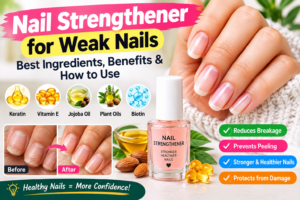

Nail Strengthener for Weak Nails: Best Ingredients, Benefits & How to Use
Nail Strengthener for Weak Nails: What You Need to Know
Weak, brittle, peeling, or splitting nails can be frustrating. Nails may become damaged because of frequent manicures, gel polish, nail-biting, excessive water exposure, harsh cleaning products, or simply from everyday wear and tear. Fortunately, using a nail strengthener for weak nails can help improve nail resilience and protect the nail surface.
Products called nail strengtheners are made to make nails feel stronger, tougher, and less likely to break. Depending on the recipe, they could include components that moisturise the nail, increase flexibility, build a protective layer, or lessen peeling.
But selecting the appropriate product is crucial. It’s not always the case that a really hard nail is healthy. To prevent cracking, nails must have the right amount of strength and flexibility.
The greatest nail-strengthening ingredients, their advantages, proper nail strengthener usage, and easy practices that can promote healthy nail growth are all covered in this book.
What Is a Nail Strengthener?
A nail strengthener is a cosmetic treatment formulated to improve the appearance and durability of weak or damaged nails. It is usually applied directly to clean nails as a clear coating, serum, cream, or oil.
Some formulas work by forming a protective layer over the nail, while others focus more on conditioning and moisturizing the nail and surrounding skin.
A good nail strengthener for weak nails may help:
- Reduce nail breakage
- Minimize splitting and peeling
- Protect nails from everyday damage
- Improve nail flexibility
- Make nails look smoother and healthier
- Support better nail-care habits
It’s important to remember that nail strengtheners don’t necessarily make nails grow faster. Instead, stronger and better-protected nails may break less often, allowing you to retain more length over time.
Best Ingredients in a Nail Strengthener for Weak Nails
When choosing a nail-strengthening product, look at the ingredient list rather than relying only on marketing claims.
1. Keratin
Keratin is a structural protein naturally found in nails, hair, and skin. Some nail treatments use keratin or keratin-related ingredients to condition and reinforce the nail surface.
Keratin-based products may be particularly appealing for nails that feel thin or damaged after repeated cosmetic treatments.
2. Biotin
Biotin, also known as vitamin B7, is commonly associated with healthy hair and nails. Biotin deficiency can affect nail health, but true deficiency is relatively uncommon.
Some people use biotin supplements for brittle nails, but supplements aren’t appropriate for everyone. If you are considering taking biotin specifically for nail problems, discuss it with a healthcare professional.
3. Calcium
Calcium is sometimes included in nail-strengthening formulas. It is an important mineral for the body, but applying calcium-containing products directly to the nails does not necessarily mean that the nails will absorb enough calcium to become stronger.
Still, calcium-containing cosmetic formulas can be part of a broader nail-care routine.
4. Vitamin E
Vitamin E is widely used in nail oils and cuticle treatments because of its conditioning properties. Keeping the nails and surrounding cuticles moisturized can help reduce dryness and improve the overall appearance of the hands.
Vitamin E is particularly useful for people whose nails become dry from frequent handwashing or exposure to detergents.
5. Protein and Amino Acids
Some nail treatments contain proteins or amino acids designed to condition and protect the nail surface.
These ingredients can help create a smoother-feeling nail and may be useful when nails are damaged from repeated polishing, filing, or artificial nails.
6. Jojoba Oil
Jojoba oil is commonly found in cuticle oils and nail treatments. It helps condition dry skin around the nails and can make the nail area feel softer and more moisturized.
7. Plant Oils
Ingredients such as almond, coconut, sunflower, or argan oil may be included in nail-care products. Their main benefit is conditioning and moisturizing rather than dramatically changing the physical structure of the nail.
Benefits of Using a Nail Strengthener
A suitable nail strengthener for weak nails can provide several cosmetic and protective benefits.
1. Helps Reduce Breakage
Weak nails can break easily during everyday activities. A protective nail treatment can help reduce mechanical damage and make nails feel more durable.
2. Helps Protect Against Peeling
Peeling nails often have layers that separate at the edges. Conditioning treatments and protective coatings may help reduce further damage.
3. Improves Nail Appearance
Strengthening treatments can make nails appear smoother, shinier, and healthier.
4. Supports Nail Length Retention
Nails don’t necessarily grow faster because you use a strengthener. However, if they break less frequently, you may be able to maintain longer nails.
5. Protects Against Everyday Exposure
Frequent contact with water, soaps, detergents, and cleaning products can contribute to dry or damaged nails. A protective coating can provide an additional barrier.
How to Use a Nail Strengthener Correctly
Using a nail strengthener correctly is just as important as choosing the right product.
Step 1: Clean Your Nails
Start with clean, dry nails. Remove old nail polish and gently wash your hands.
Avoid applying the product over dirt, oils, or leftover polish unless the product instructions specifically allow it.
Step 2: Dry Your Hands Completely
Water left on the nails can interfere with some products. Give your nails a few minutes to dry before applying the treatment.
Step 3: Apply a Thin Layer
Use a thin, even layer of nail strengthener over the nail surface.
Avoid applying excessive amounts. More product does not necessarily mean better results.
Step 4: Follow the Product Instructions
Some treatments are designed for daily use, while others may be applied several times per week.
Always follow the manufacturer’s directions because formulas vary.
Step 5: Moisturize Your Cuticles
After the treatment has dried, use a cuticle oil or hand moisturizer if appropriate. Keeping the surrounding skin moisturized can improve the overall appearance of your nails.
Step 6: Be Consistent
Nail improvement takes time. Since nails grow gradually, don’t expect dramatic changes overnight. Consistent nail care over several weeks is usually more realistic.
How Often Should You Use a Nail Strengthener?
The ideal frequency depends on the product.
Some nail strengtheners are intended for daily use, while others may be used once or twice a week. Overusing certain hardening treatments can potentially make nails feel excessively rigid or dry.
If your nails become painful, unusually stiff, or more prone to cracking after using a particular product, stop using it and consider switching to a gentler conditioning treatment.
Always read the product label before establishing a routine.
Nail Strengthener vs. Nail Hardener: What’s the Difference?
The terms “nail strengthener” and “nail hardener” are sometimes used interchangeably, but they can refer to different types of formulas.
A nail hardener generally focuses on making the nail feel harder and more resistant to bending.
A nail strengthener may focus on a combination of protection, conditioning, flexibility, and reinforcement.
For very thin nails, extreme hardness isn’t always ideal. A healthy nail needs some flexibility. If a product makes your nails extremely hard but also causes cracking, it may not be the right choice.
Natural Ways to Strengthen Weak Nails
A nail strengthener can be useful, but daily habits also matter.
Keep Nails Moisturized
Apply hand cream and cuticle oil regularly, especially after washing your hands.
Wear Gloves While Cleaning
Household detergents and prolonged water exposure can contribute to dry, fragile nails. Wearing protective gloves during cleaning can help reduce exposure.
Avoid Using Nails as Tools
Don’t use your nails to open cans, scrape surfaces, remove labels, or perform other tasks that put excessive pressure on them.
Limit Aggressive Filing
File nails gently in one direction rather than aggressively sawing back and forth.
Give Gel and Acrylic Nails a Break
Repeated artificial nail applications can contribute to nail thinning or damage, particularly when products are aggressively removed.
Giving natural nails time between treatments may help reduce ongoing mechanical and chemical stress.
Maintain a Balanced Diet
Healthy nails require adequate nutrition. A balanced diet containing sufficient protein, vitamins, and minerals supports normal nail growth.
If you have persistent brittle nails despite good nutrition and nail care, speak with a healthcare professional rather than automatically taking multiple supplements.
Common Mistakes That Can Make Weak Nails Worse
Even the best nail-strengthening product cannot compensate for damaging habits.
Overusing Nail Hardeners
Applying hardening products too frequently may leave some nails feeling excessively rigid or dry.
Picking at Polish
Peeling polish from your nails can remove parts of the nail surface and increase damage.
Cutting Cuticles Aggressively
Cuticles help protect the area around the nail. Avoid aggressively cutting or damaging them.
Constant Water Exposure
Repeated wetting and drying can contribute to nail fragility. Use gloves when appropriate and moisturize afterward.
Excessive Buffing
Buffing may temporarily make nails look smooth, but excessive buffing can thin the nail plate.
When Should You See a Doctor?
Not every nail problem is caused by dryness or cosmetic damage.
Consider speaking with a healthcare professional if you experience:
- Persistent nail splitting or severe brittleness
- Significant changes in nail color
- Thickened or distorted nails
- Pain or swelling around the nail
- Nails separating from the nail bed
- Dark or unusual streaks
- Sudden changes affecting several nails
- Nail problems that don’t improve with basic care
Certain nail changes can be associated with infections, skin conditions, nutritional deficiencies, medication effects, or other medical conditions.
A healthcare professional can determine the underlying cause and recommend appropriate treatment.
How Long Does It Take to Strengthen Weak Nails?
Nails grow slowly, so patience is important. You may notice improvements in the feel and appearance of your nails within several weeks, but completely replacing damaged nail material can take considerably longer.
Fingernails generally grow continuously, and the full nail plate can take several months to grow out.
The best approach is to combine a suitable nail strengthener for weak nails with consistent moisturizing, gentle nail care, and protection from excessive water and chemicals.
Frequently Asked Questions
Does nail strengthener really work?
Nail strengtheners can help protect and condition weak nails, depending on their formulation and the cause of the nail problem. They work best when combined with good nail-care habits.
What is the best nail strengthener for weak nails?
The best option depends on your individual nail condition. Look for a product designed for brittle, peeling, or thin nails and choose a formula that balances protection with flexibility.
Can nail strengthener make nails grow faster?
Most nail strengtheners do not directly accelerate nail growth. They may help reduce breakage, which can allow you to retain more nail length as your nails naturally grow.
Can I use nail strengthener every day?
Some products are designed for daily use, while others are not. Always follow the instructions on the specific product you’re using.
Should I use nail oil with a nail strengthener?
A nail oil or cuticle moisturizer can complement a strengthening routine by helping condition dry nails and surrounding skin. Follow the product instructions regarding when to apply each treatment.
Final Thoughts
A nail strengthener for weak nails can be a helpful addition to a nail-care routine, particularly when nails are thin, brittle, peeling, or frequently exposed to cosmetic treatments and harsh environments.
Look for formulas containing conditioning and protective ingredients such as keratin, amino acids, vitamin E, jojoba oil, and other moisturizing ingredients. Use the product according to its instructions, and don’t rely on strengthener alone.
Protect your nails from excessive water and chemicals, moisturize your hands and cuticles, avoid aggressive filing and buffing, and give your nails a break from frequent artificial nail treatments.
Most importantly, remember that healthy nails take time. With consistent care and the right nail strengthening treatment, you can help your nails become more resilient and maintain a smoother, healthier appearance.