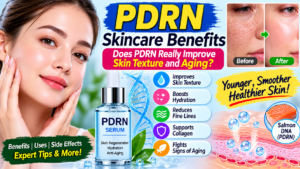

PDRN skincare has quickly become a popular topic in the beauty and aesthetic industry, especially among people looking for smoother, healthier, and more youthful-looking skin. PDRN, short for Polydeoxyribonucleotide, is an ingredient that has gained attention for its potential skin-repairing and regenerative properties.
But does PDRN really improve skin texture and signs of aging? While early research and clinical use suggest that PDRN may support skin regeneration, hydration, elasticity, and wound healing, results can vary depending on the formulation, method of use, and individual skin condition.
In this guide, we explore PDRN skincare benefits, how PDRN works, possible anti-aging effects, side effects, treatment options, and what you should know before adding PDRN to your skincare routine.
What Is PDRN?
PDRN stands for Polydeoxyribonucleotide, a mixture of DNA fragments that has been studied for tissue repair and regenerative applications. PDRN has traditionally been associated with medical and aesthetic treatments because of its potential role in supporting tissue healing.
PDRN is marketed in skincare products as a skin-repairing ingredient that could help ageing, dry, dull, or damaged skin look better.
Although the precise source and formulation can differ between goods, PDRN is frequently linked to DNA fragments taken from salmon. It’s crucial to realise that not all products sold as “PDRN serums” have the same concentration or formulation, therefore outcomes could vary greatly.
How Does PDRN Work on the Skin?
One reason PDRN has attracted attention is its potential interaction with cellular repair pathways.
PDRN is believed to support processes involved in tissue regeneration and may influence the activity of certain receptors associated with cell growth and repair. It has also been studied for its potential effects on inflammation, blood vessel formation, and tissue recovery.
From a skincare perspective, these mechanisms may help support the skin’s natural repair process.
However, applying PDRN topically is not necessarily equivalent to professional treatments that deliver ingredients into the skin. The ability of a topical product to penetrate the skin depends on its formulation, molecular characteristics, concentration, and delivery system.
PDRN Skincare Benefits
PDRN products are becoming increasingly popular because they are marketed for multiple skin concerns. Although research is still developing, several potential benefits have been associated with PDRN-based skincare and treatments.
1. May Improve Skin Texture
Uneven skin texture can be caused by dehydration, environmental damage, acne scars, aging, and reduced collagen production.
PDRN is promoted for supporting skin repair and regeneration, which may contribute to a smoother-looking complexion. With consistent skincare and appropriate treatment, some people may notice that their skin appears softer and more refined.
PDRN should not be considered a guaranteed treatment for deep acne scars or significant textural changes, however. More established procedures such as microneedling, laser treatments, and chemical peels may be recommended for certain types of scarring.
2. May Support Skin Hydration
Healthy skin needs adequate moisture to maintain a smooth and comfortable appearance.
Many PDRN skincare products are formulated with additional moisturizing ingredients such as hyaluronic acid, glycerin, ceramides, or peptides. These ingredients can contribute to improved hydration and skin softness.
When the skin is well hydrated, fine lines can temporarily appear less noticeable, and the overall complexion may look more plump and healthy.
3. May Support Collagen and Skin Firmness
Collagen production naturally declines with age. This contributes to changes such as fine lines, reduced firmness, and loss of elasticity.
PDRN has been studied in regenerative medicine and aesthetic applications for its potential role in supporting tissue repair and cellular activity. Some professional PDRN-based treatments are therefore marketed for improving skin firmness and elasticity.
However, the amount of evidence supporting different PDRN cosmetic products varies. Consumers should avoid assuming that every PDRN cream or serum will produce the same effects as an in-office procedure.
4. May Help Improve the Appearance of Fine Lines
Fine lines are influenced by aging, repeated facial movement, sun exposure, dehydration, and reduced collagen and elastin.
By supporting hydration and overall skin condition, PDRN skincare may help make fine lines appear less prominent. Some professional regenerative treatments may provide more noticeable results than topical products.
PDRN is best viewed as a potential supportive ingredient rather than a replacement for proven anti-aging strategies such as daily sunscreen, retinoids, antioxidants, and professional treatments when appropriate.
5. May Support Skin Recovery
PDRN has a history of investigation in wound-healing and tissue-repair settings. This is one of the reasons it has become popular in aesthetic medicine.
Professional PDRN treatments are sometimes used as part of post-procedure skincare because supporting the skin barrier and recovery process can be important after certain aesthetic procedures.
However, anyone undergoing a cosmetic procedure should follow the specific aftercare instructions provided by their dermatologist or healthcare professional.
6. May Improve the Appearance of Dull Skin
Dull-looking skin can be caused by dehydration, dead skin-cell buildup, environmental exposure, poor sleep, and other factors.
A well-formulated PDRN skincare product may help improve overall skin hydration and support a healthier-looking complexion. If the product also contains ingredients such as niacinamide, antioxidants, or hyaluronic acid, the combined formula may provide additional cosmetic benefits.
PDRN for Anti-Aging: Does It Really Work?
The potential anti-aging effects of PDRN are one of the biggest reasons for its popularity.
PDRN is associated with tissue repair and regenerative processes, which has led researchers and aesthetic professionals to investigate its possible role in improving skin quality.
Some studies and clinical applications suggest that PDRN-based treatments may improve factors such as skin hydration, elasticity, texture, and overall appearance.
However, it is important to distinguish between PDRN used in medical or professional aesthetic treatments and PDRN used in ordinary topical skincare products.
A serum applied to the surface of the skin may not produce the same results as a professionally administered treatment. The concentration, formulation, delivery method, and depth of penetration can all influence outcomes.
Therefore, PDRN may have potential as an anti-aging ingredient, but it should not be presented as a miracle solution for wrinkles or sagging skin.
PDRN Serum vs. Professional PDRN Treatment
One of the most important differences is how the product is delivered.
PDRN Serums and Creams
Topical PDRN products are designed to be applied directly to the skin. They are generally easier to incorporate into a daily skincare routine.
Their potential benefits may include:
- Supporting skin hydration
- Improving the appearance of dry skin
- Supporting the skin barrier
- Making skin look smoother
- Providing a more refreshed appearance
Results depend heavily on the product’s formulation and other ingredients.
Professional PDRN Treatments
Professional treatments may use specialized techniques to deliver PDRN into or around the skin. Depending on the treatment, this may involve injections or other aesthetic delivery methods.
These treatments should only be performed by appropriately trained and licensed professionals.
Professional procedures may provide more noticeable results than topical products, but they can also involve risks, discomfort, swelling, bruising, or other side effects.
How to Use PDRN Skincare
If you are using a topical PDRN serum, start by applying it to clean skin according to the manufacturer’s instructions.
A simple routine may look like:
Morning:
Cleanser → PDRN serum → Moisturizer → Broad-spectrum sunscreen
Evening:
Cleanser → PDRN serum → Moisturizer
If you use active ingredients such as retinoids, exfoliating acids, or vitamin C, introduce products gradually to reduce the chance of irritation.
Always perform a patch test when trying a new skincare product, especially if you have sensitive skin.
Can PDRN Be Used With Other Skincare Ingredients?
PDRN can often be included in a skincare routine alongside common ingredients such as hyaluronic acid, ceramides, niacinamide, and peptides.
The best combination depends on your skin type and concerns.
For example, someone with dry skin may benefit from combining a PDRN product with a gentle cleanser, moisturizer, and hydrating ingredients.
Someone concerned about premature aging should prioritize sunscreen and may also use evidence-based ingredients such as retinoids, depending on their skin tolerance and professional advice.
Using too many active products at once can increase irritation, so a simple routine is often easier to maintain.
PDRN Side Effects and Safety
Topical PDRN products are generally marketed as gentle skincare products, but any cosmetic product can cause irritation or an allergic reaction.
Possible reactions may include:
- Redness
- Burning or stinging
- Itching
- Dryness
- Irritation
- Breakouts in some individuals
Professional PDRN procedures may have additional risks depending on the delivery method. Injection-based treatments can cause temporary swelling, bruising, tenderness, redness, or infection.
Anyone considering an injectable or professional PDRN treatment should consult a qualified medical professional before treatment.
Pregnant or breastfeeding individuals, people with significant skin conditions, and those with known allergies should discuss cosmetic procedures and new skincare products with an appropriate healthcare professional.
How Long Does PDRN Take to Show Results?
Results can vary considerably.
A topical PDRN serum may provide improvements in hydration and skin softness relatively quickly, while changes in overall texture or appearance may require consistent use over several weeks.
Professional treatments may have different timelines. Some people notice changes after one session, while others may require a series of treatments.
Factors such as age, skin condition, lifestyle, sun exposure, skincare routine, and the specific PDRN formulation can all affect results.
It is important to have realistic expectations rather than expecting dramatic changes immediately.
Is PDRN Better Than Retinol?
PDRN and retinol work differently, so one should not automatically be considered “better.”
Retinoids have extensive evidence supporting their use for several signs of photoaging, including fine lines and uneven skin texture. PDRN is better known for its potential regenerative and skin-repair properties.
Some people may use both within a carefully designed skincare routine, but combining multiple active ingredients can cause irritation.
If your primary concern is wrinkles, pigmentation, acne, or significant skin texture changes, a dermatologist can help determine which ingredients or treatments are most appropriate.
Who May Benefit From PDRN Skincare?
PDRN skincare may be worth considering for people who want to improve the appearance of:
- Dry or dehydrated skin
- Dull-looking skin
- Mild uneven texture
- Fine lines
- Loss of skin softness
- A weakened-feeling skin barrier
It may be less suitable as a standalone solution for deep wrinkles, significant sagging, severe acne scars, or major pigmentation problems.
For these concerns, professional evaluation may be more useful.
Tips for Getting Better Results From PDRN Skincare
To get the most from any skincare routine, consistency is essential.
Use a gentle cleanser, moisturize regularly, and wear broad-spectrum sunscreen every day. UV exposure is one of the major contributors to premature skin aging, so sunscreen should remain a priority even when using advanced skincare ingredients.
Avoid changing multiple products at the same time. Introducing products gradually makes it easier to determine what works and what causes irritation.
Finally, choose products from reputable manufacturers and check the ingredient list rather than relying only on marketing claims.
Frequently Asked Questions About PDRN Skincare
Does PDRN really improve skin texture?
PDRN has potential skin-repair and regenerative properties, and some professional applications have shown improvements in skin quality. However, results from topical skincare products can vary, and more research is needed to determine how effective different cosmetic formulations are.
Is PDRN good for wrinkles?
PDRN may support hydration, skin quality, and regenerative processes that can contribute to a smoother appearance. However, it should not be considered a guaranteed wrinkle-removal treatment.
Can I use PDRN every day?
Many topical PDRN products are designed for regular use, but you should follow the manufacturer’s directions. If irritation occurs, reduce use or stop the product and seek professional advice if symptoms persist.
Is PDRN the same as salmon DNA?
PDRN is commonly associated with purified DNA fragments derived from salmon or other sources. However, product ingredients and manufacturing processes can differ, so it is important to check the specific product label.
Is PDRN safe?
Topical PDRN products are generally marketed for cosmetic use, but individual reactions are possible. Professional treatments have additional risks and should be performed by qualified professionals.
Final Thoughts
PDRN skincare is an emerging option for people interested in skin regeneration, hydration, texture improvement, and anti-aging care. Research into PDRN suggests that it may support tissue repair and cellular processes, while professional aesthetic treatments have generated interest for improving overall skin quality.
However, not all PDRN products are the same. A topical serum should not automatically be compared with a professional PDRN procedure, and results can vary based on formulation and individual skin characteristics.
For long-term skin health, PDRN should be considered part of a broader skincare strategy rather than a miracle ingredient. Daily sunscreen, gentle cleansing, adequate moisturization, and evidence-based anti-aging ingredients remain important.
If you are considering injectable or professional PDRN treatment, consult a qualified dermatologist or licensed healthcare professional to discuss whether it is appropriate for your skin and what results you can realistically expect.