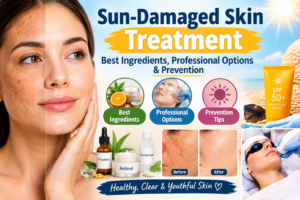

Sun-Damaged Skin Treatment: Best Ingredients, Professional Options & Prevention
Sun-damaged skin is one of the most common causes of premature skin aging. Repeated exposure to ultraviolet (UV) radiation can gradually lead to dark spots, uneven skin tone, fine lines, wrinkles, dryness, rough texture, and loss of skin firmness. Over time, chronic sun exposure can also contribute to precancerous skin changes and skin cancer.
The good news is that with the correct skincare products, expert treatments, and regular sun protection, you may improve many obvious signs of sun damage. Dermatological treatments can help improve pigmentation, wrinkles, texture, and general skin look, even if years of UV damage may not be entirely reversible.
In this guide, you will learn about the best sun-damaged skin treatments, effective skincare ingredients, professional treatment options, prevention tips, and when you should see a dermatologist.
What Is Sun-Damaged Skin?
Sun-damaged skin develops when the skin is repeatedly exposed to ultraviolet radiation from sunlight or tanning beds. The medical term for visible premature aging caused by UV exposure is photoaging.
UV radiation can damage healthy skin cells and cause changes that become more noticeable over time. Common signs include:
- Fine lines and wrinkles
- Dark spots and age spots
- Uneven skin tone
- Rough or leathery texture
- Dryness
- Loss of elasticity
- Sagging skin
- Red or blotchy areas
- Freckles
- Persistent rough or scaly patches
According to the American Academy of Dermatology, accumulated sun damage can also contribute to actinic keratoses, which are precancerous skin growths, and skin cancer.
What Causes Sun Damage?
The main cause is repeated exposure to ultraviolet radiation. UVA rays are strongly associated with photoaging, while UVB rays are a major cause of sunburn and also contribute to skin cancer.
Sun exposure can occur during everyday activities, including:
- Walking outdoors
- Driving
- Working outside
- Sitting near windows
- Going to the beach
- Outdoor sports
- Gardening
- Using tanning beds
Importantly, sun damage is cumulative. You may not notice a problem after one sunny day, but repeated unprotected exposure can gradually produce visible changes.
Can Sun-Damaged Skin Be Reversed?
Some signs of sun damage can be significantly improved, but treatment cannot simply erase every change caused by years of UV exposure.
Skincare and dermatological treatments may improve:
- Dark spots
- Fine lines
- Wrinkles
- Uneven pigmentation
- Rough texture
- Redness
- Overall skin tone
Dermatologists often combine different treatments depending on the type and severity of sun damage.
The most important step is to stop additional UV damage. Without daily sun protection, new damage can continue to develop and may reduce the results of treatment.
Best Ingredients for Sun-Damaged Skin
Choosing evidence-based skincare ingredients can help improve the appearance of photoaged skin. However, introducing too many active ingredients at once can cause irritation.
1. Retinoids and Retinol
Retinoids are vitamin A-derived ingredients widely used for signs of aging. They can help improve fine lines, wrinkles, skin texture, and uneven pigmentation.
A dermatologist may prescribe stronger retinoids like tretinoin, however retinol is a widely accessible kind of retinoid.
Retinoids can assist with wrinkles, acne, dark spots, fine lines, and skin texture, according to the American Academy of Dermatology.
If retinol is new to you, start out carefully. Dryness and irritation may be lessened by applying it a few nites a week rather than every nite.
2. Vitamin C
Vitamin C is an antioxidant that can help support brighter-looking skin and reduce the appearance of dark spots. It is commonly used in morning skincare routines.
A simple routine can include vitamin C after cleansing and before sunscreen.
However, sensitive skin may react to some vitamin C formulations. If burning, redness, or significant irritation develops, reduce use or speak with a dermatologist.
3. Niacinamide
Niacinamide, also known as vitamin B3, is a versatile skincare ingredient that can support the skin barrier and improve the appearance of uneven skin tone.
It can be useful for people who want a relatively gentle ingredient in their routine.
4. Alpha Hydroxy Acids
Ingredients such as glycolic acid and lactic acid can exfoliate the surface of the skin. Regular, controlled exfoliation may help improve dullness and uneven texture.
However, over-exfoliating sun-damaged skin can cause irritation and make the skin more sensitive. Use exfoliating acids carefully and always prioritize sunscreen.
5. Hyaluronic Acid
Hyaluronic acid is primarily a hydrating ingredient. It does not repair UV damage by itself, but it can help the skin feel smoother and more hydrated.
Hydration is especially helpful when using active ingredients such as retinoids.
6. Azelaic Acid
Azelaic acid may be useful for uneven pigmentation and certain inflammatory skin concerns. Dermatologists may recommend it as an alternative or addition to other pigment-targeting treatments.
For stubborn pigmentation, professional advice is often better than trying multiple strong products independently.
Best Professional Treatments for Sun-Damaged Skin
When sun damage is moderate or severe, professional treatment can provide more noticeable results than skincare alone.
Chemical Peels
Chemical peels use specific acids to remove damaged outer layers of skin. Depending on the type and strength of the peel, they may improve:
- Uneven pigmentation
- Fine lines
- Rough texture
- Dullness
- Certain types of sun spots
The appropriate peel depends on your skin type, pigmentation, sensitivity, and treatment goals.
Laser Resurfacing
Laser treatments can target signs of photoaging such as wrinkles, uneven pigmentation, and texture changes.
Laser resurfacing can produce significant improvement, but it should be performed by a qualified professional because inappropriate treatment can cause burns, pigmentation changes, or scarring.
The AAD lists laser resurfacing among professional options for wrinkles and other signs of sun-damaged skin.
Intense Pulsed Light (IPL)
IPL uses pulses of light to target certain pigmentation and redness. It may be considered for blotchy complexion and sun-related discoloration.
Results vary depending on skin tone and the type of pigmentation being treated.
Microdermabrasion
Microdermabrasion gently removes the outermost layer of skin and may help improve mild roughness and dullness.
It is generally less aggressive than some laser treatments, although multiple sessions may be recommended.
Cryotherapy
For certain individual sun-damaged spots, a dermatologist may use cryotherapy to freeze abnormal skin growths.
This is not a general cosmetic treatment for all sun damage. A dermatologist should first determine what a suspicious or persistent spot actually is.
Prescription Treatments
For certain pigmentation problems, dermatologists may prescribe treatments such as hydroquinone, tretinoin, azelaic acid, or other medications depending on the diagnosis.
For melasma, for example, dermatologists may recommend prescription treatments alongside strict sun protection.
Daily Skincare Routine for Sun-Damaged Skin
A simple routine is usually better than using too many active products.
Morning
- Wash with a gentle cleanser.
- Apply vitamin C or another suitable antioxidant.
- Apply a moisturizer if needed.
- Finish with broad-spectrum SPF 30 or higher sunscreen.
The AAD recommends sunscreen with SPF 30 or higher, broad-spectrum protection, and water resistance.
Evening
- Cleanse gently.
- Apply retinol or a dermatologist-recommended retinoid if appropriate.
- Apply moisturizer.
If your skin becomes irritated, reduce the frequency of active ingredients and focus on repairing the skin barrier.
How to Prevent Further Sun Damage
Prevention is the most important part of treating photoaged skin.
Use Sunscreen Every Day
Choose a sunscreen that provides:
- SPF 30 or higher
- Broad-spectrum UVA and UVB protection
- Water resistance
Apply it to exposed skin before going outdoors. The AAD recommends reapplying sunscreen every two hours when outdoors and immediately after swimming or sweating.
Do not forget commonly missed areas such as:
- Ears
- Neck
- Hands
- Hairline
- Tops of feet
- Lips
Wear Protective Clothing
Sunscreen should not be your only form of protection. Wear long sleeves, protective clothing, a wide-brimmed hat, and UV-protective sunglasses when possible.
Seeking shade is also an important part of sun protection.
Avoid Tanning Beds
Tanning beds expose your skin to UV radiation and can accelerate premature skin aging while increasing skin cancer risk.
If you want a tanned appearance, consider safer cosmetic alternatives rather than intentional UV exposure.
Use Tinted Sunscreen for Dark Spots
If pigmentation is a major concern, a tinted sunscreen containing iron oxide may provide additional protection from visible light, which can worsen some dark spots.
This can be especially helpful for people dealing with hyperpigmentation or melasma.
Common Mistakes When Treating Sun-Damaged Skin
Trying to repair sun damage quickly can sometimes make the problem worse.
Avoid:
- Using several strong acids at once
- Aggressive physical scrubs
- Picking or scratching dark spots
- Skipping sunscreen
- Applying too many new products
- Using harsh bleaching products without professional guidance
- Tanning to “even out” skin tone
- Ignoring suspicious skin changes
Consistency is more important than having a complicated skincare routine.
When Should You See a Dermatologist?
You should consider seeing a dermatologist if you have persistent or worsening sun damage, especially if you notice a new or changing spot.
Seek professional evaluation for a lesion that:
- Changes in size, shape, or color
- Bleeds repeatedly
- Does not heal
- Becomes painful
- Develops a persistent crust
- Becomes thick or scaly
- Looks different from other spots
A dermatologist can determine whether a spot is simply cosmetic pigmentation or something that requires medical treatment. The AAD warns that some precancerous or cancerous lesions can resemble age spots.
Frequently Asked Questions
Can sunscreen reverse sun damage?
Sunscreen cannot erase existing damage, but consistent sun protection can prevent additional UV damage and help protect the results of treatment. It is an essential part of managing photoaged skin.
What is the best ingredient for sun-damaged skin?
Retinoids are among the most useful ingredients for photoaging because they can improve fine lines, wrinkles, pigmentation, and texture. Vitamin C can also be useful for antioxidant support and dark spots.
How long does it take to improve sun-damaged skin?
Results depend on the severity of damage and the treatment used. Skincare ingredients may require several weeks or months of consistent use, while professional treatments may produce faster visible changes.
Is vitamin C good for sun-damaged skin?
Vitamin C can help improve the appearance of dark spots and support brighter-looking skin. It is commonly used in the morning before sunscreen.
Can dark sun spots disappear naturally?
Some mild pigmentation may fade gradually, but persistent age spots may require targeted skincare or professional treatment. A dermatologist should evaluate unusual or changing spots.
Is laser treatment safe for sun-damaged skin?
Laser treatment can be effective when appropriately selected and performed by a qualified professional. Skin type, pigmentation risk, treatment intensity, and the exact condition being treated should all be considered.
Conclusion
Sun-damaged skin develops gradually, but it does not mean that healthier-looking skin is impossible to achieve. A combination of daily sun protection, gentle skincare, effective ingredients, and professional treatment when necessary can improve many visible signs of photoaging.
Start with the basics: use broad-spectrum SPF 30 or higher every day, seek shade, wear protective clothing, and avoid tanning beds. Ingredients such as retinoids, vitamin C, niacinamide, and carefully selected exfoliants may help improve the appearance of uneven tone, fine lines, and rough texture.
For significant pigmentation, deep wrinkles, persistent rough patches, or suspicious skin changes, consult a dermatologist rather than relying only on home remedies. Professional treatments such as chemical peels, laser resurfacing, IPL, microdermabrasion, and prescription medications may be appropriate depending on your skin and diagnosis.
The best approach to sun-damaged skin is not just treating yesterday’s damage—it is preventing tomorrow’s damage every day.