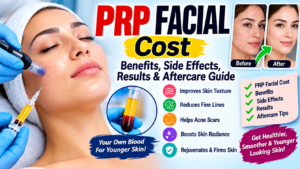

PRP facial treatment, often called the PRP vampire facial, has become a popular cosmetic procedure for people who want smoother, brighter, and more youthful-looking skin. The treatment uses a person’s own blood to prepare platelet-rich plasma (PRP), which is then applied or injected into the skin, commonly after microneedling.
PRP uses components from your own blood, in contrast to many cosmetic procedures that use artificial ingredients. PRP has drawn interest in skin rejuvenation because platelets contain growth factors and other proteins involved in tissue repair.
If you are considering this treatment, one of the first questions is usually: How much does a PRP facial cost? Your location, provider, technique, number of sessions, and whether PRP is used in conjunction with microneedling or another procedure will all affect the answer.
This guide explains PRP facial cost, benefits, side effects, expected results, recovery, aftercare, and important safety considerations.
What Is a PRP Facial?
A PRP facial is a cosmetic skin treatment that uses platelet-rich plasma prepared from your own blood.
During the procedure, a healthcare professional usually draws a small amount of blood from your arm. The blood is placed in a centrifuge to separate its components and concentrate the platelets. The resulting PRP can then be applied to the skin or injected into targeted areas.
PRP facials are frequently combined with microneedling. Microneedling creates tiny controlled channels in the skin, allowing PRP to be applied to the treated area and potentially improving the skin’s healing response.
The treatment is commonly promoted for concerns such as:
- Fine lines and wrinkles
- Uneven skin texture
- Acne scars
- Dull-looking skin
- Mild pigmentation concerns
- Sun-damaged appearance
- Reduced skin firmness
Results vary from person to person, and PRP should not be considered a guaranteed solution for every skin concern.
PRP Facial Cost
The PRP facial cost varies significantly depending on where you live and the type of treatment you receive.
In the United States, a PRP facial or PRP-based skin rejuvenation session may commonly cost several hundred dollars, while combination treatments involving microneedling can cost more. Prices may also be different in the United Kingdom, Canada, Australia, Pakistan, and other countries.
The total price can depend on:
- Geographic location
- Experience and qualifications of the provider
- Clinic reputation
- Number of PRP tubes used
- Whether microneedling is included
- Number of treatment areas
- Number of sessions required
- Additional skincare or follow-up treatments
Some clinics advertise low introductory prices, but patients should look beyond cost alone. A qualified medical professional, sterile technique, appropriate equipment, and proper patient assessment are important when choosing a provider.
Does Insurance Cover PRP Facial Treatment?
PRP facial treatment is generally considered a cosmetic procedure, so health insurance usually does not cover it.
If PRP is being used for a medical reason rather than cosmetic skin rejuvenation, coverage rules can be different. Patients should check directly with their insurance provider.
PRP Facial Benefits
PRP facial treatment is popular because it may improve several aspects of skin appearance.
1. May Improve Skin Texture
PRP combined with microneedling may support the skin’s natural repair processes. Over time, this may contribute to smoother-looking skin and a more even texture.
2. May Reduce the Appearance of Fine Lines
PRP treatments are often used as part of anti-aging skincare programs. By supporting collagen-related skin remodeling, treatment may make fine lines appear less noticeable over time.
3. May Help Acne Scars
PRP is sometimes combined with microneedling to address depressed acne scars. Microneedling itself can stimulate collagen production, while PRP may be used as an additional component of the treatment.
The effectiveness depends on the type and severity of the acne scars.
4. May Improve Skin Radiance
Some people report that their skin looks brighter and healthier after treatment. This may be related to skin renewal and improved overall texture.
5. Uses Your Own Blood
One potential advantage of PRP is that the material comes from the patient’s own blood. This means the treatment does not require a synthetic filler material.
However, using your own blood does not eliminate all possible complications or risks.
How Does a PRP Facial Work?
A typical treatment may involve several steps.
Step 1: Skin Preparation
The provider cleanses the treatment area and may apply a topical numbing cream to reduce discomfort.
Step 2: Blood Collection
A small amount of blood is drawn from the patient’s arm.
Step 3: PRP Preparation
The blood is processed in a centrifuge to separate platelet-rich plasma from other blood components.
Step 4: Skin Treatment
Depending on the treatment plan, the PRP may be applied to the skin after microneedling or injected into selected areas.
Step 5: Post-Treatment Care
The skin is cleaned and the provider gives aftercare instructions. Temporary redness, swelling, sensitivity, or pinpoint bleeding can occur.
A complete appointment may take around an hour or longer depending on the technique and whether additional treatments are performed.
PRP Facial Results: What to Expect
PRP facial results are not usually immediate.
Some people notice temporary changes shortly after treatment because of swelling or increased skin hydration, but the longer-term benefits develop gradually as the skin undergoes its natural healing and remodeling processes.
Possible improvements include:
- Smoother skin texture
- More even-looking skin
- Reduced appearance of fine lines
- Improved appearance of some acne scars
- Healthier-looking skin
- Increased skin radiance
Results vary depending on age, skin condition, lifestyle, treatment technique, and the number of sessions.
A series of treatments may be recommended rather than relying on one session.
How Many PRP Facial Sessions Are Needed?
The number of treatments depends on the individual’s skin concerns and treatment goals.
A series of treatments spaced several weeks apart may be administered to certain patients. PRP may be used by others as a sporadic maintenance procedure.
A qualified dermatologist or cosmetic healthcare professional can evaluate your skin and recommend an appropriate treatment schedule.
It’s crucial to remember that more sessions don’t always translate into better outcomes. The right frequency should be decided by your doctor based on your skin type and medical background.
PRP Facial Side Effects
PRP facial treatment is generally associated with temporary side effects, but complications can occur.
Common short-term effects may include:
- Redness
- Swelling
- Mild bruising
- Skin sensitivity
- Tightness
- Mild discomfort
- Pinpoint bleeding after microneedling
These effects often improve within several days, although recovery time can vary.
Possible Complications
Less common complications can include infection, prolonged inflammation, pigmentation changes, scarring, or worsening of certain skin conditions.
The risk can be reduced by choosing a properly qualified provider who follows appropriate infection-control and sterile procedures.
Seek medical attention if you develop severe pain, rapidly increasing swelling, significant drainage, fever, or other symptoms that appear unusual or worsen instead of improving.
PRP Facial Aftercare Guide
Following proper PRP facial aftercare can help protect the skin while it recovers.
Keep Your Skin Clean
Follow your provider’s instructions regarding cleansing. Avoid aggressively rubbing or scrubbing the treated skin.
Avoid Heavy Makeup Initially
Your provider may recommend avoiding makeup for a period after treatment, particularly when microneedling has been performed.
Protect Your Skin From Sun Exposure
Sun protection is especially important after skin procedures. Use a suitable sunscreen according to your provider’s instructions and minimize unnecessary direct sun exposure.
Avoid Harsh Skincare Products
For a short period after treatment, avoid irritating products such as strong exfoliants, retinoids, or other active ingredients unless your healthcare professional tells you to continue them.
Avoid Excessive Heat
Saunas, very hot showers, and other sources of excessive heat may increase irritation during the early recovery period.
Do Not Pick or Scratch the Skin
Even if your skin feels dry or irritated, avoid picking, scratching, or peeling it. This can increase irritation and may contribute to complications.
Who Is a Good Candidate for a PRP Facial?
PRP facial treatment may be considered by adults who want to improve certain cosmetic skin concerns and understand that results vary.
A professional evaluation is particularly important if you have:
- Active skin infections
- Severe inflammatory skin conditions
- Blood disorders
- Problems affecting platelet function
- Certain medical conditions
- A history of abnormal scarring
- Medications that may affect bleeding or healing
Pregnant or breastfeeding individuals should discuss cosmetic procedures with their healthcare provider before proceeding.
PRP Facial vs. Microneedling
PRP and microneedling are related but different treatments.
Microneedling uses tiny needles to create controlled micro-injuries in the skin, which can stimulate the body’s wound-healing response.
PRP involves concentrating platelets from the patient’s blood and using the resulting plasma during treatment.
When combined, microneedling creates controlled channels while PRP is used as part of the treatment protocol.
Whether combination treatment is better for a particular person depends on the skin concern and the provider’s assessment.
How Long Do PRP Facial Results Last?
The duration of PRP facial results varies.
Skin continues to age naturally, and factors such as sun exposure, smoking, stress, nutrition, sleep, and skincare habits can affect the appearance of the skin.
Some people choose maintenance treatments after completing an initial series, but there is no universal schedule that works for everyone.
A good daily skincare routine, sun protection, healthy lifestyle, and appropriate professional treatments can help maintain improvements.
How to Choose a PRP Facial Provider
Choosing the right provider is one of the most important parts of the treatment.
Before booking a PRP facial, consider:
- Provider qualifications and medical training
- Experience performing PRP treatments
- Clinic hygiene and infection-control practices
- Whether the provider performs a proper consultation
- How blood is collected and processed
- What equipment is used
- What aftercare instructions are provided
- Whether realistic results are explained
Be cautious of clinics that promise dramatic or guaranteed results.
A very low price should not be the only reason for choosing a provider. Safety, qualifications, and proper technique are more important than finding the cheapest treatment.
Frequently Asked Questions About PRP Facial
Is a PRP facial painful?
Some discomfort may occur, particularly when microneedling or injections are involved. A topical numbing cream may be used to make the procedure more comfortable.
How long does a PRP facial take?
The appointment can take approximately 45–90 minutes depending on the technique, blood preparation, numbing time, and whether microneedling or another treatment is included.
Can PRP remove acne scars completely?
PRP cannot guarantee complete removal of acne scars. It may help improve the appearance of certain scars, especially when combined with procedures such as microneedling.
When can I wear makeup after a PRP facial?
Your provider will give specific instructions. If microneedling is performed, you may be advised to avoid makeup for a period while the skin recovers.
Is PRP better than Botox?
PRP and Botox work differently and are used for different purposes. PRP is generally used for skin rejuvenation and texture, while Botox targets specific facial muscles to reduce the appearance of certain expression lines. Neither treatment is universally better.
Final Thoughts
A PRP facial can be an appealing option for people looking for a minimally invasive approach to improving skin texture, fine lines, acne scars, and overall skin appearance. The treatment uses platelet-rich plasma prepared from the patient’s own blood and is frequently combined with microneedling.
The cost of a PRP facial can vary considerably depending on location, provider, treatment technique, and the number of sessions required. Temporary redness, swelling, bruising, and sensitivity are among the common side effects, while more serious complications are less common but possible.
Before treatment, consult a qualified dermatologist or other appropriately trained healthcare professional. A proper assessment can help determine whether PRP is suitable for your skin, what results are realistic, how many sessions may be needed, and what aftercare you should follow.