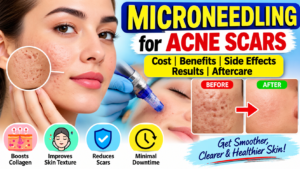

Microneedling for Acne Scars: What You Need to Know
Acne can disappear, but the scars it leaves behind may remain for years. For people looking for smoother and more even-looking skin, microneedling for acne scars has become a popular minimally invasive treatment. It works by creating tiny controlled micro-injuries in the skin, encouraging the body’s natural healing process and stimulating collagen and elastin production.
The appearance of certain types of atrophic scars, microne scars. However, the kind and degree of scarring, skin type, method of treatment, and number of sessions needed all affect the outcome.
Understanding the possible advantages, expense, adverse effects, anticipated outcomes, recuperation, and aftercare is crucial before making a treatment decision.
What Is Microneedling for Acne Scars?
Microneedling is a cosmetic procedure that uses a device containing very fine needles to create controlled microscopic punctures in the skin. These tiny injuries trigger the skin’s natural repair response.
As the skin heals, it produces new collagen and elastin. Over time, this process can make the skin surface appear smoother and may reduce the visibility of some acne scars.
Unlike treatments that remove the outer layers of skin, microneedling is designed to stimulate skin remodeling while leaving most of the surface intact.
A dermatologist or qualified medical professional may recommend microneedling alone or combine it with other acne-scar treatments depending on the patient’s needs.
Which Acne Scars Can Microneedling Treat?
Microneedling is generally more useful for atrophic acne scars, which are depressed scars caused by loss of collagen during the healing process.
Common types include:
Rolling scars: These are broad, shallow depressions that can make the skin look uneven.
Boxcar scars: These are depressed scars with more defined edges and can vary in depth.
Some shallow ice-pick scars: Very deep ice-pick scars may require other procedures, but selected superficial scars may sometimes improve with collagen-stimulating treatments.
Microneedling is not primarily a treatment for raised scars such as hypertrophic or keloid scars. People with these types of scars should consult a dermatologist before considering any procedure.
Benefits of Microneedling for Acne Scars
One of the biggest reasons people choose microneedling for acne scars is its ability to encourage collagen production without surgically removing the scar.
Potential benefits include:
1. Smoother Skin Texture
As new collagen develops, uneven areas may gradually become smoother. This can improve the overall texture of skin affected by acne scars.
2. Reduced Appearance of Depressed Scars
A series of treatments may make certain shallow acne scars less noticeable. Improvement is usually gradual rather than immediate.
3. Collagen Stimulation
Microneedling activates the body’s natural wound-healing response. Increased collagen formation can support healthier-looking skin over time.
4. Minimal Downtime
Compared with some aggressive resurfacing procedures, microneedling often involves relatively short downtime. Many people experience redness and sensitivity for a few days.
5. Can Be Used on Different Skin Types
Microneedling may be considered for people with a variety of skin tones. However, treatment should be performed by an appropriately trained professional because every skin type has different risks and considerations.
6. Improved Overall Skin Appearance
In addition to acne scars, microneedling may improve the appearance of uneven texture and some fine lines, depending on the treatment plan.
Microneedling for Acne Scars Cost
The microneedling for acne scars cost can vary significantly depending on location, provider experience, treatment area, device used, and the number of sessions required.
In many clinics, microneedling is priced per session rather than as a complete treatment package. More extensive treatments or combination procedures may cost more.
Factors that can influence the price include:
- Geographic location
- Dermatologist or provider qualifications
- Size of the treatment area
- Severity of acne scarring
- Number of sessions needed
- Type of microneedling device
- Whether additional treatments are combined with microneedling
- Consultation and follow-up fees
Because acne scars often require multiple sessions, the total cost can be considerably higher than the price of one appointment.
Patients should ask the clinic whether the quoted price includes consultation, numbing cream, aftercare products, and follow-up visits.
How Many Microneedling Sessions Are Needed?
There is no single number of sessions that works for everyone.
People with mild acne scarring may notice improvement after a few treatments, while deeper or more extensive scarring may require a longer treatment plan.
Sessions are generally spaced apart to allow the skin enough time to heal and remodel collagen. Your dermatologist can determine the appropriate interval based on your skin condition and treatment intensity.
It is important not to have treatments too frequently because the skin needs adequate recovery time.
What Happens During Microneedling?
Before treatment, the skin is usually cleansed thoroughly. A topical numbing cream may be applied to make the procedure more comfortable.
The provider then moves the microneedling device over the treatment area. The tiny needles create controlled micro-injuries at selected depths.
The procedure may cause sensations such as pressure, vibration, warmth, or mild discomfort.
After treatment, the skin may appear red and feel warm or tight, somewhat similar to a mild sunburn.
The duration depends on the size of the treatment area, but a facial treatment can often be completed during a relatively short appointment.
Microneedling Results for Acne Scars
Microneedling results are not usually visible immediately. Some temporary changes may occur soon after treatment because of swelling, but true collagen remodeling takes time.
During the weeks following treatment, the skin gradually begins repairing itself. With multiple sessions, acne scars may become less noticeable and the overall texture of the skin may improve.
Results vary from person to person. Deep scars may not completely disappear, and some scars respond better to combination treatments than to microneedling alone.
It is also important to maintain realistic expectations. Microneedling can improve the appearance of acne scars, but it cannot guarantee completely scar-free skin.
Microneedling Side Effects
Microneedling is generally considered a minimally invasive procedure, but it can cause temporary side effects.
Common microneedling side effects may include:
- Redness
- Mild swelling
- Skin sensitivity
- Tightness
- Mild burning or discomfort
- Dryness or flaking
- Temporary irritation
These effects commonly improve as the skin heals.
Less common complications can include infection, prolonged inflammation, pigmentation changes, or scarring, particularly if the procedure is performed improperly or aftercare instructions are not followed.
Anyone experiencing severe pain, increasing redness, significant swelling, pus, fever, or other signs of infection should contact a healthcare professional promptly.
Microneedling Aftercare
Proper microneedling aftercare is important for protecting the skin while it heals.
Your provider may recommend specific instructions, but general aftercare can include:
Avoid Harsh Skincare Products
For a short period after treatment, avoid irritating products such as strong exfoliants, retinoids, or other active ingredients unless your provider tells you to continue them.
Protect Your Skin From the Sun
Freshly treated skin can be more sensitive to sunlight. Use appropriate broad-spectrum sunscreen and limit unnecessary sun exposure.
Keep the Skin Clean
Use a gentle cleanser and avoid aggressive scrubbing. Clean hands are also important before touching the treated area.
Avoid Picking or Scratching
Do not peel, scratch, or remove flaking skin. Allow the skin to heal naturally.
Follow Your Provider’s Instructions
Aftercare recommendations can differ depending on treatment depth, skin type, and whether another procedure was performed at the same time.
Who Should Avoid Microneedling?
Microneedling may not be suitable for everyone. A medical professional should assess your skin before treatment.
Treatment may need to be postponed or avoided in people with certain conditions, such as:
- Active acne breakouts
- Active skin infections
- Open wounds
- Certain inflammatory skin conditions
- Poor wound healing
- A history of problematic scarring
- Recent aggressive cosmetic procedures
People taking certain medications or with medical conditions affecting healing should discuss these issues with their healthcare provider before treatment.
Microneedling should not be performed over active infections or untreated skin problems.
Microneedling vs. Other Acne Scar Treatments
Microneedling is only one option for acne scars. Depending on the scar type, a dermatologist may consider treatments such as chemical peels, laser resurfacing, subcision, dermabrasion, fillers, or other procedures.
The best treatment depends on whether scars are rolling, boxcar, ice-pick, raised, or associated with pigmentation.
For example, deeper scars may respond better to procedures specifically designed to release scar tissue or resurface the skin. In some cases, combining treatments can provide better results than using one procedure alone.
A professional evaluation is therefore more useful than choosing a treatment based only on price or online before-and-after photographs.
When Will You See Results?
Patience is important after microneedling.
The skin may look temporarily red immediately after treatment, but this does not represent the final result. Collagen remodeling occurs gradually.
Many people notice progressive improvement over several weeks or after multiple sessions. The exact timeline depends on the depth of treatment, severity of scarring, individual healing response, and overall skin health.
Taking before-and-after photographs under similar lighting can help you track gradual changes more accurately.
Frequently Asked Questions
Is microneedling good for acne scars?
Microneedling can help improve the appearance of some depressed acne scars by stimulating collagen production. It is generally more appropriate for certain atrophic scars than raised scars.
Is microneedling painful?
A topical numbing cream is often used to improve comfort. Patients may still feel pressure, vibration, or mild discomfort during treatment.
How long does microneedling take to heal?
Many people experience redness and sensitivity for a few days, but healing time varies depending on treatment intensity and individual skin response.
Can microneedling remove acne scars permanently?
Microneedling may reduce the appearance of acne scars, but it does not guarantee complete or permanent removal. Scar improvement can vary considerably between individuals.
Can I do microneedling at home?
Professional microneedling should be performed by a qualified and appropriately trained provider. At-home devices may create additional risks, particularly if they are used incorrectly or without proper hygiene.
Final Thoughts
Microneedling for acne scars can be an effective option for improving skin texture and reducing the appearance of certain depressed acne scars. Its main benefit is stimulating the skin’s natural collagen-building process rather than simply covering the scar.
However, reasonable expectations are necessary for the treatment. The outcomes of these outcomes are usually depend on the results.
See a licensed dermatologist or other health care provider before beginning treatment so they can determine the type of scar you have and suggest a suitable course of action. Safer and better outcomes can be achieved through professional technique, careful aftercare, and appropriate treatment selection.