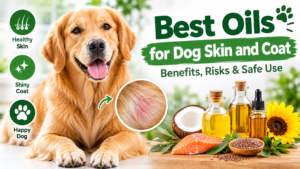

Best Oils for Dog Skin and Coat: Benefits, Risks & Safe Use
A healthy dog’s skin and coat depend on proper nutrition, regular grooming, hydration, and treatment of underlying health problems. Some oils may support skin moisture, reduce dryness, and help maintain a soft, shiny coat. However, not every oil is safe for dogs, and natural products can still cause side effects when used incorrectly.
Your dog’s age, size, diet, skin type, allergies, and general health all affect which oil is best for them. Consult a veterinarian before putting any oil on your dog’s skin or in their food, particularly if they have pancreatitis, obesity, digestive disorders, or persistent skin irritation.
Why Are Oils Important for Dog Skin and Coat?
Certain oils contain essential fatty acids that help support the skin barrier and coat quality. These fats may help the skin retain moisture, reduce flaking, and support normal inflammatory responses.
A dog’s coat may become dull, brittle, or dry because of:
- Poor-quality or unbalanced nutrition
- Low intake of essential fatty acids
- Frequent bathing
- Harsh shampoos
- Fleas or other parasites
- Environmental dryness
- Food or environmental allergies
- Yeast or bacterial skin infections
- Hormonal problems
- Underlying medical conditions
Oils may support healthy skin, but they cannot replace proper diagnosis and treatment. If your dog has severe itching, hair loss, redness, odor, scabs, or open sores, consult a veterinarian rather than relying on oil alone.
1. Fish Oil: One of the Best Oils for Dog Skin and Coat
Because fish oil contains omega-3 fatty acids, particularly EPA and DHA, it is frequently advised for dogs. These nutrients may support normal inflammatory balance, joint function, skin health, and coat luster.
Potential benefits of fish oil
- Supports the skin’s natural barrier
- May reduce dryness and flaking
- Can help maintain a soft, shiny coat
- May support dogs with certain inflammatory skin conditions
- Provides nutritional support for joints and overall health
- May be useful for dogs with limited omega-3 intake
Fish oil is usually given orally rather than applied directly to the skin. Choose a veterinary-formulated product that clearly lists the amount of EPA and DHA. Avoid giving random human supplements without veterinary guidance because ingredients, concentrations, and added vitamins may differ.
Risks of fish oil
Too much fish oil may cause:
- Diarrhea
- Vomiting
- Fishy breath
- Weight gain
- Excess calories
- Increased risk of bleeding in certain situations
- Problems in dogs with a history of pancreatitis
Fish oil can also interact with some medications. Your veterinarian can help determine whether it is suitable and how much your dog needs.
2. Coconut Oil for Dry Skin
Coconut oil is sometimes used as a topical moisturizer for dry areas of a dog’s skin. It contains fatty acids and may provide temporary softness when applied in a very small amount.
Possible benefits
- May soften dry skin
- Can help moisturize rough paw pads
- May make the coat feel smoother
- Can be useful for small, localized dry areas
Coconut oil should not be considered a cure for allergies, infections, mites, or serious skin disease. Its antimicrobial effects in laboratory settings do not mean that it can reliably treat a dog’s yeast or bacterial infection.
How to use coconut oil safely
Apply a tiny amount to a small area first. Prevent your dog from licking large quantities, as ingestion may cause stomach upset or contribute excessive fat and calories to the diet.
Avoid applying coconut oil to:
- Open wounds
- Hot spots
- Infected skin
- Large areas of the body
- Areas your dog constantly licks
Coconut oil may also make some dogs feel greasy and can worsen irritation in sensitive animals.
3. Olive Oil: Is It Safe for Dogs?
Small amounts of plain olive oil are generally tolerated by many healthy dogs, but it is not usually the first choice for treating skin or coat problems. Olive oil contains monounsaturated fats and may add calories to the diet.
Possible benefits
- Adds dietary fat
- May support coat softness when used as part of a balanced diet
- Can improve the texture of dry food
However, there is limited evidence that adding olive oil directly treats canine skin disease. It should not be used as a substitute for a complete, balanced dog food or a veterinary-recommended fatty acid supplement.
Too much olive oil can cause loose stools, weight gain, or digestive discomfort. Dogs with pancreatitis or fat-sensitive digestive conditions should not receive extra oils unless their veterinarian approves.
4. Sunflower Oil
Sunflower oil contains linoleic acid, an omega-6 fatty acid that is important for normal skin function. Dogs need certain omega-6 fats in their diet, and a deficiency can contribute to poor coat quality and skin problems.
Sunflower oil may be present in some commercial dog foods and veterinary diets. Adding extra oil is usually unnecessary when your dog already eats a complete and balanced diet.
Potential concerns
Excessive amounts can:
- Add unnecessary calories
- Cause digestive upset
- Disturb the balance of dietary fats
- Be unsuitable for dogs with certain medical conditions
Do not assume that more oil means healthier skin. A balanced diet is more important than adding multiple supplements.
5. Flaxseed Oil
Flaxseed oil contains alpha-linolenic acid, an omega-3 fatty acid from plants. Some dogs may benefit from it as a source of dietary fat, but dogs do not convert plant-based omega-3s into EPA and DHA as efficiently as they obtain them from fish oil.
Potential benefits
- Provides plant-based omega-3 fatty acids
- May support general dietary fat intake
- Can be an option for some dogs that cannot tolerate fish-based products
Flaxseed oil can become rancid if stored incorrectly. Keep it sealed and follow the product’s storage instructions. It may also cause gas or loose stools if introduced too quickly.
For dogs with skin allergies or inflammatory skin problems, ask your veterinarian whether fish oil or another veterinary supplement would be more appropriate.
6. Evening Primrose Oil
Evening primrose oil contains gamma-linolenic acid, or GLA. It is sometimes marketed for itchy skin and coat support. However, evidence for its effectiveness in dogs is limited, and it is not a standard treatment for most canine skin conditions.
Some products may interact with medications or cause digestive side effects. Do not give evening primrose oil to a dog without veterinary advice, especially if your pet takes medication for seizures, inflammation, or blood clotting.
7. Essential Oils: Use Extreme Caution
Essential oils are highly concentrated plant extracts. Many products that are safe for certain human uses can be dangerous to dogs when swallowed, applied directly, or used in poorly ventilated areas.
Examples of essential oils that may be harmful include:
- Tea tree oil
- Pennyroyal oil
- Wintergreen oil
- Cinnamon oil
- Clove oil
- Peppermint oil
- Pine oil
- Citrus oils
Never apply concentrated essential oils directly to your dog’s skin. Do not add them to shampoo, food, water, or a diffuser without professional veterinary guidance. Dogs can absorb or inhale concentrated compounds, and some oils may cause poisoning, skin burns, breathing problems, tremors, or neurological symptoms.
If your dog has been exposed to a potentially toxic essential oil, contact a veterinarian or animal poison service immediately.
Should You Apply Oil Directly to Your Dog’s Skin?
In most cases, oral nutrition is safer and more useful than applying kitchen oils directly to the coat. Topical oil can trap dirt, make the coat greasy, encourage licking, and worsen some skin conditions.
If your veterinarian approves a topical oil:
- Use only a small amount.
- Apply it to a limited area.
- Avoid the eyes, ears, nose, mouth, and genitals.
- Do not apply it to open or infected skin.
- Stop if redness, itching, or swelling develops.
- Prevent excessive licking.
- Wash the area gently if irritation occurs.
For dry skin, a dog-specific moisturizing spray, conditioner, or medicated product may be more appropriate than household oil.
How to Choose a Safe Oil Supplement
Before choosing an oil, check the label for:
- Intended use in dogs
- Clear ingredient information
- EPA and DHA amounts, if it is fish oil
- Batch testing or quality-control information
- Appropriate storage instructions
- Expiration date
- Absence of unnecessary flavorings or additives
Avoid products containing xylitol, garlic, onion, unsafe herbs, or other ingredients that may be toxic to dogs. Human supplements may contain additional vitamins or ingredients that are not suitable for pets.
Introduce any new oil gradually and monitor your dog for vomiting, diarrhea, itching, or changes in appetite.
When Oils Are Not Enough
Oil supplements will not cure every skin problem. Your dog may need veterinary testing if they have:
- Persistent itching
- Hair loss or bald patches
- Red, thickened, or darkened skin
- Strong skin odor
- Repeated ear infections
- Greasy skin
- Scabs or sores
- Constant paw licking
- Fleas or visible parasites
- Sudden coat changes
- Weight loss, excessive thirst, or low energy
Skin problems may be caused by allergies, parasites, yeast, bacteria, hormonal disease, or nutritional deficiencies. Treating only the dryness can allow the real problem to continue.
Frequently Asked Questions
Can I put coconut oil on my dog every day?
Daily use is not necessary for most dogs. If your veterinarian approves it, use only a small amount on a limited dry area and watch for licking or irritation.
What is the best oil for a dog’s itchy skin?
Fish oil containing EPA and DHA may support dogs with certain inflammatory skin problems, but itching can have many causes. A veterinarian should identify the cause before treatment begins.
Can I add olive oil to my dog’s food?
Small amounts may be tolerated by healthy dogs, but extra oil is not needed when the diet is complete and balanced. Ask your veterinarian before adding oil, particularly if your dog is overweight or has pancreatitis.
Is tea tree oil safe for dogs?
Concentrated tea tree oil can be toxic to dogs. Do not apply it directly or use it in homemade skin treatments without veterinary direction.
How long does it take for an oil supplement to improve the coat?
Coat changes are gradual. Some dogs may show improvement after several weeks, while others need longer or require treatment for an underlying condition. Follow the product instructions and your veterinarian’s advice.
Final Thoughts
The best oils for your dog’s skin and coat are those that are used properly and chosen based on your dog’s specific requirements. Because it contains EPA and DHA, fish oil is frequently the most beneficial nutritional choice; small amounts of coconut oil may temporarily relieve localized dry skin. When your dog already eats a balanced diet, adding dietary fats like olive, sunflower, and flaxseed oils is usually not necessary.
Avoid concentrated essential oils and do not use household oils to treat infections, severe itching, wounds, or hair loss. A healthy diet, regular grooming, parasite prevention, and veterinary care are the foundation of healthy skin and a shiny coat.