
Fleas are one of the most common parasites affecting puppies. Although tiny, these pests can cause serious discomfort, skin irritation, itching, allergic reactions, and even anemia in very young puppies. Because puppies have sensitive skin and developing immune systems, choosing the best flea treatment for puppies is essential for their health and safety.
Not every flea product is suitable for young dogs. Some medications are only approved for puppies over a certain age or weight, making it important to read labels carefully and consult your veterinarian if you’re unsure.
In this comprehensive guide, you’ll learn how fleas affect puppies, the safest flea treatments, prevention tips, and how to protect your furry friend from future infestations.
Why Fleas Are Dangerous for Puppies
Many pet owners think fleas are only a minor annoyance, but they can cause serious health problems in puppies.
Common problems include:
- Constant itching
- Hair loss
- Skin infections
- Flea allergy dermatitis
- Restlessness
- Weight loss
- Tapeworm infection
- Blood loss leading to anemia
Young puppies are especially vulnerable because even a moderate flea infestation can remove enough blood to make them weak or ill.
Signs Your Puppy Has Fleas
Recognizing flea infestations early makes treatment easier.
Look for these symptoms:
- Excessive scratching
- Frequent biting or licking the skin
- Red or irritated skin
- Hair thinning
- Tiny black specks (flea dirt)
- Small jumping insects in the coat
- Scabs around the neck or tail
- Restlessness or poor sleep
Use a flea comb to check around the ears, neck, belly, and base of the tail, where fleas often hide.
How Puppies Get Fleas
Even indoor puppies can become infested.
Common sources include:
- Contact with other pets
- Visiting parks
- Contaminated bedding
- Carpets
- Furniture
- Wildlife around the home
- Mother dogs carrying fleas
Flea eggs can survive in the environment for weeks before hatching, making complete treatment important.
Choosing the Best Flea Treatment for Puppies
Before using any flea product, consider:
- Your puppy’s age
- Body weight
- Overall health
- Product safety
- Veterinary approval
Never use flea medication made for cats or adult dogs unless specifically directed by your veterinarian.
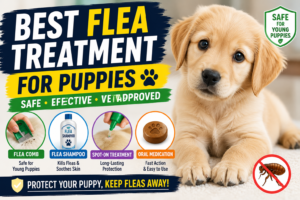
1. Flea Comb
A flea comb is one of the safest treatments for very young puppies.
Benefits
- No chemicals
- Removes adult fleas
- Removes flea dirt
- Helps monitor infestations
- Safe for newborn puppies
Comb your puppy daily and place removed fleas into warm soapy water to kill them.
2. Puppy Flea Shampoo
Many flea shampoos are formulated specifically for puppies over a certain age.
Benefits include:
- Kills adult fleas
- Cleans the coat
- Relieves itching
- Removes flea dirt
Avoid human shampoos, as they can irritate a puppy’s skin.
3. Topical Flea Treatments
Spot-on treatments are applied directly to the skin, usually between the shoulder blades.
Advantages:
- Long-lasting protection
- Easy application
- Kills fleas quickly
- Prevents reinfestation
Only use products approved for your puppy’s age and weight.
4. Oral Flea Medications
Chewable flea treatments are available for many puppies once they reach the appropriate age and weight.
Benefits include:
- Fast action
- No greasy residue
- Easy to administer
- Long-lasting protection
Your veterinarian can recommend the most appropriate oral medication for your puppy.
5. Flea Collars
Modern flea collars can provide extended protection against fleas and ticks.
Look for collars specifically labeled for puppies and follow the minimum age recommendations.
Older-style flea collars may be less effective or unsuitable for young puppies.
Home Treatments for Flea Infestations
Treating your puppy alone is not enough. Around 95% of a flea infestation (eggs, larvae, and pupae) can live in the environment rather than on your pet. To eliminate fleas completely, you need to clean your home as well.
1. Wash Bedding Regularly
Wash your puppy’s:
- Blankets
- Bed covers
- Towels
- Soft toys
Use hot water and dry them on high heat to kill fleas and their eggs.
2. Vacuum Frequently
Vacuum all areas where your puppy spends time, including:
- Carpets
- Rugs
- Sofas
- Pet beds
- Hardwood floor cracks
- Corners of rooms
Dispose of the vacuum bag or empty the canister immediately after cleaning to prevent fleas from escaping.
3. Clean Upholstery
Fleas often hide inside furniture cushions.
Vacuum upholstered furniture thoroughly and wash removable covers whenever possible.
4. Treat Your Yard
If your puppy spends time outdoors, fleas may also live in your yard.
Helpful tips include:
- Mow the lawn regularly.
- Remove piles of leaves.
- Trim bushes.
- Keep the yard dry where possible.
- Discourage wildlife that may carry fleas.
If flea infestations are severe, speak with a pest-control professional about pet-safe outdoor treatments.
Natural Flea Remedies: Do They Work?
Many pet owners look for natural alternatives. While some may help reduce fleas, they are generally not as effective as veterinarian-approved flea medications, especially for moderate or heavy infestations.
Apple Cider Vinegar
Some owners use diluted apple cider vinegar as a rinse. It may make the coat less attractive to fleas but does not reliably kill them.
Coconut Oil
Coconut oil can moisturize dry skin and improve coat condition, but it should not be relied upon as the main flea treatment.
Herbal Sprays
Some herbal sprays containing ingredients such as neem may offer limited flea-repelling effects. Always choose products labeled as safe for puppies and avoid homemade mixtures that may irritate the skin.
Important: Never apply essential oils (such as tea tree, peppermint, eucalyptus, or clove oil) directly to puppies unless specifically recommended by your veterinarian. Some essential oils can be toxic to dogs.
How to Prevent Fleas from Returning
Prevention is easier than treating a severe infestation.
Follow these simple steps:
- Use veterinarian-approved flea prevention year-round.
- Groom your puppy regularly.
- Check the coat after walks.
- Wash bedding weekly.
- Vacuum carpets and furniture often.
- Keep your home and yard clean.
- Treat all pets in the household if fleas are present.
- Schedule regular veterinary checkups.
Consistent prevention greatly reduces the risk of future flea problems.
Common Flea Treatment Mistakes
Avoid these common errors:
Using Dog Products on Cats (or Vice Versa)
Some flea medications for dogs contain ingredients that are dangerous to cats. Always use products designed for the correct species.
Ignoring Age and Weight Requirements
Many flea products are approved only for puppies above a specific age or body weight. Always read the label before use.
Stopping Treatment Too Early
Even if you no longer see adult fleas, eggs may still hatch later. Continue treatment according to your veterinarian’s instructions.
Forgetting the Environment
Treating only your puppy while ignoring your home often leads to repeated infestations.
Overusing Flea Products
Using multiple flea medications at the same time without veterinary advice may increase the risk of side effects.
When Should You Visit a Veterinarian?
Seek veterinary care if your puppy:
- Is younger than the minimum age listed for flea products.
- Has severe itching or open sores.
- Shows signs of anemia (weakness, pale gums, tiredness).
- Has persistent fleas despite treatment.
- Develops skin infections.
- Appears lethargic or loses appetite.
A veterinarian can recommend the safest and most effective treatment based on your puppy’s age, weight, and overall health.
Frequently Asked Questions (FAQs)
What is the safest flea treatment for puppies?
The safest option depends on your puppy’s age and weight. Flea combs are generally safe for very young puppies, while older puppies may be eligible for veterinarian-approved shampoos, topical treatments, or oral medications.
Can I use flea medicine on an 8-week-old puppy?
Many flea treatments are approved for puppies that are at least 8 weeks old, but age and weight requirements vary by product. Always read the label and consult your veterinarian.
How often should I check my puppy for fleas?
Check your puppy at least once a week and after outdoor activities, especially during warm weather.
Can fleas live in my house without pets?
Yes. Flea eggs, larvae, and pupae can survive for weeks or even months in carpets, furniture, bedding, and floor cracks until conditions are suitable for hatching.
Can puppies get sick from fleas?
Yes. Heavy flea infestations can lead to anemia, skin infections, allergic reactions, and the transmission of tapeworms, especially in young puppies.
Final Thoughts
Finding the best flea treatment for puppies means choosing a safe, age-appropriate solution while also treating your home and maintaining regular prevention. Fleas are more than just an inconvenience—they can seriously affect a puppy’s health if left untreated.
A combination of veterinarian-approved flea medication, regular grooming, a clean environment, and routine preventive care offers the best protection. By acting early and staying consistent, you can keep your puppy comfortable, healthy, and free from fleas all year round.