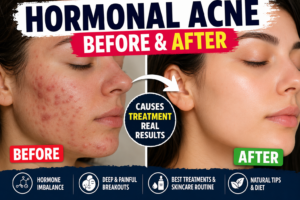

Hormonal acne is one of the most frustrating skin conditions because it often appears repeatedly, even when you follow a good skincare routine. Unlike ordinary pimples, hormonal acne is caused by changes in hormone levels that increase oil production, clog pores, and lead to painful breakouts.
Many people search for “hormonal acne before and after” because they want proof that clear skin is possible. The good news is that with the right treatment, consistency, and healthy lifestyle habits, dramatic improvements can happen over time.
In this complete guide, you’ll learn what hormonal acne is, why it develops, what before-and-after results look like, and the best ways to achieve healthier, clearer skin.
What Is Hormonal Acne?
Hormonal acne develops when fluctuations in hormones stimulate the sebaceous glands to produce excess oil (sebum). This excess oil mixes with dead skin cells and bacteria, causing clogged pores and inflammation.
Hormonal acne commonly appears as:
- Painful cysts
- Deep pimples
- Tender bumps
- Whiteheads
- Blackheads
- Recurring breakouts
Unlike teenage acne, hormonal acne frequently affects adults between the ages of 20 and 40.
Where Does Hormonal Acne Usually Appear?
The most common locations include:
- Chin
- Jawline
- Neck
- Lower cheeks
- Around the mouth
Some people also develop hormonal acne on the:
- Back
- Chest
- Shoulders
These breakouts are often larger, deeper, and slower to heal than regular pimples.
What Causes Hormonal Acne?
Several hormonal changes can trigger acne.
1. Puberty
During puberty, the body produces more androgen hormones, which increase oil production and often cause teenage acne.
2. Menstrual Cycle
Many women notice breakouts about one week before their period.
This happens because estrogen levels fall while progesterone and androgen activity increase, making the skin oilier.
3. Pregnancy
Hormonal shifts during pregnancy can lead to unexpected acne flare-ups.
Some women experience severe acne during the first trimester, while others notice clearer skin.
4. Polycystic Ovary Syndrome (PCOS)
PCOS is one of the leading causes of persistent hormonal acne.
Women with PCOS often experience:
- Acne
- Excess facial hair
- Irregular periods
- Weight gain
5. Menopause
Hormone changes during menopause may trigger acne despite having clear skin for years.
6. Stress
Stress increases cortisol levels, which indirectly stimulate oil production and worsen acne.
Symptoms of Hormonal Acne
Hormonal acne usually includes:
- Painful cysts
- Deep nodules
- Inflamed red pimples
- Oily skin
- Breakouts that return every month
- Acne around the chin and jawline
Hormonal Acne Before and After: What Changes?
Many people wonder what improvements they can realistically expect.
Before Treatment
Before beginning proper treatment, skin often shows:
- Large inflamed pimples
- Painful cysts
- Redness
- Dark acne marks
- Uneven skin texture
- Excess oil
- Frequent breakouts
Daily makeup may become necessary, and self-confidence often decreases because acne keeps returning.
After Successful Treatment
After consistent treatment, skin usually becomes:
- Smoother
- Less oily
- Brighter
- More even-toned
- Less inflamed
- Free from painful cysts
Although acne scars may take longer to fade, active breakouts usually reduce significantly.
How Long Does It Take to See Results?
Improvement doesn’t happen overnight.
Most dermatologists recommend giving treatments:
- 4–6 weeks for early improvement
- 8–12 weeks for noticeable changes
- 3–6 months for significant before-and-after results
Patience is extremely important because stopping treatment too early can cause acne to return.
Best Treatments for Hormonal Acne
1. Salicylic Acid
Salicylic acid penetrates deep into pores to remove oil and dead skin cells.
Benefits include:
- Reduces clogged pores
- Prevents blackheads
- Controls oily skin
- Helps prevent new breakouts
A 2% salicylic acid cleanser is often recommended for oily and acne-prone skin.
2. Benzoyl Peroxide
Benzoyl peroxide kills acne-causing bacteria and reduces inflammation.
It is especially effective for:
- Inflamed pimples
- Red acne
- Mild cystic acne
Use lower strengths (2.5%–5%) to reduce dryness and irritation.
3. Retinoids
Retinoids are considered one of the most effective treatments for hormonal acne.
They help by:
- Speeding up cell turnover
- Preventing clogged pores
- Reducing acne scars
- Improving skin texture
- Smoothing fine lines
Retinoids require consistent use and should always be paired with sunscreen during the day.
4. Niacinamide
Niacinamide is a gentle skincare ingredient that helps:
- Reduce redness
- Control oil
- Strengthen the skin barrier
- Fade post-acne marks
- Calm inflammation
It works well alongside salicylic acid or retinoids.
5. Azelaic Acid
Azelaic acid is excellent for people with sensitive skin.
Benefits include:
- Reduces acne bacteria
- Fades dark spots
- Treats redness
- Improves uneven skin tone
6. Prescription Treatments for Hormonal Acne
If over-the-counter products don’t improve your acne after several weeks, a dermatologist may recommend prescription treatments. These medications target the root causes of hormonal acne and can provide significant before-and-after improvements.
Hormonal Birth Control
Certain birth control pills help regulate hormone levels and reduce androgen activity, which decreases excess oil production. Many women notice fewer breakouts after using these medications consistently for several months.
Spironolactone
Spironolactone is a prescription medication commonly used for adult women with hormonal acne. It works by blocking the effects of androgens, helping to reduce oil production and prevent new cystic breakouts.
Oral Antibiotics
For moderate to severe inflammatory acne, doctors may prescribe oral antibiotics for a limited period. These medications reduce acne-causing bacteria and inflammation but are usually combined with topical treatments for the best results.
Isotretinoin (Accutane)
For severe cystic acne that doesn’t respond to other treatments, isotretinoin may be recommended. It significantly reduces oil production and can lead to long-term acne clearance. Because of its potential side effects, it must only be used under close medical supervision.
Natural Remedies That May Help Hormonal Acne
While natural remedies cannot replace medical treatment for severe hormonal acne, they may support healthy skin when used alongside a proper skincare routine.
1. Green Tea
Green tea contains antioxidants that help reduce inflammation and may decrease oil production. Drinking green tea regularly or using skincare products containing green tea extract may benefit acne-prone skin.
2. Aloe Vera
Aloe vera has soothing and anti-inflammatory properties. Applying pure aloe vera gel can help calm irritated skin and support the healing process.
3. Tea Tree Oil
Tea tree oil has natural antibacterial properties. Always dilute it properly before applying it to the skin to avoid irritation.
4. Omega-3 Fatty Acids
Foods rich in omega-3 fatty acids, such as salmon, walnuts, and flaxseeds, may help reduce inflammation associated with acne.
5. Zinc
Zinc supports wound healing and immune function. Some studies suggest that zinc supplementation may help reduce acne severity, but it’s best to consult a healthcare provider before taking supplements.
Best Skincare Routine for Hormonal Acne
Consistency is one of the most important factors in achieving noticeable before-and-after results.
Morning Routine
- Wash your face with a gentle cleanser.
- Apply a niacinamide or vitamin C serum.
- Use a lightweight, non-comedogenic moisturizer.
- Finish with a broad-spectrum SPF 30 or higher sunscreen every day.
Evening Routine
- Remove makeup thoroughly.
- Cleanse your skin.
- Apply a retinoid or adapalene as directed.
- Moisturize to protect the skin barrier.
Avoid using multiple strong active ingredients at the same time, as this can increase irritation.
Foods That May Help Hormonal Acne
Although diet is not the sole cause of acne, certain foods may support healthier skin.
Eat More Of:
- Fresh vegetables
- Leafy greens
- Berries
- Citrus fruits
- Whole grains
- Lean proteins
- Salmon
- Eggs
- Nuts and seeds
- Avocados
- Plenty of water
Limit:
- Sugary drinks
- Candy
- White bread
- Highly processed foods
- Fast food
- Excess dairy (for some individuals)
Keeping a balanced diet and staying hydrated may improve overall skin health.
Hormonal Acne Before-and-After Timeline
Weeks 1–2
- Skin may purge if using retinoids.
- Breakouts can temporarily appear worse.
- Oil production may begin to decrease.
Weeks 4–6
- Fewer new pimples develop.
- Redness starts to improve.
- Existing acne begins healing.
Weeks 8–12
- Noticeable reduction in inflamed breakouts.
- Skin texture becomes smoother.
- Oiliness continues to decrease.
Months 3–6
- Significant before-and-after improvement is often visible.
- Active acne is greatly reduced.
- Post-acne marks begin fading.
- Confidence usually improves as skin becomes clearer.
Tips to Prevent Hormonal Acne
Follow these habits to reduce future breakouts:
- Wash your face twice daily.
- Avoid touching or picking pimples.
- Remove makeup before sleeping.
- Use non-comedogenic skincare and cosmetics.
- Clean pillowcases and makeup brushes regularly.
- Manage stress through exercise, meditation, or adequate sleep.
- Eat a balanced diet rich in whole foods.
- Stay hydrated.
- Follow your skincare routine consistently.
- Visit a dermatologist if acne persists or becomes painful.
Frequently Asked Questions (FAQs)
Can hormonal acne go away naturally?
In some cases, mild hormonal acne improves as hormone levels stabilize. Persistent or severe acne often requires treatment.
How can I tell if my acne is hormonal?
Hormonal acne commonly appears on the chin, jawline, and lower cheeks. It often flares before menstruation or during hormonal changes and tends to be deep and painful.
Does stress make hormonal acne worse?
Yes. Stress increases cortisol levels, which can stimulate oil production and contribute to acne flare-ups.
Can diet cure hormonal acne?
Diet alone cannot cure hormonal acne, but eating a balanced diet and reducing high-glycemic foods may help improve skin health in some people.
Can men get hormonal acne?
Yes. Hormonal acne affects both men and women, especially during puberty and other periods of hormonal fluctuation.
Final Thoughts
Hormonal acne can be challenging, but it is treatable with patience, consistency, and the right approach. Whether you choose over-the-counter skincare, prescription medications, or supportive lifestyle changes, real before-and-after improvements are possible over time.
Remember that every person’s skin responds differently. Results may take several weeks or even months, so avoid switching products too quickly. Building a simple, consistent skincare routine, maintaining healthy habits, and seeking professional advice when needed can make a lasting difference.
With the right treatment plan, clearer, healthier skin is an achievable goal.