
Acne vulgaris is one of the most common skin conditions worldwide, affecting teenagers and adults alike. Although acne is often associated with adolescence, millions of adults continue to experience breakouts well into their 30s and 40s.
The good news is that modern dermatology offers highly effective treatments that can significantly reduce pimples, blackheads, whiteheads, inflammation, and acne scars. Whether you have mild acne or severe cystic acne, there are dermatologist-approved solutions that can help restore healthy skin.
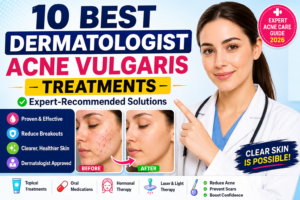
In this guide, we’ll explore the 10 best dermatologist-recommended treatments for acne vulgaris, explain how each works, and help you determine which option may be right for your skin.
What Is Acne Vulgaris?
Acne vulgaris is a chronic inflammatory skin condition that develops when hair follicles become clogged with excess oil (sebum), dead skin cells, and bacteria.
It commonly appears on:
- Face
- Chest
- Back
- Shoulders
- Neck
Common Symptoms
- Whiteheads
- Blackheads
- Papules
- Pustules
- Nodules
- Cysts
- Redness
- Acne scars
What Causes Acne Vulgaris?
Several factors contribute to acne, including:
- Excess oil production
- Hormonal changes
- Genetics
- Clogged pores
- Growth of Cutibacterium acnes
- Stress
- Certain medications
- Poor skincare habits
Understanding these causes helps dermatologists choose the most effective treatment plan.
1. Topical Retinoids
Topical retinoids are considered the gold standard for treating acne vulgaris.
Popular options include:
- Adapalene
- Tretinoin
- Tazarotene
How They Work
Retinoids:
- Unclog pores
- Prevent new acne
- Speed up skin cell turnover
- Reduce inflammation
- Fade post-acne marks
Best For
- Blackheads
- Whiteheads
- Mild acne
- Moderate acne
Possible Side Effects
- Dryness
- Peeling
- Mild irritation
- Sun sensitivity
Dermatologists usually recommend applying retinoids at night and wearing sunscreen during the day.
2. Benzoyl Peroxide
Benzoyl peroxide has remained one of the most trusted acne treatments for decades.
It works by:
- Killing acne-causing bacteria
- Reducing inflammation
- Removing excess oil
- Preventing clogged pores
Available strengths include:
- 2.5%
- 5%
- 10%
Most dermatologists recommend starting with a lower concentration to reduce irritation.
Best For
- Inflamed pimples
- Mild acne
- Moderate acne
3. Salicylic Acid
Salicylic acid is a beta hydroxy acid (BHA) that penetrates deep into pores.
Benefits include:
- Removes dead skin cells
- Dissolves oil buildup
- Reduces blackheads
- Prevents future breakouts
- Improves skin texture
Best Products
- Cleansers
- Toners
- Serums
- Spot treatments
It is especially useful for oily and acne-prone skin.
4. Topical Antibiotics
When inflammatory acne becomes more severe, dermatologists may prescribe topical antibiotics.
Common choices include:
- Clindamycin
- Erythromycin
These medications reduce bacterial growth and inflammation.
Important Note
Topical antibiotics should not be used alone for long periods because bacteria can become resistant.
Dermatologists usually combine them with:
- Benzoyl peroxide
- Retinoids
This combination improves results while reducing antibiotic resistance.
5. Oral Antibiotics
For moderate to severe acne, oral antibiotics may be recommended.
Common options include:
- Doxycycline
- Minocycline
- Sarecycline
These medications work by reducing inflammation and bacterial growth throughout the body.
Best For
- Painful acne
- Large pimples
- Back acne
- Chest acne
Treatment Duration
Dermatologists generally prescribe oral antibiotics for 3–4 months, followed by maintenance treatment using topical medications.
Why Dermatologist Treatment Works Better Than Home Remedies
Many people spend months trying DIY acne remedies before consulting a dermatologist.
Professional treatment offers several advantages:
- Accurate diagnosis
- Personalized skincare plans
- Prescription-strength medications
- Prevention of acne scars
- Faster improvement
- Long-term acne control
Dermatologists also identify underlying conditions such as hormonal imbalances or medication-related acne.
Daily Skincare Routine for Acne Vulgaris
Following a consistent skincare routine can improve treatment results.
Morning Routine
- Gentle cleanser
- Benzoyl peroxide (if recommended)
- Oil-free moisturizer
- Broad-spectrum SPF 30+ sunscreen
Evening Routine
- Gentle cleanser
- Retinoid
- Non-comedogenic moisturizer
Avoid harsh scrubs or over-washing, as they can worsen irritation.
Lifestyle Tips to Reduce Acne
Along with medication, healthy habits can support clearer skin:
- Wash your face twice daily.
- Avoid picking or squeezing pimples.
- Remove makeup before bed.
- Use non-comedogenic skincare products.
- Wash pillowcases regularly.
- Clean your phone screen often.
- Manage stress through exercise or relaxation.
- Eat a balanced diet rich in fruits and vegetables.
These simple practices may help reduce new breakouts and improve overall skin health.
6. Hormonal Therapy for Acne
Hormonal changes are a common trigger for acne, especially in women. Fluctuations in hormones can increase sebum (oil) production, leading to clogged pores and persistent breakouts.
Dermatologists may recommend hormonal treatments for women who experience acne related to menstruation, polycystic ovary syndrome (PCOS), or hormonal imbalances.
Common Hormonal Treatments
- Combination birth control pills
- Spironolactone
- Hormonal therapy prescribed by a healthcare provider
Benefits
- Reduces excess oil production
- Controls hormonal acne
- Decreases painful cystic acne
- Helps prevent future breakouts
Best For
- Adult women
- Hormonal acne on the jawline and chin
- Recurring monthly breakouts
Hormonal therapy is not suitable for everyone, so it should always be used under medical supervision.
7. Isotretinoin (Accutane)
Isotretinoin is one of the most powerful medications available for severe acne vulgaris. It is typically prescribed when other treatments have failed or when acne is causing permanent scars.
How It Works
Isotretinoin:
- Dramatically reduces oil production
- Prevents clogged pores
- Decreases inflammation
- Reduces acne-causing bacteria
Best For
- Severe cystic acne
- Nodular acne
- Acne that leaves scars
- Treatment-resistant acne
Possible Side Effects
- Dry lips and skin
- Dry eyes
- Increased sun sensitivity
- Temporary muscle aches
Because isotretinoin can cause serious birth defects, women who may become pregnant must follow strict pregnancy prevention guidelines while taking the medication.
Many patients experience long-lasting or permanent improvement after completing one treatment course.
8. Chemical Peels
Chemical peels are professional procedures performed by dermatologists to improve acne and post-acne marks.
Common peeling agents include:
- Salicylic acid
- Glycolic acid
- Lactic acid
These treatments gently remove damaged outer skin layers, helping unclog pores and stimulate new skin growth.
Benefits
- Reduces blackheads
- Improves skin texture
- Fades acne marks
- Brightens dull skin
- Helps prevent clogged pores
Chemical peels usually require several sessions for the best results.
9. Laser and Light Therapy
Modern laser and light-based treatments can help patients with persistent acne, especially when medications alone are not enough.
Popular options include:
- Blue light therapy
- Red light therapy
- Pulsed dye laser
- Fractional laser for acne scars
Benefits
- Reduces acne-causing bacteria
- Decreases inflammation
- Improves collagen production
- Treats acne scars
- Enhances overall skin appearance
Although laser therapy can be effective, it is often used alongside a dermatologist-designed skincare plan for optimal results.
10. Cortisone Injections
Painful cystic pimples can sometimes be treated with cortisone injections.
A dermatologist injects a small amount of corticosteroid directly into the inflamed acne lesion.
Benefits
- Reduces swelling quickly
- Relieves pain
- Speeds healing
- Lowers the risk of scarring
Many patients notice improvement within 24 to 48 hours.
This treatment is typically reserved for large, painful acne cysts rather than routine breakouts.
How to Choose the Best Acne Treatment
There is no single treatment that works for everyone. Dermatologists create personalized treatment plans based on several factors.
They Consider
- Type of acne
- Severity of breakouts
- Skin type
- Age
- Hormonal influences
- Medical history
- Pregnancy status
- Previous treatments
Following your dermatologist’s recommendations consistently gives the best chance of long-term improvement.
Foods That May Affect Acne
While diet is not the sole cause of acne, some research suggests that certain foods may contribute to breakouts in some individuals.
Foods That May Trigger Acne
- Sugary drinks
- Candy and sweets
- White bread
- Highly processed snacks
- Fast food
- Excess dairy (for some people)
Skin-Friendly Foods
- Leafy green vegetables
- Berries
- Citrus fruits
- Salmon and other fatty fish
- Nuts
- Seeds
- Whole grains
- Plenty of water
Eating a balanced diet supports overall skin health and may complement medical acne treatments.
When Should You See a Dermatologist?
Consult a dermatologist if:
- Over-the-counter products are not working after 8–12 weeks.
- Acne is painful or severe.
- You have cysts or nodules.
- Acne is leaving scars.
- Breakouts affect your confidence or mental well-being.
- Acne continues into adulthood.
- You experience frequent flare-ups despite good skincare.
Early treatment can help prevent permanent scarring and improve long-term skin health.
Frequently Asked Questions (FAQs)
1. What is the most effective dermatologist treatment for acne vulgaris?
Topical retinoids, benzoyl peroxide, oral medications, and isotretinoin are among the most effective treatments, depending on the severity of acne.
2. Can acne vulgaris be cured permanently?
Many people achieve long-term control with appropriate treatment. Severe acne may require prescription medications such as isotretinoin.
3. How long does acne treatment take to work?
Most acne treatments require 6–12 weeks before significant improvement is visible. Consistency is essential.
4. Should I pop pimples?
No. Picking or popping pimples increases the risk of infection, inflammation, and permanent scarring.
5. Is sunscreen necessary if I have acne?
Yes. Use a lightweight, oil-free, non-comedogenic sunscreen with SPF 30 or higher every day, especially if using retinoids or exfoliating products.
Final Thoughts
Acne vulgaris is a common but manageable skin condition. With the right combination of dermatologist-recommended treatments, a gentle skincare routine, and healthy lifestyle habits, most people can achieve clearer, healthier skin.
Whether your acne is mild or severe, early intervention is key to preventing scars and improving your confidence. If over-the-counter products are not providing results, consult a board-certified dermatologist for a personalized treatment plan.
Patience and consistency are essential—most treatments take several weeks to show visible improvements, but sticking to the recommended regimen often leads to lasting success.