
Acne is one of the most common skin conditions, affecting millions of teenagers and adults worldwide. It develops when hair follicles become clogged with oil, dead skin cells, and bacteria. The result is pimples, blackheads, whiteheads, cysts, and painful inflammation that can lower confidence and leave scars if untreated.
While many over-the-counter acne treatments contain ingredients such as benzoyl peroxide or salicylic acid, some people prefer natural alternatives because they are gentler on the skin and often contain fewer harsh chemicals. Although natural remedies are not instant cures, several have scientific evidence supporting their ability to reduce acne-causing bacteria, calm inflammation, and improve overall skin health.
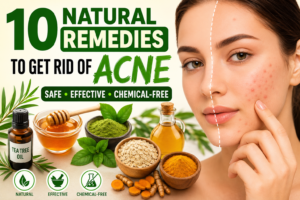
This guide explores 10 natural remedies to get rid of acne, excluding aloe vera, and explains how each remedy works, how to use it safely, and who can benefit the most.
What Causes Acne?
Understanding acne helps you choose the right treatment.
Common causes include:
- Excess oil (sebum) production
- Clogged pores
- Dead skin cell buildup
- Acne-causing bacteria
- Hormonal changes
- Stress
- Poor skincare habits
- High-glycemic diets
- Genetics
Usually, acne develops due to a combination of these factors rather than a single cause.
Why Choose Natural Remedies?
Natural treatments may help:
- Reduce inflammation
- Kill acne-causing bacteria
- Control excess oil
- Support skin healing
- Minimize redness
- Improve skin texture
However, severe or cystic acne often requires medical treatment from a dermatologist.
1. Tea Tree Oil
Tea tree oil is one of the most researched natural acne treatments. Extracted from the leaves of the Australian tea tree, it has strong antibacterial and anti-inflammatory properties.
Benefits
- Fights acne-causing bacteria
- Reduces redness
- Decreases swelling
- Helps dry active pimples
- May reduce future breakouts
Several studies suggest tea tree oil can improve mild to moderate acne when used consistently.
How to Use
Never apply pure tea tree oil directly to the skin.
Instead:
- Mix 1 drop of tea tree oil with 9 drops of a carrier oil (such as jojoba oil).
- Apply only to acne spots using a cotton swab.
- Leave it overnight.
- Wash your face the next morning.
Use it once daily.
Pros
✔ Natural antibacterial properties
✔ Helps reduce inflammation
✔ Suitable for oily skin
Cons
- May cause irritation if undiluted
- Not recommended for sensitive skin without patch testing
2. Raw Honey
Raw honey has been used for centuries to treat wounds and skin infections. It contains natural enzymes and antibacterial compounds that help calm inflamed acne.
Unlike processed honey, raw honey retains beneficial nutrients that may support skin healing.
Benefits
- Moisturizes skin naturally
- Helps reduce acne bacteria
- Speeds healing
- Soothes irritation
- Supports damaged skin
How to Use
- Wash your face.
- Apply a thin layer of raw honey.
- Leave for 15–20 minutes.
- Rinse with lukewarm water.
Repeat 2–3 times each week.
Pros
✔ Gentle on sensitive skin
✔ Natural moisturizer
✔ Helps reduce redness
Cons
- Sticky to apply
- May not be effective for severe acne
3. Green Tea
Green tea is packed with antioxidants called catechins that help fight inflammation and reduce oil production.
The main antioxidant, EGCG (epigallocatechin gallate), has been studied for its ability to improve acne-prone skin.
Benefits
- Reduces excess sebum
- Fights inflammation
- Helps decrease acne lesions
- Protects skin from oxidative stress
- Supports healthy skin barrier
How to Use
Brew green tea.
Allow it to cool completely.
Use a cotton pad to apply it as a toner.
Leave it on your skin.
Repeat once or twice daily.
You can also drink green tea regularly to support overall skin health.
Pros
✔ Easy to use
✔ Affordable
✔ Suitable for most skin types
Cons
- Results require consistency
- Benefits appear gradually
4. Apple Cider Vinegar
Apple cider vinegar contains natural organic acids such as acetic acid, citric acid, and lactic acid that may help kill bacteria and gently exfoliate the skin.
Because it is acidic, it should always be diluted before use.
Benefits
- Removes excess oil
- Helps unclog pores
- Reduces acne-causing bacteria
- Supports gentle exfoliation
- Brightens skin appearance
How to Use
Mix:
- 1 part apple cider vinegar
- 3–4 parts water
Apply with a cotton pad.
Leave for about one minute.
Rinse thoroughly.
Use only two or three times weekly.
Pros
✔ Affordable
✔ Easy to prepare
✔ Helps oily skin
Cons
- Can burn skin if undiluted
- Not suitable for broken skin
Always perform a patch test before using.
5. Turmeric
Turmeric contains curcumin, a powerful natural compound known for its anti-inflammatory and antioxidant effects.
It has become a popular ingredient in natural skincare because it helps calm irritated skin and reduce redness associated with acne.
Benefits
- Reduces inflammation
- Helps calm redness
- Supports wound healing
- Protects against free radicals
- May reduce acne marks over time
How to Use
Mix:
- One teaspoon turmeric powder
- Plain yogurt or honey
- A few drops of water if needed
Apply for 10–15 minutes.
Rinse gently.
Use once or twice each week.
Pros
✔ Excellent anti-inflammatory properties
✔ Natural antioxidant
✔ Supports healing
Cons
- May temporarily stain skin yellow
- Can stain clothing and towels
Use an old towel when applying turmeric masks.
6. Witch Hazel
Witch hazel is a natural plant extract known for its astringent and anti-inflammatory properties. It contains tannins, which may help reduce excess oil, soothe irritated skin, and minimize the appearance of enlarged pores. Many people with oily or acne-prone skin use alcohol-free witch hazel as part of their daily skincare routine.
Benefits
- Helps reduce excess oil production
- Calms redness and irritation
- May reduce the appearance of pores
- Refreshes oily skin
- Supports healthier-looking skin
How to Use
- Wash your face with a gentle cleanser.
- Apply alcohol-free witch hazel using a cotton pad.
- Let it dry naturally.
- Follow with a lightweight, non-comedogenic moisturizer.
Use once daily at first. If your skin tolerates it well, you can increase to twice daily.
Pros
✔ Controls oily skin
✔ Easy to use
✔ Helps reduce redness
Cons
- Products containing alcohol may dry out the skin.
- Not suitable for everyone with very sensitive skin.
7. Oatmeal Face Mask
Oatmeal is a gentle natural ingredient that helps soothe inflamed skin while absorbing excess oil. Colloidal oatmeal is commonly recommended for people with sensitive skin because it supports the skin barrier and reduces irritation.
Benefits
- Calms inflamed acne
- Absorbs excess oil
- Gently cleanses pores
- Helps relieve itching and irritation
- Softens the skin
How to Make an Oatmeal Mask
Ingredients:
- 2 tablespoons finely ground oatmeal
- Warm water
- 1 teaspoon plain yogurt (optional)
Instructions
- Mix oatmeal with warm water until it forms a smooth paste.
- Apply evenly to your face.
- Leave it on for 15–20 minutes.
- Rinse gently with lukewarm water.
Repeat two times per week.
Pros
✔ Gentle enough for sensitive skin
✔ Affordable
✔ Helps reduce redness
Cons
- Results develop gradually.
- Does not treat severe acne alone.
8. Jojoba Oil
Although it may seem surprising to apply oil to acne-prone skin, jojoba oil closely resembles the skin’s natural sebum. This may help balance oil production without clogging pores.
Benefits
- Moisturizes without feeling greasy
- Helps balance natural oil production
- Supports skin healing
- Reduces dryness caused by acne treatments
- Suitable for most skin types
How to Use
After cleansing:
- Apply 2–3 drops of pure jojoba oil.
- Massage gently into the skin.
- Leave it overnight.
Use once daily if needed.
Pros
✔ Lightweight
✔ Non-comedogenic
✔ Helps protect the skin barrier
Cons
- Rare allergic reactions are possible.
- Choose 100% pure jojoba oil for best results.
9. Ice Therapy
Ice does not cure acne, but it can quickly reduce swelling, redness, and discomfort associated with inflamed pimples.
Benefits
- Reduces swelling
- Calms inflammation
- Minimizes redness temporarily
- Helps relieve pain
- Refreshes irritated skin
How to Use
- Wrap an ice cube in a clean cloth.
- Apply it to the affected area for 30–60 seconds.
- Remove it for one minute.
- Repeat 2–3 times.
Never place ice directly on the skin because it may cause irritation or ice burns.
Pros
✔ Instant relief
✔ Free and easy
✔ Helps inflamed pimples appear smaller
Cons
- Temporary results only
- Does not prevent future breakouts
10. Eat More Omega-3 Rich Foods
Healthy skin starts from within. Omega-3 fatty acids help reduce inflammation throughout the body, including inflammation associated with acne.
Best Sources
- Salmon
- Sardines
- Mackerel
- Walnuts
- Chia seeds
- Flaxseeds
Benefits
- Supports healthy skin
- May reduce inflammatory acne
- Promotes faster skin healing
- Supports overall wellness
Aim to include omega-3-rich foods in your diet several times each week.
Foods That May Help Reduce Acne
A healthy diet can support clearer skin over time.
Consider eating more:
- Fresh vegetables
- Berries
- Citrus fruits
- Whole grains
- Lean proteins
- Nuts and seeds
- Probiotic foods like yogurt and kefir
- Green tea
Drink plenty of water throughout the day to maintain healthy skin hydration.
Daily Skincare Routine for Acne-Prone Skin
Following a simple routine consistently often delivers better results than using many different products.
Morning
- Wash with a gentle cleanser.
- Apply green tea toner or alcohol-free witch hazel.
- Use a lightweight, non-comedogenic moisturizer.
- Finish with a broad-spectrum SPF 30+ sunscreen.
Evening
- Remove makeup thoroughly.
- Cleanse your face.
- Apply a natural spot treatment such as diluted tea tree oil.
- Moisturize before bed.
Common Mistakes to Avoid
Avoid these habits that can make acne worse:
- Picking or popping pimples
- Washing your face too often
- Using harsh scrubs
- Sleeping with makeup on
- Skipping moisturizer
- Using dirty makeup brushes
- Touching your face frequently
- Ignoring sunscreen
Small daily habits can make a significant difference in your skin’s appearance.
When Should You See a Dermatologist?
Natural remedies are most helpful for mild acne. If you experience any of the following, consult a dermatologist:
- Painful cystic acne
- Deep acne scars
- Frequent breakouts despite treatment
- Acne lasting several months
- Signs of skin infection
- Severe emotional distress due to acne
Prescription medications or professional treatments may be necessary for moderate to severe acne.
Frequently Asked Questions (FAQs)
Do natural remedies really work for acne?
Some natural remedies, such as tea tree oil, green tea, and raw honey, have scientific evidence supporting their effectiveness for mild acne. Results vary depending on the individual and the severity of the condition.
How long do natural remedies take to work?
Most people need 4–8 weeks of consistent use before noticing visible improvements.
Can I combine multiple natural remedies?
Yes. For example, you can use green tea as a toner, apply diluted tea tree oil as a spot treatment, and use an oatmeal mask once or twice a week. Introduce new remedies gradually to avoid irritation.
Which natural remedy works fastest?
Ice therapy can quickly reduce redness and swelling, while tea tree oil often provides the fastest improvement in active pimples with consistent use.
Are natural remedies safe for sensitive skin?
Many are gentle, but it’s important to perform a patch test before applying any new ingredient to your face.
Conclusion
Natural remedies can be an effective way to manage mild acne while supporting healthier skin. Ingredients such as tea tree oil, raw honey, green tea, apple cider vinegar, turmeric, witch hazel, oatmeal, jojoba oil, ice therapy, and omega-3-rich foods each offer unique benefits, from reducing inflammation to controlling excess oil and supporting the skin’s natural healing process.
Remember that natural treatments require patience and consistency. Pair these remedies with a balanced diet, proper hydration, a gentle skincare routine, and healthy lifestyle habits for the best results. If your acne is severe, painful, or leaves scars, seek advice from a qualified dermatologist to explore medical treatment options.