

Forehead acne is one of the most frustrating skin issues many people face. You treat it, it fades… and then suddenly, it’s back again. If you’re dealing with recurring breakouts on your forehead, you’re not alone. This area is part of the “T-zone,” which tends to produce more oil, making it a hotspot for stubborn acne.
In this article, we’ll explore why forehead acne keeps coming back, its hidden causes, and the best ways to treat and prevent it for good.
What Is Forehead Acne?
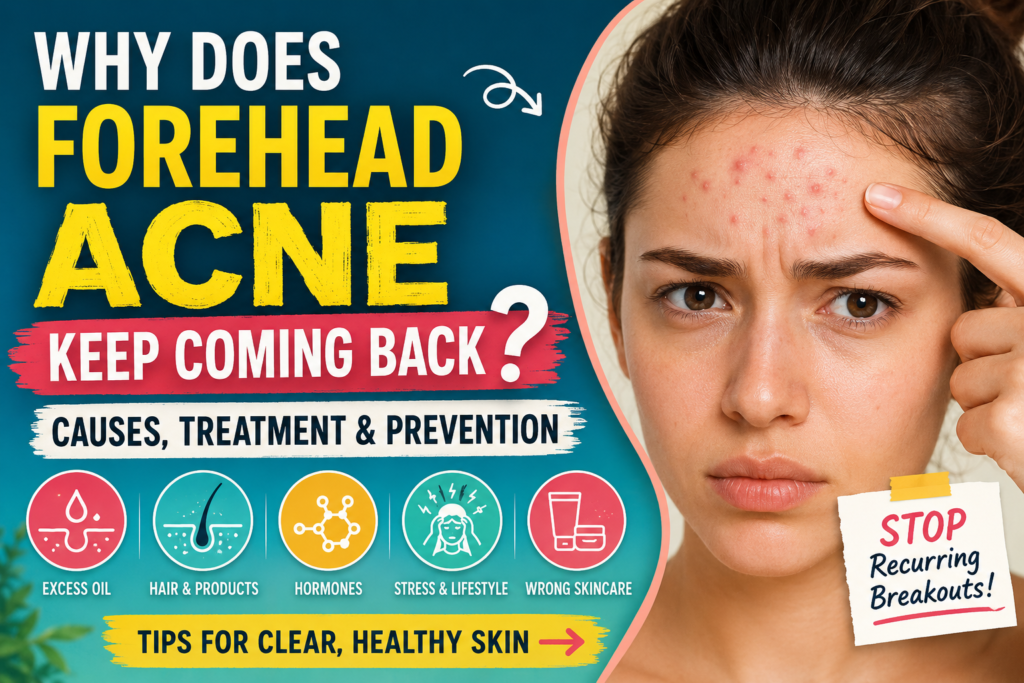
Forehead acne includes different types of breakouts such as:
- Whiteheads
- Blackheads
- Papules
- Pimples
- Small bumps (fungal acne)
Because the forehead produces excess oil, pores can easily get clogged with sebum, dirt, and dead skin cells.
Top Reasons Why Forehead Acne Keeps Coming Back
1. Excess Oil Production
Your forehead naturally produces more oil than other areas of your face. When oil mixes with dead skin cells, it clogs pores and leads to acne.
If your skin is oily or combination, you are more likely to experience recurring forehead breakouts.
2. Poor Hair Hygiene
Hair products like oils, gels, and sprays can transfer onto your forehead and clog pores.
Common triggers include:
- Hair oil dripping onto skin
- Dirty hair touching your forehead
- Dandruff falling onto the skin
This is often called “pomade acne.”
3. Not Washing Your Face Properly
Skipping cleansing or not removing sweat, dirt, and makeup can lead to clogged pores.
Also, over-washing can strip natural oils, causing your skin to produce even more oil — making acne worse.
4. Hormonal Imbalance
Hormones play a big role in acne. Changes during:
- Puberty
- Stress
- Menstrual cycles
can increase oil production, leading to repeated breakouts on the forehead.
5. Stress and Lifestyle
Stress increases cortisol levels, which triggers oil glands to produce more sebum.
Poor lifestyle habits such as:
- Lack of sleep
- Unhealthy diet
- Dehydration
can also worsen acne.
6. Fungal Acne (Malassezia)
Sometimes forehead acne is not typical acne but fungal acne.
Signs include:
- Small, itchy bumps
- Acne that doesn’t respond to regular treatments
This type of acne comes back easily if not treated correctly.
7. Using the Wrong Skincare Products
Heavy or comedogenic products can clog pores.
Avoid:
- Thick creams
- Oily sunscreens
- Harsh chemicals
Always choose non-comedogenic products.
8. Dirty Pillowcases and Accessories
Your pillowcase collects:
- Oil
- Sweat
- Bacteria
Sleeping on a dirty pillowcase can reintroduce acne-causing bacteria to your forehead every night.
How to Treat Recurring Forehead Acne
1. Cleanse Your Face Twice Daily
Use a gentle cleanser to remove oil and dirt without over-drying your skin.
2. Use Salicylic Acid or Benzoyl Peroxide
These ingredients help:
- Unclog pores
- Kill acne-causing bacteria
- Reduce inflammation
3. Keep Your Hair Clean
Wash your hair regularly and avoid letting oily hair touch your forehead.
4. Try Anti-Dandruff Shampoo
If dandruff is the cause, use anti-dandruff shampoo on your scalp — and gently on your forehead if needed.
5. Avoid Touching Your Face
Touching spreads bacteria and worsens acne.
6. Use Lightweight Moisturizers
Even oily skin needs hydration. Choose gel-based, oil-free moisturizers.
7. Manage Stress
Practice stress-reducing habits like:
- Exercise
- Meditation
- Proper sleep
8. Stay Hydrated and Eat Clean
Drink plenty of water and avoid:
- Junk food
- Sugary drinks
- Excess dairy
How to Prevent Forehead Acne from Coming Back
- Wash pillowcases twice a week
- Avoid tight hats or headbands
- Remove makeup before sleeping
- Use sunscreen daily (oil-free)
- Stick to a simple skincare routine
When to See a Dermatologist
If your acne:
- Keeps returning despite treatment
- Is painful or severe
- Leaves scars
Then it’s best to consult a dermatologist. You may need prescription treatments.
Final Thoughts
Forehead acne keeps coming back because the root cause is often not fully addressed. Whether it’s oil production, hair habits, hormones, or skincare mistakes — identifying the real reason is key.
With the right routine and consistency, you can control and even prevent recurring forehead acne.
