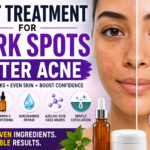

A small whitehead on the nose may seem harmless, but after it disappears, you may notice a dark mark, red spot, or even a small change in the skin’s texture. This can make it difficult to determine whether you are looking at a whitehead scar, dark spot, clogged pore, or post-acne mark.
The nose is especially prone to whiteheads and other types of clogged pores because it contains many sebaceous glands that produce oil. Picking, squeezing, or repeatedly touching whiteheads can increase inflammation and make discoloration more noticeable.
Understanding the difference between a whitehead scar and a dark spot on the nose is important because the treatments are not always the same. Dark spots generally respond to pigmentation-focused skincare, while true acne scars may require professional treatments.
This guide explains how to identify the difference, what causes each condition, the best treatments, and how to prevent new marks from developing.
What Is a Whitehead?
A whitehead is a type of closed comedone. It develops when oil, dead skin cells, and other debris become trapped inside a hair follicle.
Unlike a blackhead, the pore remains closed at the surface. This creates a small white, flesh-colored, or slightly raised bump.
Whiteheads commonly appear on:
- Nose
- Forehead
- Chin
- Cheeks
- Around the mouth
- Jawline
The nose can be particularly susceptible because of its high concentration of oil-producing sebaceous glands.
Whiteheads are not usually scars. However, manipulating them can cause inflammation and potentially leave behind a dark mark or scar.
What Is a Dark Spot After a Whitehead?
A dark spot that appears after a whitehead heals is often post-inflammatory hyperpigmentation (PIH) rather than a true scar.
PIH occurs when inflammation triggers increased melanin production in the skin.
The result may be a:
- Brown spot
- Dark brown mark
- Grayish mark
- Purple-brown discoloration
- Red or pink mark, depending on skin tone and inflammation
The important difference is that PIH is usually flat.
If you run your finger over the area and the skin feels smooth even though the color is darker, you may be dealing with a post-acne dark spot rather than a scar.
Whitehead Scar vs Dark Spot on Nose: Key Differences
One of the easiest ways to distinguish the two is to examine both color and texture.
Dark Spot
A dark spot usually:
- Is flat
- Mainly changes skin color
- May be brown, dark brown, gray, purple, or reddish
- Often develops after inflammation
- Gradually fades over time
- Usually responds to pigmentation treatments
Acne Scar
A true acne scar may:
- Change the texture of the skin
- Look indented
- Appear raised
- Feel different from surrounding skin
- Remain for a long time
- Require professional treatment
A flat dark mark is generally not considered an acne scar simply because it remains after a pimple disappears.
What Does a Whitehead Scar Look Like?
People often use the term “whitehead scar” to describe any mark left after a whitehead. Medically, however, a scar involves a change in the structure or texture of the skin.
An acne scar can be classified broadly as either atrophic or raised.
Atrophic Acne Scars
These scars appear depressed or indented.
They occur when inflammation damages collagen during the healing process.
Small depressed scars can sometimes be difficult to notice unless light hits the skin from a particular angle.
Raised Acne Scars
Raised scars develop when excess scar tissue forms.
They may feel firm or elevated compared with the surrounding skin.
If you have a raised or indented area on your nose that does not improve with normal skincare, a dermatologist can determine whether it is a true scar.
What Causes Dark Spots on the Nose After Whiteheads?
Several factors can contribute to post-whitehead dark spots.
Picking or Squeezing
Squeezing a whitehead can cause additional inflammation and trauma.
This increases the chance of leaving behind discoloration.
Sun Exposure
UV exposure can stimulate melanin production and make existing dark spots appear darker.
This is why sunscreen is an important part of treating post-acne pigmentation.
Repeated Breakouts
If whiteheads repeatedly form in the same area, the skin may experience repeated inflammation.
This can lead to persistent discoloration.
Harsh Skincare
Over-exfoliating or using irritating products can damage the skin barrier and potentially worsen inflammation.
How to Treat a Dark Spot on the Nose
If the mark is flat and primarily a color change, treatment should focus on gradually improving pigmentation while preventing additional irritation.
1. Wear Sunscreen Every Day
Daily sunscreen is one of the most important steps.
Choose a broad-spectrum SPF 30 or higher and apply it to the nose and other exposed areas.
Sun exposure can make pigmentation darker and may slow the fading process.
For people who are prone to hyperpigmentation, a tinted sunscreen containing iron oxides may provide additional protection against visible light.
2. Try Niacinamide
Niacinamide, also known as vitamin B3, is a popular skincare ingredient for uneven skin tone.
It can support the skin barrier and may help improve the appearance of discoloration over time.
It is generally suitable for many skin types and can be found in serums and moisturizers.
3. Use Vitamin C
Vitamin C is an antioxidant that can help brighten the appearance of uneven skin tone.
A well-formulated vitamin C serum can be incorporated into a morning routine before moisturizer and sunscreen.
If you have sensitive skin, introduce it slowly to minimize irritation.
4. Consider Azelaic Acid
Azelaic acid can be especially useful when dark spots and acne occur together.
It has anti-inflammatory properties and can help improve acne as well as uneven pigmentation.
This makes it a useful option for people who continue to develop whiteheads while trying to fade existing marks.
5. Consider a Retinoid
Retinoids can help prevent clogged pores and improve overall skin turnover.
They may also gradually improve uneven pigmentation.
Adapalene is available without a prescription in some countries, while other retinoids require a prescription.
Retinoids can cause dryness and irritation, particularly when first introduced, so they should be used gradually.
If you are pregnant or trying to become pregnant, consult a healthcare professional before using topical retinoids.
How to Treat an Actual Whitehead Scar
If the mark is indented or raised rather than simply darker, skincare products alone may not completely remove it.
A dermatologist may consider professional treatments such as:
Microneedling
Microneedling creates controlled micro-injuries in the skin and can stimulate collagen production.
It is commonly used to improve certain types of acne scars and uneven texture.
Chemical Peels
Professional chemical peels can improve skin texture and pigmentation.
The type and strength of peel should be carefully selected based on skin type and pigmentation risk.
Laser Treatments
Certain laser procedures can improve acne scars and uneven skin texture.
However, laser treatment is not appropriate for everyone, and people with darker skin tones may have a greater risk of post-inflammatory hyperpigmentation with some procedures.
Subcision
Subcision is a professional procedure sometimes used for certain depressed acne scars that are tethered beneath the skin.
A dermatologist determines whether this treatment is appropriate based on the type of scar.
How to Tell If the Mark Is a Scar or Dark Spot
You can perform a simple observation at home.
Look at the Color
If the area is darker but the surface looks normal, it is more likely to be pigmentation.
Feel the Skin
Gently run a clean fingertip over the area.
If the skin feels smooth, the mark may be a dark spot.
If you notice an indentation or raised area, it may be a scar.
Look Under Different Lighting
Some shallow scars become more noticeable under side lighting because shadows emphasize changes in skin texture.
Dark spots, on the other hand, are usually visible because of their color rather than shadows.
However, these observations cannot replace a professional diagnosis.
Can a Whitehead Leave a Permanent Dark Spot?
A whitehead can leave behind a persistent dark spot, particularly if it becomes inflamed or is picked.
However, many post-inflammatory dark spots gradually fade.
The amount of time required varies depending on:
- Skin tone
- Degree of inflammation
- Sun exposure
- Skincare routine
- Whether new acne develops
- Individual healing response
Some marks fade relatively quickly, while others may remain noticeable for several months.
How to Prevent Whitehead Marks on the Nose
Prevention is easier than treating persistent pigmentation.
Don’t Pop Whiteheads
Avoid squeezing or digging at whiteheads.
This can increase inflammation and potentially cause both pigmentation and scarring.
Use a Gentle Cleanser
Cleanse your face gently twice daily if tolerated.
Avoid harsh scrubbing because physical irritation can worsen acne-prone skin.
Use Salicylic Acid for Clogged Pores
Salicylic acid is a beta hydroxy acid that can help unclog pores and reduce buildup.
It may be particularly useful for oily skin and frequent whiteheads around the nose.
Don’t combine multiple strong exfoliating products without considering your skin’s tolerance.
Keep Your Skin Moisturized
A lightweight, non-comedogenic moisturizer can support the skin barrier.
This is especially important if you are using acne treatments that cause dryness.
Wear Sunscreen
Consistent sun protection can reduce the chance that post-acne pigmentation becomes darker.
Common Mistakes to Avoid
Scratching or Picking
Repeatedly touching the nose can increase irritation.
Using Lemon Juice
Lemon juice is sometimes promoted as a natural dark-spot remedy, but it can irritate the skin and is not a reliable treatment for hyperpigmentation.
Using Baking Soda
Baking soda can disrupt the skin barrier and should not be used as a DIY acne or pigmentation treatment.
Aggressive Exfoliation
Scrubbing a dark spot harder will not make it disappear faster.
Excessive exfoliation may instead cause irritation.
Using Too Many Actives
Combining retinoids, several acids, vitamin C, and other active ingredients all at once can increase irritation.
A simple routine is often easier to tolerate and maintain.
Best Skincare Routine for Whiteheads and Dark Spots on the Nose
If you have both clogged pores and leftover dark marks, consider a simple routine.
Morning
- Gentle cleanser
- Vitamin C or niacinamide
- Lightweight moisturizer
- Broad-spectrum SPF 30+ sunscreen
Evening
- Gentle cleanser
- Salicylic acid or an appropriate retinoid
- Moisturizer
Azelaic acid may also be incorporated depending on your skin and other treatments.
You do not need to use every active ingredient at the same time.
Introducing products gradually can help reduce irritation.
When Should You See a Dermatologist?
Consider professional evaluation if:
- The mark has been present for many months
- The area is raised or indented
- Whiteheads keep returning
- You have painful or inflamed acne
- Dark spots are becoming darker
- Over-the-counter treatments are not helping
- You are developing permanent acne scars
A dermatologist can determine whether you have post-inflammatory hyperpigmentation, an acne scar, an active clogged pore, or another skin condition.
Frequently Asked Questions
Is a dark spot after a whitehead a scar?
Not necessarily. If the mark is completely flat and only changes the color of your skin, it is more likely to be post-inflammatory hyperpigmentation than a true acne scar.
How do I remove a dark spot left by a whitehead?
Daily sunscreen and ingredients such as azelaic acid, niacinamide, vitamin C, and retinoids may help fade post-acne pigmentation over time.
Can whiteheads cause permanent scars?
Whiteheads themselves do not always cause scars, but severe inflammation and picking or squeezing can increase the risk of permanent acne scarring.
How long does a dark spot from a whitehead last?
It varies. Some marks fade within weeks, while others can remain for several months or longer, especially when there is continued sun exposure or repeated inflammation.
Is salicylic acid good for whiteheads on the nose?
Yes. Salicylic acid can help loosen dead skin cells and reduce clogged pores, making it a common ingredient for treating whiteheads.
Should I squeeze a whitehead on my nose?
It is better not to squeeze it yourself. Picking can increase inflammation, discoloration, and the risk of scarring.
What is the difference between an acne scar and hyperpigmentation?
Hyperpigmentation changes the color of the skin but is usually flat. Acne scars change the skin’s texture and may appear depressed or raised.
Final Thoughts
Understanding the difference between a whitehead scar and a dark spot on the nose can help you choose the right treatment.
If the mark is flat and darker than your surrounding skin, it is more likely to be post-inflammatory hyperpigmentation. Consistent sunscreen, gentle skincare, and ingredients such as azelaic acid, niacinamide, vitamin C, salicylic acid, or retinoids may help improve its appearance.
If the area is raised, indented, or noticeably different in texture, it may be a true acne scar. Professional treatments such as microneedling, chemical peels, laser procedures, or other dermatologist-selected treatments may be more appropriate.
Most importantly, avoid squeezing whiteheads. Preventing inflammation and protecting your skin from UV exposure can significantly reduce the chance of developing persistent marks.
If you are uncertain about a persistent spot on your nose, especially if it changes in appearance, bleeds, becomes painful, or does not behave like a typical acne mark, seek evaluation from a qualified dermatologist.
SEO Information
SEO Title: Whitehead Scar vs Dark Spot on Nose: How to Tell the Difference
Meta Description: Whitehead scar vs dark spot on nose explained. Learn how to identify acne scars, post-inflammatory hyperpigmentation, causes, treatments, and prevention tips.
Focus Keyword: Whitehead Scar vs Dark Spot on Nose
Secondary Keywords:
- Whitehead scar on nose
- Dark spot after whitehead
- Dark spot on nose after acne
- Whitehead marks on nose
- Acne scar vs dark spot
- Post-inflammatory hyperpigmentation
- How to remove whitehead marks
- Nose acne scars
- Whitehead treatment
- Dark spots after acne
Suggested URL Slug:
/whitehead-scar-vs-dark-spot-on-nose/