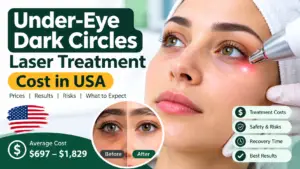

Under-Eye Dark Circles Laser Treatment Cost in the USA: Prices, Results, Risks & What to Expect
Laser and light-based therapies may be taken into consideration for those who do not see adequate improvement with skincare products. However, depending on the type of laser, the clinic, the location, the reason for the dark circles, and the number of sessions needed, the cost of under-eye dark circles laser treatment in the USA can vary significantly.
The average cost of skin resurfacing operations is $1,829, and the average cost of laser skin treatments is $697, according to the American Society of Plastic Surgeons. However, these are national averages rather than a specific cost for eliminating dark circles beneath the eyes.
This guide explains what you may pay, which treatments are used, what results to expect, and what factors can increase the total cost.
How Much Does Under-Eye Dark Circles Laser Treatment Cost in the USA?
There is no fixed nationwide price specifically for laser treatment of dark circles because different clinics use different technologies and treatment plans.
As a general guide, patients may encounter prices ranging from several hundred dollars to more than $2,000 for a treatment plan, depending on the technology and whether the procedure treats only the under-eye area or a larger portion of the face.
For comparison, the American Society of Plastic Surgeons lists the average cost of laser skin treatments at $697, while the average cost of skin resurfacing procedures such as laser resurfacing is $1,829. These figures represent broader treatment categories and should not be interpreted as a guaranteed under-eye price.
A clinic may charge per session, while another may offer a package of multiple treatments.
Typical Factors That Affect Price
The final price may depend on:
- Type of laser or light treatment
- Number of sessions required
- Size of the treatment area
- Severity and cause of pigmentation
- Doctor’s experience and qualifications
- Geographic location
- Consultation fees
- Facility fees
- Anesthesia or numbing medication
- Follow-up appointments
- Additional treatments performed at the same time
According to the American Society of Plastic Surgeons, laser resurfacing prices vary according to the provider’s qualifications, treatment type, time and effort involved, and geographic location.
Why Do You Have Dark Circles Under Your Eyes?
Before choosing laser treatment, it is important to understand why your under-eye area looks dark.
Dark circles can have several causes, including:
Genetics
Some people naturally have darker pigmentation or thinner skin around their eyes. Family history can play an important role.
Aging
As people age, the skin under the eyes can become thinner. Blood vessels may become more visible, while loss of volume can create shadows around the tear trough.
Hyperpigmentation
Sun exposure can stimulate melanin production and contribute to brown pigmentation around the eyes.
Lack of Sleep
Poor sleep can make the skin appear paler, which may make blood vessels beneath the eyes more noticeable.
Allergies and Eye Rubbing
Allergies can cause inflammation and frequent rubbing, which may worsen the appearance of dark circles.
Dehydration
Dehydrated skin may look dull and can make shadows around the eyes more noticeable.
Cleveland Clinic notes that genetics, aging, allergies, lack of sleep, dehydration, dermatitis, sun exposure and lifestyle factors can all contribute to dark circles.
Because dark circles have different causes, laser treatment may not be the right solution for everyone.
What Types of Lasers Are Used for Under-Eye Dark Circles?
The treatment selected depends on whether pigmentation, skin texture, blood vessels, or aging changes are responsible for the appearance of the area.
Fractional Laser Resurfacing
Fractional laser treatments can improve skin texture and stimulate collagen production. They may be considered when dark circles occur along with fine lines, sun damage, or uneven skin texture.
Laser resurfacing works by delivering concentrated energy to the skin, stimulating changes in the epidermis and dermis and encouraging new collagen formation.
Non-Ablative Laser Treatment
Non-ablative treatments affect deeper layers of the skin without removing the entire outer skin layer. They generally involve less downtime than aggressive ablative resurfacing.
Cleveland Clinic notes that non-ablative laser treatments generally involve minimal downtime compared with more invasive laser procedures.
Vascular Lasers
If visible blood vessels contribute to a bluish or reddish appearance beneath the eyes, a dermatologist may consider a vascular laser or another light-based treatment.
The exact technology should be selected after examining the skin and determining the likely cause of discoloration.
How Many Laser Sessions Are Needed?
The number of treatments varies from person to person.
Some patients may notice improvement after one treatment, while others may require a series of sessions. Pigmentation, skin texture, aging, and the type of laser being used can all influence the treatment schedule.
A dermatologist or qualified laser specialist should examine the under-eye area before recommending a specific number of sessions.
If several treatments are required, the total cost can become significantly higher than the price of a single session.
For this reason, when comparing clinics, ask:
- What is the price per session?
- How many sessions are typically recommended?
- Is consultation included?
- Are follow-up visits included?
- Are medications or aftercare products extra?
- Is there a package price for multiple treatments?
What Results Can You Expect?
Laser treatment may improve the appearance of certain types of dark circles, particularly when pigmentation or skin texture contributes to the problem.
Laser resurfacing can also improve fine lines and sun-damaged skin around the eyes. The American Society of Plastic Surgeons lists fine lines and wrinkles around or under the eyes among conditions that laser resurfacing can improve.
However, laser treatment does not guarantee complete removal of dark circles.
If your dark appearance is mainly caused by deep tear-trough hollows, genetics, or naturally thin skin, another treatment may be more appropriate.
It is important to have realistic expectations before treatment.
Is Laser Treatment Safe for Under-Eye Dark Circles?
Laser treatments can be safe when appropriately selected and performed by a qualified medical professional, but the area around the eyes is delicate.
Potential side effects can include:
- Redness
- Swelling
- Temporary irritation
- Pigmentation changes
- Skin sensitivity
- Blistering in some cases
- Infection
- Rare scarring
- Eye-related injury if appropriate eye protection is not used
Cleveland Clinic notes that laser treatments can cause temporary hyperpigmentation and, depending on the procedure, other complications. Appropriate protection of the eyes is especially important during laser treatment around the eye area.
People with darker skin tones may have a greater risk of post-treatment pigmentation changes with certain laser procedures. A qualified provider should evaluate skin type before treatment.
Laser Treatment Recovery Time
Recovery depends heavily on the type of laser.
Non-ablative treatments typically have little downtime, although redness or mild swelling may occur.
More aggressive ablative resurfacing can require substantially more recovery time.
For example, the American Society of Plastic Surgeons notes that CO2 laser resurfacing can require up to approximately two weeks of recovery, while erbium resurfacing may require about one week.
During recovery, your provider may recommend:
- Gentle cleansing
- Moisturizing
- Strict sun protection
- Avoiding irritating skincare ingredients
- Avoiding unnecessary rubbing of the eyes
- Following prescribed aftercare instructions
Do not return to active skincare ingredients or cosmetic products around the treated area until your provider says it is appropriate.
Does Insurance Cover Laser Treatment for Dark Circles?
In most cases, laser treatment for cosmetic dark circles is not covered by health insurance.
The American Society of Plastic Surgeons states that most health insurance plans do not cover cosmetic surgery or its complications.
Because dark circles are generally considered a cosmetic concern, patients should expect to pay out of pocket unless a specific medical indication and insurance policy provide otherwise.
Some clinics may offer financing or payment plans.
Laser Treatment vs. Other Dark Circle Treatments
Laser treatment is only one option.
Depending on the cause, a provider may recommend:
Topical Skincare
Ingredients such as vitamin C and other pigment-targeting products may help improve certain types of discoloration.
Chemical Peels
Certain carefully selected chemical peels may be used for pigmentation. However, the under-eye area is sensitive, so treatment should be performed by an experienced professional.
Dermal Fillers
If hollowing creates shadows beneath the eyes, fillers may sometimes be considered. This does not treat pigmentation itself but may reduce the appearance of shadows caused by volume loss.
Sun Protection
Daily broad-spectrum sunscreen and sunglasses can help reduce additional sun-related pigmentation.
Lifestyle Changes
Improving sleep, managing allergies, staying hydrated, and avoiding frequent eye rubbing may help when these factors contribute to dark circles.
Cleveland Clinic lists topical treatments, chemical peels, laser therapy and tissue fillers among medical options that may be considered depending on the cause.
How to Choose a Laser Clinic in the USA
Price should not be the only factor when choosing a provider for treatment around the eyes.
Look for a qualified dermatologist, plastic surgeon, or appropriately trained medical professional with experience treating the delicate periorbital area.
Before booking, ask:
- What is causing my dark circles?
- Which laser are you recommending?
- Why is this laser appropriate for me?
- How many treatments might I need?
- What is the total estimated cost?
- What are the possible side effects?
- How much downtime should I expect?
- What eye protection is used during treatment?
- What happens if pigmentation becomes darker?
- Can I see before-and-after examples from similar patients?
A consultation is particularly important for people with darker skin tones or a history of pigmentation problems.
How to Save Money on Under-Eye Laser Treatment
If cost is an important consideration, compare several qualified clinics rather than choosing solely based on the lowest advertised price.
Ask whether the clinic offers:
- Package pricing
- Consultation-inclusive pricing
- Financing
- Seasonal promotions
- Payment plans
However, unusually cheap treatment should be approached carefully. Laser treatment around the eyes requires specialized knowledge and appropriate safety measures.
The American Society of Plastic Surgeons emphasizes that provider qualifications and experience are important considerations in addition to cost.
Frequently Asked Questions
How much does under-eye dark circles laser treatment cost in the USA?
The price varies by treatment and clinic. Broader national statistics from the American Society of Plastic Surgeons report an average of $697 for laser skin treatments and $1,829 for skin resurfacing procedures. These figures are not specific quotes for under-eye dark circles.
Is laser treatment permanent for dark circles?
Not necessarily. Results depend on the underlying cause. Aging, genetics, sun exposure and lifestyle factors can continue to influence the appearance of the under-eye area.
How many sessions are needed?
Some people may need one treatment, while others require multiple sessions. The appropriate number depends on the laser, skin condition and treatment goals.
Does laser treatment hurt?
Discomfort varies by laser and treatment intensity. Providers may use topical numbing medication or other methods to improve comfort.
Is laser treatment safe for dark skin?
Certain lasers can increase the risk of pigmentation changes in darker skin. A qualified provider should evaluate your skin type and choose an appropriate treatment.
Can laser completely remove dark circles?
No treatment can guarantee complete removal. Laser therapy may improve pigmentation, texture or signs of aging, but it may not correct dark circles caused primarily by genetics or tear-trough shadows.
Final Thoughts
The under-eye dark circles laser treatment cost in the USA can vary widely because there is no single standard treatment or national price for this cosmetic concern. Current national plastic-surgery statistics provide useful benchmarks, including an average of $697 for laser skin treatments and $1,829 for skin resurfacing, but an individual under-eye treatment may cost more or less depending on the technology, provider, location and number of sessions.
Before paying for treatment, identify the underlying cause of your dark circles. Pigmentation, visible blood vessels, thin skin, aging, allergies and tear-trough hollows can require different approaches.
A consultation with a qualified dermatologist or plastic surgeon can help determine whether laser treatment is appropriate and provide an individualized estimate of the total cost, expected results, recovery time and potential risks.