
Dry skin can be frustrating to manage. Tightness, flakiness, itching, and dullness often make it difficult to achieve a healthy glow. One skincare trend that has gained significant attention is slugging for dry skin. Originally popularized by Korean skincare enthusiasts, slugging has become a favorite routine for people looking to deeply hydrate their skin and strengthen their skin barrier.
But what exactly is slugging? Is it safe for everyone? And how can you include it in your nightly skincare routine?
In this complete guide, you’ll learn everything you need to know about slugging for dry skin, including its benefits, the correct way to do it, common mistakes to avoid, and expert skincare tips.
What Is Slugging?
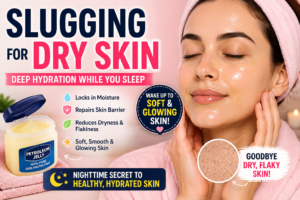
Slugging is a skincare technique that involves applying a thick layer of an occlusive product—usually petroleum jelly—as the final step in your nighttime skincare routine.
The term “slugging” comes from the shiny appearance your face has after applying the product, making it resemble a slug.
Unlike moisturizers that add hydration, slugging works by sealing in moisture and preventing water loss from the skin while you sleep.
Why Is Slugging Good for Dry Skin?
People with dry skin often have a weakened skin barrier. This barrier is responsible for keeping moisture inside while protecting the skin from environmental damage.
When the barrier becomes damaged, moisture escapes quickly, causing:
- Dry patches
- Flaky skin
- Redness
- Tightness
- Rough texture
- Increased sensitivity
Slugging helps reduce transepidermal water loss (TEWL) by creating a protective layer over the skin.
As a result, your skin remains hydrated for longer periods.
Benefits of Slugging for Dry Skin
1. Locks in Moisture
The biggest benefit of slugging is its ability to trap moisture already present in your skin.
Instead of letting your moisturizer evaporate overnight, slugging seals it in.
2. Repairs the Skin Barrier
When your skin barrier is damaged, irritants can enter more easily.
Regular slugging helps support the barrier by minimizing moisture loss and allowing your skin to recover naturally.
3. Reduces Dry Patches
If you constantly experience flaky skin around your nose, cheeks, or forehead, slugging can dramatically soften these rough areas.
4. Gives Skin a Healthy Glow
Hydrated skin naturally reflects more light.
After several nights of slugging, many people notice brighter, smoother, and healthier-looking skin.
5. Soothes Irritated Skin
Dry skin often feels itchy and uncomfortable.
Slugging creates a calming protective layer that reduces irritation caused by dehydration.
6. Makes Fine Lines Less Noticeable
Dehydrated skin tends to exaggerate fine lines.
Keeping your skin hydrated helps plump the surface, making these lines appear less visible.
How Does Slugging Work?
Your skin naturally loses water throughout the day and night.
This process is known as Transepidermal Water Loss (TEWL).
Occlusive ingredients like petroleum jelly reduce this water loss by forming a protective barrier over the skin.
Interestingly, petroleum jelly does not actually hydrate your skin.
Instead, it prevents the moisture already in your skin from escaping.
That’s why applying a moisturizer before slugging is essential.
Who Should Try Slugging?
Slugging works especially well for people with:
- Dry skin
- Very dry skin
- Mature skin
- Sensitive skin
- Dehydrated skin
- Winter-damaged skin
- Compromised skin barrier
If your skin constantly feels tight after washing, slugging may be worth trying.
Who Should Avoid Slugging?
Although slugging offers many benefits, it isn’t suitable for everyone.
People with the following conditions should use caution:
- Oily skin
- Acne-prone skin
- Active acne breakouts
- Fungal acne
- Skin infections
Because slugging traps everything underneath it, applying it over dirty skin may increase the risk of clogged pores.
Step-by-Step Guide to Slugging for Dry Skin
Step 1: Cleanse Your Face
Start with a gentle cleanser that removes dirt and sunscreen without stripping natural oils.
Avoid harsh cleansers containing alcohol or strong sulfates.
Step 2: Apply a Hydrating Toner (Optional)
A hydrating toner can provide an extra layer of moisture before your serum.
Look for ingredients such as:
- Glycerin
- Hyaluronic Acid
- Panthenol
Step 3: Use a Hydrating Serum
Apply a serum that attracts moisture into the skin.
Good ingredients include:
- Hyaluronic Acid
- Ceramides
- Beta-Glucan
- Polyglutamic Acid
Step 4: Apply Moisturizer
Choose a rich moisturizer designed for dry skin.
Look for products containing:
- Ceramides
- Shea Butter
- Squalane
- Glycerin
- Cholesterol
- Fatty Acids
Step 5: Seal Everything with Petroleum Jelly
Take a pea-sized amount of petroleum jelly and spread a thin layer across your face.
Avoid applying too much.
A light layer is enough to lock in moisture overnight.
How Often Should You Slug?
Most people with dry skin benefit from slugging:
- 2–4 nights per week
- Every night during winter
- After using drying skincare products
- Whenever your skin feels dehydrated
You don’t necessarily need to slug every evening.
Best Ingredients to Use Before Slugging
Your skincare underneath the occlusive layer matters.
Choose products containing:
- Ceramides
- Glycerin
- Hyaluronic Acid
- Niacinamide
- Panthenol
- Squalane
- Aloe Vera
Avoid applying strong exfoliating acids or retinoids immediately before slugging unless your skin already tolerates them well.
Slugging for Dry Skin: The Ultimate Guide to Deep Hydration and Healthy Skin (Part 2)
Best Products for Slugging
Some of the best occlusive products include:
- 100% Petroleum Jelly
- Healing Ointments
- Petrolatum-based balms
- Fragrance-free occlusive ointments
Choose fragrance-free formulas if you have sensitive skin.
Common Slugging Mistakes
Applying Too Much Product
Using a thick layer doesn’t improve results.
Instead, it can feel greasy and transfer onto your pillow.
Slugging on Dirty Skin
Always cleanse first.
Otherwise, dirt, sweat, oil, and bacteria become trapped underneath the occlusive layer.
Using Active Ingredients Incorrectly
Slugging over strong exfoliating acids or prescription retinoids may increase irritation because the occlusive layer can enhance penetration.
Using It Every Night Without Need
Some people achieve better results slugging only a few nights each week.
Adjust your routine based on how your skin responds.
Morning Routine After Slugging
When you wake up:
- Wash with a gentle cleanser if needed.
- Apply a hydrating moisturizer.
- Use sunscreen with SPF 30 or higher if going outside.
Daily sun protection helps maintain healthy skin.
Slugging During Winter
Cold weather and indoor heating increase water loss from the skin.
Slugging becomes especially helpful during winter because it protects the skin barrier against dryness and harsh environmental conditions.
Can You Slug Around the Eyes?
Yes. The eye area is naturally thin and prone to dryness.
Apply only a very small amount, and avoid getting the product into your eyes.
Can You Slug on the Lips?
Absolutely.
Petroleum jelly is excellent for preventing moisture loss from dry, cracked lips.
Apply a lip balm first if desired, then seal it with a thin layer of petroleum jelly.
How Long Does It Take to See Results?
Many people notice softer skin after just one night.
More noticeable improvements in dryness and barrier health typically occur within one to three weeks of consistent use.
Frequently Asked Questions
Is slugging safe every night?
For very dry skin, nightly slugging may be beneficial. Others may only need it a few times per week.
Can slugging cause acne?
It may contribute to clogged pores in people who are acne-prone, especially if applied over dirty skin or heavy products.
Is petroleum jelly bad for skin?
No. Pure petroleum jelly is generally considered safe for most people and is widely used to help reduce moisture loss.
Can I use coconut oil instead?
Coconut oil is more likely to clog pores than petroleum jelly for some individuals, especially on the face.
Can I slug during the day?
It’s usually best as a nighttime treatment because of its thick, greasy texture.
Expert Tips for Better Results
- Apply slugging only on clean skin.
- Use hydrating products before the occlusive layer.
- Start with two nights per week.
- Use fragrance-free skincare if your skin is sensitive.
- Replace pillowcases regularly.
- Stay hydrated by drinking enough water.
- Avoid over-exfoliating your skin.
Final Thoughts
Slugging for dry skin is a simple yet highly effective skincare technique that helps reduce moisture loss, strengthen the skin barrier, and improve overall hydration. When combined with a gentle cleanser, hydrating serum, and nourishing moisturizer, slugging can leave your skin feeling softer, smoother, and healthier over time.
While it is especially beneficial for dry and sensitive skin, it may not be suitable for everyone. If you have oily or acne-prone skin, introduce slugging cautiously and monitor how your skin responds. With the right routine and consistency, slugging can become a valuable addition to your nighttime skincare regimen and help you achieve a radiant, well-hydrated complexion.