
Skin Care Routine for Preteens: Best Products, Tips, and What to Avoid
Introduction
Taking care of your skin is important at every age, but knowing when to start a skincare routine can be confusing for preteens and their parents. With social media influencers and celebrities sharing complicated beauty routines, many children are becoming interested in skincare at a younger age. However, young skin does not need dozens of products or expensive treatments to stay healthy.
A simple skincare routine for preteens can help keep the skin clean, hydrated, and protected from the sun. During puberty, hormonal changes can increase oil production, making children more likely to develop pimples, blackheads, and acne.
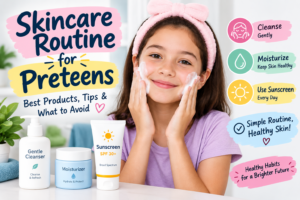
The good news is that an effective routine does not have to be complicated. Most preteens can benefit from three basic products: a gentle facial cleanser, a lightweight moisturizer, and a broad-spectrum sunscreen.
In this guide, you will learn when preteens should start skincare, which products are suitable for young skin, how to establish a daily routine, and which popular skincare ingredients should be avoided.
Key Takeaways
- Preteens can begin a basic skincare routine when puberty starts, usually between ages 8 and 13.
- A gentle cleanser, lightweight moisturizer, and SPF 30 or higher sunscreen are the foundation of a simple routine.
- Fragrance-free and non-comedogenic products can be good choices for young, sensitive, or acne-prone skin.
- Preteens should avoid unnecessary anti-aging products and strong active ingredients unless recommended by a qualified healthcare professional.
- Parents can help children develop healthy skincare habits without encouraging complicated beauty routines.
Why Is Skincare Important for Preteens?
Skincare is about more than appearance. The skin is the body’s largest organ and provides a protective barrier against environmental irritants, germs, and other external factors.
During the preteen years, the body begins preparing for puberty. Hormonal changes can affect the skin’s texture, oil production, and overall appearance.
Before puberty, children’s skin generally produces less oil. As puberty progresses, androgen hormones stimulate the sebaceous glands to produce more sebum. Sebum is a natural oily substance that helps lubricate the skin.
Although some oil is necessary for healthy skin, excess sebum can mix with dead skin cells and block pores. This may contribute to blackheads, whiteheads, pimples, and inflammatory acne.
A gentle skincare routine helps remove dirt, sweat, makeup, and excess oil without unnecessarily irritating the skin. Regular sun protection also helps protect young skin from harmful ultraviolet radiation.
Another benefit is the development of healthy habits. Learning to cleanse, moisturize, and protect the skin during childhood can make these practices easier to maintain throughout adulthood.
Youtube Video
When Should Preteens Start a Skincare Routine?
Most preteens can begin a simple daily skincare routine around the beginning of puberty, which commonly starts between ages 8 and 13. However, every child develops differently, so age alone should not determine when a routine is needed.
Parents can look for changes such as increased facial oil, clogged pores, pimples, or the need to remove makeup after school or special occasions.
If a child’s skin is healthy and does not have particular concerns, there is no need to introduce multiple skincare products simply because other children are using them.
The goal is to establish a routine that supports healthy skin without exposing it to unnecessary ingredients.
For most preteens, three basic products are enough to begin.
The Best Skincare Routine for Preteens
A beginner-friendly skincare routine should be simple, gentle, and easy to follow. In most cases, children can follow the same basic steps in the morning and evening, with sunscreen used during the daytime.
1. Cleanse With a Gentle Facial Cleanser
Cleansing is the first step in a basic skincare routine. It helps remove sweat, dirt, excess oil, and other substances that accumulate on the skin throughout the day.
Preteens should choose a gentle facial cleanser that suits their skin type. Products labeled non-comedogenic are designed to be less likely to clog pores.
Look for formulas that contain moisturizing ingredients, such as ceramides or hyaluronic acid. These ingredients can help support skin hydration while cleansing.
Children with oily skin may prefer a gentle foaming cleanser, while those with dry or sensitive skin may benefit from a mild, hydrating formula.
How to cleanse properly:
- Wet the face with lukewarm water.
- Apply a small amount of gentle cleanser.
- Massage it over the skin using clean fingertips.
- Rinse thoroughly without scrubbing.
- Pat the face dry with a clean, soft towel.
Most preteens can wash their face twice daily. They may also benefit from cleansing after sports or activities that cause heavy sweating.
Avoid harsh scrubs, rough brushes, and excessively hot water because these can irritate the skin.
2. Apply a Lightweight Moisturizer
Moisturizing is important even for children with oily or acne-prone skin. A moisturizer helps maintain hydration and supports the skin’s natural protective barrier.
Some preteens skip moisturizer because they believe it will make their skin oilier. However, the right moisturizer can help keep the skin comfortable without adding unnecessary heaviness.
A lightweight lotion or gel moisturizer is often a practical choice for normal, combination, or oily skin. Children with dry skin may need a richer fragrance-free cream instead.
Look for products labeled non-comedogenic if clogged pores are a concern.
Ingredients such as ceramides, glycerin, and hyaluronic acid can help support skin hydration.
Apply moisturizer after cleansing while the skin is slightly damp. Use a small amount and spread it gently over the face.
If a product causes persistent burning, redness, itching, or a rash, stop using it and seek appropriate medical advice if the symptoms continue.
3. Protect the Skin With Sunscreen
Sunscreen is one of the most important parts of a daytime skincare routine. Sun exposure can contribute to sunburn, premature skin aging, uneven pigmentation, and an increased risk of skin cancer.
Preteens should use a broad-spectrum sunscreen with an SPF of at least 30. Broad-spectrum protection helps defend against both UVA and UVB rays.
Choose a formula that feels comfortable and is suitable for the child’s skin. A non-comedogenic product may be helpful for children who experience acne.
Apply sunscreen generously to exposed skin before going outdoors, following the product label. Reapply approximately every two hours while outdoors and after swimming, sweating, or towel drying, as directed by the label.
Sunscreen remains useful throughout the year, including winter. Protective clothing, shade, and hats can provide additional protection.
Making sunscreen part of the morning routine can help children establish a valuable lifelong habit.
Best Skincare Products for Preteens
Choosing products can be confusing because the skincare market contains many formulas aimed at different ages and skin concerns.
For most preteens, the priority should be gentle cleansing, hydration, and sun protection rather than complicated treatments.
Gentle Cleansers
Choose a cleanser that removes dirt and oil without leaving the skin feeling tight or uncomfortable.
Fragrance-free cleansers can be a good option for children with sensitive skin. Non-comedogenic formulas may be helpful for those prone to clogged pores.
Lightweight Moisturizers
Look for a moisturizer that provides hydration without feeling excessively greasy.
Gel moisturizers and lightweight lotions are often suitable for oily or combination skin. Children with dry skin may need a richer product.
Broad-Spectrum Sunscreens
Choose a broad-spectrum sunscreen with SPF 30 or higher. A formula that is comfortable to wear can make daily use easier.
Fragrance-Free Formulas
Fragrance-free products may help reduce exposure to ingredients that can irritate sensitive skin. However, no product is guaranteed to suit everyone.
Brands such as Cetaphil, CeraVe, and Neutrogena offer skincare products that may be suitable for some preteens. The specific formula matters more than the brand name, so check the product label and select products according to the child’s needs.
If a child has persistent acne, eczema, frequent irritation, or another skin concern, a dermatologist can recommend suitable products.
Are Additional Skincare Products Safe for Preteens?
Many children become interested in facial masks, serums, pimple patches, and other products they see online. Some may be useful in particular situations, but additional products are not necessary for every child.
Micellar Water
Micellar water contains water and mild cleansing agents that help lift dirt, oil, and makeup from the skin.
It may be useful for removing makeup before the usual cleansing step. Choose a gentle formula and follow the product directions. If residue remains or the product irritates the skin, rinse it off.
Clay Masks
Clay masks can absorb some excess oil and may temporarily make oily skin feel cleaner.
However, some masks can cause dryness or irritation, particularly if they contain fragrance or other irritating ingredients. Preteens do not need to use facial masks regularly to maintain healthy skin.
If a child wants to try one, choose a gentle product, follow the instructions, and discontinue it if irritation occurs.
Pimple Patches
Hydrocolloid pimple patches can absorb fluid from certain surface-level pimples and help discourage picking.
Some patches also contain active acne-fighting ingredients. For younger children, simple hydrocolloid patches may be preferable to medicated versions unless a healthcare professional recommends otherwise.
Pimple patches do not treat every type of acne, including deeper nodules or cysts.
Hyaluronic Acid
Hyaluronic acid is a substance naturally found in the body that helps retain moisture.
When included in a cleanser or moisturizer, it can support skin hydration. It is not the same as exfoliating acids, and it is generally used as a hydrating ingredient rather than an acne treatment.
A separate serum is usually unnecessary if a preteen’s moisturizer already provides adequate hydration.
Facial Mist
Facial mists may provide temporary refreshment and additional hydration, depending on their ingredients.
However, they are optional. A basic moisturizer is usually a more practical way to maintain skin hydration.
Choose fragrance-free products when possible, particularly if the child has sensitive skin.
What Skincare Products Should Preteens Avoid?
Social media trends can encourage children to experiment with products designed for adults. However, using more products does not automatically lead to healthier skin.
Preteens should focus on their actual skin needs rather than following every beauty trend.
1. Unnecessary Anti-Aging Products
Products marketed for wrinkles, fine lines, and mature skin are generally unnecessary for preteens.
Some anti-aging formulas contain active ingredients that can cause dryness, redness, peeling, or irritation when used unnecessarily or incorrectly.
Preteens should not start anti-aging treatments simply because influencers recommend them.
2. Strong Exfoliating Acids
Alpha-hydroxy acids and beta-hydroxy acids are used in certain exfoliating and acne products. These ingredients can be helpful for specific skin concerns, but they may also irritate the skin.
Preteens should avoid experimenting with strong exfoliating products without appropriate guidance.
If acne treatment is needed, a healthcare professional can recommend an age-appropriate option.
3. Retinol Products
Retinol is commonly used in adult skincare routines to address concerns such as wrinkles and skin texture. It can cause irritation, dryness, and peeling.
It is not necessary for a basic preteen skincare routine. If a child has a medical skin condition requiring a retinoid, a qualified healthcare professional should guide its use.
4. Heavy Facial Oils and Occlusive Products
Some facial oils and thick ointments may be useful for particular skin conditions. However, certain products can feel too heavy or contribute to breakouts in some individuals.
Preteens with oily or acne-prone skin should choose products according to their skin’s needs rather than automatically applying facial oils or copying slugging routines.
Petroleum-based ointments can be useful for specific dry or irritated areas, so they should not be considered universally harmful. The important point is to use them appropriately.
5. Heavy Makeup
Some makeup products can contribute to clogged pores, especially when they are not removed properly.
If a preteen wears makeup, encourage them to choose products suitable for their skin and remove makeup gently before bedtime.
Makeup does not need to be completely prohibited, but good hygiene and gentle cleansing are important.
6. Harsh Scrubs and Strong Fragrances
Rough scrubs can damage the skin’s surface and cause irritation when used aggressively.
Strong fragrances can also irritate some children, particularly those with sensitive skin.
A simple, fragrance-free routine is often a better starting point.
How Can Parents Help Preteens Develop Healthy Skincare Habits?
Parents play an important role in helping children understand skincare without making them feel that their natural appearance needs to be corrected.
Involve Children in Choosing Products
Allow preteens to participate in selecting their cleanser, moisturizer, and sunscreen. Explain that products should be chosen according to their skin’s needs rather than packaging, popularity, or influencer recommendations.
This encourages independence while keeping the routine practical.
Keep the Routine Simple
A complicated routine can be difficult for children to follow consistently.
Start with three basic steps: cleanse, moisturize, and protect with sunscreen in the morning. In the evening, cleanse and moisturize.
Additional products should be introduced only when there is a clear reason to use them.
Explain the Importance of Sun Protection
Help children understand that sunscreen protects their skin from ultraviolet radiation. Encourage them to use it during outdoor activities and combine it with shade, hats, and protective clothing.
Discuss Social Media Skincare Trends
Online beauty content can make children feel pressured to purchase unnecessary products or achieve unrealistic skin results.
Explain that filters, lighting, and editing can change how skin looks in photographs and videos. Healthy skin does not need to look completely poreless or flawless.
Encourage children to ask a parent or trusted healthcare professional before trying strong skincare products.
Encourage Healthy Lifestyle Habits
A balanced diet, adequate sleep, regular physical activity, and good hygiene support general health.
Diet may influence acne in some individuals, but there is no single food that causes every breakout. Evidence suggests that high-glycemic dietary patterns may worsen acne in some people, while the relationship between dairy and acne varies.
Avoid imposing restrictive diets on children without appropriate medical advice. A balanced approach to nutrition is generally more helpful than eliminating entire food groups.
How to Manage Acne in Preteens
Acne can begin during puberty as hormone changes increase oil production. It may appear as blackheads, whiteheads, small pimples, or inflamed blemishes.
A gentle skincare routine can help keep the skin clean, but cleansing alone may not be enough to treat established acne.
Here are some practical steps:
Cleanse gently: Wash the face twice daily and after heavy sweating. Avoid repeatedly washing or scrubbing the skin.
Use suitable moisturizers: Choose a lightweight, non-comedogenic moisturizer to help maintain hydration.
Avoid picking pimples: Picking can increase inflammation and may contribute to scarring or discoloration.
Use sunscreen: Sun protection is important, particularly when acne leaves dark marks.
Seek professional advice when needed: If acne is painful, severe, persistent, or causing scars or emotional distress, consult a healthcare professional or dermatologist.
Do not assume that every acne treatment is suitable for every age. A clinician can help select the appropriate treatment based on the child’s age, skin condition, and medical history.
Common Skincare Mistakes Preteens Should Avoid
Even a simple skincare routine can become less effective if products are used incorrectly.
One common mistake is washing the face too frequently. Excessive cleansing and aggressive scrubbing can irritate the skin rather than improve it.
Another mistake is skipping moisturizer because the skin appears oily. Oily skin can still become dehydrated, and the right moisturizer can help maintain comfort.
Using too many new products at once can make it difficult to identify the cause of irritation. Introduce products gradually and follow their directions.
Preteens should also avoid copying complicated routines without considering their age and skin needs. Products that work for adults may be unnecessary for children.
Finally, do not expect immediate results. Healthy skincare habits require consistency, and acne may need professional treatment rather than additional cosmetic products.
Frequently Asked Questions About Skincare for Preteens
1. At What Age Should a Child Start Using Skincare Products?
Many children can begin a basic skincare routine when puberty starts, commonly between ages 8 and 13. However, individual needs differ. A gentle cleanser, moisturizer, and sunscreen are usually sufficient.
2. What Is the Best Skincare Routine for a 10-Year-Old?
A simple routine for a 10-year-old can include a gentle facial cleanser, a suitable moisturizer, and broad-spectrum SPF 30 or higher sunscreen during the day.
The routine should depend on the child’s skin and whether puberty-related changes have begun.
3. Can Preteens Use Moisturizer Every Day?
Yes. Most preteens can use a suitable moisturizer daily. Lightweight, non-comedogenic products may be helpful for oily or acne-prone skin, while dry skin may require a richer formula.
4. Should Preteens Use Retinol?
Retinol is generally unnecessary for a basic preteen skincare routine. It can cause dryness and irritation, particularly when used incorrectly. If a skin condition requires a retinoid treatment, follow a healthcare professional’s guidance.
5. Is Sunscreen Necessary for Children?
Yes. A broad-spectrum sunscreen with SPF 30 or higher helps protect exposed skin from harmful ultraviolet radiation. Protective clothing and shade provide additional protection.
6. Can Preteens Use Products Containing Hyaluronic Acid?
Hyaluronic acid is commonly used as a hydrating ingredient in skincare products. A moisturizer containing hyaluronic acid may be suitable for many preteens, depending on the complete formula and the child’s skin sensitivity.
7. What Should Parents Do if Their Child Develops Acne?
Encourage gentle cleansing, appropriate moisturizing, and avoiding picking at pimples. If acne becomes painful, severe, persistent, or causes scarring, consult a dermatologist or another qualified healthcare professional.
8. Do Preteens Need Expensive Skincare Products?
No. Expensive products are not necessary for an effective basic routine. A few suitable, gentle products are generally more useful than a large collection of unnecessary skincare items.
Conclusion
A healthy skincare routine for preteens should focus on simplicity, consistency, and protecting the skin rather than following complicated beauty trends.
As puberty begins, hormonal changes can increase oil production and contribute to acne. A gentle cleanser, lightweight moisturizer, and broad-spectrum sunscreen with SPF 30 or higher can help support healthy skin.
Parents can make the process easier by helping children choose appropriate products, teaching them about sun protection, and encouraging realistic expectations about their appearance.
Avoid unnecessary anti-aging products, harsh scrubs, and strong active ingredients unless a healthcare professional recommends them for a specific condition.
The best skincare routine for preteens is one that meets their individual needs, protects their skin, and helps them develop healthy habits for life.