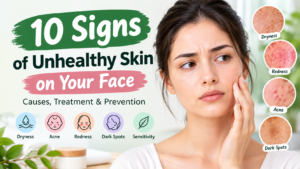

10 Signs of Unhealthy Skin on Your Face: Causes, Treatment & Prevention
Introduction
Your facial skin can reveal a lot about its health. Changes such as persistent dryness, redness, acne, uneven skin tone, and unusual itching may indicate that your skin needs extra care. Sometimes, these changes result from everyday habits, environmental exposure, or unsuitable skincare products. In other cases, they may be associated with an underlying skin condition.
Recognizing the signs of unhealthy skin on your face can help you make better skincare choices and identify problems before they become more severe.
Healthy skin does not have to be perfectly smooth, poreless, or completely free of wrinkles. Natural pores, fine lines, freckles, and occasional blemishes are normal. The important thing is to recognize changes that are unusual for your skin, persistent, or uncomfortable.
In this article, we will discuss 10 common signs of unhealthy facial skin, their possible causes, and practical ways to support healthier-looking skin.
1. Persistent Dryness and Flaky Skin
One of the most noticeable signs of unhealthy skin on your face is persistent dryness. Your skin may feel tight after washing, develop rough patches, or begin peeling around the nose, cheeks, forehead, and mouth.
Dry skin can occur when the skin loses too much moisture. Cold weather, low humidity, hot showers, harsh cleansers, and frequent exfoliation can contribute to the problem.
Sometimes, persistent dryness is associated with conditions such as eczema or contact dermatitis.
How to Improve Dry Facial Skin
You can support your skin by following a gentle moisturizing routine.
- Wash your face with a mild, fragrance-free cleanser.
- Avoid very hot water.
- Apply moisturizer while your skin is slightly damp.
- Look for ingredients such as glycerin, ceramides, and hyaluronic acid.
- Avoid harsh scrubs and exfoliating acids while your skin is irritated.
If your skin remains extremely dry, cracks, or becomes painful, consult a dermatologist to identify the underlying cause.
2. Frequent Acne and Pimples
Acne is another common facial skin concern. It can appear as blackheads, whiteheads, red bumps, or pus-filled pimples.
Acne develops when hair follicles become clogged with oil and dead skin cells. Hormonal changes, genetics, certain medications, and some skincare products can contribute to breakouts.
Although occasional pimples are common, persistent acne can cause inflammation, dark marks, and permanent scarring.
How to Manage Acne-Prone Skin
Start with a simple skincare routine that does not irritate your skin.
- Cleanse your face gently twice daily.
- Choose products labeled non-comedogenic when possible.
- Avoid squeezing or picking pimples.
- Consider evidence-based acne ingredients, such as salicylic acid or benzoyl peroxide, if appropriate for your skin.
- Use a moisturizer and broad-spectrum sunscreen.
Introduce acne treatments gradually because some products can cause dryness and irritation.
If acne is painful, severe, persistent, or leaving scars, consult a dermatologist. Early treatment can reduce the risk of long-term skin damage.
Youtube Video
3. Persistent Facial Redness
Facial redness may appear across the cheeks, nose, forehead, or chin. Your skin might also feel warm, sensitive, or irritated.
Temporary redness can occur after exercise, exposure to heat, or emotional stress. However, persistent redness may be associated with rosacea, eczema, contact dermatitis, or other skin conditions.
Using strong exfoliants, fragranced products, and unsuitable skincare ingredients may also irritate sensitive skin.
How to Reduce Facial Redness
To help calm irritated skin:
- Use a gentle, fragrance-free cleanser.
- Avoid products that cause burning or stinging.
- Apply a suitable moisturizer.
- Protect your face from excessive sun exposure.
- Notice whether heat, spicy foods, or particular products trigger redness.
Avoid experimenting with multiple treatments at once.
If redness persists, repeatedly returns, or occurs with swelling, pain, or visible blood vessels, seek medical advice. Persistent redness may require treatment tailored to the underlying condition.
4. Uneven Skin Tone and Dark Spots
Uneven skin tone is characterized by areas of pigmentation that appear darker or lighter than the surrounding skin.
Dark spots can develop after acne, inflammation, skin injuries, or sun exposure. Hormonal changes may also contribute to conditions such as melasma.
Although uneven pigmentation is not always a sign of unhealthy skin, new or changing discoloration deserves attention.
How to Improve Uneven Skin Tone
A consistent routine can help prevent further pigmentation and gradually improve some dark spots.
Use sunscreen daily: Choose a broad-spectrum sunscreen with SPF 30 or higher. Sun protection helps prevent existing pigmentation from becoming darker.
Avoid picking pimples: Picking can increase inflammation and raise the risk of post-inflammatory hyperpigmentation.
Choose suitable skincare ingredients: Depending on your skin and the type of pigmentation, ingredients such as niacinamide, azelaic acid, or vitamin C may help improve uneven skin tone.
Be patient: Dark spots can take several months to fade, and some types of pigmentation require professional treatment.
Avoid unregulated skin-lightening products and harsh home remedies. If a dark spot changes in size, shape, or color, or develops bleeding, seek medical evaluation.
5. Excessive Oiliness and Clogged Pores
Oily skin produces more sebum, the natural oil that helps protect the skin. However, excess oil combined with dead skin cells can contribute to clogged pores and acne.
You may notice a persistent shine across your forehead, nose, and chin. Blackheads and whiteheads may also become more noticeable.
Oily skin is not automatically unhealthy. Problems are more likely when excess oil occurs alongside irritation, clogged pores, or inflammatory acne.
How to Care for Oily Skin
Follow these practical tips:
- Use a gentle foaming cleanser if it suits your skin.
- Avoid washing your face repeatedly throughout the day.
- Choose a lightweight, non-comedogenic moisturizer.
- Consider salicylic acid if clogged pores are a concern.
- Use sunscreen that feels comfortable on your skin.
Do not use harsh cleansers to remove every trace of oil. Stripping the skin can cause irritation and make your routine harder to tolerate.
The goal is to manage excess oil while maintaining a healthy skin barrier.
6. Increased Skin Sensitivity and Burning
If your face frequently stings, burns, or becomes irritated after applying skincare products, your skin may be reacting to an ingredient or environmental trigger.
Increased sensitivity can occur after over-exfoliation, excessive use of retinoids, or exposure to irritating ingredients. Allergic contact dermatitis is another possible cause.
Symptoms may include redness, itching, burning, dryness, or swelling.
How to Support Sensitive Skin
Temporarily simplify your skincare routine.
- Stop using products that appear to trigger irritation.
- Avoid scrubs and strong exfoliating acids until your skin recovers.
- Use a gentle cleanser and bland moisturizer.
- Choose fragrance-free products.
- Introduce new skincare products one at a time.
Natural ingredients are not automatically suitable for sensitive skin. Essential oils, fragrances, and botanical extracts can also trigger reactions.
If irritation continues despite simplifying your routine, consult a dermatologist.
Important: Severe swelling, blistering, or difficulty breathing after using a product requires urgent medical attention, especially if breathing is affected.
7. Rough Texture and Peeling Skin
Healthy facial skin naturally has pores and some texture. However, sudden roughness, widespread flaking, or persistent peeling may indicate irritation or an underlying skin problem.
Possible causes include dry weather, excessive exfoliation, irritating skincare products, eczema, and certain inflammatory skin conditions.
Peeling can also occur when starting treatments such as retinoids or exfoliating acids.
How to Improve Rough Facial Skin
Focus on restoring comfort before adding treatments for texture.
- Use a mild cleanser.
- Apply moisturizer regularly.
- Avoid peeling or scrubbing loose skin.
- Pause irritating active ingredients when necessary.
- Protect your face from sunlight.
Once your skin has recovered, you may consider introducing a suitable product for your specific concern.
If peeling is severe, painful, widespread, or accompanied by swelling or sores, seek professional advice rather than trying multiple home remedies.
8. Dark Circles and a Tired-Looking Appearance
Dark circles beneath the eyes can make your face appear tired. However, they are not necessarily evidence of unhealthy skin or poor overall health.
Possible causes include genetics, natural pigmentation, aging, thin skin, allergies, and shadows created by the structure of the face. Lack of sleep can make their appearance more noticeable in some people.
How to Care for the Under-Eye Area
You can support the delicate skin around your eyes by following a few simple habits.
Get sufficient sleep: Most adults need approximately seven to nine hours of sleep each night.
Protect your skin from the sun: Use suitable sun protection and sunglasses outdoors.
Avoid rubbing your eyes: Frequent rubbing can irritate the skin and worsen pigmentation.
Moisturize gently: Choose a product designed for the eye area if your skin needs additional hydration.
Manage allergies: If itching and rubbing are related to allergies, appropriate treatment may help.
Dark circles do not always disappear with skincare. If they develop suddenly alongside other symptoms, consult a healthcare professional.
9. Persistent Itching, Rashes, or Bumps
Itching and unexplained facial bumps can indicate that your skin is reacting to an irritant, allergen, infection, or inflammatory condition.
Possible causes include eczema, contact dermatitis, rosacea, acne, and certain infections.
The appearance of a rash alone is not enough to determine its cause. Different conditions can produce similar symptoms but require different treatments.
How to Respond to Facial Rashes
Take these precautions:
- Stop using any new product that appears to trigger the reaction.
- Avoid scratching or squeezing affected areas.
- Cleanse gently with lukewarm water.
- Avoid applying multiple home remedies.
- Do not use prescription creams, particularly steroid creams, on your face without appropriate medical guidance.
Seek medical advice if a rash persists, spreads, becomes painful, or develops pus or open sores.
A rapidly spreading rash with fever or significant swelling needs prompt medical assessment. Swelling of the lips or tongue, or difficulty breathing, requires emergency care.
10. Slow-Healing Sores or Unusual Changes in Moles
Most minor skin injuries heal over time. However, a sore that repeatedly opens, bleeds, crusts, or does not heal may need medical evaluation.
Changes in moles or the appearance of new, unusual skin growths also deserve attention.
These changes do not automatically mean skin cancer, but they should not be ignored.
What Should You Look For?
Pay attention to the following changes:
- A mole that becomes asymmetrical.
- An irregular or changing border.
- Multiple colors within one spot.
- A spot that grows or changes over time.
- A lesion that repeatedly bleeds or forms a crust.
- A sore that does not heal.
These are reasons to arrange an assessment with a healthcare professional, particularly if the changes are new or progressing.
Early evaluation is important because many skin cancers are more treatable when diagnosed early.
Do not attempt to remove unusual moles or persistent sores at home.
What Causes Unhealthy Facial Skin?
Several factors can contribute to facial skin problems. The cause depends on the specific symptoms and your individual circumstances.
1. Harsh Skincare Products
Strong cleansers, irritating fragrances, and excessive exfoliation can weaken the skin’s protective barrier.
2. Sun Exposure
Ultraviolet radiation contributes to premature skin aging, pigmentation, and an increased risk of skin cancer.
3. Hormonal Changes
Hormonal fluctuations can influence oil production and contribute to acne in some people.
4. Genetics
Genetics can influence skin type and susceptibility to conditions such as acne, eczema, and rosacea.
5. Environmental Factors
Cold weather, low humidity, pollution, and other environmental exposures may aggravate certain skin concerns.
6. Underlying Health Conditions
Some skin changes may be associated with diabetes, immune system disorders, medication effects, or other health conditions.
7. Inconsistent Skincare Habits
Repeatedly changing products, skipping sun protection, or using unsuitable treatments may make some skin concerns harder to manage.
Identifying the underlying cause is often more useful than simply treating the visible symptoms.
How to Maintain Healthy Facial Skin Naturally
A consistent routine can help maintain your skin’s protective barrier and improve its appearance.
Follow a Simple Daily Routine
Morning:
- Cleanse gently if needed.
- Apply a suitable moisturizer.
- Use broad-spectrum sunscreen with SPF 30 or higher.
Evening:
- Remove makeup and sunscreen.
- Cleanse your face gently.
- Apply an appropriate treatment if needed.
- Finish with moisturizer.
You do not need expensive products or numerous steps to maintain good skincare habits.
Eat a Balanced Diet
Include fruits, vegetables, whole grains, healthy fats, and adequate protein in your diet. A varied diet supports general health and provides nutrients needed for normal skin function.
Drink Enough Water
Maintain adequate hydration throughout the day. Drinking excessive amounts of water will not automatically eliminate acne, wrinkles, or pigmentation.
Get Enough Sleep
A consistent sleep schedule supports overall health. Most adults benefit from seven to nine hours of sleep each night.
Avoid Unproven Home Remedies
Do not apply lemon juice, toothpaste, baking soda, or undiluted essential oils to your face as treatments. These substances may irritate your skin or cause other unwanted reactions.
Manage Stress
Stress can worsen certain skin conditions, including acne and eczema, in some people. Regular exercise, relaxation, and adequate sleep may help support overall well-being.
When Should You See a Dermatologist?
Not every skin concern requires professional treatment. However, it is important to seek medical advice when facial skin changes are persistent, severe, or unexplained.
Consider consulting a dermatologist if you experience:
- Severe or persistent acne.
- Redness that does not improve.
- Repeated itching or unexplained rashes.
- Painful or cracking skin.
- Sudden changes in pigmentation.
- A mole that changes in appearance.
- A sore that does not heal.
- Skin symptoms that continue despite gentle skincare.
A dermatologist may examine your skin and, when necessary, recommend tests or treatments based on the suspected condition.
Depending on the diagnosis, treatment may include medicated creams, oral medications, moisturizers, or other medical procedures.
Avoid self-diagnosing skin conditions based on photographs alone. Similar-looking symptoms can have different causes, and using the wrong treatment may make some conditions worse.
Frequently Asked Questions
1. What Are the Main Signs of Unhealthy Skin on Your Face?
Common warning signs include persistent dryness, frequent acne, ongoing redness, unusual pigmentation, increased sensitivity, rough or peeling skin, persistent itching, unexplained rashes, and sores that do not heal.
These symptoms can have several causes, so their presence does not automatically indicate a serious condition.
2. How Can I Tell If My Skin Barrier Is Damaged?
A compromised skin barrier may cause dryness, tightness, flaking, redness, burning, or increased sensitivity to skincare products.
These symptoms can also occur with other skin conditions. If they persist, seek advice from a dermatologist.
3. Can Unhealthy Skin Become Healthy Again?
Many skin concerns improve with appropriate skincare and treatment of their underlying causes. For example, mild dryness may improve with regular moisturizing, while acne often responds to suitable treatment.
Some chronic skin conditions require ongoing management rather than a permanent cure.
4. Does Drinking More Water Improve Facial Skin?
Adequate hydration supports general health, but drinking more water than your body needs is not a guaranteed treatment for dry skin, acne, or wrinkles.
Using a suitable moisturizer and addressing the underlying cause of a skin problem are also important.
5. Is Oily Skin a Sign of Unhealthy Skin?
No. Oily skin is a normal skin type. However, excess oil can contribute to clogged pores and acne in some people.
A gentle cleanser, suitable moisturizer, and appropriate acne treatments can help manage these concerns.
6. How Can I Improve My Facial Skin Naturally?
Use gentle skincare products, moisturize regularly, protect your skin from sunlight, eat a balanced diet, get enough sleep, and avoid ingredients that cause irritation.
Natural skincare products can be helpful, but natural ingredients may also cause allergic reactions or irritation.
7. Which Vitamin Is Best for Healthy Skin?
Healthy skin requires several nutrients, including vitamins A, C, D, and E, as well as adequate protein and essential fats.
No single vitamin guarantees healthy skin. Most people should aim to obtain nutrients through a balanced diet, and supplements should be considered when appropriate.
8. How Long Does It Take to Improve Unhealthy Skin?
The timeline depends on the cause. Mild dryness may improve within days of using a suitable moisturizer, while acne and pigmentation may take weeks or months to improve.
Persistent or worsening symptoms should be assessed by a healthcare professional.
Conclusion
Recognizing the signs of unhealthy skin on your face can help you make informed decisions about your skincare routine and identify problems that may need professional attention.
Persistent dryness, acne, redness, pigmentation, sensitivity, and unusual skin changes can have different causes. Gentle cleansing, appropriate moisturizing, sun protection, and healthy lifestyle habits can support your skin’s overall health.
However, skincare products and home remedies cannot treat every skin condition. If you experience persistent irritation, severe acne, unexplained rashes, changing moles, or sores that do not heal, consult a dermatologist.
Remember: Healthy skin does not have to be flawless. The goal is to maintain comfortable, well-protected skin and recognize changes that deserve attention.