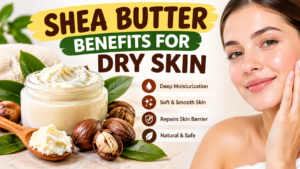

Shea Butter Benefits for Dry Skin: Uses, Benefits, and How to Apply It
Dry skin can feel rough, tight, flaky, and uncomfortable, especially during cold weather or after frequent washing. Finding the right moisturizer is essential for keeping your skin soft, smooth, and healthy-looking. One natural ingredient that has become popular in skincare is shea butter. Extracted from the nuts of the shea tree, this rich, creamy butter is widely used in lotions, body creams, lip balms, and other moisturizing products.
Shea butter supports the skin’s natural protective barrier, softens rough spots, and helps minimize moisture loss in dry skin. It is a helpful component of regular skincare because it contains fatty acids and other naturally occurring substances.
You will learn how shea butter functions, its primary advantages for dry skin, how to apply it properly, and what safety measures to take before incorporating it into your skincare regimen in this tutorial.
What Is Shea Butter?
Shea butter is a natural fat extracted from the nuts of the shea tree, which grows mainly in parts of Africa. It has a creamy texture and is commonly used in skincare products because of its moisturizing properties.
Shea butter contains fatty acids, including oleic, stearic, linoleic, and palmitic acids. These components help give it its rich texture and make it useful for softening and conditioning the skin.
There are two common types of shea butter:
- Unrefined shea butter: Generally undergoes less processing and retains more of its natural color, scent, and minor components.
- Refined shea butter: Processed to create a more consistent color and smell, making it suitable for many commercial skincare products.
Both types can help moisturize dry skin. The best option depends on your skin’s sensitivity, personal preference, and the formulation of the product.
7 Shea Butter Benefits for Dry Skin
1. Provides Deep Moisturization
One of the most recognized benefits of shea butter is its ability to moisturize dry skin. Its rich texture helps soften the skin and reduce moisture loss by forming a protective layer on the surface.
When your skin loses too much moisture, it may become rough, tight, or flaky. Applying shea butter after bathing can help keep the skin feeling comfortable and hydrated.
For best results, apply a small amount to slightly damp skin. This helps retain moisture and leaves the skin feeling softer.
2. Helps Strengthen the Skin Barrier
Your skin barrier protects against environmental irritants and helps prevent excessive water loss. When this barrier becomes weakened, the skin may feel dry, sensitive, or uncomfortable.
Shea butter contains fatty acids that help condition the skin and support its moisture barrier. Regular use may improve the appearance and feel of rough, dehydrated skin.
However, shea butter does not replace medical treatment for serious skin barrier problems. People with persistent irritation or severe dryness should consult a dermatologist.
3. Softens Rough and Flaky Skin
Dry skin often develops rough patches on the elbows, knees, heels, hands, and legs. These areas may need a richer moisturizer than other parts of the body.
Shea butter helps soften the outer layer of the skin, making rough areas feel smoother. Its thick consistency also makes it suitable for overnight moisturizing.
For rough heels, apply a small amount of shea butter before bed and wear clean cotton socks. For dry hands, massage it into your skin after washing your hands.
Consistent use can help improve softness, although very thick or cracked skin may require additional treatment.
4. Helps Soothe the Feeling of Dryness
Dry skin can cause tightness, mild itching, and discomfort. A moisturizer such as shea butter can help relieve these feelings when they are caused by a lack of moisture.
Its emollient properties help soften the skin and make the surface feel more comfortable. Some people find it especially useful during winter or in dry indoor environments.
Choose a fragrance-free product if your skin is sensitive. Added perfumes and essential oils may irritate some people.
Shea butter should not be considered a treatment for eczema, allergic reactions, or unexplained itching. Seek medical advice if symptoms are severe, persistent, or accompanied by swelling or broken skin.
5. Improves Skin Smoothness and Appearance
When skin is dehydrated, fine lines and rough texture can become more noticeable. By moisturizing the surface, shea butter can make skin appear smoother, softer, and more supple.
This effect is particularly helpful for dry areas that look dull or feel rough to the touch.
Although moisturized skin may look healthier, shea butter does not permanently remove wrinkles or stop the natural aging process. Its primary benefit is improving hydration and the appearance of dryness.
6. Contains Antioxidant Compounds
Shea butter naturally contains minor compounds, including vitamin E-related compounds and other antioxidants, depending on how it is processed.
Antioxidants help protect skin components from oxidative stress. However, the amount and activity of these compounds can vary between products.
Shea butter should not be relied on as a complete anti-aging treatment or as a substitute for sunscreen. For daily skin protection, use a broad-spectrum sunscreen with SPF 30 or higher on exposed skin.
7. Helps Moisturize Lips, Hands, and Feet
Shea butter is versatile enough to use on several dry areas of the body.
For dry lips: Apply a lip balm containing shea butter to help soften and protect the lips.
For dry hands: Massage a small amount into your hands after washing, especially before bedtime.
For dry feet: Apply it to the heels and other rough areas after bathing.
For dry elbows and knees: Use a thin layer to improve softness and reduce the uncomfortable feeling of rough skin.
Avoid applying it to deep, open cracks or infected areas without professional advice.
How to Use Shea Butter for Dry Skin
Using shea butter correctly can help you get the most out of its moisturizing properties. Follow these simple steps.
Step 1: Cleanse Your Skin Gently
Wash your skin with lukewarm water and a gentle cleanser. Avoid very hot water because it can remove natural oils and make dryness worse.
Step 2: Pat Your Skin Dry
Use a soft towel to gently pat your skin dry. Do not rub aggressively, particularly if your skin is already irritated.
Step 3: Apply Shea Butter
Take a small amount of shea butter and warm it between your fingertips or palms. Gently spread it over the dry areas.
You do not need to apply a thick layer. A thin, even coating is usually enough for comfortable moisturization.
Step 4: Apply It While Your Skin Is Slightly Damp
Applying shea butter shortly after bathing can help reduce moisture loss. If your skin is extremely dry, consider applying a water-based moisturizer first and then a thin layer of shea butter to help seal in moisture.
Step 5: Use It Consistently
Apply shea butter once or twice daily, depending on your skin’s needs and the product instructions. Reduce use if you notice clogged pores, irritation, or breakouts.
Is Shea Butter Good for the Face?
Shea butter may help moisturize a dry face, especially when used in a well-formulated facial cream. However, its rich texture may not suit every skin type.
People with dry skin may find it helpful on rough or flaky areas. Those with oily or acne-prone skin may prefer a lighter, non-comedogenic moisturizer.
If you want to use pure shea butter on your face, start with a small amount on a limited area. Monitor your skin for irritation or new breakouts before using it more widely.
Avoid getting it into your eyes, and do not assume that a natural ingredient is automatically suitable for sensitive skin.
Shea Butter vs. Other Moisturizers for Dry Skin
Different moisturizers work in different ways. Understanding their roles can help you choose the right product.
| Moisturizer | Main benefit | Best suited for |
|---|---|---|
| Shea butter | Softens skin and helps reduce moisture loss | Dry, rough areas |
| Glycerin | Attracts water to the skin | Dehydrated skin |
| Hyaluronic acid | Helps the skin retain water | Skin that feels dehydrated |
| Petrolatum | Forms a strong protective barrier | Very dry areas and moisture loss |
| Ceramide creams | Help support the skin barrier | Dry or barrier-impaired skin |
You do not have to choose only one ingredient. A moisturizer containing glycerin or ceramides combined with shea butter may offer both hydration and moisture retention.
Are There Any Side Effects of Shea Butter?
Shea butter is generally well tolerated when used topically, but it may not suit everyone.
Possible concerns include:
- Skin irritation: Some people may react to shea butter or other ingredients in a product.
- Acne or clogged pores: Rich formulations may contribute to breakouts in some acne-prone individuals.
- Fragrance sensitivity: Products containing perfumes or essential oils can trigger irritation.
- Product contamination: Poorly stored or low-quality products may become contaminated or deteriorate.
Before using a new product, apply a small amount to a limited area and monitor it for several days. Stop using it if you experience redness, burning, itching, or swelling.
People with known allergies to shea butter or its ingredients should avoid the product and seek advice from a healthcare professional if they are unsure about its suitability.
Who Should Use Shea Butter?
Shea butter may be a good option for people who experience:
- Dry or rough skin
- Flaky skin caused by dehydration
- Dry hands, feet, elbows, and knees
- Skin that feels tight after bathing
- Seasonal dryness during cold weather
People with oily skin, frequent facial breakouts, or very sensitive skin should select products carefully. If you have eczema, psoriasis, or another skin condition, ask a dermatologist whether a shea butter product is appropriate for your needs.
Tips for Choosing the Best Shea Butter
When shopping for a shea butter product, consider the following tips:
- Check the ingredient list: Choose a product with a simple formula if you have sensitive skin.
- Consider fragrance-free options: Fragrance-free products may be better tolerated by sensitive skin.
- Choose the right texture: Thick creams and balms are useful for very dry areas, while lighter lotions may be more comfortable for daily use.
- Look for suitable packaging: Follow the storage instructions and avoid products with unusual changes in smell, color, or texture.
- Consider your skin type: A product that works for dry hands may not be ideal for an acne-prone face.
Remember that a higher price does not automatically mean better results. The formulation and your skin’s response matter most.
Frequently Asked Questions
1. Can I use shea butter every day for dry skin?
Yes. Many people can use shea butter daily as a moisturizer. Apply a small amount to dry areas once or twice a day, depending on your needs and the product instructions.
2. How long does shea butter take to improve dry skin?
Some people notice softer skin shortly after application. More consistent improvements in dryness may take several days of regular moisturizing. Results depend on the severity of dryness and the rest of your skincare routine.
3. Is shea butter better than coconut oil for dry skin?
Both can soften the skin and help reduce moisture loss. Shea butter has a rich, creamy texture, while coconut oil spreads differently and may not suit every skin type. The better choice depends on your skin’s needs and how you tolerate each product.
4. Can shea butter remove dark spots?
Shea butter is primarily a moisturizer. There is insufficient evidence that it reliably removes dark spots or treats hyperpigmentation. Sunscreen and ingredients specifically intended for pigmentation concerns may be more appropriate.
5. Can I leave shea butter on my skin overnight?
Yes, if your skin tolerates it. Applying a thin layer to dry hands, feet, elbows, or other body areas before bed can help keep them moisturized overnight.
6. Is shea butter safe for sensitive skin?
It may be suitable for some people with sensitive skin, but reactions are possible. Choose a fragrance-free formulation and test it on a small area before regular use.
7. Does shea butter help with eczema?
Shea butter may help moisturize dry skin associated with eczema, but it is not a proven replacement for eczema medication or a complete treatment plan. Consult a healthcare professional if eczema symptoms persist or worsen.
Conclusion
The benefits of shea butter for dry skin make it a useful ingredient in many moisturizing routines. It helps soften rough patches, reduce moisture loss, improve skin smoothness, and keep dry areas feeling comfortable.
For the best results, apply shea butter to slightly damp skin after bathing and use it consistently. You can also combine it with a water-based moisturizer to provide hydration and help retain moisture.
Although shea butter works well for many people, it is not suitable for every skin type and does not treat every skin condition. Choose a product that matches your needs, monitor your skin’s response, and consult a dermatologist if dryness becomes severe or persistent.
With the right skincare routine, shea butter can be a simple and effective addition to your efforts to maintain soft, healthy-looking skin.