
Safe Dog Walking Temperatures: How Hot or Cold Is Too Extreme?
Introduction
Walking is an essential part of keeping your dog healthy, active, and mentally stimulated. Regular walks help maintain a healthy weight, support muscle strength, and provide opportunities for your pet to explore the environment. However, extreme weather can make outdoor exercise dangerous.
Dogs can suffer from heat exhaustion, heatstroke, hypothermia, and paw injuries when exposed to very hot or cold conditions. The risks vary depending on your dog’s breed, age, coat, size, health, humidity levels, and how long they spend outdoors.
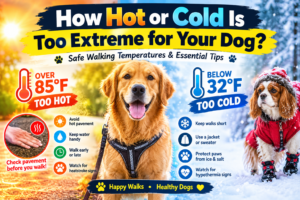
As a general guideline, temperatures above 85°F (29°C) can increase the risk of heat-related problems, while temperatures below 32°F (0°C) require additional precautions. These are not universal safety limits because some dogs can become uncomfortable or develop health problems at milder temperatures.
Understanding weather conditions and recognizing early warning signs can help you decide when to walk your dog, how long to stay outside, and when indoor exercise is a safer option.
What Temperature Is Too Hot for a Dog Walk?
Hot weather can make walking uncomfortable and potentially dangerous for dogs. Temperatures above 85°F (29°C) deserve particular caution, especially when humidity is high or your dog is exercising in direct sunlight.
Dogs cool themselves primarily through panting, which becomes less effective in hot, humid conditions. When the body cannot release heat efficiently, its temperature can rise dangerously.
Why Hot Pavement Is Dangerous
Pavement, asphalt, and other hard surfaces absorb heat from sunlight. Their temperatures can become significantly higher than the surrounding air temperature.
Walking on overheated surfaces can cause painful paw-pad burns, blistering, and tissue damage.
Before taking your dog outside, check the pavement with the back of your hand. If you cannot comfortably keep it against the surface for several seconds, choose a cooler route or postpone the walk.
However, this test is only a rough screening method. Pavement that passes the test may still be unsafe under certain conditions.
Youtube Video
Which Dogs Are Most Vulnerable to Heat?
Some dogs have a harder time regulating their body temperature than others.
- Flat-faced breeds: Pugs, bulldogs, and boxers may struggle to cool themselves through panting.
- Senior dogs: Older animals may have reduced tolerance for heat and exercise.
- Puppies: Young dogs may not regulate their body temperature as effectively as healthy adults.
- Overweight dogs: Excess body weight can increase heat-related stress.
- Dogs with medical conditions: Heart and respiratory problems can make hot-weather exercise more dangerous.
- Thick-coated dogs: Some heavily coated breeds may become uncomfortable more quickly in hot conditions.
Even dogs that enjoy warm weather can overheat if they exercise too intensely or remain outdoors too long.
What Temperature Is Too Cold for a Dog Walk?
Cold weather can also present serious risks. When temperatures fall below freezing, or 32°F (0°C), it is important to assess your dog’s comfort and limit exposure when necessary.
Some dogs with thick, insulating coats are better adapted to cold conditions than short-haired breeds. However, no breed is completely immune to cold-related problems.
A Siberian Husky may tolerate cold weather better than a Chihuahua or Greyhound, but wind, damp fur, snow, and prolonged exposure can affect every dog.
Why Cold Weather Can Be Dangerous
Low temperatures can cause dogs to lose body heat faster than they can replace it. Prolonged exposure can lead to hypothermia, while freezing conditions can increase the risk of frostbite.
Ice, snow, and de-icing chemicals can also irritate or injure paw pads.
Small dogs, short-haired breeds, puppies, senior pets, and dogs with health problems may need extra protection even when temperatures are above freezing.
How Long Can Dogs Walk in Freezing Weather?
There is no single duration that is safe for every dog. For some dogs, a brief outdoor break may be sufficient when temperatures are below freezing. Others may tolerate longer walks if they are healthy, acclimated to the cold, and properly protected.
Start with short outings and observe your dog’s behavior. If your pet begins shivering, lifting its paws, slowing down, whining, or trying to return home, end the walk.
Do not force your dog to remain outdoors simply to complete a daily exercise target.
Factors That Affect Your Dog’s Temperature Tolerance
The same outdoor temperature can affect two dogs very differently. Consider these factors before planning a walk.
1. Breed and Body Size
Large dogs with thick coats may tolerate cold better than small dogs with little body fat or short fur. Flat-faced breeds may struggle more in hot weather.
2. Coat Type
A dense double coat can provide insulation in cold weather, while short-haired dogs may lose body heat more quickly. Thick fur does not eliminate the risk of overheating.
3. Age
Puppies and senior dogs can be more vulnerable to temperature extremes. Their exercise routines may need to be adjusted according to their age and health.
4. Humidity and Wind
High humidity makes it harder for dogs to cool down through panting. Strong winds can increase heat loss in cold weather, especially when a dog’s coat is wet.
5. Health Conditions
Heart disease, respiratory conditions, arthritis, obesity, and other medical problems can affect how comfortably a dog tolerates outdoor activity.
6. Acclimation
Dogs gradually accustomed to seasonal changes may tolerate certain conditions better than dogs suddenly exposed to extreme temperatures. However, acclimation does not make dangerous weather safe.
7. Activity Level and Hydration
Running, playing, and walking uphill increase heat production. Dehydration can further increase the risk of heat-related illness.
Always adjust exercise according to your dog’s condition rather than relying on temperature alone.
Best Practices for Walking Dogs in Hot Weather
Use these precautions to help protect your dog during warm weather.
Walk Early in the Morning or Late in the Evening
Choose cooler times of day rather than walking during the hottest hours. Check the actual conditions before leaving, since evenings can remain hot after sunset.
Check the Walking Surface
Test pavement before your dog steps onto it. Choose grass, shaded paths, or other cooler surfaces when possible.
Carry Fresh Water
Bring water and a portable bowl on longer outings. Offer frequent opportunities to drink and never force your dog to continue walking when it appears tired.
Keep Walks Shorter
Reduce the distance and intensity of walks when temperatures rise. Replace strenuous exercise with short toilet breaks and indoor games if conditions are unsafe.
Use Appropriate Dog Booties
Heat-resistant dog booties may provide some protection from hot surfaces when properly fitted. However, they do not prevent overheating, so avoid relying on footwear as your only precaution.
Provide Shade and Rest
Choose shaded routes and allow your dog to rest when necessary. Avoid leaving your pet in a parked car, even briefly, because temperatures can rise rapidly.
Avoid Intense Exercise
Running, vigorous play, and strenuous training can increase body temperature. Postpone these activities during hot weather.
Signs of Heatstroke in Dogs
Heatstroke occurs when a dog’s body temperature rises dangerously and its cooling mechanisms cannot keep up. It is a veterinary emergency that can damage organs and become life-threatening.
Watch for these warning signs:
- Excessive or unusually heavy panting
- Rapid breathing or an elevated heart rate
- Heavy drooling
- Bright red, pale, or otherwise abnormal gums
- Weakness or unusual fatigue
- Vomiting or diarrhea
- Confusion or disorientation
- Difficulty standing or walking
- Seizures
- Collapse or loss of consciousness
What to Do if Your Dog Overheats
If you suspect heatstroke, move your dog to a cooler, shaded area immediately and contact an emergency veterinarian.
Begin gentle cooling with cool—not ice-cold—water and airflow while arranging veterinary care. Avoid wrapping your dog in wet towels that may trap heat against the body, and do not force it to drink.
Do not delay veterinary treatment even if your dog appears to improve. Heatstroke can cause internal damage that is not immediately obvious.
Best Practices for Walking Dogs in Cold Weather
Cold-weather walks can remain enjoyable when you take steps to protect your pet.
Keep Walks Short When Necessary
Reduce outdoor time when temperatures are low, particularly for small dogs, puppies, senior pets, and short-haired breeds.
Consider a Dog Jacket or Sweater
A properly fitted coat can help vulnerable dogs retain body heat. Choose clothing that allows comfortable movement and does not become wet or restrict breathing.
Dogs with thick, insulating coats may need less additional clothing, but always monitor their comfort.
Protect Your Dog’s Paws
Dog booties can help protect paws from snow, ice, and de-icing chemicals. If your dog will not tolerate boots, inspect its paws regularly and clean them after each walk.
Look for cracks, redness, bleeding, or ice trapped between the toes.
Wipe Paws and Belly After Walks
Use a damp cloth and then dry your dog’s paws and belly thoroughly. This helps remove salt, dirt, and chemical residues that could irritate the skin or be swallowed during grooming.
Avoid Antifreeze and Chemical Runoff
Antifreeze can be extremely toxic to dogs. Keep your pet away from spills, treated puddles, and snow contaminated with chemicals.
Contact a veterinarian immediately if you suspect your dog has swallowed antifreeze or another toxic substance. Do not wait for symptoms to develop.
Stay Alert on Snowy Walks
Keep your dog on a leash near icy paths, roads, and unfamiliar areas. Snow and poor visibility can make it easier for dogs to become lost or injured.
Signs of Hypothermia in Dogs
Hypothermia occurs when a dog’s body temperature drops below its normal range. It can develop after prolonged exposure to cold weather, especially when the dog is wet or unable to find shelter.
Possible signs include:
- Shivering
- Whining or unusual anxiety
- Weakness
- Low energy or lethargy
- Slowing down or refusing to walk
- Difficulty coordinating movements
- Shallow or slow breathing
- Reduced responsiveness
Severe hypothermia can become life-threatening.
What to Do if Your Dog Becomes Too Cold
Move your dog indoors or to a warm, sheltered location. Remove wet clothing and blankets, and wrap the animal in dry blankets to help it warm gradually.
Avoid direct high heat from heating pads, hot-water bottles, or hair dryers, which can cause burns. Contact a veterinarian promptly if you suspect hypothermia, particularly if your dog is weak, confused, or breathing abnormally.
Do Dogs Need Jackets in Cold Weather?
Not every dog needs a jacket, but some benefit significantly from extra insulation.
Small breeds, short-haired dogs, lean animals, puppies, and senior dogs are often more sensitive to cold. A suitable jacket may improve their comfort during short outdoor walks.
Dogs with thick double coats may tolerate cold weather better, but individual needs still vary.
Choose clothing that fits securely without restricting movement. Remove wet clothing after returning indoors, and check your dog’s skin for irritation.
Frequently Asked Questions
What temperature is safe for walking a dog?
There is no universal safe temperature for every dog. Temperatures above 85°F (29°C) can increase heat-related risks, while temperatures below 32°F (0°C) require additional cold-weather precautions. Humidity, wind, pavement temperature, breed, and health all influence safety.
Can I walk my dog in 90°F weather?
A 90°F (32°C) day can be dangerous, particularly in direct sunlight or high humidity. Avoid strenuous walks, choose brief toilet breaks in cooler conditions, and consider indoor activities instead.
Can dogs walk outside in freezing weather?
Some dogs can tolerate brief walks in freezing conditions, but vulnerable pets may need much shorter outings or may be safer indoors. Watch for shivering, paw lifting, and reluctance to move.
How can I cool down my dog after a hot walk?
Move your dog into a cool, shaded or air-conditioned area. Offer fresh water and use cool water and airflow if the dog appears overheated. If heatstroke is suspected, contact an emergency veterinarian immediately.
Can dogs get frostbite on their paws?
Yes. Prolonged exposure to freezing temperatures can damage paw tissue, ears, and other extremities. Inspect your dog’s paws after winter walks and seek veterinary care if you notice severe pain, swelling, discoloration, or blisters.
Is it safe for dogs to sleep outside overnight?
Outdoor sleeping can be unsafe in extreme heat or cold. Shelter, ventilation, water, bedding, humidity, and the dog’s health all matter. When temperatures are extreme, bringing your dog indoors is generally the safer choice.
Do dog booties protect paws from hot pavement?
Suitable booties can reduce direct contact with hot surfaces, but they do not eliminate the risk of overheating or heatstroke. Check the temperature, keep walks short, and avoid hot pavement whenever possible.
Conclusion
Extreme temperatures can turn an ordinary dog walk into a health risk. Hot weather can cause dehydration, paw burns, and potentially fatal heatstroke, while cold conditions can lead to hypothermia, frostbite, and chemical exposure.
Temperatures above 85°F (29°C) and below 32°F (0°C) are useful warning points, not absolute safety boundaries. Your dog’s breed, age, coat, health, humidity, and the walking surface should all influence your decisions.
Choose cooler times for summer walks, shorten outings during freezing weather, provide fresh water, protect vulnerable paws, and use suitable clothing when needed.
Most importantly, watch your dog’s behavior. If your pet appears distressed, stop the walk and move to a safer environment. When you suspect heatstroke, hypothermia, or another serious condition, seek veterinary assistance immediately.