
Introduction
Collagen is the most abundant protein in the human body and plays a vital role in maintaining firm, smooth, and youthful-looking skin. As we age, the body’s natural collagen production gradually declines, leading to wrinkles, fine lines, sagging skin, and reduced elasticity. Factors such as sun exposure, smoking, poor diet, stress, and pollution can accelerate this process.
Many people are now looking for natural ways to support healthy collagen production, and herbal remedies have become increasingly popular. While herbs do not directly replace collagen, several contain antioxidants and plant compounds that help protect existing collagen and support the body’s natural collagen-forming processes as part of a healthy lifestyle.
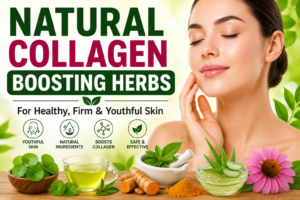
In this guide, you’ll discover the best natural collagen boosting herbs, their potential skin benefits, and how to include them in your skincare and wellness routine.
What Is Collagen?
Collagen is a structural protein found in:
- Skin
- Hair
- Nails
- Bones
- Joints
- Tendons
- Ligaments
It acts like the body’s natural support system, helping skin stay firm and elastic while supporting healthy joints and connective tissues.
Why Does Collagen Decline?
Natural collagen production starts slowing during adulthood and continues to decrease with age.
Common factors that contribute include:
- Aging
- Excessive UV exposure
- Smoking
- High sugar intake
- Chronic stress
- Poor sleep
- Environmental pollution
- Nutritional deficiencies
Supporting your skin with healthy habits and antioxidant-rich herbs may help protect collagen from damage.
Benefits of Natural Collagen Boosting Herbs
Using herbal ingredients as part of a balanced lifestyle may help:
- Support skin elasticity
- Reduce the appearance of fine lines
- Protect against oxidative stress
- Promote healthy skin hydration
- Support wound healing
- Maintain healthy hair and nails
- Support overall skin health
Best Natural Collagen Boosting Herbs
1. Gotu Kola (Centella Asiatica)
Gotu Kola is one of the most well-known herbs in traditional skincare.
It contains compounds that have been studied for their role in supporting skin repair and collagen formation.
Potential Benefits
- Supports skin elasticity
- Promotes healthy-looking skin
- Helps improve the appearance of scars
- Encourages skin repair
Many modern skincare products include Centella Asiatica for these reasons.
2. Aloe Vera
Aloe Vera is valued for its soothing and hydrating properties.
Some research suggests aloe vera may support the skin’s natural collagen and healing processes, although more high-quality studies are needed.
Benefits
- Hydrates the skin
- Supports the skin barrier
- Helps calm irritation
- Promotes a healthy complexion
3. Turmeric
Turmeric contains curcumin, a natural antioxidant with anti-inflammatory properties.
By helping protect skin from oxidative stress, turmeric may contribute to healthier-looking skin and support the body’s normal collagen maintenance.
Benefits
- Helps protect existing collagen
- Brightens dull-looking skin
- Supports an even skin tone
- Helps calm redness
4. Green Tea
Green tea is rich in polyphenols, particularly EGCG, which help protect skin from environmental damage.
Benefits
- Powerful antioxidant support
- Helps defend against UV-related damage
- Supports healthy aging
- Promotes smoother-looking skin
Drinking green tea and using skincare products containing green tea extract may both contribute to healthier skin.
5. Horsetail Herb
Horsetail naturally contains silica, a mineral involved in the formation of connective tissue.
Benefits
- Supports healthy skin
- Promotes stronger hair and nails
- Helps maintain connective tissues
Because horsetail supplements may not be suitable for everyone, consult a healthcare professional before long-term use.
6. Ginseng
Ginseng has long been used in traditional medicine and is prized for its antioxidant properties.
Benefits
- Supports healthy circulation
- Helps protect the skin from oxidative stress
- Promotes a refreshed, healthy appearance
- May improve skin vitality
7. Rosehip
Rosehip is naturally rich in vitamin C, a nutrient essential for the body’s normal collagen production.
Benefits
- Supports collagen formation
- Brightens the skin
- Helps improve skin texture
- Provides antioxidant protection
Rosehip is available in oils, teas, and skincare products.
8. Calendula
Calendula is commonly used in creams and ointments for its soothing properties.
Benefits
- Supports skin repair
- Helps soothe dry skin
- Promotes a healthy skin barrier
- Reduces the appearance of irritation
9. Chamomile
Chamomile is known for its calming effects on the skin.
Benefits
- Soothes redness
- Supports sensitive skin
- Helps reduce discomfort from minor irritation
- Promotes healthy-looking skin
10. Licorice Root
Licorice root is a popular botanical ingredient in brightening skincare products.
Benefits
- Helps improve the appearance of uneven skin tone
- Provides antioxidant support
- Promotes smoother-looking skin
- Helps calm visible redness
How Herbs Support Healthy Skin
Although herbs do not instantly create new collagen, many contain:
- Antioxidants
- Flavonoids
- Polyphenols
- Vitamins
- Plant compounds
These nutrients help reduce oxidative stress and support the body’s normal skin repair processes, which can contribute to healthier-looking skin over time.
Foods That Complement Collagen-Supporting Herbs
For the best results, pair herbal ingredients with a nutrient-rich diet that includes:
- Citrus fruits (Vitamin C)
- Berries
- Leafy green vegetables
- Nuts and seeds
- Fatty fish
- Eggs
- Beans
- Lean protein
A balanced diet provides the amino acids and vitamins needed for normal collagen production.
Daily Herbal Collagen-Boosting Skincare Routine
A consistent skincare routine combined with collagen-supporting herbs can help keep your skin healthy, hydrated, and youthful-looking. While herbs cannot completely stop the natural aging process, they may help protect the skin from environmental damage and support its natural repair processes.
Step 1: Gentle Herbal Cleanser
Start your morning by cleansing your face with a mild herbal cleanser containing ingredients such as:
- Aloe Vera
- Chamomile
- Green Tea
- Calendula
A gentle cleanser removes excess oil, dirt, and impurities without stripping the skin’s natural moisture.
Step 2: Herbal Toner
A toner refreshes the skin and prepares it for moisturizing.
Choose herbal toners containing:
- Rose Water
- Green Tea Extract
- Witch Hazel (alcohol-free)
- Chamomile Water
Benefits include:
- Refreshing the skin
- Supporting hydration
- Helping maintain the skin’s natural pH balance
Step 3: Herbal Serum
Apply a lightweight serum rich in botanical extracts.
Look for ingredients such as:
- Centella Asiatica (Gotu Kola)
- Vitamin C
- Aloe Vera
- Green Tea
- Licorice Root
These ingredients may help improve the appearance of fine lines and uneven skin tone while supporting healthier-looking skin.
Step 4: Herbal Moisturizer
Hydration is essential for maintaining a smooth, healthy complexion.
Choose moisturizers containing:
- Aloe Vera
- Shea Butter
- Jojoba Oil
- Rosehip Oil
- Calendula
Apply twice daily for the best results.
Step 5: Daily Sunscreen
One of the most important ways to protect collagen is to reduce UV damage.
Use:
- Broad-spectrum SPF 30 or higher
- Reapply every two hours when outdoors
- Wear hats and sunglasses for added protection
Sun protection helps reduce collagen breakdown caused by ultraviolet radiation.
Herbal Face Masks for Firmer Skin
Using a herbal face mask once or twice a week can complement your skincare routine.
Aloe Vera & Honey Mask
Ingredients
- 2 tablespoons fresh aloe vera gel
- 1 teaspoon raw honey
Benefits
- Deep hydration
- Soothes dry skin
- Supports the skin barrier
Leave on for 15 minutes before rinsing.
Turmeric & Yogurt Mask
Ingredients
- 1 teaspoon turmeric powder
- 2 teaspoons plain yogurt
- 1 teaspoon honey
Benefits
- Brightens dull-looking skin
- Helps improve uneven skin tone
- Provides antioxidant support
Use once weekly and avoid leaving it on too long to reduce the chance of temporary staining.
Green Tea Face Mask
Ingredients
- Brewed green tea
- Oatmeal
- Honey
Benefits
- Rich in antioxidants
- Helps calm redness
- Supports healthy-looking skin
Rosehip & Aloe Gel Mask
Ingredients
- Fresh aloe vera gel
- A few drops of rosehip oil
Benefits
- Hydrates skin
- Leaves skin feeling soft
- Supports a radiant complexion
Herbal Teas That Support Healthy Skin
Herbal teas can be part of a balanced diet that supports overall skin health.
Green Tea
Rich in antioxidants that help protect skin from oxidative stress.
Hibiscus Tea
Contains natural antioxidants and vitamin C, a nutrient needed for normal collagen production.
Chamomile Tea
Known for its calming properties and may support overall wellness.
Rooibos Tea
Contains antioxidants that may help protect skin from environmental stressors.
Gotu Kola Tea
Traditionally used in herbal wellness practices and often associated with skin support.
Best Foods to Support Collagen Production
A healthy diet is just as important as topical skincare.
Vitamin C-Rich Foods
Vitamin C is essential for normal collagen synthesis.
Eat more:
- Oranges
- Kiwi
- Strawberries
- Bell peppers
- Broccoli
Protein-Rich Foods
Collagen is made from amino acids.
Include:
- Fish
- Chicken
- Eggs
- Greek yogurt
- Lentils
- Beans
Healthy Fats
Healthy fats help maintain the skin barrier.
Choose:
- Avocados
- Walnuts
- Chia seeds
- Flaxseeds
- Olive oil
Zinc-Rich Foods
Zinc supports healthy skin repair.
Sources include:
- Pumpkin seeds
- Chickpeas
- Cashews
- Seafood
Lifestyle Habits That Protect Collagen
Healthy habits can help reduce factors that contribute to collagen breakdown.
Stay Hydrated
Drink enough water throughout the day to support healthy skin hydration.
Get Enough Sleep
Aim for 7–9 hours of quality sleep each night to support your body’s natural repair processes.
Exercise Regularly
Regular physical activity improves circulation, delivering oxygen and nutrients to the skin.
Manage Stress
Long-term stress may affect overall skin health.
Practice:
- Meditation
- Yoga
- Deep breathing
- Regular relaxation
Avoid Smoking
Smoking accelerates collagen breakdown and contributes to premature skin aging.
Common Mistakes That Damage Collagen
Avoid these habits if you want healthier-looking skin.
Excessive Sun Exposure
Unprotected UV exposure is one of the leading causes of premature skin aging.
Always wear sunscreen outdoors.
High Sugar Intake
Diets high in added sugars may contribute to glycation, a process that can affect collagen fibers over time.
Choose whole foods whenever possible.
Poor Skincare Routine
Skipping cleansing, moisturizing, or sunscreen can leave the skin more vulnerable to environmental damage.
Not Removing Makeup
Sleeping in makeup may clog pores and interfere with skin health.
Always cleanse your face before bed.
Dehydration
Dry skin often appears dull and less elastic.
Drink enough water and use moisturizers consistently.
Frequently Asked Questions (FAQs)
Which herb is best for collagen production?
Gotu Kola is widely recognized in skincare for supporting skin repair and elasticity. Aloe vera, rosehip, green tea, and turmeric are also popular choices for maintaining healthy-looking skin.
Can herbs increase collagen naturally?
Some herbs contain antioxidants and plant compounds that help protect existing collagen and support the body’s natural collagen-forming processes as part of a healthy lifestyle.
Is aloe vera good for collagen?
Aloe vera has soothing and hydrating properties and may support healthy skin and its natural repair processes.
How long does it take to notice improvements?
Results vary depending on your skincare routine, diet, sun protection, and lifestyle. Consistent use over several weeks is generally needed to notice visible improvements.
Can I drink herbal tea every day?
Many herbal teas can be enjoyed daily as part of a balanced diet. However, some herbs may interact with medications or be unsuitable for certain health conditions, so consult a healthcare professional if you have concerns.
Are herbal skincare products suitable for sensitive skin?
Many herbal products are formulated for sensitive skin, but you should always perform a patch test before using a new product.
Conclusion
Natural collagen boosting herbs can be a valuable addition to a healthy skincare routine. Herbs such as Gotu Kola, Aloe Vera, Green Tea, Turmeric, Rosehip, Calendula, Chamomile, Ginseng, Horsetail, and Licorice Root provide antioxidants and beneficial plant compounds that help protect the skin from oxidative stress and support its natural repair processes.
For the best results, combine herbal skincare with a nutrient-rich diet, adequate hydration, daily sunscreen, regular exercise, quality sleep, and healthy lifestyle habits. While herbs may support healthier-looking skin, they should not be considered a substitute for medical treatment or guaranteed anti-aging solutions.
Consistency is the key to maintaining healthy, glowing, and youthful-looking skin over time.https://www.youtube.com/watch?v=-e1cLCjk8cQ&pp=ygURYmxhY2toZWFkIHJlbW92YWw%3D