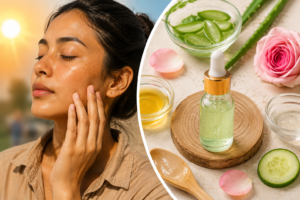

If you spend long hours working under the sun, you’ve probably noticed that your skin has become darker, duller, or uneven in tone. This is a natural response to ultraviolet (UV) rays, which stimulate your skin to produce more melanin—the pigment responsible for skin color. While a tan is your body’s way of protecting itself, prolonged sun exposure can also cause dryness, roughness, premature aging, and dark spots.
The good news is that with proper sun protection and gentle skincare, your skin can gradually recover. A simple homemade serum made from skin-friendly ingredients can help hydrate your skin, improve its appearance, and support a healthier-looking complexion. However, it’s important to understand that no homemade serum can instantly “whiten” skin or permanently change your natural skin tone.
In this guide, you’ll learn why the sun darkens your skin, how to make a safe DIY serum at home, and the best daily habits to protect your skin from further sun damage.
Why Does Skin Become Dark After Sun Exposure?
When your skin is exposed to UV rays, it produces more melanin to help protect deeper layers of the skin from damage. This increase in melanin leads to tanning or a darker appearance.
Common causes include:
- Working outdoors for long hours
- Walking without sunscreen
- Excessive heat exposure
- UV-A and UV-B radiation
- Not wearing protective clothing
- Dehydrated skin
- Pollution combined with sunlight
People who work in construction, farming, delivery services, or outdoor sports are especially likely to experience sun tanning.
Signs of Sun-Damaged Skin
Sun exposure affects more than just skin color. Common signs include:
- Uneven skin tone
- Dry, rough skin
- Sun tan
- Dark patches
- Fine lines
- Loss of skin glow
- Redness after sun exposure
- Increased pigmentation
- Freckles becoming darker
Can Homemade Serums Remove Sun Tan?
A homemade serum cannot bleach your skin or instantly remove a tan. However, some gentle ingredients can:
- Hydrate dry skin
- Calm irritation
- Support the skin barrier
- Improve skin texture
- Gradually brighten the appearance of dull skin
Results usually take several weeks of consistent care, and sunscreen is essential to prevent further tanning.
Best Homemade Serum for Sun-Damaged Skin
This DIY serum uses ingredients that are commonly tolerated by many people. Always do a patch test first, especially if you have sensitive skin.
Ingredients
- 2 tablespoons pure aloe vera gel
- 1 teaspoon glycerin
- 1 teaspoon rose water
- 3–4 drops vitamin E oil (optional)
How to Make It
- Mix all ingredients in a clean bowl.
- Stir until smooth.
- Transfer to a clean, airtight bottle.
- Store in the refrigerator.
- Use within 5–7 days for freshness.
How to Apply the Serum
- Wash your face with a gentle cleanser.
- Pat your skin dry.
- Apply 2–3 drops of the serum.
- Massage gently for one minute.
- Leave it on overnight or until absorbed.
Use it once daily in the evening.
Benefits of Aloe Vera
Aloe vera is well known for its soothing properties.
It may help:
- Hydrate the skin
- Reduce the feeling of irritation after sun exposure
- Support the skin barrier
- Improve overall skin softness
Benefits of Rose Water
Rose water can help:
- Refresh tired skin
- Provide light hydration
- Calm mild irritation
- Leave skin feeling soft
Benefits of Glycerin
Glycerin is a powerful humectant that draws moisture into the skin.
Benefits include:
- Deep hydration
- Reduced dryness
- Improved skin texture
- Better moisture retention
Benefits of Vitamin E
Vitamin E is an antioxidant that helps protect the skin from oxidative stress.
It may help:
- Support skin repair
- Improve moisture
- Reduce dryness
- Keep skin smooth
Daily Skincare Routine for Outdoor Workers
Morning:
- Wash your face with a gentle cleanser.
- Apply a lightweight moisturizer.
- Use a broad-spectrum sunscreen with SPF 30 or higher.
- Reapply sunscreen every two hours if you remain outdoors.
Evening:
- Cleanse your skin thoroughly.
- Apply the homemade serum.
- Finish with a moisturizer if your skin feels dry.
Foods That Support Healthy Skin
A healthy diet can help your skin recover from daily environmental stress.
Include foods such as:
- Oranges
- Tomatoes
- Carrots
- Spinach
- Berries
- Almonds
- Walnuts
- Avocados
- Salmon
- Green tea
These foods provide vitamins, antioxidants, and healthy fats that support overall skin health.
10 More Natural Remedies for Sun-Damaged Skin
Along with the homemade serum, several natural ingredients can help keep your skin hydrated and healthy after spending time in the sun. These remedies won’t change your natural skin tone, but they may improve skin texture and reduce dryness caused by sun exposure.
1. Cucumber Gel Mask
Cucumber contains a high percentage of water, making it refreshing for overheated skin.
How to Use:
- Blend half a cucumber.
- Apply the paste to your face.
- Leave it on for 15–20 minutes.
- Rinse with cool water.
Benefits:
- Refreshes the skin
- Provides hydration
- Helps reduce the feeling of heat after sun exposure
2. Plain Yogurt Mask
Plain yogurt contains lactic acid, which gently exfoliates dead skin cells.
How to Use:
- Apply plain, unsweetened yogurt to clean skin.
- Leave it for 10–15 minutes.
- Wash off with cool water.
Benefits:
- Softens rough skin
- Improves skin texture
- Provides cooling relief
3. Oatmeal Face Pack
Oatmeal is known for its soothing properties.
Ingredients:
- 2 tablespoons oatmeal
- 1 tablespoon water
- 1 teaspoon honey
Mix into a paste and apply for 15 minutes.
Benefits:
- Helps calm dry skin
- Supports the skin barrier
- Leaves skin feeling smoother
4. Green Tea Toner
Green tea is rich in antioxidants.
How to Make It:
- Brew one cup of green tea.
- Let it cool completely.
- Pour it into a spray bottle.
- Refrigerate and use within a few days.
Benefits:
- Refreshes the skin
- Helps reduce the feeling of irritation
- Provides antioxidant support
5. Honey Moisture Mask
Honey is a natural humectant that helps attract moisture.
Apply a thin layer for 10 minutes before rinsing.
Benefits:
- Keeps skin hydrated
- Leaves skin soft
- Supports a healthy skin barrier
6. Potato Juice (Use with Care)
Some people use potato juice as a traditional home remedy for uneven-looking skin.
How to Use:
- Grate one potato.
- Extract the juice.
- Apply with a cotton pad for 10 minutes.
- Rinse thoroughly.
Always perform a patch test first, as natural ingredients can still cause irritation.
7. Tomato Pulp
Tomatoes contain antioxidants, including lycopene.
Directions:
- Mash fresh tomato pulp.
- Apply for 10 minutes.
- Wash with cool water.
Do not use on broken or irritated skin, as tomatoes may sting.
8. Rice Water
Rice water has become popular in skincare for its soothing feel.
How to Prepare:
- Soak uncooked rice in clean water for 30 minutes.
- Strain the water.
- Store it in the refrigerator for up to two days.
Use it as a facial rinse or toner.
9. Coconut Oil (For Dry Skin Only)
Coconut oil may help people with dry skin but is not suitable for acne-prone skin because it can clog pores.
Apply a very small amount before bedtime if your skin tolerates it.
10. Aloe Vera Ice Cubes
Freeze pure aloe vera gel into ice cube trays.
Wrap one cube in a soft cloth and gently massage it over your face for a few minutes.
This may help cool overheated skin after spending time outdoors.
Ingredients to Avoid in DIY Skincare
Not every kitchen ingredient is safe for your face. Some can irritate the skin or increase sensitivity.
Avoid using:
- Lemon juice directly on the skin
- Baking soda
- Toothpaste
- Undiluted apple cider vinegar
- Strong essential oils without dilution
- Harsh scrubs with large particles
These ingredients may damage the skin barrier or make sun sensitivity worse.
Common Mistakes That Make Sun Tanning Worse
Many people unknowingly make tanning more noticeable by following poor skincare habits.
Avoid these mistakes:
- Skipping sunscreen on cloudy days
- Not reapplying sunscreen every two hours
- Washing your face with very hot water
- Scrubbing the skin aggressively
- Using multiple exfoliating products at once
- Staying in direct sunlight during peak UV hours (10 a.m. to 4 p.m.)
- Forgetting to wear hats or protective clothing
- Not drinking enough water
How to Prevent Future Sun Damage
Prevention is the most effective way to maintain healthy-looking skin.
Follow these simple habits:
- Apply a broad-spectrum sunscreen with SPF 30 or higher every morning.
- Reapply sunscreen every two hours when outdoors.
- Wear a wide-brimmed hat and UV-protective sunglasses.
- Choose lightweight long-sleeved clothing if you work outside.
- Stay hydrated throughout the day.
- Moisturize your skin daily.
- Seek shade whenever possible during peak sunlight hours.
Frequently Asked Questions (FAQs)
Can homemade serum permanently remove a sun tan?
No. Homemade serums cannot permanently remove tanning or change your natural skin color. They can help hydrate the skin and improve its appearance over time.
How long does it take for a sun tan to fade?
A mild tan often fades within a few weeks as the skin naturally renews itself. Deeper tanning may take longer, especially with continued sun exposure.
Can I use the homemade serum every day?
Yes, if your skin tolerates the ingredients well. Apply it once daily in the evening after cleansing.
Is aloe vera good for sun-damaged skin?
Aloe vera is widely used to soothe and moisturize skin after sun exposure, although it is not a treatment for severe sunburn.
Should I wear sunscreen even indoors?
If you spend most of your time near windows or frequently go outdoors during the day, wearing sunscreen is still recommended.
Conclusion
Long hours in the sun can leave your skin looking darker, drier, and less radiant, but healthy skincare habits can help improve its appearance over time. A homemade serum made with aloe vera, glycerin, rose water, and vitamin E can provide hydration and support your skin barrier when used consistently. Combining this routine with daily sunscreen, protective clothing, a balanced diet, and regular moisturizing is the best way to reduce the visible effects of sun exposure. Remember that healthy skin is not about becoming lighter—it’s about keeping your skin strong, hydrated, and protected from further damage.