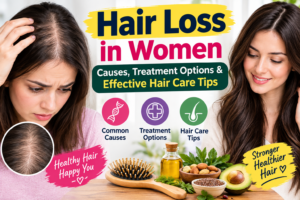

Hair loss in women is a common concern that can affect confidence, appearance, and overall quality of life. While losing a few hairs every day is completely normal, noticeable thinning, excessive shedding, widening of the hair part, or bald patches may indicate that something is affecting the normal hair growth cycle. Female hair loss can happen at almost any age and may have many different causes, including genetics, hormonal changes, nutritional deficiencies, stress, medical conditions, medications, and damaging hair-care practices.
The good news is that once the underlying cause is found, many types of hair loss in women can be treated. The cause of the hair loss, the duration of the issue, and the health of the hair follicles all influence the best course of action. The most prevalent causes of hair loss in women, available treatments, practical hair care advice, and when it’s crucial to consult a healthcare provider are all covered in this guide.
What Is Hair Loss in Women?
Hair loss refers to excessive shedding or a reduction in the amount of hair growing on the scalp. Normally, hair goes through a natural cycle that includes growth, transition, resting, and shedding. It is normal to lose some hair each day as older hairs naturally fall out and are replaced by new ones.
However, when more hairs go through the shedding phase than normal, when new hair growth is weaker, or when hair follicles are damaged, hair loss becomes more apparent. Women may experience small patches of hair loss, a wider part line, decreased hair density around the temples, or thinning throughout the scalp.
Hair loss may be transient or chronic. Determining the best course of action can be aided by early cause identification.
Common Causes of Hair Loss in Women
1. Genetic Hair Loss
One of the most common causes of female hair thinning is hereditary hair loss, sometimes called female pattern hair loss. Women with this condition often experience gradual thinning around the crown or a widening of the central part rather than complete baldness.
Genetics can influence how sensitive hair follicles are to certain hormones and how long individual hairs remain in the growth phase. Because this type of hair loss tends to develop gradually, women may not notice it immediately.
2. Hormonal Changes
Hormones can have a significant effect on hair growth. Hair shedding may occur during periods of hormonal change, including pregnancy, after childbirth, menopause, or changes in hormonal medication.
After giving birth, many women experience increased shedding several months later. This can happen because pregnancy hormones keep more hairs in the growth phase. When hormone levels change after delivery, those hairs may enter the shedding phase at approximately the same time.
3. Stress and Emotional Changes
Physical or emotional stress can sometimes trigger excessive hair shedding. Major illness, surgery, significant weight changes, emotional distress, or prolonged stress may disrupt the normal hair-growth cycle.
This type of shedding is often temporary. Hair growth may gradually return once the trigger is addressed, although the process can take several months.
4. Nutritional Deficiencies
Hair follicles require adequate nutrients to function normally. Low levels of certain nutrients, particularly iron, protein, zinc, vitamin D, or other vitamins and minerals, may contribute to hair shedding in some people.
Restrictive diets and rapid weight-loss programs can increase the risk of inadequate nutrition. If a nutritional deficiency is suspected, testing and professional guidance are preferable to taking high-dose supplements without knowing whether a deficiency exists.
5. Thyroid and Other Medical Conditions
Certain medical conditions can cause hair thinning or excessive shedding. Thyroid disorders are one example. Other conditions that affect hormones, immunity, or overall health may also influence hair growth.
Autoimmune conditions can sometimes cause clearly defined patches of hair loss. Because different medical conditions can look similar at first, persistent or unusual hair loss should be evaluated by a healthcare professional.
6. Polycystic Ovary Syndrome and Hormonal Imbalances
Hormonal disorders may be associated with scalp hair thinning in some women. For example, polycystic ovary syndrome, commonly known as PCOS, can be associated with hormonal changes and increased androgen activity.
Women experiencing hair thinning together with symptoms such as irregular menstrual cycles, increased facial or body hair, or persistent acne may benefit from discussing these symptoms with a healthcare professional.
7. Tight Hairstyles
Repeatedly wearing tight ponytails, buns, braids, extensions, or other hairstyles that pull strongly on the roots can damage hair follicles over time. This type of hair loss is known as traction alopecia.
Reducing tension and giving the scalp regular breaks from tight hairstyles may help prevent additional damage. Early attention is particularly important because prolonged traction can potentially cause permanent follicle damage.
8. Chemical and Heat Damage
Frequent coloring, bleaching, straightening, perming, and excessive heat styling can weaken the hair shaft. Although these practices do not always directly cause hair loss from the follicle, they can increase breakage and make hair appear much thinner.
Using lower heat settings, limiting chemical treatments, and handling wet hair gently can reduce unnecessary damage.
Symptoms to Watch For
Hair loss can appear in different ways. Common signs include:
- Noticeably increased hair shedding
- Thinning around the crown
- A widening hair part
- Reduced hair density near the temples
- More scalp becoming visible
- Hair breaking easily
- Receding hairline
- Round or irregular bald patches
- Itching, redness, scaling, or pain on the scalp
Sudden hair loss, rapidly developing bald patches, or hair loss accompanied by scalp inflammation deserves professional attention.
Hair Loss Treatment Options for Women
Treatment depends on the underlying cause. There is no single hair-loss treatment that works for every woman.
Minoxidil
Topical minoxidil is one of the commonly used treatments for certain types of female pattern hair loss. It may help slow hair loss and encourage hair growth in some women.
Because results vary and treatment needs to be continued to maintain benefits, it is important to discuss appropriate use with a healthcare professional or pharmacist. Possible side effects can include scalp irritation and unwanted facial hair.
Treating Nutritional Deficiencies
If testing confirms a deficiency, correcting it may help improve hair shedding. For example, women with iron deficiency may require treatment recommended by their healthcare professional.
It is generally better to identify a deficiency before taking high-dose supplements. Excessive intake of certain nutrients can also cause health problems.
Managing Hormonal or Medical Causes
When hair loss is related to a hormonal condition, thyroid problem, medication, or another medical issue, treating the underlying condition may help reduce shedding.
A healthcare professional may ask about your medical history, medications, menstrual cycle, recent illness, diet, stress, and family history. Blood tests may sometimes be recommended depending on the symptoms.
Prescription Treatments
Some women with specific types of hair loss may be candidates for prescription medications. These treatments can have important side effects or may not be appropriate during pregnancy, so they should only be used under professional guidance.
Effective Hair Care Tips to Reduce Hair Damage
Healthy hair care cannot treat every medical cause of hair loss, but it can help minimize breakage and protect existing hair.
Choose a Gentle Shampoo
Use a shampoo that suits your scalp and avoid excessive scrubbing. If your scalp is sensitive or dry, a gentle formula may be more comfortable.
Condition Your Hair Regularly
Conditioner can help reduce friction and make hair easier to comb. Apply it mainly to the lengths and ends if your scalp becomes oily easily.
Avoid Excessive Heat
Frequent use of flat irons, curling irons, and high-temperature blow dryers can weaken hair. When possible, use lower temperatures and reduce the frequency of heat styling.
Be Gentle With Wet Hair
Wet hair is more vulnerable to stretching and breakage. Avoid aggressive towel rubbing and use a wide-tooth comb when detangling.
Avoid Very Tight Hairstyles
Choose loose hairstyles whenever possible. If a hairstyle causes pain or a pulling sensation on the scalp, it is probably too tight.
Protect Hair From Excessive Chemical Treatments
Repeated bleaching, relaxing, and permanent straightening can weaken the hair shaft. Spacing out chemical treatments can reduce cumulative damage.
Eat a Balanced Diet
A balanced diet containing adequate protein, vegetables, fruits, whole grains, and healthy fats supports overall health and provides nutrients needed for normal hair growth.
Can Hair Loss in Women Be Prevented?
Not every type of hair loss can be prevented, especially hereditary or medically related hair loss. However, women can reduce avoidable hair damage by maintaining a balanced diet, avoiding extreme dieting, treating scalp problems, reducing excessive heat and chemical treatments, and avoiding hairstyles that constantly pull on the hair.
Managing stress and getting adequate sleep may also support overall well-being, although lifestyle changes alone cannot cure every type of hair loss.
When Should You See a Doctor?
It is a good idea to seek professional advice if hair loss is sudden, severe, persistent, or accompanied by other symptoms.
You should consider an evaluation if you notice:
- Sudden or rapid hair loss
- Bald patches
- Significant scalp itching, redness, pain, or scaling
- Hair loss after starting a medication
- Hair loss together with fatigue or other unexplained symptoms
- Hair thinning combined with menstrual or hormonal changes
- Hair loss that continues for several months without improvement
A dermatologist or other healthcare professional can help determine whether the problem is related to genetics, hormones, nutrition, scalp conditions, medications, or another cause.
Frequently Asked Questions About Hair Loss in Women
What is the most common cause of hair loss in women?
Hereditary female pattern hair loss is a common cause of gradual thinning. However, stress, hormonal changes, nutritional deficiencies, medical conditions, and hair-care practices can also contribute.
Can stress cause hair loss?
Yes. Significant physical or emotional stress can trigger increased shedding in some women. The shedding may occur weeks or months after the stressful event and can improve after the underlying trigger is resolved.
Does cutting hair reduce hair loss?
Cutting the hair does not stop hair loss from the follicle. However, trimming damaged ends may make the hair look healthier and can reduce the appearance of split ends and breakage.
Can hair grow back after hair loss?
Hair regrowth depends on the cause. Temporary shedding may improve when the underlying trigger is resolved, while some forms of hereditary or scarring hair loss may require medical treatment.
Final Thoughts
Hair loss in women can have many different causes, and understanding the reason behind the shedding is an important first step toward effective management. Genetics, hormonal changes, stress, nutritional deficiencies, medical conditions, medications, tight hairstyles, and chemical or heat damage can all play a role.
Existing hair can be preserved with a mild hair-care regimen, a balanced diet, less exposure to heat and chemicals, and avoiding tight haircuts. A professional evaluation is crucial when hair loss is severe, abrupt, persistent, or accompanied by other symptoms.
Women should concentrate on determining the underlying problem and selecting a suitable treatment rather than depending on a single “miracle” cure. Many types of hair shedding can be controlled with prompt examination and regular care, and certain types of hair loss may get better with the right care.