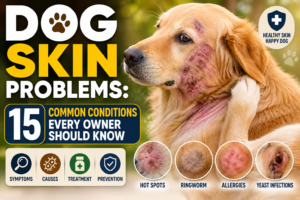

Your dog’s skin is one of the biggest indicators of its overall health. Healthy skin should be soft, clean, and free from redness, excessive scratching, or unusual bumps. Unfortunately, dog skin problems are among the most common reasons pet owners visit veterinarians.
Skin issues can range from mild allergies to serious infections and autoimmune diseases. Some conditions are easy to treat at home, while others require immediate veterinary care.
In this comprehensive guide, you’ll learn about the 15 most common dog skin conditions, their symptoms, possible causes, treatment options, and prevention tips to help keep your furry companion healthy.
Why Do Dogs Develop Skin Problems?
Many different factors can affect a dog’s skin health.
Common causes include:
- Fleas and ticks
- Food allergies
- Environmental allergies
- Bacterial infections
- Fungal infections
- Parasites
- Hormonal disorders
- Poor nutrition
- Stress
- Genetics
Early diagnosis is important because untreated skin conditions can quickly become painful and infected.
Signs Your Dog Has a Skin Problem
Watch for these common symptoms:
- Constant scratching
- Licking paws excessively
- Red skin
- Hair loss
- Scabs
- Dry flakes
- Bad odor
- Bumps or lumps
- Open sores
- Thickened skin
- Oily coat
- Bleeding from scratching
If these symptoms continue for more than a few days, consult your veterinarian.
1. Flea Allergy Dermatitis (FAD)
One flea bite may seem harmless, but some dogs develop an allergic reaction to flea saliva.
Symptoms
- Severe itching
- Hair loss around the tail
- Red irritated skin
- Scabs
- Constant chewing
Causes
- Flea infestation
- Flea saliva allergy
Treatment
- Prescription flea medications
- Anti-itch medications
- Medicated shampoos
- Antibiotics if infection develops
Prevention
Use veterinarian-approved flea prevention all year.
2. Atopic Dermatitis (Environmental Allergies)
Environmental allergies are one of the leading causes of chronic itching.
Common allergens include:
- Grass
- Dust mites
- Mold
- Pollen
- Trees
Symptoms
- Itchy ears
- Paw licking
- Red belly
- Facial rubbing
- Recurring ear infections
Treatment
- Allergy medications
- Immunotherapy
- Omega-3 supplements
- Medicated baths
3. Food Allergies
Certain ingredients may trigger allergic skin reactions.
Common triggers include:
- Beef
- Chicken
- Dairy
- Eggs
- Wheat
- Soy
Symptoms
- Itchy skin year-round
- Ear infections
- Paw chewing
- Digestive upset
Treatment
A veterinarian usually recommends an elimination diet lasting 8–12 weeks.
4. Hot Spots (Acute Moist Dermatitis)
Hot spots appear suddenly and spread quickly.
They often result from:
- Flea bites
- Allergies
- Moisture trapped in fur
- Excessive licking
Symptoms
- Red moist patches
- Hair loss
- Pain
- Bad smell
Treatment
- Shaving around the area
- Cleaning with antiseptic
- Antibiotics
- Anti-inflammatory medication
5. Ringworm
Despite its name, ringworm is actually a fungal infection.
It is contagious to:
- Dogs
- Cats
- Humans
Symptoms
- Circular hair loss
- Dry flaky skin
- Broken hairs
- Mild itching
Treatment
- Antifungal shampoo
- Oral medication
- Cleaning bedding regularly
6. Mange
Mange is caused by microscopic mites.
Two common types include:
Demodectic Mange
Usually affects puppies or dogs with weakened immune systems.
Sarcoptic Mange
Highly contagious and extremely itchy.
Symptoms
- Severe scratching
- Hair loss
- Thick skin
- Crusty lesions
Treatment
- Prescription mite medications
- Medicated baths
- Treat all pets if contagious
7. Yeast Infections
Yeast naturally lives on dog skin but can overgrow.
Symptoms
- Greasy skin
- Brown discoloration
- Bad odor
- Constant licking
- Ear infections
Causes
- Allergies
- Moist skin
- Weak immune system
Treatment
- Antifungal medication
- Special shampoos
- Ear cleaning
8. Bacterial Skin Infection (Pyoderma)
Pyoderma often develops after allergies or excessive scratching.
Symptoms
- Pimples
- Pus-filled bumps
- Crusts
- Hair loss
- Red skin
Treatment
- Antibiotics
- Medicated shampoo
- Treat underlying allergies
FAQ
What is the most common skin problem in dogs?
Flea allergy dermatitis, environmental allergies, and bacterial skin infections are among the most common dog skin problems.
Can dog skin problems heal on their own?
Minor irritation may improve naturally, but persistent itching, sores, or infections require veterinary treatment.
What food helps improve dog skin?
Foods rich in omega-3 fatty acids, high-quality protein, zinc, and vitamin E help support healthy skin.
Are dog skin diseases contagious?
Some conditions like ringworm and sarcoptic mange are contagious, while allergies and hormonal conditions are not.
9. Seborrhea (Dandruff and Oily Skin)
Seborrhea is a skin disorder that causes excessive production of skin oils or flaky dandruff. It can be inherited or develop as a result of allergies, hormonal imbalances, or infections.
Symptoms
- White flakes (dandruff)
- Greasy or oily coat
- Strong unpleasant odor
- Thickened skin
- Itching
Treatment
Treatment depends on the underlying cause and may include:
- Medicated anti-seborrheic shampoos
- Omega-3 fatty acid supplements
- Prescription medications
- Treatment of allergies or hormonal diseases
Prevention
Regular grooming, a balanced diet, and routine veterinary checkups can help reduce flare-ups.
10. Dry Skin (Xerosis)
Dry skin is especially common during winter months or in dogs that eat poor-quality diets.
Symptoms
- Flaky skin
- Mild itching
- Dull coat
- Small cracks in the skin
- Excessive shedding
Causes
- Cold weather
- Indoor heating
- Poor nutrition
- Frequent bathing
- Low humidity
Treatment
- Moisturizing dog shampoos
- High-quality dog food
- Omega-3 supplements
- Fresh drinking water
Avoid using human lotions unless approved by your veterinarian.
11. Hives (Urticaria)
Hives are raised, swollen bumps caused by allergic reactions.
Common Triggers
- Bee stings
- Insect bites
- Vaccinations
- Medications
- Certain foods
- Plants
Symptoms
- Raised bumps
- Swollen face
- Puffy eyelids
- Sudden itching
- Redness
Treatment
Veterinarians may recommend:
- Antihistamines
- Corticosteroids
- Emergency treatment for severe allergic reactions
Seek immediate veterinary care if your dog has difficulty breathing or severe facial swelling.
12. Contact Dermatitis
Some dogs develop skin irritation after direct contact with certain substances.
Common Irritants
- Lawn chemicals
- Cleaning products
- Certain shampoos
- Rubber
- Plants
- Synthetic fabrics
Symptoms
- Red skin
- Rash
- Blisters
- Paw licking
- Itching
Treatment
- Remove the irritant
- Bathe the dog with a gentle shampoo
- Anti-inflammatory medications
- Antibiotics if infection develops
13. Autoimmune Skin Diseases
Although less common, autoimmune diseases can seriously affect a dog’s skin.
Examples include:
- Pemphigus
- Lupus
Symptoms
- Skin ulcers
- Crusting around the nose
- Footpad sores
- Hair loss
- Blisters
Treatment
These diseases usually require lifelong veterinary care with immune-suppressing medications and regular monitoring.
14. Hormonal Skin Disorders
Hormonal imbalances often affect skin and coat quality.
Common conditions include:
- Hypothyroidism
- Cushing’s disease
Symptoms
- Hair loss on both sides of the body
- Thin skin
- Darkened skin
- Slow hair regrowth
- Recurrent infections
Treatment
Treatment depends on the specific hormonal disorder and may include lifelong medication.
15. Skin Tumors and Lumps
Not every lump is cancer, but every new lump should be checked by a veterinarian.
Common Types
- Lipomas (fatty tumors)
- Sebaceous adenomas
- Mast cell tumors
- Melanomas
Warning Signs
- Rapid growth
- Bleeding
- Ulceration
- Pain
- Change in color or size
Treatment
Depending on the diagnosis, treatment may include:
- Surgical removal
- Biopsy
- Chemotherapy
- Radiation therapy
Early detection significantly improves treatment outcomes.
How to Prevent Dog Skin Problems
While not all skin conditions are preventable, these habits greatly reduce the risk:
- Use year-round flea and tick prevention.
- Feed a high-quality, balanced diet rich in essential nutrients.
- Brush your dog’s coat regularly to remove dirt and loose hair.
- Bathe only as needed with a dog-specific shampoo.
- Keep ears clean and dry.
- Wash bedding, blankets, and toys regularly.
- Maintain a healthy body weight.
- Schedule routine veterinary wellness exams.
- Avoid known allergens whenever possible.
- Check your dog’s skin weekly for lumps, redness, or parasites.
When Should You Visit a Veterinarian?
Contact your veterinarian if your dog has:
- Itching that lasts more than a few days
- Open wounds or bleeding skin
- A foul odor from the skin or ears
- Large patches of hair loss
- Pus or discharge
- Rapidly growing lumps
- Severe redness or swelling
- Fever or lethargy along with skin problems
- Difficulty breathing after an allergic reaction
Prompt treatment can prevent minor issues from becoming serious infections.
Frequently Asked Questions (FAQ)
What causes itchy skin in dogs?
The most common causes include allergies, fleas, mites, bacterial infections, yeast infections, and dry skin.
Can I use human shampoo on my dog?
No. Human shampoos have a different pH balance and can worsen irritation. Always use a shampoo formulated specifically for dogs.
Which dog breeds are more likely to develop skin problems?
Breeds such as Bulldogs, Golden Retrievers, Labrador Retrievers, German Shepherds, West Highland White Terriers, and Shar-Peis are more prone to skin conditions due to genetics.
Can diet improve my dog’s skin?
Yes. A nutritious diet rich in protein, omega-3 fatty acids, zinc, and vitamins A and E supports healthy skin and a shiny coat.
Final Thoughts
Skin problems are among the most common health concerns in dogs, but many are manageable with early diagnosis and proper care. By recognizing the signs of conditions such as allergies, hot spots, fungal infections, mange, seborrhea, hormonal disorders, and skin tumors, you can seek timely veterinary treatment and help your dog recover more quickly.
A healthy diet, regular grooming, parasite prevention, and routine veterinary checkups are the foundation of healthy skin. Paying close attention to changes in your dog’s coat or skin can make a significant difference in preventing discomfort and serious complications.