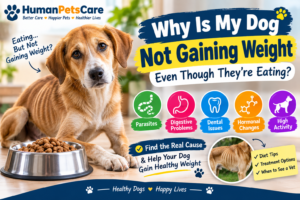

Why Is My Dog Not Gaining Weight Even Though They’re Eating?
If your dog is eating normally but still not gaining weight, it can be confusing and concerning. Many dog owners expect a healthy appetite to result in steady weight gain, but a dog not gaining weight despite eating can have several possible explanations.
While some dogs are naturally lean, others may require more calories due to their high levels of activity, youth, recuperation from illness, or quicker metabolisms. However, parasites, digestive issues, dental disease, or another underlying medical condition may occasionally be indicated by unexplained weight loss or an inability to maintain a healthy weight.
Understanding why your dog is not gaining weight is important because simply giving more food may not solve the problem. In this article, we will discuss the common causes of a dog not gaining weight, signs to watch for, feeding tips, possible treatments, and when to see a veterinarian.
What Does It Mean When a Dog Is Eating but Not Gaining Weight?
A dog that eats regularly but remains underweight may not be receiving enough usable calories, or their body may not be properly digesting or absorbing nutrients.
There is also a difference between a naturally slim dog and a dog that is losing weight unexpectedly.
A healthy dog’s ribs should generally be easy to feel but should not be extremely prominent. The abdomen should have a natural tuck when viewed from the side, and the dog’s overall body condition should be appropriate for their breed, age, and size.
If your dog’s ribs, spine, or hip bones are becoming increasingly visible, or if their body weight is decreasing without an obvious reason, it is worth discussing the change with a veterinarian.
10 Common Reasons Your Dog Is Not Gaining Weight
1. Your Dog May Not Be Eating Enough Calories
Sometimes a dog appears to eat a normal amount but is simply not consuming enough calories for their individual needs.
Calorie requirements can vary depending on:
- Age
- Breed
- Body size
- Activity level
- Metabolism
- Reproductive status
- Health condition
- Life stage
An energetic working dog may need considerably more energy than a less active adult dog.
If your dog eats small meals, leaves food behind, or receives a diet that is relatively low in calories, they may struggle to gain weight.
Instead of simply increasing food dramatically, ask your veterinarian how many calories your dog needs based on their body condition and lifestyle.
2. Intestinal Parasites
Intestinal parasites in dogs can interfere with normal nutrition and may contribute to poor weight gain.
Common intestinal parasites include roundworms, hookworms, whipworms, and tapeworms.
Depending on the parasite, symptoms may include:
- Weight loss
- Poor growth
- Diarrhea
- Vomiting
- A dull coat
- Increased hunger
- Weakness
- Abdominal discomfort
- Visible worms or worm segments in stool
Puppies are particularly vulnerable to some intestinal parasites.
If your dog is eating well but losing weight or failing to grow normally, your veterinarian may recommend a stool examination and appropriate parasite treatment.
3. Poor Digestion or Nutrient Absorption
A dog can eat enough food but still fail to gain weight if their digestive system cannot properly digest or absorb nutrients.
Digestive problems can sometimes cause:
- Weight loss
- Loose stools
- Frequent bowel movements
- Large amounts of stool
- Vomiting
- Gas
- Changes in appetite
Some dogs have conditions that affect pancreatic function or intestinal nutrient absorption.
For example, exocrine pancreatic insufficiency (EPI) can prevent a dog’s digestive system from properly processing certain nutrients. Dogs with EPI may have a good or increased appetite while continuing to lose weight.
A veterinarian can perform appropriate diagnostic tests when digestive disease is suspected.
4. Your Dog May Have Dental Problems
Dental pain can affect how much a dog eats and what foods they can comfortably consume.
A dog with dental disease may appear interested in food but struggle with eating normally.
Watch for:
- Bad breath
- Dropping food
- Chewing on one side
- Difficulty chewing
- Excessive drooling
- Red or swollen gums
- Pawing at the mouth
- Avoiding hard food
Some dogs hide dental pain surprisingly well.
If your dog seems hungry but has difficulty eating, have their mouth and teeth checked by a veterinarian.
5. Stress Can Affect Weight
Changes in the environment can affect a dog’s appetite, digestion, and body condition.
Stress may occur after:
- Moving to a new home
- Introducing another pet
- Major changes in routine
- Boarding
- Loud noises
- Separation from a family member
- Changes in feeding location
Some stressed dogs eat less, while others may continue eating but experience digestive changes.
Providing a consistent routine, quiet feeding area, exercise, and positive interaction may help. Persistent weight problems should still be evaluated medically rather than automatically attributed to stress.
6. Your Dog May Be Extremely Active
Highly active dogs burn a lot of energy.
Dogs that regularly run, hike, work, compete in sports, or spend many hours exercising may require more calories than typical companion dogs.
If your dog’s activity has increased but their food intake has remained unchanged, they may gradually become leaner.
Your veterinarian can help determine whether your dog’s diet provides enough energy for their activity level.
7. Underlying Medical Conditions
Sometimes unexplained weight loss in dogs is a symptom of an underlying medical condition.
Potential causes can include problems involving the:
- Digestive system
- Pancreas
- Liver
- Kidneys
- Heart
- Hormonal system
- Intestinal tract
- Immune system
Older dogs may be particularly vulnerable to certain chronic diseases.
A dog that continues losing weight despite eating normally should receive a veterinary assessment rather than simply being given larger meals.
8. Food Quality or Diet Imbalance
The amount of food is not the only important factor. The nutritional quality and calorie density of the diet matter as well.
A complete and balanced commercial dog food formulated for your dog’s life stage can provide the nutrients needed for normal health.
If you prepare homemade meals for your dog, make sure the diet has been properly formulated to meet canine nutritional requirements. Simply adding meat, rice, or other individual foods may not provide all essential nutrients.
9. Your Dog Is Still Growing
Puppies have different nutritional requirements from adult dogs.
During growth, puppies use significant amounts of energy and nutrients to develop their muscles, bones, organs, and immune system.
A puppy that is not gaining weight appropriately should not simply be fed unlimited food. Rapid or excessive growth can also be unhealthy, particularly in large-breed puppies.
Regular weight checks and veterinary guidance can help ensure that a puppy is growing at an appropriate rate.
10. Your Dog May Have a Naturally Lean Body Type
Not every slim dog is underweight.
Some breeds naturally have athletic, lean body structures. Greyhounds, Whippets, and other sighthounds, for example, may appear much thinner than breeds with heavier builds.
Instead of judging your dog’s health only by appearance, consider their body condition score, muscle mass, energy level, appetite, stool quality, and overall health.
Your veterinarian can help determine whether your dog’s weight is actually too low.
Signs Your Dog May Be Underweight
Knowing the difference between a healthy lean dog and an underweight dog is important.
Possible signs of being underweight include:
- Ribs that are very prominent
- Visible spine or hip bones
- Loss of muscle
- Very little body fat
- Sunken appearance around the abdomen
- Dull coat
- Low energy
- Weakness
- Unexplained weight loss
If your dog is losing weight despite maintaining their normal appetite, this deserves attention.
How to Help a Dog Gain Weight Safely
If your veterinarian determines that your dog needs to gain weight, the goal should be healthy weight gain, not simply adding large amounts of food.
1. Choose an Appropriate Diet
Your veterinarian may recommend a nutritionally complete diet with an appropriate calorie density.
The best food depends on your dog’s age, size, health, activity level, and underlying condition.
2. Feed Smaller, Frequent Meals
Some dogs may tolerate several smaller meals better than one or two very large meals.
For dogs with certain digestive problems, meal frequency may be especially important.
Discuss an appropriate feeding schedule with your veterinarian.
3. Measure Food Accurately
Use a measuring cup or kitchen scale rather than estimating portions.
Small differences in daily food intake can add up over time.
Keep track of how much your dog actually eats.
4. Monitor Body Weight
Regular weighing can help you determine whether your dog’s weight is changing.
Try to weigh your dog under similar conditions each time.
For larger dogs, your veterinarian may recommend a specific monitoring schedule.
5. Avoid Excessive Treats
Treats can add calories, but they should not replace a complete and balanced diet.
Too many treats can also reduce appetite for normal meals or create nutritional imbalance.
6. Do Not Use Random Supplements
Weight-gain supplements are not always necessary and may sometimes be inappropriate for dogs with certain medical conditions.
Do not give your dog human nutritional supplements or appetite stimulants unless recommended by a veterinarian.
What Should I Feed My Dog to Gain Weight?
The best food for weight gain depends on why your dog is underweight.
A dog with a healthy digestive system may simply need a nutritionally complete, calorie-dense diet with an appropriate amount of protein and fat.
However, a dog with pancreatitis, digestive disease, kidney problems, allergies, or another medical condition may require a very different diet.
This is why there is no single “best weight-gain food” for every dog.
Before changing your dog’s diet significantly, consult your veterinarian.
When Should You See a Vet?
A veterinary appointment is particularly important if your dog is losing weight without an obvious explanation.
See a veterinarian if your dog:
- Is losing weight despite eating
- Has persistent diarrhea
- Vomits repeatedly
- Has an increased or decreased appetite
- Drinks much more water than usual
- Urinates more frequently
- Has a swollen or painful abdomen
- Has persistent weakness
- Has a dull coat
- Has blood in the stool
- Has difficulty eating
- Is losing muscle
- Is a puppy that is not growing normally
Sudden or severe weight loss should be evaluated promptly.
If your dog is extremely weak, collapses, has difficulty breathing, repeatedly vomits, or appears seriously ill, seek urgent veterinary care.
What Will a Veterinarian Check?
A veterinarian may begin with a physical examination and review your dog’s diet, appetite, activity level, stool, medical history, and weight changes.
Depending on the situation, testing may include:
- Fecal examination for parasites
- Blood tests
- Urine testing
- Dental examination
- Imaging
- Pancreatic testing
- Additional gastrointestinal tests
These tests can help determine whether the problem is nutritional, digestive, infectious, hormonal, or related to another health condition.
Why Is My Dog Losing Weight but Still Eating Normally?
This is an especially important question.
A normal or increased appetite does not always mean that a dog is healthy.
If your dog is eating normally but continuing to lose weight, possible explanations include inadequate calorie intake, parasites, poor nutrient absorption, pancreatic disease, increased energy requirements, or certain metabolic conditions.
The combination of weight loss plus normal or increased appetite is a good reason to schedule a veterinary examination.
How to Monitor Your Dog’s Weight at Home
Keeping track of your dog’s weight can help you notice changes early.
Create a simple record of:
- Date
- Body weight
- Daily food amount
- Treats
- Appetite
- Stool consistency
- Activity level
- Other symptoms
Take note of gradual changes rather than relying only on appearance.
If you notice a consistent downward trend, share the information with your veterinarian.
Frequently Asked Questions
Why is my dog not gaining weight even though they eat a lot?
Possible reasons include high activity levels, inadequate calorie intake, parasites, digestive problems, poor nutrient absorption, or an underlying medical condition. A veterinarian can help identify the cause.
How can I make my skinny dog gain weight?
First determine why your dog is underweight. If your veterinarian confirms that additional calories are appropriate, they may recommend a nutritionally complete, calorie-dense diet and an appropriate feeding schedule.
Should I give my dog more food if they are underweight?
Not necessarily. Simply increasing food may not solve the problem if an illness or digestive disorder is preventing normal weight gain. Ask your veterinarian before making major dietary changes.
Can worms make a dog lose weight?
Yes. Certain intestinal parasites can contribute to poor growth, weight loss, diarrhea, or other digestive symptoms. A veterinarian can recommend appropriate testing and treatment.
Why is my dog eating but getting thinner?
Weight loss despite eating can have several causes, including insufficient calories, parasites, digestive problems, nutrient malabsorption, increased energy requirements, and certain diseases. Persistent unexplained weight loss should be checked by a veterinarian.
Is rice good for helping a dog gain weight?
Rice can provide carbohydrates and calories, but feeding rice alone is not a balanced diet for a dog. If your dog needs to gain weight, a complete and balanced diet appropriate for their condition is generally more suitable.
How quickly should an underweight dog gain weight?
The appropriate rate depends on the dog’s age, size, health, and reason for being underweight. Healthy weight gain should be gradual and monitored rather than forced through excessive feeding.
Final Thoughts
If your dog is not gaining weight even though they are eating, do not assume that they simply need more food. Some dogs naturally have a lean body type, but unexplained weight loss or poor weight gain can also be associated with parasites, dental problems, digestive disorders, inadequate calories, high activity levels, or underlying medical conditions.
Start by keeping an eye on your dog’s general behavior, activity level, stool, appetite, and weight. Ensure they are eating a healthy, well-balanced diet suitable for their stage of life.
Make an appointment for a veterinary examination if your dog keeps losing weight, exhibits symptoms like vomiting, diarrhea, weakness, excessive thirst, or difficulty eating, or has a normal or increased appetite but is still extremely thin.
Finding the underlying cause and then developing a suitable diet and treatment plan under veterinary supervision is the safest way to assist an underweight dog in gaining weight.