
Introduction
One of the most significant and obvious characteristics of a dog is its nose. Dogs use their noses to communicate, detect smells, investigate their surroundings, and comprehend the world. As a result, alterations in your dog’s nose may occasionally indicate a problem.
Certain changes to the nose are perfectly normal. For instance, after sleeping or spending time in a warm environment, a dog’s nose may become momentarily dry. Persistent dryness, crusting, bleeding, discharge, sores, swelling, or color changes, however, might point to a deeper issue.
Dog nose issues can range from minor irritation and allergies to infections and more serious conditions.
We’ll go over five common dog nose issues in this guide, along with their causes, symptoms, available treatments, and when your dog should see a vet.
What Should a Healthy Dog’s Nose Look Like?
Every healthy dog’s nose doesn’t have to look the same.
A healthy nose can be black, brown, pink, or a combination of these colors, depending on the breed and specific dog. While some dogs may undergo typical seasonal or age-related pigmentation changes, others may naturally have lighter noses.
A healthy dog’s nose is usually a little wet, but a dog’s health is not always indicated by a wet nose, and a dog’s health is not always indicated by a dry nose.
Pay attention to changes that are out of the ordinary for your particular dog rather than just moisture.
Signs that deserve attention include:
- Persistent crusting
- Sores or ulcers
- Swelling
- Frequent sneezing
- Thick nasal discharge
- Blood from the nose
- Difficulty breathing
- Pain or sensitivity
- Loss of appetite or energy
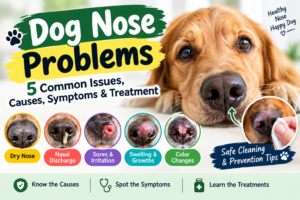
5 Common Dog Nose Problems
1. Dry or Crusty Dog Nose
One of the most frequent worries among pet owners is a dry dog’s nose.
Because they are not licking their noses while they sleep, dogs may experience momentary dry noses. Temporary dryness can also be caused by wind, dehydration, cold weather, warm indoor air, and environmental factors.
On the other hand, a nose that is still very dry, cracked, thickened, or crusty might require veterinary care.
Common causes
Possible causes include:
- Dry environmental conditions
- Cold or windy weather
- Dehydration
- Excessive sun exposure
- Allergies
- Skin irritation
- Certain skin disorders
- Autoimmune conditions
Symptoms to watch for
Mild dryness may simply make the nose feel less moist than usual. More concerning signs include:
- Deep cracks
- Bleeding
- Thick crusts
- Redness
- Swelling
- Pain
- Sores
Treatment
Treatment depends on the underlying cause.
Make sure your dog always has access to fresh water and avoid exposing the nose to unnecessary irritants. Do not apply human creams, sunscreen, essential oils, or medicated products unless your veterinarian says they are safe for dogs.
If dryness persists or the skin becomes cracked or painful, schedule a veterinary examination.
2. Dog Nose Infection
A dog nose infection can affect the nasal passages or surrounding tissues. Respiratory infections can sometimes cause nasal discharge, sneezing, coughing, or changes in breathing.
Not every case of nasal discharge means your dog has a bacterial infection. Viral infections, allergies, foreign objects, dental disease, and other problems can produce similar symptoms.
Common symptoms
Watch for:
- Frequent sneezing
- Runny nose
- Thick or colored discharge
- Nasal congestion
- Coughing
- Reduced appetite
- Low energy
- Noisy breathing
If discharge comes from only one nostril, a foreign object or localized problem may sometimes be involved.
Treatment
The cause determines the course of treatment. Your dog’s nose, mouth, teeth, and respiratory system may all be examined by your veterinarian, who may also suggest further testing if needed.
Since many respiratory issues are not caused by bacteria, antibiotics should not be administered without consulting a veterinarian.
See a veterinarian right away if your dog is having breathing problems.
3. Dog Nose Allergies and Irritation
Dogs can develop allergies or irritation after exposure to substances in their environment.
Potential triggers include pollen, dust, mold, smoke, fragrances, cleaning products, and other airborne irritants.
Allergies may affect different parts of the body, so a dog with nasal irritation may also have itchy skin, watery eyes, or frequent sneezing.
Possible symptoms
- Sneezing
- Runny nose
- Watery eyes
- Nose rubbing
- Face rubbing
- Itchy skin
- Redness
- Excessive licking
Some dogs may rub their face against furniture or the floor because their nose or face feels irritated.
Treatment
The most effective treatment depends on identifying the trigger.
Try to reduce exposure to obvious irritants such as smoke, strong fragrances, and harsh cleaning products. Keep your dog’s living area clean and well ventilated.
If symptoms continue, your veterinarian can determine whether allergies or another condition may be responsible.
Never give your dog human allergy medication unless your veterinarian specifically recommends the product and dose.
4. Nasal Discharge, Sneezing, or Nosebleeds
Nasal discharge is another common dog nose problem.
A small amount of clear discharge may occur occasionally, particularly with mild irritation. However, persistent or unusual discharge deserves attention.
The appearance of the discharge can provide clues, although it cannot diagnose the cause by itself.
Clear discharge
Clear discharge may occur with mild irritation, allergies, excitement, or some respiratory illnesses.
Thick or cloudy discharge
Thicker discharge may occur with infection or inflammation.
Blood from the nose
Nosebleeds can occur for several reasons, including trauma, irritation, foreign objects, nasal disease, or problems affecting blood clotting.
A recurring nosebleed should always be evaluated by a veterinarian.
What to do
If your dog has mild nasal discharge but is otherwise acting normally, monitor the symptoms closely.
However, contact your veterinarian if discharge persists, becomes heavy, contains blood, comes mainly from one nostril, or is accompanied by coughing, lethargy, appetite loss, or breathing difficulties.
5. Nose Sores, Swelling, or Growths
Sores, lumps, swelling, or unusual growths on or around a dog’s nose should not be ignored.
Some changes may be caused by minor trauma or irritation, while others can be related to infections, inflammatory conditions, dental problems, or abnormal tissue growth.
Signs that need attention include:
- A lump that continues growing
- A sore that does not heal
- Persistent bleeding
- Crusting
- Ulceration
- Facial swelling
- Pain
- Changes in the nose’s shape
- Difficulty eating or breathing
A veterinarian may need to examine the area closely to determine the cause.
Do not squeeze, cut, or attempt to remove a growth at home.
Why Is My Dog’s Nose Changing Color?
Some dogs naturally experience changes in nose pigmentation.
Seasonal changes can cause a dog’s nose to become lighter in some cases. Age, genetics, and breed can also influence nose color.
However, a sudden or unusual change accompanied by sores, inflammation, hair loss, or crusting should be evaluated.
Do not use human skin-lightening products or other cosmetic treatments on your dog’s nose.
How to Keep Your Dog’s Nose Healthy
You can support your dog’s overall nose health with a few simple habits.
Provide Fresh Water
Make sure clean drinking water is available throughout the day. Adequate hydration supports normal body function.
Avoid Irritants
Keep your dog away from cigarette smoke, strong fragrances, harsh cleaning chemicals, and other airborne irritants whenever possible.
Check the Nose Regularly
During grooming, take a few seconds to look at your dog’s nose.
Look for:
- Cracks
- Crusts
- Swelling
- Discharge
- Sores
- Bleeding
- Unusual color changes
Early recognition can make it easier to address problems.
Protect the Nose From Excessive Sun
Dogs with light-colored or sparsely pigmented noses may be more vulnerable to sun-related damage.
Ask your veterinarian about appropriate sun protection rather than using a human sunscreen without checking its safety for dogs.
Maintain Good Dental Health
Dental disease can sometimes contribute to nasal symptoms, particularly when problems affect structures near the nasal passages.
Regular dental care and veterinary examinations can help support both oral and overall health.
Can You Put Coconut Oil or Other Home Remedies on a Dog’s Nose?
Pet owners often search for home remedies for a dry dog nose, including coconut oil, petroleum jelly, or other moisturizers.
Although some products may be appropriate in specific situations, not every household product is safe for dogs. Dogs can lick anything applied to their noses, and some ingredients may cause gastrointestinal upset or skin irritation.
Before applying a product to your dog’s nose, ask your veterinarian whether it is appropriate.
Avoid essential oils, medicated human creams, and products containing potentially harmful ingredients.
When Should You Take Your Dog to the Vet?
Not every nose change requires an emergency visit, but certain symptoms should be evaluated promptly.
Contact your veterinarian if your dog has:
- Persistent nasal discharge
- Repeated nosebleeds
- A nose that is severely cracked or bleeding
- A persistent sore
- Swelling around the nose or face
- A growing lump
- Difficulty breathing
- Severe or repeated sneezing
- Loss of appetite
- Unusual tiredness
- Pain when the nose or face is touched
- A sudden major change in nose appearance
Emergency signs
Difficulty breathing, heavy bleeding, severe facial swelling, collapse, or significant weakness can require urgent veterinary attention.
Do not wait for a minor nose problem to resolve if your dog is struggling to breathe.
Frequently Asked Questions About Dog Nose Problems
Why is my dog’s nose dry?
A dog’s nose can become temporarily dry after sleeping, during dry weather, or because of environmental conditions. Persistent dryness, cracking, crusting, bleeding, or pain should be checked by a veterinarian.
Is a dry dog nose a sign of illness?
Not necessarily. Nose moisture naturally changes throughout the day. A dry nose alone does not prove that a dog is sick. Look for other symptoms and changes from your dog’s normal condition.
Why does my dog have a runny nose?
A runny nose can result from mild irritation, allergies, respiratory infections, foreign material, or other conditions. Persistent, thick, bloody, or one-sided discharge should be evaluated by a veterinarian.
Can I use human moisturizer on my dog’s nose?
It is better not to use human skincare products without veterinary guidance. Dogs may lick products from their noses, and some ingredients may be irritating or unsafe if swallowed.
Why is my dog’s nose changing color?
Nose color can naturally vary because of genetics, age, and seasonal changes. If the color change occurs with sores, crusting, swelling, or other skin changes, veterinary evaluation is recommended.
How can I keep my dog’s nose healthy?
Provide fresh water, reduce exposure to irritants, maintain good dental and general health, monitor the nose regularly, and seek veterinary care when you notice persistent or unusual changes.
Final Thoughts
Dog nose issues can include infections, allergies, nasal irritation, sores, and other medical conditions in addition to simple transient dryness. While persistent changes shouldn’t be disregarded, a dry nose by itself is not always cause for concern.
Keep an eye out for symptoms like discharge, bleeding, swelling, crusting, sores, frequent sneezing, or breathing issues in addition to the normal appearance of your dog’s nose.
Do not apply human skincare products or haphazard home remedies to your dog’s nose without first consulting a veterinarian. A veterinarian can assist in determining the underlying cause and suggesting the best course of action if a nose issue continues, becomes painful, or is accompanied by additional symptoms of illness.
Instead of evaluating your dog’s health solely on the basis of whether or not its nose is wet, it is crucial to consider the whole picture.