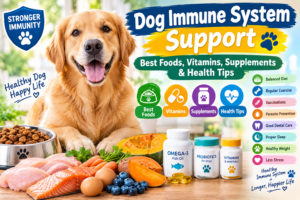

Dog Immune System Support: Best Foods, Vitamins, Supplements & Health Tips
A healthy immune system is essential for every dog. It helps the body defend against infections, recover from illness, heal wounds, and maintain overall health. While there is no single food or supplement that can make a dog’s immune system instantly stronger, a balanced diet, regular veterinary care, exercise, good hygiene, proper sleep, and a healthy weight can all support normal immune function.
Additionally, a lot of dog owners question the necessity of vitamins or immune-boosting supplements. A complete and balanced diet gives the majority of healthy dogs the vital nutrients they require. While supplements may be useful in some circumstances, administering excessive amounts of vitamins without consulting a veterinarian can occasionally result in health issues.
The best foods to support your dog’s immune system, essential vitamins and minerals, possible supplements, healthy lifestyle choices, and warning signs that your dog might require veterinary care are all covered in this guide..
What Does the Dog Immune System Do?
The immune system is a complex network of cells, tissues, organs, and biological processes that helps protect your dog from harmful bacteria, viruses, parasites, and other threats.
A healthy immune system can help your dog:
- Fight infections
- Recover from illness
- Heal wounds
- Maintain healthy skin
- Support normal digestion
- Respond appropriately to inflammation
- Protect the body from harmful organisms
The immune system is closely connected with other parts of the body, particularly the digestive system. A healthy gut and a nutritionally complete diet can therefore play an important role in overall immune health.
Best Foods for Dog Immune System Support
Food should be the foundation of your dog’s nutrition. Instead of relying heavily on supplements, focus first on feeding a complete and balanced dog food that is appropriate for your pet’s age, size, activity level, and health needs.
1. High-Quality Protein
Protein provides amino acids that dogs need for maintaining muscles, tissues, enzymes, hormones, and immune-related functions.
Good protein sources may include:
- Chicken
- Turkey
- Beef
- Fish
- Eggs
- Lamb
- Commercially prepared complete dog foods containing quality animal or plant protein
Cooked lean meat can sometimes be used as a small treat or food topper, but it should not replace a complete and balanced diet unless the diet has been formulated for your dog by a qualified veterinary nutrition professional.
2. Fatty Fish
Fish such as salmon, sardines, and other oily fish provide omega-3 fatty acids. These fats are important for normal skin, coat, and inflammatory processes.
If you feed fish to your dog, it should be properly prepared and free from harmful seasonings, excessive salt, and cooked bones.
Some commercial dog foods already contain fish oil or fish-based ingredients, so additional supplementation may not be necessary.
3. Eggs
Plain, fully cooked eggs can provide protein and several nutrients. They can be offered as an occasional treat for dogs that tolerate them well.
Avoid feeding raw eggs regularly because of food-safety concerns and the potential for digestive problems.
4. Pumpkin
Plain pumpkin is a source of fiber and may be useful for digestive support in some dogs.
However, pumpkin should be offered in moderation and should not contain added sugar, spices, salt, or artificial ingredients.
Since digestive health and immune function are connected, maintaining regular and healthy digestion can be beneficial as part of an overall wellness plan.
5. Carrots
Carrots provide fiber and nutrients and can make a convenient low-calorie treat for many dogs.
Serve them plain and cut into an appropriate size to reduce choking risk.
6. Blueberries
Blueberries contain naturally occurring antioxidants and can be given as a small treat to dogs that tolerate them.
Treats, including fruits and vegetables, should remain a relatively small part of the daily diet rather than replacing nutritionally complete dog food.
7. Sweet Potatoes
Plain, cooked sweet potato can provide carbohydrates and fiber. Remove the skin if appropriate, cook it thoroughly, and avoid butter, salt, sugar, or seasoning.
Portion size matters because excessive treats or high-calorie foods can contribute to weight gain.
Important Vitamins for Dogs
Vitamins are essential nutrients, but more is not always better. Dogs require vitamins in appropriate amounts, and a complete commercial diet should generally provide the nutrients they need.
Vitamin A
Vitamin A supports normal vision, skin, reproductive function, and immune processes.
Dogs can obtain vitamin A through properly formulated diets containing appropriate animal and plant ingredients.
Too much vitamin A from unnecessary supplementation can be harmful, so avoid giving high-dose vitamin A products without veterinary guidance.
Vitamin C
Dogs can produce vitamin C in their bodies, so routine vitamin C supplementation is not usually necessary for healthy dogs.
Some supplements contain vitamin C as an antioxidant, but adding it to a dog’s diet should be discussed with a veterinarian, particularly if your dog has an underlying health condition.
Vitamin E
Vitamin E is an antioxidant that helps protect cells from oxidative damage and supports normal immune function.
It is naturally present in some foods and is also included in many complete dog foods.
Vitamin D
Vitamin D is important for calcium metabolism, bones, muscles, and other body functions.
Unlike humans, dogs should not be given vitamin D supplements casually. Excessive vitamin D can be toxic.
B Vitamins
B vitamins support energy metabolism, nervous-system function, and several other normal biological processes.
A complete and balanced dog food generally provides appropriate amounts of these vitamins.
Minerals That Support Overall Health
Minerals are also important for normal immune and body function.
Zinc
Zinc supports skin health, wound healing, immune function, and many cellular processes.
Dogs with certain nutritional deficiencies may require supplementation, but excessive zinc can cause serious problems.
Selenium
Selenium works with antioxidant systems in the body and contributes to normal immune function.
Only appropriate amounts are needed, making balanced nutrition particularly important.
Iron
Iron is necessary for healthy red blood cells and oxygen transport. However, iron supplementation should not be given simply because a dog seems tired.
If anemia is suspected, veterinary testing is necessary to determine the cause.
Best Supplements for Dog Immune System Support
Supplements can be useful for some dogs, but they should not replace proper nutrition or veterinary treatment.
Omega-3 Fish Oil
Fish oil containing EPA and DHA is commonly used to support skin, coat, and healthy inflammatory responses.
The correct dose depends on the product and the dog’s size and health. Too much can cause digestive problems and may not be appropriate for every dog.
Probiotics
Probiotics contain beneficial microorganisms that may support digestive health.
Some dogs may benefit from probiotics during certain digestive problems or after particular medications, but products vary considerably. Choose a dog-specific product and ask your veterinarian which option is appropriate.
Veterinary Multivitamins
A multivitamin may be considered when a veterinarian identifies a nutritional need.
Healthy dogs eating a complete and balanced diet generally do not need large amounts of additional vitamins.
Antioxidant Supplements
Some veterinary products contain combinations of antioxidants such as vitamin E and other nutrients.
Whether a supplement is useful depends on your dog’s age, diet, health condition, and veterinary assessment.
Are Immune-Boosting Supplements Necessary for Dogs?
Not necessarily.
The phrase “immune booster” is often used in supplement marketing, but supporting immune health is more complicated than giving a single product.
For most healthy dogs, the foundation should be:
- Complete and balanced nutrition
- Appropriate body weight
- Regular exercise
- Routine veterinary examinations
- Recommended vaccinations
- Parasite prevention
- Good dental care
- Adequate rest
- Clean drinking water
- A low-stress living environment
Supplements can complement these habits when there is a specific reason to use them.
How Exercise Supports Your Dog’s Health
Regular physical activity helps dogs maintain healthy muscles, joints, circulation, and body weight.
Exercise requirements vary depending on:
- Age
- Breed
- Size
- Fitness level
- Medical conditions
- Individual temperament
Daily walks, interactive play, supervised outdoor activities, and mentally stimulating games can all contribute to overall wellness.
Avoid suddenly increasing exercise in an unfit dog. Build activity gradually and provide plenty of fresh water.
Maintain a Healthy Weight
Being overweight can negatively affect many aspects of a dog’s health.
A healthy body condition can support:
- Mobility
- Heart health
- Metabolic health
- Joint function
- Energy levels
- General quality of life
If your dog is overweight, avoid crash diets or severe food restriction. Your veterinarian can help create a safe weight-management plan.
Vaccinations and Parasite Prevention
Vaccination is one of the most important ways to protect dogs from serious infectious diseases.
Vaccination schedules vary according to age, lifestyle, location, and individual risk.
Parasite prevention is also important. Fleas, ticks, intestinal parasites, and other parasites can affect a dog’s health and may cause significant problems if left untreated.
Speak with your veterinarian about an appropriate vaccination and parasite-prevention plan.
Support Your Dog’s Gut Health
The digestive system plays an important role in overall health.
You can support healthy digestion by:
- Feeding a consistent, balanced diet
- Avoiding sudden food changes
- Providing clean water
- Limiting excessive treats
- Avoiding unsafe human foods
- Discussing persistent diarrhea or vomiting with your veterinarian
If you need to change your dog’s food, transition gradually unless your veterinarian recommends a different approach.
Give Your Dog Enough Sleep
Dogs need plenty of rest, and puppies and older dogs often require even more sleep than healthy adult dogs.
Provide a comfortable, quiet sleeping area where your dog can rest without constant disturbance.
Poor-quality rest combined with stress and an unhealthy routine can negatively affect overall wellness.
Reduce Stress
Long-term stress can affect a dog’s behavior and general health.
Common sources of stress include:
- Loud noises
- Major changes in the home
- Separation
- Lack of exercise
- Conflict with other animals
- Unfamiliar environments
- Pain or illness
Maintain a predictable routine and give your dog opportunities for exercise, play, rest, and positive interaction.
Avoid Giving Human Supplements Without Veterinary Advice
One of the biggest mistakes dog owners make is assuming that human vitamins are automatically safe for pets.
Some human supplements may contain ingredients that are inappropriate or dangerous for dogs. Products may also contain doses that are too high for a particular animal.
Before giving your dog any vitamin, mineral, herbal product, or immune supplement, discuss it with your veterinarian.
Signs Your Dog May Have a Health Problem
A weak immune system is not something you can diagnose simply by looking at your dog. Repeated illness or unusual symptoms may have many different causes.
Contact your veterinarian if you notice:
- Frequent infections
- Persistent diarrhea
- Repeated vomiting
- Unexplained weight loss
- Loss of appetite
- Extreme tiredness
- Persistent coughing
- Recurrent skin problems
- Slow wound healing
- Pale gums
- Significant changes in behavior
- Frequent ear infections
Some symptoms may indicate an underlying medical condition that requires proper testing rather than an immune supplement.
When to See a Veterinarian
You should contact a veterinarian if your dog is persistently unwell, stops eating or drinking normally, has difficulty breathing, develops severe vomiting or diarrhea, becomes extremely weak, or shows another sudden or concerning change.
Puppies, senior dogs, pregnant dogs, and dogs with chronic medical conditions may require more individualized nutritional and healthcare plans.
A veterinarian can determine whether your dog needs blood tests, dietary changes, medication, supplements, or other treatment.
Frequently Asked Questions
What is the best food for a dog’s immune system?
The best foundation is a complete and balanced dog food appropriate for your dog’s life stage and individual needs. Quality protein, appropriate fats, vitamins, minerals, and other nutrients all contribute to normal health.
What vitamins help a dog’s immune system?
Vitamins A, E, D, and several B vitamins have important roles in normal body function and immune health. However, healthy dogs generally obtain these nutrients from a complete diet, and unnecessary supplementation can be harmful.
Can I give my dog vitamin C?
Healthy dogs can produce vitamin C themselves. A veterinarian may recommend supplementation in particular circumstances, but routine high-dose vitamin C is not necessary for most dogs.
Are probiotics good for dogs?
Certain probiotics may support digestive health in some dogs. Choose a product formulated for dogs and discuss its use with your veterinarian, particularly if your dog has ongoing digestive problems.
Does fish oil help a dog’s immune system?
Fish oil provides omega-3 fatty acids that support several aspects of health, including normal inflammatory processes and skin and coat health. The appropriate dose depends on the dog and the specific product.
How can I naturally support my dog’s immune system?
Feed a complete and balanced diet, maintain a healthy weight, provide regular exercise, keep vaccinations and parasite prevention up to date, provide fresh water and adequate rest, and reduce unnecessary stress.
Can too many vitamins hurt dogs?
Yes. Some vitamins and minerals can become toxic when given in excessive amounts. Never assume that a higher dose will provide greater immune support.
Conclusion
Supporting your dog’s immune system starts with everyday health habits rather than relying on one “immune-boosting” product. A complete and balanced diet, appropriate exercise, healthy body weight, good dental and parasite care, recommended vaccinations, adequate sleep, and regular veterinary checkups provide the foundation for your dog’s overall health.
Foods such as properly prepared lean proteins, fish, eggs, pumpkin, carrots, blueberries, and sweet potatoes can be used appropriately as part of a balanced feeding plan. However, treats and human foods should never replace a nutritionally complete dog diet.
Supplements such as omega-3 fatty acids or probiotics may be useful for certain dogs, but the right product and dosage depend on your pet’s individual needs. Vitamins and minerals should not be given in high doses without veterinary guidance.
If your dog frequently becomes sick, has recurring infections, experiences unexplained weight loss, develops persistent digestive problems, or shows other unusual symptoms, speak with a veterinarian. Finding and treating an underlying problem is much more important than simply trying to boost the immune system.
A healthy immune system is supported by a healthy lifestyle every day. Consistent nutrition, preventive care, exercise, rest, and professional veterinary guidance can help your dog stay active and enjoy a better quality of life.