
One of the first things we notice about a dog is its face. Every feature of a dog’s face, from adorable wrinkles and floppy ears to bright eyes and a wet nose, requires routine maintenance.
Dogs, on the other hand, can readily gather moisture, food particles, tear stains, and dirt around their faces. Certain breeds may require additional care to maintain clean and comfortable skin, particularly those with wrinkles or long facial hair.
Taking care of a dog’s face doesn’t have to be difficult. A few easy routines can help you identify possible health issues early on, keep your dog’s face clean, and lessen irritation.
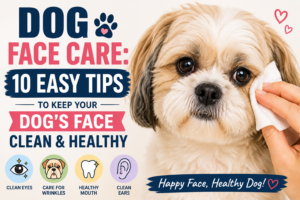
We’ll go over ten simple dog face care tips in this guide, such as how to safely clean your dog’s face, take care of wrinkles and tear stains, and spot symptoms that might call for veterinary care.
Why Is Dog Face Care Important?
A dog’s face can be exposed to dirt, dust, food, saliva, moisture, and environmental allergens every day. If these areas are not cleaned appropriately, moisture and debris can accumulate and contribute to skin irritation.
Regular grooming also gives you an opportunity to check your dog for changes such as:
- Red or swollen skin
- Unusual discharge
- Bad odors
- Crusts or sores
- Excessive scratching
- Swelling
- Changes around the eyes or nose
The goal is not to make your dog’s face perfectly clean all the time. Instead, the goal is to keep the skin comfortable while avoiding unnecessary irritation.
10 Easy Dog Face Care Tips
1. Clean Your Dog’s Face Gently
One of the simplest ways to care for your dog’s face is regular gentle cleaning.
You can use a soft, clean, damp cloth to wipe away dirt or food around the mouth and face. Be gentle, especially around the eyes and other sensitive areas.
Avoid scrubbing because vigorous rubbing can irritate your dog’s skin.
A simple routine:
- Use a clean, soft cloth.
- Dampen it with lukewarm water.
- Gently wipe dirty areas.
- Use a separate clean section of the cloth for sensitive areas.
- Pat the face dry.
If your dog has a specific skin problem, ask your veterinarian which cleanser is appropriate.
2. Keep the Area Around the Eyes Clean
Common grooming issues include tear stains and eye discharge, especially in some small or flat-faced breeds.
Normal eye discharge may occur in small amounts, but excessive discharge, redness, swelling, cloudiness, squinting, or frequent rubbing may be signs of an eye issue.
For regular cleaning, gently wipe away from the eye with a soft, moist cloth.
Avoid putting homemade remedies, soap, or shampoo directly into your dog’s eyes.
Instead of attempting to treat the issue at home, call your veterinarian if the discharge is thick, yellow, green, bloody, or suddenly increases.
3. Take Extra Care of Facial Wrinkles
Dogs with facial folds, such as Bulldogs, Pugs, and some other breeds, may need more frequent wrinkle care.
Wrinkles can trap moisture, food particles, dirt, and skin debris. Constant moisture can contribute to irritation and unpleasant odors.
To care for facial folds:
- Check them regularly.
- Gently clean visible debris.
- Keep the folds dry.
- Avoid harsh products.
- Follow your veterinarian’s advice if the skin becomes irritated.
Do not aggressively pull apart or scrub deep folds. If the area is very red, painful, swollen, or has a strong odor, veterinary advice is recommended.
4. Keep Facial Hair Trimmed When Necessary
Long hair around the face can collect food, water, dirt, and eye discharge.
Depending on your dog’s breed and coat type, keeping facial hair neatly trimmed may make cleaning easier.
However, trimming around the eyes requires special care. Never use scissors close to the eyeball unless you are experienced and confident in doing so.
For dogs with hair that constantly gets into their eyes, professional grooming can be a safer option.
5. Clean Around the Mouth After Meals
Food can easily stick to the hair and skin around a dog’s mouth, especially in dogs with longer facial hair.
If food remains around the mouth, gently wipe the area after meals when necessary.
You can use a clean damp cloth to remove visible food particles.
Do not use human toothpaste, mouthwash, or other human oral-care products on your dog unless your veterinarian specifically recommends them.
Keeping the mouth area reasonably clean can also help reduce unpleasant odors caused by trapped food.
6. Take Care of Your Dog’s Nose
A healthy dog’s nose can naturally change in moisture and appearance throughout the day. A warm or dry nose by itself does not necessarily mean your dog is sick.
For routine care, avoid constantly wiping or applying products to the nose.
If your dog has dirt on the outside of the nose, gently clean the surrounding area with a soft damp cloth.
You should contact a veterinarian if you notice:
- Persistent cracking
- Bleeding
- Significant swelling
- Sores
- Unusual discharge
- A major change that does not improve
Avoid applying human creams or medications to your dog’s nose without professional guidance.
7. Brush Your Dog’s Teeth Regularly
Face care isn’t only about the skin. Your dog’s mouth is also an important part of overall facial health.
Regular brushing can help reduce plaque buildup and support good oral hygiene.
Use a toothbrush and toothpaste specifically made for dogs. Human toothpaste is not appropriate for dogs because some ingredients can be harmful if swallowed.
Start slowly if your dog is not used to tooth brushing.
You can begin by allowing your dog to become comfortable with having its lips and mouth gently touched before introducing a toothbrush.
Regular veterinary dental examinations are also important, particularly as dogs get older.
8. Keep Your Dog’s Ears Clean—But Don’t Overclean
The ears are technically separate from the face, but they are an important part of facial grooming.
Check your dog’s ears regularly for:
- Excess wax
- Redness
- Swelling
- Bad odors
- Discharge
- Scratching
- Head shaking
Do not put cotton swabs deep inside your dog’s ear canal. They can push debris deeper or injure the ear.
Not every dog needs frequent ear cleaning. Some dogs need more attention because of their breed, allergies, ear shape, or previous ear problems.
If your dog’s ears smell bad or appear painful, ask your veterinarian to check them.
9. Use Only Dog-Safe Grooming Products
One of the most important dog face care rules is to avoid using random human skincare products on your pet.
Human products may contain ingredients that are unsuitable for dogs, especially if your dog licks the product.
Avoid applying things such as:
- Human acne creams
- Perfumed lotions
- Essential oils
- Human sunscreen
- Strong exfoliants
- Human shampoo
- Medicated creams without veterinary advice
If your dog has a skin condition, your veterinarian can recommend a product that is appropriate for the specific problem.
10. Check Your Dog’s Face During Regular Grooming
You don’t need a complicated routine to monitor your dog’s facial health.
When brushing or petting your dog, take a few seconds to look at the face.
Check for changes in:
- Skin color
- Swelling
- Hair loss
- Redness
- Crusting
- Odor
- Eye discharge
- Nose appearance
- Mouth odor
Getting your dog used to having its face gently examined can also make grooming and veterinary visits easier.
How Often Should You Clean Your Dog’s Face?
The ideal cleaning schedule depends on your dog’s breed, coat, lifestyle, and individual needs.
Some dogs may only need occasional wiping when their face gets dirty. Dogs with wrinkles, long facial hair, excessive tearing, or certain skin conditions may require more frequent care.
Avoid excessive cleaning. Constant wiping, scrubbing, or use of cleaning products can irritate the skin.
A good rule is to clean when needed while keeping the process gentle.
How to Clean a Dog’s Face Step by Step
If your dog has a dirty face but no obvious medical problem, you can follow a simple routine.
Step 1: Prepare your supplies
Have a clean, soft cloth and lukewarm water ready.
Step 2: Make your dog comfortable
Choose a calm place and let your dog relax before you begin.
Step 3: Wipe gently
Use the damp cloth to clean visible dirt around the face.
Step 4: Be careful around the eyes
Use a separate clean part of the cloth and avoid rubbing directly across the eyeball.
Step 5: Clean facial folds
If your dog has wrinkles, gently clean visible debris from the folds.
Step 6: Dry the skin
Pat the area dry, particularly inside facial folds.
If your dog becomes stressed, stop and try again later.
Common Dog Face Care Mistakes to Avoid
Even with good intentions, some grooming habits can cause problems.
Using human skincare products
Dogs may lick products from their skin, and some human ingredients are not appropriate for pets.
Scrubbing too hard
Gentle cleaning is enough. Aggressive rubbing can damage the skin barrier.
Using cotton swabs inside the ears
Avoid inserting objects deep into the ear canal.
Ignoring bad odors
A persistent unusual odor can sometimes indicate a skin, ear, dental, or other health problem.
Removing tear stains aggressively
Repeated rubbing can irritate the delicate skin beneath the eyes.
Treating infections without diagnosis
Redness, swelling, discharge, or sores may have different causes. Using the wrong treatment can make the problem worse.
What About Dog Tear Stains?
Tear staining is particularly noticeable in dogs with light-colored coats.
Tears can leave reddish-brown staining on the hair around the eyes. While cosmetic tear staining is common, excessive tearing can sometimes have an underlying cause.
Possible reasons for excessive tearing include:
- Eye irritation
- Hair rubbing against the eye
- Allergies
- Blocked tear drainage
- Eye disease
- Facial anatomy
If your dog’s eyes are constantly watery or irritated, a veterinarian should evaluate the cause.
Do not use bleach, peroxide, lemon juice, or other harsh substances to remove tear stains.
Signs Your Dog May Need a Veterinarian
Routine grooming is helpful, but it cannot replace veterinary care.
Contact your veterinarian if you notice:
- Severe redness
- Facial swelling
- Persistent itching
- Open sores
- Bleeding
- Thick eye discharge
- Squinting or difficulty opening an eye
- A sudden change in the nose
- Persistent bad odor
- Difficulty eating
- Excessive drooling
- Facial pain
- Sudden lumps or swelling
Eye problems can sometimes become serious quickly, so unusual eye symptoms should not be ignored.
Dog Face Care for Different Breeds
Different breeds may have different grooming needs.
Flat-faced breeds
Pugs, Bulldogs, and similar breeds often have facial folds that require careful cleaning and drying.
Long-haired breeds
Dogs with long facial hair may need regular grooming to prevent hair from collecting food and debris.
White or light-colored dogs
Tear and saliva staining may be more visible, requiring regular gentle cleaning.
Dogs with allergies
Dogs with allergies may develop facial itching or skin irritation. In these cases, simply cleaning the face may not solve the underlying problem.
Your dog’s breed and individual health history should guide its grooming routine.
Frequently Asked Questions About Dog Face Care
How do I clean my dog’s face safely?
Use a soft cloth dampened with lukewarm water to gently remove visible dirt. Avoid harsh scrubbing and keep soap and other products away from the eyes.
Can I use baby wipes on my dog’s face?
It is better to use products specifically formulated for dogs. Some human wipes contain fragrances or other ingredients that may irritate your dog’s skin.
How do I clean my dog’s wrinkles?
Gently remove visible debris from the folds using a clean, damp cloth, then dry the area carefully. If the folds are red, painful, swollen, or smelly, consult a veterinarian.
How do I remove tear stains from my dog?
Keep the area clean and dry using gentle methods. Persistent or excessive tearing should be evaluated by a veterinarian rather than treated only as a cosmetic problem.
Can I use human shampoo on my dog?
Human shampoo is generally not the best choice because dogs have different skin needs. Use a shampoo formulated specifically for dogs.
Why does my dog’s face smell bad?
A bad facial odor can come from trapped food, skin-fold moisture, dental problems, ear problems, or skin infections. Persistent or strong odors should be checked by a veterinarian.
How often should I clean my dog’s face?
It depends on your dog’s breed and individual needs. Some dogs need only occasional cleaning, while dogs with wrinkles, long facial hair, or excessive tearing may need more frequent care.
Final Thoughts
Rather than using complex products, gentle, consistent grooming is the main component of good dog face care. Maintaining a clean and comfortable face can be achieved by routinely examining your dog’s eyes, mouth, nose, facial folds, and surrounding skin.
Avoid vigorous scrubbing, use a gentle cloth and dog-safe grooming products, and focus especially on areas that retain moisture or gather food and debris.
Above all, find out what is typical for your own dog. Your pet may require professional care if they have a new smell, swelling, redness, unusual discharge, pain, or an abrupt change in appearance.
You can help maintain the cleanliness, comfort, and health of your dog’s face with a basic grooming regimen and routine veterinary care.