
A dog’s nose is often one of the first things pet owners notice. Many people believe that a healthy dog must always have a cold, wet nose, while a warm or dry nose automatically means illness. In reality, that’s a common myth.
A dog’s nose can naturally become dry for several harmless reasons, such as sleeping, spending time in the sun, or being in a room with dry air. However, a persistently dry, cracked, bleeding, or painful nose—especially when combined with other symptoms—may indicate an underlying health problem that deserves attention.
Understanding the difference between a normal dry nose and one that signals illness can help you provide the best care for your furry friend.
In this guide, we’ll explain the common causes of a dry dog nose, symptoms to watch for, and when it’s time to contact your veterinarian.
What Is a Dry Dog Nose?
A dry dog nose simply means that the surface of your dog’s nose has less moisture than usual. Dogs naturally produce a thin layer of mucus that helps them detect scents more effectively and keeps the nose comfortable.
The moisture level can change throughout the day. For example, many dogs wake up with a dry nose after sleeping because they haven’t been licking their nose during rest. After drinking water, playing, or grooming themselves, the nose often becomes moist again.
A dry nose alone does not confirm that a dog is sick. It’s important to look at your dog’s overall behaviour, appetite, energy level, and any additional signs before assuming there’s a medical problem.
Is a Dry Nose Normal in Dogs?
Yes. In many cases, a dry nose is completely normal.
Healthy dogs may have dry noses due to everyday activities or environmental conditions. The nose may feel warm one moment and cool the next. These changes are usually temporary and not a cause for concern.
A healthy dog with a dry nose will usually:
- Eat normally
- Drink water regularly
- Remain playful and energetic
- Have bright, clear eyes
- Breathe comfortably
- Show no signs of pain or discomfort
If your dog behaves normally and the dryness disappears within a short time, there is generally no reason to worry.
10 Common Causes of a Dry Dog Nose
1. Sleeping
One of the most common reasons for a dry nose is sleep.
While sleeping, dogs usually stop licking their noses. Without this natural moisture, the nose may feel dry when they wake up. In most cases, it becomes moist again after the dog starts moving around.
2. Warm or Dry Weather
Hot temperatures, low humidity, and indoor heating can dry out the surface of your dog’s nose.
Dogs living in hot climates or spending time near heaters or fireplaces may experience temporary dryness.
Providing plenty of fresh water and keeping your dog cool can help reduce this problem.
3. Mild Dehydration
When dogs don’t drink enough water, they may become mildly dehydrated, which can contribute to a dry nose.
Other signs of dehydration include:
- Dry gums
- Lethargy
- Sunken eyes
- Thick saliva
- Reduced skin elasticity
Always ensure your dog has access to clean drinking water throughout the day.
4. Sun Exposure
Dogs with light-coloured noses are more likely to experience sunburn.
Excessive exposure to direct sunlight may cause:
- Dryness
- Peeling
- Redness
- Cracking
If your dog spends long periods outdoors, provide shade and avoid the hottest part of the day.
5. Allergies
Environmental allergens such as pollen, dust, grass, or mould may irritate a dog’s nose.
Some dogs also react to certain plastic food or water bowls.
Possible allergy symptoms include:
- Itchy skin
- Sneezing
- Watery eyes
- Nose irritation
- Paw licking
Switching to stainless steel or ceramic bowls may help reduce irritation in some dogs.
6. Ageing
Older dogs often produce less natural moisture than younger dogs.
As dogs age, mild nose dryness may become more common. Regular veterinary check-ups help monitor any age-related health concerns.
7. Dry Indoor Air
Air conditioning and central heating can reduce indoor humidity, especially during winter.
Dry air may affect not only your dog’s nose but also their skin and paw pads.
Using a humidifier may improve indoor moisture levels if the air in your home is particularly dry.
8. Breed Differences
Some breeds naturally experience more nose dryness than others.
Flat-faced (brachycephalic) breeds, such as Pugs, Bulldogs, and Boxers, may have difficulty licking their noses effectively because of their facial structure.
As a result, their noses may dry out more frequently.
9. Minor Skin Irritation
A dog’s nose can become dry after contact with irritating substances, including certain cleaning products, lawn chemicals, or rough outdoor surfaces.
Avoid allowing your dog to come into contact with potentially irritating chemicals and always use pet-safe cleaning products where possible.
10. Certain Medical Conditions
Although uncommon, a persistently dry nose can sometimes be associated with medical conditions such as autoimmune disorders, infections, or skin diseases.
A dry nose alone is not enough to diagnose any illness. However, if the dryness is severe or accompanied by other concerning symptoms, your veterinarian can perform an examination and determine whether further testing is needed.
Symptoms That May Require Veterinary Attention
While many cases of a dry nose are harmless, contact your veterinarian if your dog has a dry nose along with any of the following:
- Deep cracks or bleeding
- Thick discharge from the nose
- Swelling or sores
- Persistent peeling
- Loss of appetite
- Vomiting or diarrhoea
- Fever
- Extreme tiredness
- Difficulty breathing
- Sudden behavioural changes
These symptoms may indicate an underlying medical condition that requires professional evaluation and treatment.
Key Takeaway
A dry nose by itself is usually not a reason to panic. Many healthy dogs experience temporary nose dryness after sleeping, spending time in warm weather, or being in a dry environment. The most important thing is to observe your dog’s overall health and behaviour. If the dryness is persistent, painful, or accompanied by other symptoms, it’s best to seek veterinary advice.
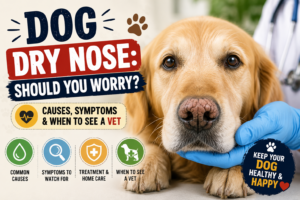
Dog Dry Nose: Should You Worry?
Safe Home Remedies for a Dry Dog Nose
If your dog has a mildly dry nose but is otherwise healthy, there are several safe ways to help restore moisture. These remedies are suitable for temporary dryness and should never replace veterinary care if your dog is showing signs of illness.
1. Keep Your Dog Hydrated
Fresh, clean water should always be available. Proper hydration supports healthy skin and helps maintain natural moisture in the nose.
Tips:
- Refill the water bowl daily.
- Bring water when travelling or walking.
- Encourage drinking after exercise or on hot days.
2. Use a Pet-Safe Nose Balm
A veterinarian-approved nose balm can help soothe dryness and protect cracked skin. Choose products specifically made for dogs.
Avoid products containing ingredients that may be unsafe if licked.
3. Increase Indoor Humidity
Dry indoor air from heating or air conditioning can contribute to a dry nose.
A humidifier may help improve moisture levels, especially during winter.
4. Limit Sun Exposure
Dogs with light-coloured noses can develop dryness from excessive sunlight.
Provide:
- Shade during outdoor play
- Plenty of water
- Walks during cooler morning or evening hours
5. Switch Food and Water Bowls
Some dogs may react to plastic bowls.
Consider using:
- Stainless steel bowls
- Ceramic bowls
These materials are often easier to clean and may reduce irritation.
6. Feed a Balanced Diet
Healthy skin begins with proper nutrition.
A balanced diet containing:
- Omega-3 fatty acids
- High-quality protein
- Vitamins A and E
- Zinc
can support healthy skin and coat.
Always consult your veterinarian before adding supplements.
Veterinary Treatments
If your dog’s dry nose is caused by an underlying medical condition, treatment will depend on the diagnosis.
Your veterinarian may recommend:
- Prescription creams or ointments
- Antibiotics for bacterial infections
- Antifungal medication when appropriate
- Allergy management
- Treatment for autoimmune diseases
- Hydration therapy if dehydration is severe
Never give your dog human medications unless instructed by a veterinarian.
How to Prevent a Dry Dog Nose
Although not every case can be prevented, these habits may help keep your dog’s nose healthy.
✔ Keep Fresh Water Available
Hydration is one of the easiest ways to support overall health.
✔ Feed a Nutritious Diet
Choose complete and balanced dog food appropriate for your dog’s age and health needs.
✔ Protect Against Extreme Weather
Limit prolonged exposure to:
- Hot sun
- Cold winds
- Very dry indoor air
✔ Schedule Regular Veterinary Check-ups
Routine exams can identify health problems before they become serious.
✔ Monitor Your Dog’s Nose
Check your dog’s nose regularly for:
- Cracks
- Bleeding
- Sores
- Swelling
- Unusual discharge
Early detection often leads to better outcomes.
When Should You See a Vet?
A dry nose alone is rarely an emergency.
However, schedule a veterinary visit if your dog has:
- A dry nose lasting several days without improvement
- Deep cracks or bleeding
- Thick yellow or green discharge
- Fever
- Vomiting or diarrhoea
- Loss of appetite
- Weight loss
- Lethargy
- Difficulty breathing
- Swelling or painful sores
Prompt evaluation can help identify the cause and provide the right treatment.
Frequently Asked Questions (FAQs)
Does a dry nose always mean my dog is sick?
No. Many healthy dogs have dry noses after sleeping, spending time in the sun, or being in a dry environment. Look at your dog’s overall behaviour rather than relying on nose moisture alone.
Can I use petroleum jelly on my dog’s nose?
It is generally better to use a veterinarian-approved nose balm made specifically for dogs. Many human products are not intended to be licked and swallowed.
Why is my dog’s nose dry but still cold?
A nose can be dry and cool at the same time. Moisture and temperature are not reliable indicators of illness by themselves.
Can allergies cause a dry nose?
Yes. Environmental allergies or irritation from certain materials may contribute to nose dryness in some dogs.
Is a cracked dog nose painful?
It can be. Deep cracks, bleeding, or sores may cause discomfort and should be examined by a veterinarian.
How can I keep my dog’s nose healthy?
Provide fresh water, a balanced diet, regular veterinary care, protection from harsh weather, and monitor for any persistent changes.
Conclusion
A dry dog nose is often harmless and may simply result from sleeping, weather changes, or temporary dehydration. Most healthy dogs will regain normal nose moisture naturally without treatment.
However, persistent dryness accompanied by cracking, bleeding, swelling, discharge, fever, or changes in your dog’s behaviour should not be ignored. Paying attention to your dog’s overall health—not just the condition of the nose—will help you decide when home care is enough and when professional veterinary advice is needed.
With proper hydration, good nutrition, routine veterinary care, and regular observation, you can help keep your dog’s nose healthy and support their overall well-being.l