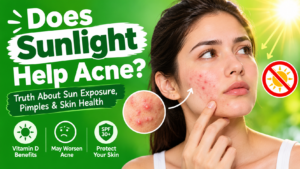

Does Sunlight Help Acne? Truth About Sun Exposure, Pimples, and Skin Health
Introduction
Spending time outdoors can offer several health benefits, including supporting vitamin D production, improving mood, and helping regulate your sleep schedule. However, when it comes to acne, sunlight is not the miracle treatment many people believe it to be.
Some people notice that their pimples appear less visible after spending time in the sun. This temporary improvement may create the impression that sunlight clears acne. In reality, excessive sun exposure can irritate the skin, increase pigmentation, and potentially worsen acne over time.
Acne is a common inflammatory skin condition that develops when hair follicles become clogged with oil, dead skin cells, and other debris. Hormonal changes, inflammation, and bacteria also contribute to its development.
In this article, we will explore whether sunlight helps acne, why pimples may temporarily look better after sun exposure, how ultraviolet rays affect your skin, and which treatments are more effective for managing breakouts.
What Is Acne?
Acne is a common skin condition that occurs when hair follicles become blocked with sebum, the natural oil produced by your skin, and dead skin cells. These blockages can lead to whiteheads, blackheads, pimples, and, in more severe cases, deep inflammatory lesions.
A bacterium called Cutibacterium acnes naturally lives on human skin. When blocked follicles and other factors create favorable conditions, this bacterium can contribute to inflammation and acne development.
Several factors can trigger or worsen acne, including:
- Excess oil production: Too much sebum can contribute to clogged pores.
- Hormonal changes: Puberty, menstrual cycles, pregnancy, and other hormonal changes can affect oil production.
- Inflammation: The body’s inflammatory response contributes to redness and swelling.
- Genetics: A family history of acne may increase your likelihood of developing it.
- Certain medications: Some medicines can trigger acne-like breakouts.
- Stress: Stress may worsen existing acne in some individuals.
- Skin-care products: Heavy or pore-clogging products can contribute to breakouts.
Understanding these factors can help you choose an appropriate treatment rather than relying on sunlight to improve your skin.
Youtube Video
Does Sunlight Help Clear Acne?
The short answer is no. Natural sunlight is not a proven acne treatment.
Although sun exposure may temporarily make pimples appear less noticeable, there is no strong evidence that spending time in direct sunlight reliably clears acne. The potential risks of ultraviolet radiation also outweigh any short-term cosmetic improvement.
Sunlight contains ultraviolet A (UVA) and ultraviolet B (UVB) radiation. These rays can damage the skin, contribute to premature aging, and increase the risk of skin cancer.
Sun exposure can also darken existing acne marks, making them more noticeable and longer-lasting.
Why Do Some People Think Sunlight Improves Acne?
There are several possible explanations for why acne may appear better after spending time outdoors.
1. Temporary drying of the skin
Sun exposure can dry the skin’s surface, temporarily reducing its oily appearance. However, excessive drying can damage the skin barrier and lead to irritation. Your skin may also respond with changes in oil production, potentially making acne harder to manage.
2. A tan can hide redness
When the skin becomes darker from sun exposure, redness and some acne marks may appear less obvious. This is a visual effect rather than proof that the underlying acne has improved.
A tan is also a sign of skin damage caused by ultraviolet radiation.
3. Confusion with medical light therapy
Some dermatologist-supervised light treatments use specific wavelengths of visible light to help manage certain types of acne. These treatments are carefully selected and are not equivalent to exposing your skin to natural sunlight.
Blue-light and red-light devices may have a role in selected acne treatment plans, but results vary, and they are not substitutes for every established acne treatment.
How Can Sun Exposure Make Acne Worse?
Although the effects of sunlight on acne are not identical for everyone, excessive UV exposure can create several problems for acne-prone skin.
1. Increased Skin Irritation
Too much sun can cause redness, dryness, burning, and inflammation. When your skin barrier becomes damaged, it may become more sensitive to cleansers, moisturizers, and acne medications.
Irritated skin can be uncomfortable and may make an existing skin-care routine harder to tolerate.
2. Darker Acne Marks
One of the most important concerns is post-inflammatory hyperpigmentation. This condition causes dark spots to appear after pimples heal.
UVA and UVB exposure can darken these marks, particularly in people whose skin is prone to hyperpigmentation. The spots may remain visible for months, even after the original acne has disappeared.
Daily sun protection can help prevent existing acne marks from becoming darker.
3. Premature Skin Aging
Repeated UV exposure damages collagen and elastin, two proteins that help maintain skin firmness and elasticity.
Over time, this damage can contribute to fine lines, wrinkles, uneven skin tone, and a rough skin texture.
People who already have acne may find that excessive sun exposure creates additional skin concerns that require separate treatment.
4. Possible Worsening of Breakouts
Sunlight may temporarily reduce surface oil, but it does not remove the underlying causes of acne. Excessive exposure can irritate the skin, and heat, sweat, friction, and occlusive products used outdoors may contribute to breakouts in some people.
The relationship between sunlight and oil production is complex, so it is not accurate to say that everyone produces more oil after sun exposure. Nevertheless, intentionally tanning to treat acne is not recommended.
5. Increased Sun Sensitivity From Acne Treatments
Some acne medications make the skin more sensitive to sunlight or more vulnerable to irritation.
These include certain retinoids and some oral antibiotics, such as doxycycline. Other medications may have different precautions, so check the label or ask your pharmacist.
If you use acne treatments, sun protection becomes particularly important.
Best Ways to Treat Acne Without Sun Exposure
Instead of using sunlight to dry out pimples, consider a consistent skin-care routine and evidence-based treatments.
1. Use a Gentle Cleanser
Wash your face with a mild, non-abrasive cleanser. Use lukewarm water and your fingertips rather than rough scrubs or brushes.
Washing too frequently or scrubbing aggressively can irritate your skin without effectively treating acne.
For most people, washing twice daily and after heavy sweating is a reasonable starting point.
2. Try Salicylic Acid
Salicylic acid helps loosen dead skin cells and can reduce clogged pores. It may be particularly useful for blackheads and whiteheads.
Choose a product formulated for facial skin and follow the instructions. If dryness or irritation develops, reduce use or stop and seek advice.
3. Consider Benzoyl Peroxide
Benzoyl peroxide helps reduce acne-causing bacteria and can improve inflammatory pimples. It is available in various over-the-counter formulations.
Start with a suitable low-strength product and introduce it gradually to reduce irritation. Benzoyl peroxide can bleach towels, pillowcases, and clothing.
4. Use Adapalene or Other Recommended Retinoids
Topical retinoids help prevent clogged pores and are commonly used to treat acne. Adapalene is available over the counter in some countries, while other retinoids may require a prescription.
Use these products as directed, moisturize regularly, and protect your skin from the sun.
If you are pregnant or planning a pregnancy, consult your healthcare professional before using topical retinoids. These products are generally avoided during pregnancy.
5. Choose a Non-Comedogenic Moisturizer
Even oily and acne-prone skin needs moisture. A lightweight, non-comedogenic moisturizer can help maintain the skin barrier and reduce dryness associated with acne treatments.
Look for products labeled fragrance-free if you have sensitive skin.
6. Apply Sunscreen Every Day
Choose a broad-spectrum sunscreen with SPF 30 or higher. A non-comedogenic formulation may be suitable for acne-prone skin.
Apply it to exposed skin before going outdoors and reapply approximately every two hours when outside, or more frequently after swimming or heavy sweating, according to the product instructions.
Additional protection includes wearing a wide-brimmed hat, seeking shade, and avoiding tanning beds.
7. Avoid Picking or Squeezing Pimples
Picking acne can increase inflammation and raise the risk of scarring and dark marks.
Allow pimples to heal without squeezing them. If you have painful, deep, or recurring acne, a dermatologist can recommend treatments that reduce the risk of permanent scarring.
Does Sunscreen Help Acne-Prone Skin?
Yes. Sunscreen does not directly cure acne, but it helps protect the skin from UV damage and can reduce the darkening of acne-related pigmentation.
Some people avoid sunscreen because they worry it will clog their pores. However, many lightweight formulas are designed for acne-prone skin.
When selecting sunscreen, consider the following:
- Choose broad-spectrum SPF 30 or higher.
- Look for a non-comedogenic formulation.
- Consider a lightweight gel or fluid if your skin is oily.
- Use a fragrance-free product if your skin is sensitive.
- Remove sunscreen gently at the end of the day.
If one sunscreen repeatedly causes breakouts or irritation, try another formulation rather than abandoning sun protection altogether.
Can Red-Light Therapy Help Acne?
Red-light therapy is different from sunlight. It uses selected wavelengths of visible light rather than uncontrolled exposure to the full spectrum of natural sunlight.
Some light-based treatments may help reduce inflammation in certain people with acne. However, evidence varies according to the device, treatment schedule, and severity of acne.
At-home devices are not all equally effective, and they may not provide the same results as professional treatment. Follow the device instructions and consult a dermatologist if you are unsure whether light therapy is appropriate for your skin.
Blue-light therapy may also be used for selected acne cases, but light therapy alone is not a reliable solution for every type of breakout.
Does a Tanning Bed Help Acne?
No. Tanning beds are not recommended for acne treatment.
They expose the skin to artificial UV radiation, which can damage skin cells, accelerate premature aging, worsen pigmentation, and increase the risk of skin cancer.
Although a tan may temporarily change how acne looks, it does not treat clogged pores or address the underlying causes of breakouts.
Avoid tanning beds and choose proven acne treatments instead.
Frequently Asked Questions
1. Can sunlight cause acne?
Sunlight does not directly cause every acne breakout, but excessive exposure may irritate the skin. Heat, sweat, friction, and certain products used during outdoor activities may also contribute to breakouts in some individuals.
2. Is the sun good for pimples?
No. Sunlight is not a recommended treatment for pimples. It may temporarily make them less noticeable, but UV radiation can worsen dark marks and damage the skin.
3. How can I clear acne naturally?
A gentle cleansing routine, a non-comedogenic moisturizer, avoiding pore-clogging products, and not picking pimples can support acne-prone skin. However, moderate or persistent acne may require evidence-based medication.
4. Does sunscreen make acne worse?
Not necessarily. Many sunscreens are formulated for acne-prone skin. Choosing a lightweight, non-comedogenic product may help reduce the likelihood of clogged pores.
5. How long does acne treatment take to work?
Many acne treatments require approximately 6 to 8 weeks before noticeable improvement, and further improvement may take several months. Follow the product directions and consult a dermatologist if your acne is severe or not improving.
6. Can sunlight remove acne scars?
No. Sunlight does not remove acne scars. UV exposure can darken post-acne marks and make discoloration more noticeable. True indented or raised scars may require professional treatment.
Conclusion
Sunlight may temporarily change the appearance of acne, but it is not a proven way to clear pimples. Excessive UV exposure can worsen dark spots, irritate the skin, contribute to premature aging, and increase the risk of skin cancer.
A better approach is to use gentle skin care, choose suitable acne treatments, moisturize consistently, and apply broad-spectrum SPF 30 or higher every day.
If your acne is painful, persistent, or leaving scars, a dermatologist can help you develop a treatment plan suited to your skin type and the severity of your breakouts.
SEO Pack
SEO Title: Does Sunlight Help Acne? Effects of Sun on Pimples
Focus Keyword: Does sunlight help acne?
Secondary Keywords:
- Does the sun clear acne?
- Sun exposure and acne
- Can sunlight make acne worse?
- Best acne treatment for clear skin
- Sunscreen for acne-prone skin
- Natural ways to manage acne
- Sun damage and acne scars
- Red light therapy for acne
Meta Description: Does sunlight help acne? Learn how UV rays affect pimples, why sun exposure can worsen dark spots, and the best treatments for acne-prone skin.
URL Slug: does-sunlight-help-acne
Image Alt Text: Does sunlight help acne? Understanding sun exposure, pimples, and skin protection.
Suggested Category: Skin Care & Beauty