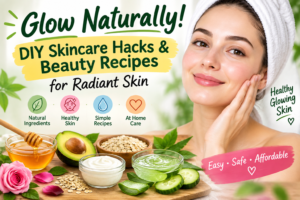

Glow Naturally: DIY Skincare Hacks & Beauty Recipes
A simple guide to natural-looking radiance using gentle skincare, homemade masks, and healthy daily habits.
Expensive beauty products and complex routines are not always necessary for glowing skin. You can make your skin look healthier, softer, and more youthful with a few gentle ingredients, adequate hydration, and regular skincare routines.
In search of inexpensive methods to take care of their faces at home, many people look for do-it-yourself skincare tips and beauty recipes. Natural skincare products are not always safe, but they can be helpful. Selecting the right ingredients is important because harsh scrubs, lemon juice, and undiluted essential oils can irritate the skin.
In this guide, you will learn easy beauty recipes, practical skincare hacks, and everyday habits that support a healthy skin barrier and a natural glow.
What Does Naturally Glowing Skin Mean?
Naturally glowing skin usually looks hydrated, smooth, and comfortable rather than excessively oily or shiny. Your skin’s appearance is influenced by genetics, age, hydration, sun exposure, sleep, and skincare.
DIY beauty recipes cannot permanently change your natural skin color or remove every dark spot. However, gentle care may help improve dryness, dullness, and rough texture over time.
15 DIY Skincare Hacks and Beauty Recipes
These recipes are intended for gentle, occasional use. Patch-test new ingredients before applying them to your face, and avoid any ingredient that causes burning, itching, or redness.
1. Aloe Vera Gel for a Fresh, Hydrated Look
Aloe vera gel is a popular home skincare ingredient because it feels cooling and can provide light hydration.
Ingredients:
- 1 teaspoon plain, fragrance-free aloe vera gel.
- A clean bowl.
How to use:
- Wash your face with a gentle cleanser.
- Apply a thin layer of aloe vera gel.
- Leave it on according to the product instructions, or rinse after 10 minutes if using fresh gel.
- Apply a moisturizer afterward.
Use commercially prepared, fragrance-free gel when possible. Fresh aloe may contain irritating compounds, so remove the yellow latex and discontinue use if your skin reacts.
2. Oatmeal and Yogurt Face Mask
Oatmeal is a gentle ingredient that can help soothe dry, uncomfortable skin. Plain yogurt contains lactic acid, but the concentration and effect vary, and it may irritate sensitive skin.
Ingredients:
- 1 tablespoon finely ground plain oats.
- 1 teaspoon plain, unsweetened yogurt.
- A little water if needed.
Method:
Mix into a smooth paste and apply for 5–10 minutes. Rinse gently with lukewarm water, without scrubbing. Follow with moisturizer.
This mask is best for normal or dry skin that tolerates both ingredients. Avoid it if you have a dairy allergy or active irritation.
3. Honey for Soft, Smooth Skin

Honey is a humectant, meaning it helps attract moisture. It may make skin feel softer temporarily, although it is not a proven treatment for acne or dark spots.
Beauty recipe: Mix 1 teaspoon of plain honey with a few drops of water. Apply a thin layer for 5–10 minutes, then rinse and moisturize.
Do not use honey if you are allergic to it or bee products. Avoid applying it to open wounds or broken skin.
4. Cucumber Cooling Compress

Cucumber contains water and can feel refreshing on warm or puffy skin. Its cooling effect is temporary, but it is a simple way to make your skincare routine more relaxing.
Place clean, cool cucumber slices over closed eyes or on the face for a few minutes. Do not press hard or rub the skin.
For sensitive skin, use a clean, cool washcloth instead of raw cucumber if it causes irritation.
5. Green Tea Face Compress

Green tea contains antioxidants, and cooled green tea can be used as a simple compress.
Recipe:
- Brew a cup of plain green tea.
- Let it cool completely.
- Soak a clean cotton cloth in the tea.
- Place it on your face for 5 minutes.
- Rinse if your skin feels irritated.
Green tea is not a replacement for sunscreen or acne treatment. Prepare a fresh batch and avoid storing homemade tea mixtures for long periods.
6. Avocado and Oatmeal Moisture Mask

Avocado contains fats that can make a temporary moisturizing mask feel nourishing. Oatmeal helps provide a gentle, creamy texture.
Ingredients:
- 1 tablespoon mashed ripe avocado.
- 1 teaspoon finely ground oats.
- A few drops of water.
Mix and apply for 5–10 minutes. Rinse gently and apply moisturizer. This recipe is more suitable for dry skin than oily or acne-prone skin, and it should not be used if you have an avocado allergy.
7. Rose Water Mist for a Refreshing Routine

Rose water is a popular beauty ingredient for refreshing the face. It may provide a pleasant, light-feeling mist, but it is not a proven treatment for pigmentation, acne, or wrinkles.
Choose a fragrance-free product with a simple ingredient list if you have sensitive skin. Spray lightly onto clean skin, or apply with a clean cotton pad. Follow with moisturizer if your skin feels dry.
Avoid homemade rose water that has been stored at room temperature for several days, as it can become contaminated.
8. Banana and Oatmeal Face Mask

Bananas provide a creamy texture and contain nutrients, while finely ground oatmeal can help make a gentle mask.
Ingredients:
- 1 tablespoon mashed banana.
- 1 teaspoon finely ground oats.
- A little water.
Mix, apply for 5–10 minutes, and rinse without rubbing. This mask may temporarily soften the skin, but there is no strong evidence that it removes wrinkles or lightens dark spots.
9. Simple Sugar-Free Lip Scrub Alternative

A common DIY beauty hack is a sugar lip scrub. However, rough sugar particles can cause irritation, especially when lips are dry or cracked.
A safer approach is to apply a plain, fragrance-free lip balm or a thin layer of petroleum jelly to soften dry lips. Use a soft, damp cloth only if needed, and avoid scrubbing.
10. Oatmeal Water for Gentle Skin Care

Oatmeal water is a mild home remedy that some people use for dry or itchy skin.
Recipe:
- Blend 1 tablespoon of plain oats into a fine powder.
- Mix with a cup of lukewarm water.
- Strain if desired.
- Apply to the skin with clean hands.
- Rinse and moisturize.
Colloidal oatmeal products have better-established soothing benefits than ordinary kitchen oatmeal water. Stop using it if your skin becomes red or itchy.
11. Moisturizer After Every Face Wash
One of the most effective DIY skincare hacks is not a homemade mask at all. Applying moisturizer after cleansing helps reduce water loss and supports the skin barrier.
For oily skin, choose a lightweight, non-comedogenic gel or lotion. For dry skin, a cream containing ingredients such as glycerin, ceramides, or hyaluronic acid may be more comfortable.
12. Use Sunscreen for Natural-Looking Glow

Daily sun protection is essential for maintaining an even-looking complexion. UV exposure contributes to premature skin aging, dark spots, and uneven pigmentation.
Use a broad-spectrum SPF 30 or higher sunscreen, apply enough to cover exposed skin, and reapply when outdoors as directed. A homemade sunscreen made from oils or kitchen ingredients is not a reliable substitute for tested sunscreen.
13. Try a Gentle Face Massage
A short, gentle facial massage can make skincare feel relaxing. Use clean hands and a small amount of moisturizer to reduce friction.
Massage lightly for one or two minutes. Avoid aggressive rubbing, particularly if you have acne, rosacea, or irritated skin. Massage does not permanently lift the face or remove wrinkles, but it can be a pleasant addition to your routine.
14. Use a Clean Pillowcase

Changing pillowcases regularly is a simple hygiene habit. It can reduce the buildup of oil, sweat, and skincare residue that comes into contact with your face.
Choose a comfortable fabric, wash it regularly, and avoid heavily fragranced laundry products if they irritate your skin.
15. Make a Hydration and Sleep Routine

Drinking enough water and getting adequate sleep support general health and can help your skin look less tired. Water is especially important when you are thirsty or dehydrated, but drinking excessive amounts does not create instant glowing skin.
Aim for a consistent sleep schedule, eat a balanced diet, and include fruits, vegetables, protein, and healthy fats.
How to Build a Natural Glow Skincare Routine
A consistent routine is usually more useful than trying a different face mask every day.
Morning routine
- Gentle cleanser or lukewarm water if your skin is dry.
- Lightweight moisturizer.
- Broad-spectrum SPF 30 or higher sunscreen.
Night routine
- Remove makeup and sunscreen.
- Cleanse gently without scrubbing.
- Apply a moisturizer suited to your skin type.
Use a homemade mask once a week if your skin tolerates it. You do not need several masks, scrubs, or active ingredients at the same time.
DIY Beauty Recipes for Different Skin Types

Dry skin
Try a simple oatmeal mask or a fragrance-free moisturizer. Avoid harsh exfoliation and hot water.

Oily skin
Choose a lightweight, non-comedogenic moisturizer. DIY masks cannot control oil production permanently.

Sensitive skin
Keep your routine minimal. A gentle cleanser, plain moisturizer, and sunscreen are often a better starting point than homemade masks.

Combination skin
Use a gentle moisturizer and avoid heavy oils on areas prone to breakouts. Treat dry and oily areas according to their needs.
How Long Does It Take to See Glowing Skin?
Some DIY masks can make skin feel softer or more hydrated immediately. Longer-term improvements depend on your skin concern and routine.
- Hydration: Skin may feel more comfortable after moisturizing.
- Dullness: Consistent cleansing, moisturizing, and sun protection can improve the appearance of skin over time.
- Dark spots: These often take weeks to months to fade, and sunscreen is essential.
- Acne: Homemade masks are not a reliable treatment for persistent acne.
If a product or mask causes burning, swelling, or persistent redness, stop using it. Seek medical advice for a rash that does not improve or acne that is painful, severe, or leaving scars.
Frequently Asked Questions
Can I use DIY face masks every day?
No. Most people do not need a face mask every day. Frequent masks, especially those containing acids or exfoliating ingredients, can irritate the skin. Once a week is a reasonable starting point for a gentle mask.
What is the best homemade face mask for glowing skin?
A simple oatmeal-based mask may be a gentle option for people with dry or normal skin. There is no single best homemade mask for everyone, and the results are usually temporary.
Can lemon juice make skin fairer?
Lemon juice is not a safe or reliable skin-lightening treatment. It can cause irritation and make skin more sensitive to sunlight, potentially worsening discoloration.
Is aloe vera safe for the face?
Aloe vera gel is tolerated by many people, but it can cause contact dermatitis in some individuals. Use a fragrance-free product, patch-test it, and stop if irritation occurs.
How can I get glowing skin naturally in one week?
Focus on gentle cleansing, daily moisturizer, sunscreen, enough sleep, and a balanced diet. You may notice a fresher appearance in a week, but pigmentation, acne, and wrinkles generally require more time and sometimes professional treatment.
Final Thoughts
DIY skincare hacks and beauty recipes can be a fun, affordable part of your self-care routine. The best approach is to choose gentle ingredients, avoid harsh home remedies, and prioritize daily moisturizing and sun protection.
Natural-looking glow comes from healthy, well-cared-for skin rather than a single miracle ingredient. Keep your routine simple, patch-test new recipes, and give your skin time to respond.