
Introduction
Deep nose cleaning is an important part of maintaining nasal hygiene and keeping the nasal passages comfortable. Every day, your nose filters dust, pollen, dirt, and other tiny particles from the air you breathe. However, mucus can build up inside the nose, especially during seasonal allergies, colds, dry weather, or exposure to pollution.
Learning how to clean your nose safely can help remove excess mucus, loosen dried secretions, and reduce nasal discomfort. The right cleaning method may also help people who experience nasal congestion or allergy symptoms.
However, deep nose cleaning does not mean removing every natural substance from your nose. Mucus plays an important role in protecting the nasal passages by trapping particles and keeping delicate tissues moist. The goal is to maintain cleanliness without damaging the nose.
In this guide, you will learn about the best nose-cleaning methods, useful products, their benefits, and common mistakes to avoid.
What Is Deep Nose Cleaning?
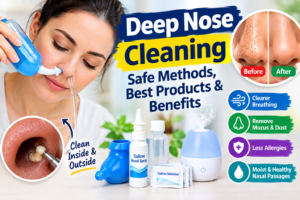
Deep nose cleaning refers to methods used to remove excess mucus, dust, allergens, and other unwanted material from the nasal passages. Depending on your needs, this may involve using saline nasal spray, saline irrigation, or gently cleaning the outside of the nostrils.
The nose naturally produces mucus to trap particles before they enter the respiratory system. In healthy conditions, this mucus usually moves toward the throat, where it is swallowed without being noticed.
However, mucus can occasionally become dry or thick. The nose may feel congested or uncomfortable due to allergies, respiratory infections, pollution, and dry indoor air.
Cleaning your nose safely can help you deal with these issues. It is crucial to realise that cleaning the nasal passages is not the same as cleaning the pores on the outside of the nose or getting rid of blackheads. While skincare products are made for the skin on the outside of the nose, nasal hygiene concentrates on the inside of the nose.
Benefits of Deep Nose Cleaning
1. Helps Remove Excess Mucus
One of the main benefits of nasal cleaning is that it can loosen and remove excess mucus. When mucus becomes thick, breathing through the nose may feel difficult.
Saline nasal sprays and nasal irrigation can help soften mucus, making it easier to clear the nasal passages naturally.
2. Helps Remove Dust and Allergens
Dust, pollen, and other airborne particles can enter the nose throughout the day. These particles may trigger sneezing, itching, or a runny nose in sensitive individuals.
Saline nasal rinsing can help wash away some of these particles and may provide relief from allergy symptoms.
3. Supports Comfortable Nasal Breathing
A blocked nose can make breathing uncomfortable, particularly at night or during a cold. Removing excess mucus and keeping the nasal lining moist may help improve comfort.
However, persistent nasal blockage may have other causes, such as nasal polyps, a deviated septum, or chronic inflammation. Cleaning alone may not solve these problems.
4. Helps Relieve Nasal Dryness
Dry air, heating systems, and air conditioning can contribute to dry nasal passages. Some people develop crusting, irritation, or small amounts of dried mucus.
A sterile saline nasal spray can help moisturize the nasal lining without requiring aggressive cleaning.
5. Supports Nasal Hygiene
Regular, gentle cleaning can help maintain comfortable nasal passages when mucus or environmental particles accumulate. It can be particularly useful for people exposed to dusty environments.
Nasal cleaning should remain gentle. Excessive rinsing or using irritating substances may cause dryness, burning, or nosebleeds.
Best Methods for Deep Nose Cleaning
Several methods can help maintain nasal hygiene. The best choice depends on whether you have mild dryness, excess mucus, allergies, or significant congestion.
1. Saline Nasal Spray
Saline nasal spray is one of the simplest options for everyday nasal care. It contains a saltwater solution designed for use inside the nose.
Benefits of saline spray:
- Helps moisturize dry nasal passages.
- Softens dried mucus.
- May help clear small amounts of dust and allergens.
- Is convenient for use at home or while travelling.
Choose a commercially prepared saline nasal spray and follow the instructions on its label. A saline spray is generally more suitable for mild dryness than a full nasal irrigation system.
Do not insert the nozzle deeply into the nose, and avoid sharing the bottle with other people.
2. Saline Nasal Irrigation
Saline nasal irrigation involves gently flushing the nasal passages with a saltwater solution. Common devices include neti pots, squeeze bottles, and specially designed nasal irrigation systems.
This method can remove mucus, dust, pollen, and other debris more thoroughly than a simple mist spray. It may be useful for certain allergy symptoms and sinus problems.
How to use nasal irrigation safely:
- Wash your hands thoroughly.
- Prepare the saline solution according to the product instructions.
- Use only distilled or sterile water, or tap water that has been boiled and cooled.
- Lean over a sink and tilt your head slightly to one side.
- Keep your mouth open and breathe through it while gently applying the solution.
- Allow the solution to drain without forcing it.
- Repeat on the other side if appropriate.
- Clean the device according to the manufacturer’s instructions and allow it to dry completely.
Never use untreated tap water for nasal irrigation. Water that is safe to drink is not necessarily safe to introduce into the nose because certain organisms can cause rare but serious infections.
Do not force liquid through a completely blocked nostril. Stop if the process causes significant pain, bleeding, or worsening discomfort.
3. Warm Shower Steam
Warm, humid air may help loosen thick mucus and temporarily relieve nasal discomfort.
Taking a warm shower can be a simple way to expose the nasal passages to moisture. However, steam is not a substitute for saline irrigation when you need to flush away mucus and particles.
Avoid leaning over bowls of boiling water because hot steam and spilled water can cause serious burns.
4. Gentle External Nose Cleaning
The skin around the nostrils can accumulate sweat, oil, dust, and skincare products. You can clean this area using lukewarm water and a mild facial cleanser.
Rinse well after gently washing the nose’s exterior. Steer clear of forcing exfoliating products, soap, or face cleansers into your nose.
Use skincare products made exclusively for facial skin instead of instruments meant to clean inside the nose if you have blackheads on the outside of your nose.
5. Saline Drops
Saline drops are another useful option, particularly for people who find sprays uncomfortable. They can help moisturize the nasal lining and soften dried mucus.
Use a product suitable for your age and follow the recommended instructions. For infants and young children, ask a healthcare professional about the appropriate product and cleaning method.
Best Products for Deep Nose Cleaning
Choosing the right product can make nasal care easier and safer. You do not need an expensive device to maintain good nasal hygiene.
Saline Nasal Spray
A basic saline spray is a practical choice for dryness, mild irritation, and small amounts of mucus. Look for a product labelled for nasal use.
Nasal Irrigation Kit
A nasal irrigation kit typically includes a squeeze bottle or another rinsing device and premeasured saline packets. These kits can be useful when you need to flush out excess mucus or allergens.
Choose a reputable product with clear cleaning and usage instructions. Always prepare the solution using water that is safe for nasal rinsing.
Neti Pot
A neti pot is a small container designed to deliver saline solution through one nostril so that it drains through the other. It can be useful for people who prefer a gravity-based rinsing method.
The device must be cleaned and dried after use. Never share it with another person.
Saline Nasal Drops
Saline drops are useful for moisturizing the nose and softening dried secretions. They may be a good alternative for people who do not want to use a larger irrigation device.
Humidifier
A clean humidifier can add moisture to dry indoor air, potentially helping people who experience nasal dryness. It does not directly wash the nose, but it may make the nasal passages feel more comfortable.
Follow the manufacturer’s cleaning instructions to prevent the buildup of microorganisms.
What Should You Avoid During Deep Nose Cleaning?
Although nasal cleaning can be beneficial, the wrong technique can irritate or injure delicate nasal tissues.
Avoid the following mistakes:
- Inserting cotton swabs, tweezers, or sharp tools deeply into the nostrils.
- Scraping the inside of the nose to remove dried mucus.
- Using untreated tap water for nasal irrigation.
- Putting soap, facial cleansers, or chemical exfoliants inside the nose.
- Using strong essential oils, perfumes, or household cleaning products in the nasal passages.
- Forcing saline through a completely blocked nose.
- Sharing nasal sprays or irrigation devices.
- Cleaning excessively when the nose is already dry or irritated.
The inside of the nose contains delicate tissue and small blood vessels. Aggressive cleaning may cause bleeding, swelling, irritation, and infection.
How Often Should You Clean Your Nose?
The ideal frequency depends on your symptoms and the product you use.
For occasional dryness, saline spray may be sufficient when needed. People experiencing allergies or thick mucus may benefit from saline irrigation when used according to product directions or a healthcare professional’s advice.
There is no universal need to perform deep nasal irrigation every day. If regular rinsing causes burning, dryness, or nosebleeds, reduce use and seek professional advice if symptoms continue.
People with frequent sinus infections, immune system problems, recent nasal surgery, or ongoing nasal bleeding should consult a healthcare professional before starting regular irrigation.
When Should You See a Doctor?
Occasional nasal congestion or dryness is common. However, some symptoms require medical evaluation.
Seek medical advice if you experience persistent nasal blockage, repeated nosebleeds, significant facial pain, fever, foul-smelling nasal discharge, or symptoms that continue or worsen despite appropriate care.
If you develop a severe headache, fever, confusion, or vomiting after nasal rinsing, seek urgent medical attention. These symptoms require prompt assessment, even though serious infections related to nasal rinsing are rare.
A doctor can determine whether allergies, sinus inflammation, infection, structural problems, or another condition is responsible for your symptoms.
Frequently Asked Questions
Is deep nose cleaning safe?
Yes, gentle nasal cleaning can be safe when performed correctly. Saline sprays and properly performed saline irrigation are common options. Use suitable products, safe water, and clean equipment.
Can saline nasal spray remove all mucus?
Saline spray can moisturize the nose and loosen some mucus, but it may not remove all thick secretions. Nasal irrigation may provide more thorough flushing when appropriate.
Is it safe to use tap water for nasal cleaning?
Untreated tap water should never be used for nasal irrigation. Choose distilled or sterile water, or boil tap water for at least one minute and allow it to cool before use. Follow current public-health guidance and the instructions for your device.
Can I clean inside my nose with cotton buds?
It is best to avoid inserting cotton buds deeply into the nostrils. They can scratch delicate tissues, push mucus further inside, or cause bleeding. Use saline products to soften mucus instead.
Does deep nose cleaning help with allergies?
Saline rinsing may help remove some pollen and other allergens from the nasal passages. It can relieve symptoms for some people, but it does not cure allergies. Persistent symptoms may require medical treatment.
Are expensive nose-cleaning devices better?
Not necessarily. A simple saline spray may be enough for mild dryness, while a suitable irrigation kit may be helpful for excess mucus. The safest and most appropriate option depends on your symptoms, technique, and ability to clean the device properly.
Conclusion
Deep nose cleaning can help maintain nasal comfort by removing excess mucus, loosening dried secretions, and washing away some dust and allergens. Simple products such as saline nasal sprays, saline drops, and nasal irrigation kits can support a gentle nasal hygiene routine.
The most important factor is using the correct method. Always use safe water for irrigation, keep reusable devices clean, and avoid inserting tools or harsh substances into the nose.
Remember that the goal is not to remove every trace of natural mucus. Instead, focus on keeping the nasal passages comfortable, moist, and clear without damaging their protective lining. If congestion, bleeding, or pain persists, seek advice from a qualified healthcare professional.
With the right products and safe techniques, you can make nasal hygiene a simple and effective part of your daily self-care routine.