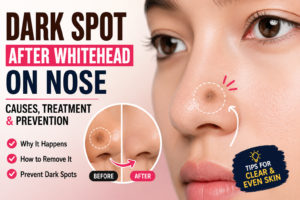

A dark spot after a whitehead on the nose is a common skin concern. You may notice that after a whitehead disappears, a brown, red, or dark mark remains in the same area. Although the original whitehead may be gone, the discoloration can make the nose look uneven and leave you wondering how to get rid of it.
In most cases, a dark spot left after a whitehead is related to post-inflammatory hyperpigmentation (PIH). It can develop when inflammation from acne stimulates the skin to produce extra melanin. Picking, squeezing, or repeatedly irritating the whitehead can make the discoloration darker and cause it to last longer.
The good news is that most dark spots after whiteheads can gradually fade with the right skincare routine. This guide explains why dark spots appear after whiteheads, how to treat them, how long they take to fade, and how to prevent new marks from developing.
What Causes a Dark Spot After a Whitehead on the Nose?
A whitehead forms when dead skin cells, oil, and other debris block a pore. When the blocked pore becomes inflamed or irritated, the surrounding skin can produce more pigment.
Several factors can contribute to a dark mark after a whitehead.
1. Post-Inflammatory Hyperpigmentation
The most common explanation is post-inflammatory hyperpigmentation. After inflammation or injury, melanocytes can produce more melanin. This can leave a brown or dark mark even after the acne lesion has disappeared.
PIH is especially noticeable on areas that receive frequent sun exposure, including the nose.
2. Picking or Squeezing Whiteheads
Trying to squeeze a whitehead can damage the skin around the pore. This increases inflammation and may trigger more pigmentation.
It can also increase the risk of developing an acne scar.
3. Sun Exposure
UV radiation can stimulate melanin production and make existing dark spots more noticeable. Without daily sun protection, pigmentation may take much longer to fade.
4. Repeated Skin Irritation
Using harsh scrubs, strong acne treatments, or rubbing the nose frequently can irritate the skin. Continued irritation may contribute to persistent discoloration.
5. Ongoing Acne
If new whiteheads continue appearing in the same area, inflammation can repeatedly stimulate pigmentation. Treating the underlying acne is therefore important for preventing additional dark spots.
Dark Spot vs. Acne Scar: What’s the Difference?
Not every mark left behind by a whitehead is an acne scar.
A dark flat mark is usually pigmentation rather than a true scar. It does not change the texture of the skin and may gradually fade over time.
An acne scar, on the other hand, can cause a change in skin texture. It may appear as a depressed area, indentation, or raised bump.
If the spot is flat and simply darker than the surrounding skin, it is more likely to be post-inflammatory hyperpigmentation.
How to Get Rid of a Dark Spot After a Whitehead on the Nose
The best approach is to combine gentle skincare with ingredients that can gradually improve pigmentation.
1. Wear Sunscreen Every Day
Sunscreen is one of the most important steps when treating dark spots.
Choose a broad-spectrum SPF 30 or higher and apply it every morning. If you spend extended time outdoors, reapply according to the product’s directions.
Sunscreen helps prevent UV exposure from making pigmentation darker and can support the fading process.
Even if your skin is oily or acne-prone, look for a lightweight, non-comedogenic sunscreen.
2. Try Niacinamide
Niacinamide is a popular skincare ingredient that can help improve the appearance of uneven skin tone while supporting the skin barrier.
A niacinamide serum may be useful for people who have oily or acne-prone skin and want a relatively gentle ingredient for their routine.
Start with a moderate-strength formula and introduce it gradually if your skin is sensitive.
3. Consider Azelaic Acid
Azelaic acid is another ingredient commonly used for acne-prone and unevenly pigmented skin.
It can help address both acne and post-inflammatory pigmentation, making it particularly useful when whiteheads and dark marks occur together.
Use it consistently rather than applying large amounts. Skin improvement usually takes time.
4. Use Salicylic Acid for Whiteheads
If clogged pores are contributing to repeated whiteheads, salicylic acid may help.
Salicylic acid is a beta-hydroxy acid that can penetrate into oily pores and help remove dead skin cells. It is commonly used in products designed for acne-prone skin.
However, using too much salicylic acid can cause dryness and irritation. Start slowly and avoid combining multiple strong exfoliating products at once.
5. Retinoids Can Help
Retinoids can help improve acne and encourage more consistent skin cell turnover. Over time, they may also improve the appearance of uneven pigmentation.
Because retinoids can cause irritation, introduce them gradually and follow the instructions for the specific product.
If you are pregnant or trying to become pregnant, talk with a healthcare professional before using topical retinoids.
6. Don’t Pick the Whitehead
One of the easiest ways to prevent another dark spot is to avoid squeezing or picking.
Although squeezing may seem like a quick solution, it can increase inflammation and damage the skin.
Instead, use appropriate acne products and allow the lesion to heal naturally.
Can You Remove a Dark Spot Overnight?
Unfortunately, dark spots after whiteheads usually cannot be removed overnight.
Products marketed as instant pigmentation removers may be misleading, especially when they rely on harsh ingredients that irritate the skin.
A consistent skincare routine is generally more useful than aggressive treatments.
Depending on the depth and cause of the pigmentation, noticeable improvement may take several weeks or longer.
How Long Does a Dark Spot After a Whitehead Take to Fade?
The fading time varies from person to person.
Some mild marks may become less noticeable within several weeks, while more persistent pigmentation can take several months.
Factors that influence fading include:
- Skin tone
- Amount of pigmentation
- Sun exposure
- Acne recurrence
- Picking or squeezing
- Skincare routine
- Skin sensitivity
- Consistency of sunscreen use
If the spot is becoming darker rather than lighter, or if new spots continue appearing, it may be worth discussing your skin with a dermatologist.
Best Skincare Routine for Dark Spots on the Nose
A simple routine can be more effective than using many products simultaneously.
Morning
- Gentle cleanser
- Niacinamide or another suitable treatment serum
- Lightweight moisturizer
- Broad-spectrum SPF 30 or higher
Evening
- Gentle cleanser
- Acne or pigmentation treatment
- Moisturizer
If using salicylic acid or a retinoid, introduce only one active treatment at a time. This makes it easier to determine how your skin responds.
Natural Remedies for Dark Spots: Do They Work?
Many home remedies are promoted online for dark spots, including lemon juice, baking soda, toothpaste, and undiluted apple cider vinegar.
These remedies are generally not recommended for treating facial pigmentation.
Lemon juice and other acidic substances can irritate the skin and potentially make discoloration worse. Baking soda can also disrupt the skin barrier.
Instead of experimenting with harsh kitchen ingredients, choose skincare products formulated for facial skin.
How to Prevent Whiteheads and Dark Spots on the Nose
Preventing new acne can reduce the chance of developing additional pigmentation.
Keep the Skin Clean
Wash your face gently rather than scrubbing aggressively. Over-cleansing can irritate the skin and potentially worsen acne.
Use Non-Comedogenic Products
Look for products labeled non-comedogenic, especially moisturizers, sunscreens, and makeup.
These products are designed to be less likely to clog pores.
Avoid Excessive Exfoliation
Exfoliating too frequently can damage the skin barrier. If you use chemical exfoliants, follow the product’s instructions and reduce frequency if your skin becomes irritated.
Don’t Touch Your Nose Frequently
Hands can transfer oil, dirt, and bacteria to the skin. Frequent touching can also irritate healing acne.
Treat Whiteheads Early
If whiteheads are a recurring problem, consider incorporating an acne-friendly ingredient such as salicylic acid into your routine.
When Should You See a Dermatologist?
Most flat dark marks after whiteheads are not an emergency. However, professional advice may be useful if:
- The pigmentation does not improve after several months.
- Dark spots are spreading.
- Acne keeps returning.
- You develop deep or painful acne.
- The area becomes itchy, painful, swollen, or crusted.
- A spot changes in size, shape, or color.
- You are unsure whether the mark is pigmentation or a scar.
A dermatologist can determine the cause and recommend treatments based on your skin type and pigmentation.
Professional treatments may include prescription medications, chemical peels, or certain laser-based procedures. These treatments should only be performed or recommended by qualified professionals because inappropriate procedures can sometimes worsen pigmentation.
Frequently Asked Questions
Why did I get a dark spot after a whitehead?
A dark spot can develop because inflammation from the whitehead stimulates increased melanin production. Picking or squeezing the whitehead can make the pigmentation more noticeable.
How do I get rid of a dark spot from a whitehead?
Daily sunscreen combined with suitable ingredients such as niacinamide, azelaic acid, or carefully selected acne treatments may help the spot fade gradually.
Does squeezing whiteheads cause dark spots?
It can. Squeezing can increase inflammation and damage surrounding skin, increasing the chance of post-inflammatory pigmentation and scarring.
Is a dark spot after acne permanent?
Usually, a flat dark mark is not permanent. However, some pigmentation can take months to fade, particularly when the skin is repeatedly exposed to sunlight or irritated.
Can sunscreen help dark spots fade?
Sunscreen helps protect pigmentation from UV exposure, which can darken existing marks and interfere with the fading process.
Should I exfoliate a dark spot?
Gentle chemical exfoliation may be useful for some people, but aggressive scrubbing can irritate the skin and make pigmentation worse. Introduce active ingredients gradually.
Final Thoughts
A dark spot after a whitehead on the nose is often caused by post-inflammatory hyperpigmentation rather than a permanent acne scar. Although the whitehead may disappear quickly, the resulting discoloration can remain for weeks or months.
The most important steps are to avoid picking, protect your skin from the sun, control recurring whiteheads, and use gentle pigmentation-friendly skincare ingredients. Niacinamide, azelaic acid, salicylic acid, and retinoid-based products may each have a role depending on your skin and the underlying problem.
Most importantly, be patient. Pigmentation rarely disappears instantly, and aggressive treatments can sometimes make it worse. A consistent, gentle routine usually gives your skin the best opportunity to recover and develop a more even appearance over time.